The War Iran Won, and the Country It May Still Lose
- Jesse Marks
- -
United States President Donald Trump has announced that his administration has reached a deal with Iran to end the war which devastated Iran and the broader region, and produced more than 3,375 Iranian civilian deaths as of early May. Iran can legitimately claim the deal as a win against the US and Israel: Tehran resisted American military power, struck its Gulf neighbours with limited consequence, preserved ties with Beijing and Moscow, and survived the assassination of its Supreme Leader and other top regime figures. By the standards the regime sets for itself, that is victory. But there is one battle it has yet to win.
A Frozen Conflict
Iran may end the war on top in the region, but it faces a larger battle for legitimacy at home. Surviving a fight with the United States will harden the regime’s resolve to clamp down on unrest, and the grievances that drove hundreds of thousands of Iranians to the streets before the war, which led to the killing of scores in a government crackdown.
The war created both internal pressure from the protest movement, and external pressure from the conflict itself, and ultimately bought the regime time to focus on the external threat. Global attention shifted to the war and away from the streets, and Washington, which had spent months trying to foment the protest movement, found itself fighting the regime, rather than helping the Iranians trying to bring it down. Mr Trump weighed surgical strikes against regime officials harming demonstrators, but never did so. His willingness to return to the negotiating table reinforced the legitimacy and the role of the regime that the people were protesting against.
The Iranian people suffered on both ends, harmed indirectly by American and Israeli munitions, and abandoned by both countries, which initially called for regime change, as well as a leadership that kept fighting. The dust is now settling on a country whose Red Crescent Society estimated more than 125,600 civilian units damaged by mid-April, including roughly 100,000 residential structures. The protests were never resolved, and the grievances driving them have multiplied.
A deal, while widely viewed as a necessity to reverse the global economic and regional consequences of the war, hands the regime two things the protest movement spent years trying to deny it. The first is international recognition as Iran’s legitimate negotiating authority, with Washington treating the post-Khamenei leadership as the government that speaks for Iran — including an unprecedented face-to-face meeting between Vice-President J.D. Vance and Parliamentary Speaker Mohammed Baghar Ghalibaf. The second is a window of diplomatic cover, however brief, in which Tehran can argue to its own population that the regime delivered survival, sanctions relief (if included as part of the deal), and an end to the bombing. For the protesters, this is the worst possible outcome, short of regime victory by force. The world is looking for a way to move on from the war, but the streets will not.
The conditions for a resurgence are already in place. The grievances that drove the pre-war protests — currency collapse, repression, and economic stagnation — have been compounded, rather than addressed. The regime’s wartime crackdown killed tens of thousands and led to tens of thousands more being arrested, leaving a generation of families with direct grievances against the state. The protest movement may return, and if it does, it will return into a country with more reasons to act, and fewer external actors willing to defend it.
To Defend or Rebuild?
How the streets respond depends on how the regime treats post-war reconstruction. Tehran now faces a watershed moment over its post-war priorities. Sanctions, which the deal is unlikely to fully lift, leave the state with limited funds to spend. The regime can rebuild an Iran for the people who suffered, or it can rebuild an Iran for the war-hardened state that fought. It is unlikely to do both.
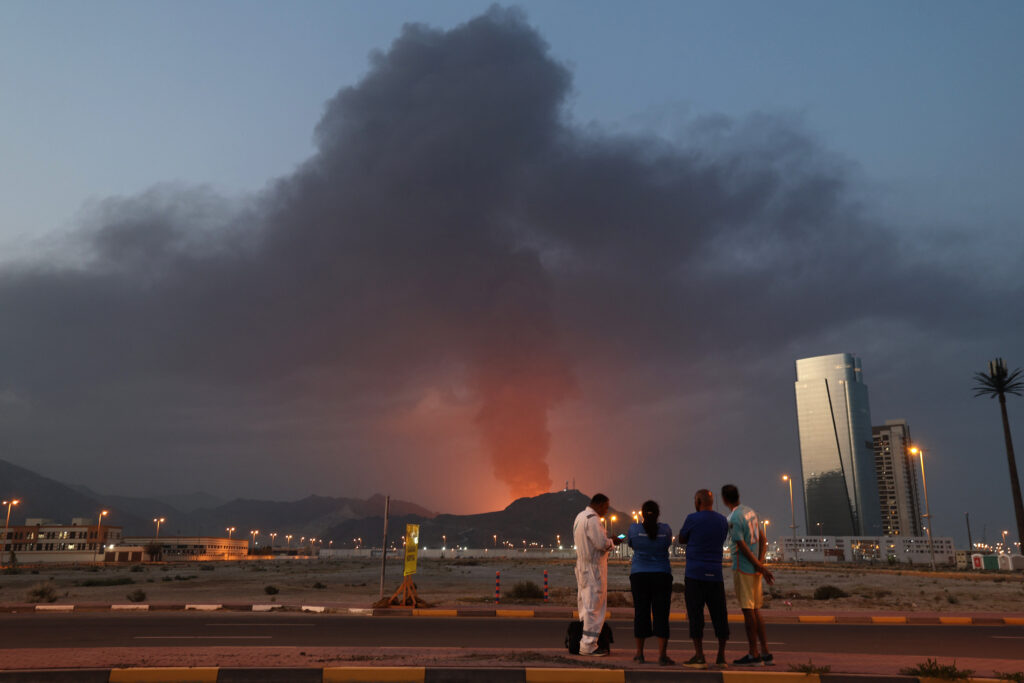
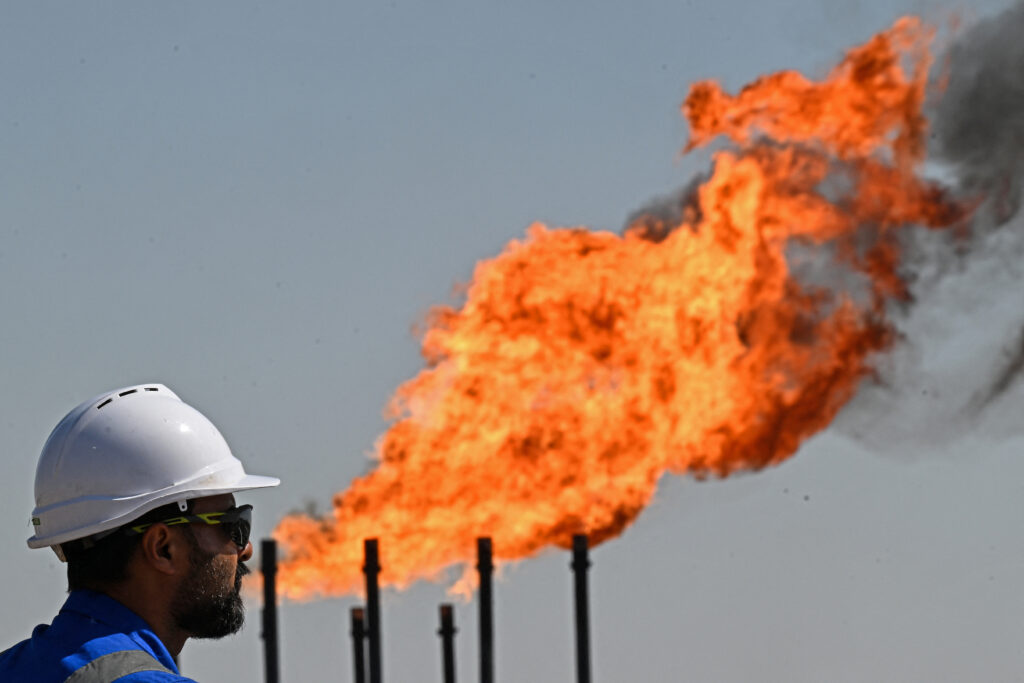
The defence rebuild will come first because the regime believes it must. Iran lost much of its strategic depth in 40 days. Some estimates place the total economic damage at between US$50 billion and US$300 billion, with a midpoint near US$144 billion. Tehran’s own accounting puts direct and indirect damages at US$270 billion. Its missile stockpiles are depleted, though estimates of what remains vary. Strategic defence assets have been destroyed. If the past is any guide, the Iranian state will expect another round, and rebuilding deterrence will require billions of dollars and years of focused industrial investment. Iran is reportedly already rebuilding faster than expected, with drone production resuming within months of the ceasefire.
The civilian rebuild is the second demand, and the larger one. According to OCHA, the war caused extensive damage across 20 provinces, including to 1,200 education facilities and 240 health and medical sites, with the heaviest destruction in Tehran, Hormozgan, and Isfahan, and electricity, water, and telecommunications outages compounded the displacement of millions. Markets remain functional in name only, with declining purchasing power leaving the most vulnerable households unable to buy adequate food. Humanitarian organisations described millions fleeing in search of safety, with destruction visible in nearly every neighbourhood in the capital. Iranian basic services barely functioned before the war. The state will now be asked to restore them at a scale that exceeds anything the government has managed or prioritised.
The maths suggest Tehran cannot rebuild the nation and its defence capabilities at the same time. Sanctions still constrain how much income the state has, and limit where it can spend, and the deal is unlikely to change that meaningfully. Given the regime’s trajectory and the narratives it has built around revolution and resistance, defence reconstruction will absorb most available resources. Civilian reconstruction will receive what remains. Tehran may look abroad for support, but find very little waiting.
Few Friends
China and Russia, Iran’s two great-power partners, are unlikely to bail Tehran out.
Iran appointed its war-time negotiator as its special envoy to Beijing, signalling that it would be seeking China’s support in rebuilding, particularly in revitalising cooperation under their 25-year agreement. Beijing has structural reasons to keep Iranian oil flowing, and the 25-year cooperation framework alive, but little Iranian oil is currently reaching China, and the framework is far from implementation. Beijing is also unlikely to extend non-collateralised humanitarian financing at the scale Iran currently requires, and, depending on the post-deal sanctions landscape, Chinese state banks will remain wary of secondary sanctions exposure. Meanwhile, Moscow’s fiscal capacity has also been hollowed out by the war in Ukraine, and the cost of sustaining its own defence industrial base. Neither will prioritise humanitarian aid at scale beyond small, symbolic amounts.
The Gulf, which had the means to underwrite Iran’s recovery, and a strategic interest in doing so, is now closed to Tehran beyond a possible non-aggression understanding. Iran spent the last three years rebuilding ties with Saudi Arabia under a 2023 rapprochement brokered by China. Iranian missiles and drones burned all of that down in 40 days. Tehran has demanded compensation from Saudi Arabia, the UAE, Bahrain, Qatar, and Jordan for alleged participation in US-Israeli strikes, hardening Gulf positions further. Qatar, historically one of the more Iran-friendly GCC states, lost roughly 17 per cent of its LNG export capacity to Iranian strikes on Ras Laffan, with repairs projected to take three to five years. Doha has sent at least 10 letters to the United Nations Security Council demanding action, and warning that Iran’s strikes crossed “all red lines”. It is unlikely that Tehran will get a dime from the Arab world.
Iran has few friends in its corner and even fewer interested in bailing it out. The regime can lean on China and Russia for political cover, on remaining proxies for regional reach, and on its own depleted treasury for everything else. That maths does not bode well for the Iranian people if the state prioritises defense, which it almost certainly will.
The Coming Revolution
The legitimacy crisis this produces will look different from anything Tehran has faced in recent years, including after last year’s 12-Day War. The regime retains its security forces, weapons stockpiles, and capacity to suppress demonstrations. It is not clear how mobilised any future protest movement will be, but it has all the conditions of a powder keg: Civilian suffering, economic collapse, sanctions, and a state that has crossed the threshold of killing its own people with impunity. The Iranian regime watched its Syrian foothold collapse with Bashar Al-Assad’s fall and learned the wrong lesson. It concluded that survival is a function of resistance. It will discover that survival is a function of legitimacy, and legitimacy comes from electricity, hospitals, schools, and food.
Whatever win Iran claims from resisting the United States and Israel will be tested internally by how much legitimacy the regime can extract from its people, and that test will hinge on restoring basic services that barely functioned before the war. The watershed moments to watch are the first post-war budget allocation between defence and civilian reconstruction, the first major protest cycle after the ceasefire, and the first Gulf Cooperation Council decision on whether to engage Tehran beyond non-aggression. Each will signal whether the regime understands what kind of conflict it actually faces now.
The Islamic Republic has claimed victory over America. But the harder battle for legitimacy is just beginning.
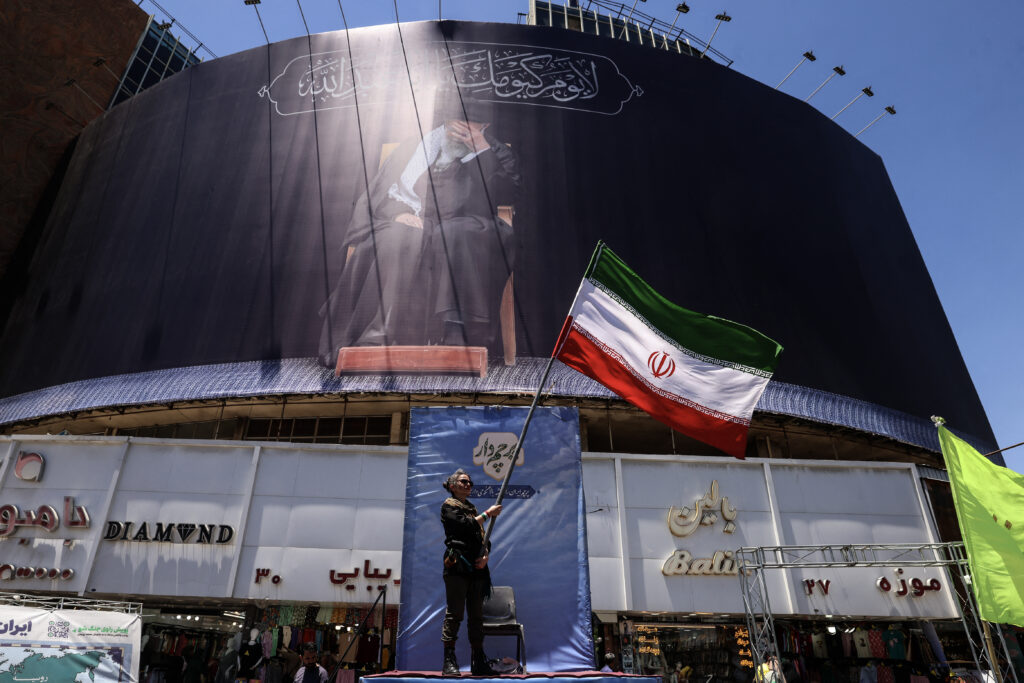
Image Caption: An Iranian woman waves a national flag next to a billboard depicting slain supreme leader Ayatollah Ali Khamenei at Valiasr Square in Tehran on 15 June 2026. Photo: AFP