*The writer was a speaker at MEI’s Annual Conference this year – this article expands on her perspectives.
Every major geopolitical shock generates its share of clean, tidy conclusions. The war in Ukraine exposed Europe’s deep dependence on Russian gas, and is propelling the continent towards a rapid, if uneven, embrace of renewable energy. The conflict in the Middle East, and the disruptions to Gulf energy flows it has precipitated, is generating a similar reflex: That the crisis should compel the world to finally abandon the volatility of hydrocarbons. The International Energy Agency has predicted “a significant boost to renewables and nuclear power” that will result in “permanent consequences for the global energy markets”, while the Institute for Energy Economics and Financial Analysis has urged India to accelerate electrification from clean energy sources across sectors to mitigate its vulnerability to high levels of imported fossil fuels. For Asian corporations and policymakers trying to navigate this moment, that conclusion is seductive but simplistic. The Arab Gulf states themselves tell a subtler and more instructive story — one with direct implications for Singapore companies.
An Old Anxiety in the Gulf
Energy security is not a concept imported into the Arab Gulf states by the current crisis. It has sat at the top of the policy agenda for years, which is, at first glance, an almost paradoxical situation. These are among the world’s largest net exporters of oil and gas. Yet, several of them have been running energy deficits at home. Kuwait regularly suffers from chronic grid stress and summer brownouts; since 2009, it has imported LNG in an attempt to alleviate the situation. The United Arab Emirates has imported roughly one-third of its natural gas requirements since 2007 from Qatar. Iraq typically imports 30-40 per cent of its gas needs from Iran to run power plants, and in some years also imports petroleum in bulk to compensate for insufficient refining capacity.
The reason is partly structural: Water and electricity consumption remains highly subsidised, and encourages waste and misallocation. In Kuwait, for instance, electricity tariffs for citizens have not changed since the 1960s. Another reason is that exporting maximum volumes at global market prices creates powerful disincentives to divert hydrocarbons for domestic use, precisely since many of the Gulf states are still highly dependent on revenues generated by oil and gas exports. In the UAE’s case, for example, it is cheaper to purchase gas from Qatar and to export its own gas to Japan than to develop its hard-to-access gas fields.
What the Iran war has done, in this context, is not create a new problem, but dramatically shorten the timeline for addressing the energy insecurity that already existed. The crisis has been a wake-up call on two fronts: The urgency of scaling up indigenous energy production, including, but not limited, to renewables; and recalibrating policy and investments to ensure that hydrocarbon exports can actually reach customers in a world where chokepoints are no longer theoretical risks.
Indigenous But Not Exclusively Green
Here is where the “victory for renewable energy” narrative breaks down. Energy security for the Gulf states does not translate automatically into a renewable energy bonanza. It translates into indigenous energy — and indigenous energy takes several forms.
The UAE recognised this calculus earlier than its neighbours. To reduce dependence on imported gas, as well as to free up domestically-consumed hydrocarbons for export, the UAE commissioned four nuclear reactors at the Barakah plant and deployed utility-scale solar power plants. From a negligible base less than a decade ago, renewable energy (mostly solar) now generates around 9 per cent of the UAE’s electricity — if low-carbon nuclear power is included, the figure approaches one-third. Despite a relatively later start, Saudi Arabia, the world’s largest net oil exporter, is now the region’s leader in renewable power, generating twice as much as the UAE in terms of volume in 2025. Both countries have set ambitious targets: Saudi Arabia aims for 50 per centrenewable power by 2030; the UAE for 44 per cent clean energy by 2050 (with 32 per cent by 2030). All Arab Gulf countries, bar Qatar and Iraq, have set net zero targets for 2050 or 2060.
But alongside this renewable buildout, some countries are simultaneously doubling down on oil and gas. Saudi Arabia imports fuel oil from Russia (cheaper than burning its own crude) for domestic power generation, buying time for renewables to scale and for massive, new gas fields to be brought onstream to feed into its expanded Master Gas System that will end the use of oil in power plants. The UAE is developing gas fields for domestic self-sufficiency, but unlike its neighbour, is also eyeing LNG exports on the assumption that gas-fired baseload power will remain critical for Asian and European grid operators, particularly as those grids absorb increasing shares of intermittent wind and solar, but lack the long-duration battery storage to manage variability at scale. On 24 June 2026, it awarded the concession to develop the giant Bab Gas Cap, 40 per cent of which is held by foreign companies, demonstrating continued investor confidence in the UAE’s energy sector.
For Bahrain and Kuwait, the crisis has concentrated minds. Bahrain, which like Singapore faces size constraints in developing utility-scale solar, is now fast-tracking studies into offshore wind and cross-border solar projects, such as sub-sea cable connections to generation assets located in Saudi Arabia. Kuwait is accelerating the phased deployment of the Al Shagaya renewable energy complex, which had been held hostage to politics for years. At the same time, it is pushing ahead with its pre-war plans to co-develop offshore gas fields with international oil companies in order to enhance its self-sufficiency in domestic power.
The point here is that the Gulf’s response to energy insecurity is a portfolio response: Indigenous gas, nuclear, and renewables. No single fuel, not even solar for countries that lie within the global sun belt, is the default answer.
Getting the Oil and Gas Out
Perhaps the most underappreciated dimension of the Gulf response to the Iran crisis is the extraordinary focus on energy logistics. Production capacity means little if supplies cannot reach customers. The current conflict has rendered this brutally obvious.
Overseas strategic storage has demonstrated its value in terms of accessibility. The national oil companies of Saudi Arabia and the UAE have long maintained storage arrangements in some of their top customers, namely South Korea, Japan, and India, and, more recently, in Singapore. These facilities proved their worth when disruptions in Hormuz resulted in host countries drawing on pre-positioned volumes. Energy supply was largely maintained, as was the Gulf’s reliability as suppliers. Expansion of both capacity and host country coverage is now underway.
Gulf producers have also enhanced accessibility by acquiring upstream oil and LNG assets overseas in the United States, Azerbaijan, Mozambique, Australia, Uruguay, and Peru, among others. These acquisitions facilitate revenue diversification and, importantly, supply diversification. Offtake arrangements attached to these assets are likely to give Gulf exporters flexibility to direct oil and LNG towards Asian customers from non-Gulf origins, reducing exposure to any single chokepoint. For Qatar, scaling up its non-Gulf source of LNG as a hedge will be particularly crucial given the constraints of geography.
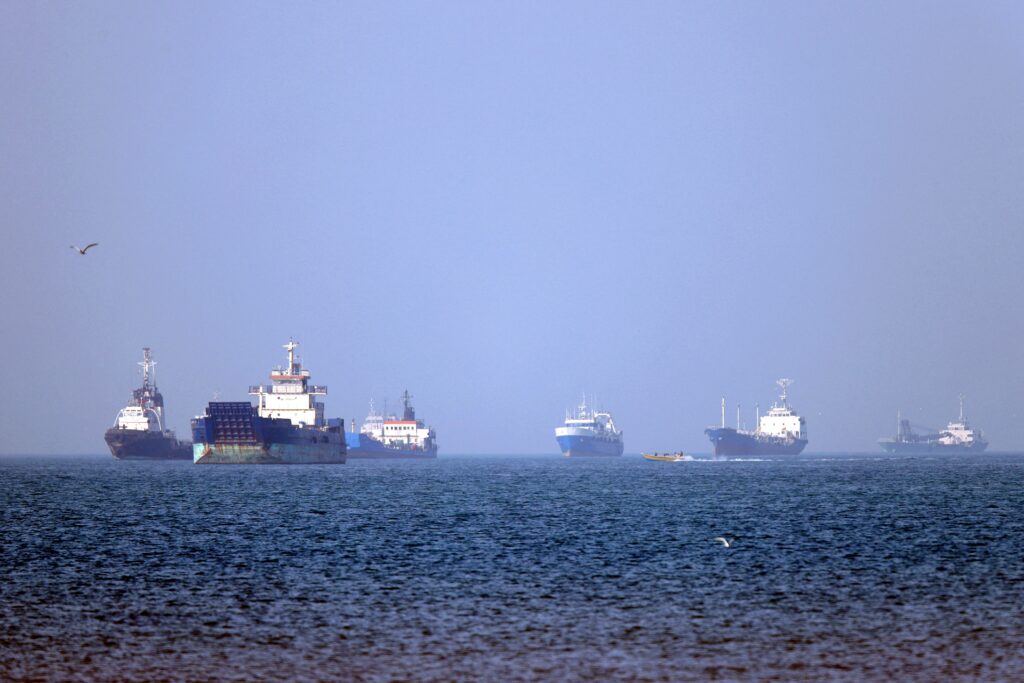
Another aspect of accessibility concerns bypass options for the Strait of Hormuz. Oman, situated outside the Strait, is the clearest economic beneficiary of the conflict, and is likely to increase spending on port and rail facilities to maximise this advantage. The UAE, which already has one operational pipeline bypassing Hormuz entirely, is the most robust advocate of a “zero Hormuz dependency”, regardless of how the current conflict is eventually resolved. This includes fast-tracking the completion of a second bypass pipeline, proceeding with a third for refined petroleum products, and upgrading port facilities (and defences) at Fujairah, Khor Fakkan, and Dibba (all outside the Strait) to handle expanded volumes. Kuwait, lacking direct sea access outside the Gulf, is exploring the possibility of routing crude through the pipeline networks of the UAE and Saudi Arabia, potentially through “batching” and “common carrier” arrangements (akin to those used in the US), or co-financing of new pipeline capacity.
In another nod to accessibility, fleet expansion by Gulf hydrocarbon exporters continues apace. Qatar, the world’s largest LNG exporter, is in the midst of a major expansion of its tanker fleet. Abu Dhabi National Oil Company’s logistics subsidiary has more than tripled its vessel ownership within five years, from 120 ships to over 350, excluding third-party charters. The aim is straightforward: Own the ships, own the risk, own the supply chain.
What This Means for Asia — and for Singapore
For corporate and policy stakeholders in Asia, the lessons from the Gulf are specific and should be absorbed carefully, rather than filtered through the single-technology prism of renewable or low-carbon energy.
The first is that more oil and gas will be available to Asian customers over the medium term, not less. The UAE’s oil output will no longer be constrained by production quotas since its departure, effective June 2026, from the Organization of the Petroleum Exporting Countries, resulting in more of its oil (and LNG) available for sale. Assets acquired by Gulf states across Africa, the Americas, and Oceania add further supply diversity available for offtake into Asian markets. Competition between similar crude grades sold by the UAE and Saudi Arabia (and any future unsanctioned Russian oil) could also mean lower prices. The crisis has accelerated, not reversed, the Gulf’s pivot towards securing and deepening relationships with Asia, its primary customer.
The second is that volatility, in both price and volume, will remain elevated. Infrastructure vulnerabilities at energy facilities and Hormuz have been exposed; they are likely to be targeted with occasional hostile projectiles to underline Iran’s strategic presence. Even bypass pipelines and expanded port capacity will not return the Gulf to its pre-war status quo. Asian buyers with long-term supply agreements should be stress-testing those contracts against disruption scenarios, and examining whether their own strategic storage arrangements are adequately sized.
The third is that the Gulf’s portfolio approach to energy security deserves some considered emulation, rather than the simplified green transition narrative that tends to dominate boardroom conversations these days in Singapore and elsewhere in Asia. The Gulf states are deploying solar and wind at scale. They are developing gas fields, building nuclear plants, expanding LNG fleets, and constructing route optionality. They are also investing in energy efficiency or “negawatts”: Unused energy that is counted as savings. State-backed energy saving companies in the Gulf advance national retrofitting frameworks by directly financing or guaranteeing the upfront capital costs of large-scale building upgrades, so that property owners take on minimal financial risk. By combining a number of government buildings into massive renovation projects, these agencies create a steady pipeline of work for private contractors, driving the widespread deployment of advanced energy efficiency technologies. By contrast, energy efficiency is an underemployed lever of energy management in Singapore and elsewhere in South-east Asia.
The Gulf states are doing all of these things simultaneously because they understand that energy security is a system problem: It is not simply a technology selection problem, or merely a supply problem. For Asia, taking a leaf out of the Gulf playbook translates into continued investment in LNG infrastructure and long-term supply agreements, even as indigenous (for example, geothermal in Indonesia, or nuclear in Vietnam) or imported (for instance, the incipient Asean electricity grid) low-carbon capacity is built out. It means treating energy development as a security imperative, rather than a purely climate or cost decision. And it means recognising that strategic storage, diverse supply portfolios, and logistics resilience are not simply optional add-ons.
There is, however, a fourth and distinctly positive lesson for Singapore to absorb as an opportunity. Singapore has spent decades building an enviable reputation as the hub through which energy trading, shipping finance, corporate reorganisation, commodity arbitrage, and infrastructure deal-making flow across Asia. That reputation is the product of legal predictability, financial depth, maritime expertise, and a trading culture that understands how to manage counter-party risk across complex, multi-jurisdictional supply chains. The Singapore brand — its citizens, residents, and companies — is highly prized in the Gulf. It opens doors and closes deals, offering a credible, efficient, and trusted platform to manage the Gulf’s post-war energy-related choices and strategies, including engineering design, urban sustainability, project consultancy and management, water circularity, and talent development, among others. The oft-cited challenges remain — such as payment delays, sudden regulatory and compliance changes, and localisation mandates — but the business ecosystem has also improved significantly in recent years.
The temptation for Singapore companies is to treat the current moment as a temporary risk management challenge: To hedge, wait, and hope for stability to return to energy markets in the Gulf. Mistrust and shifting alliances at the global and regional levels make a return to the status quo unlikely for the Gulf. A moment of maximum disruption is precisely when the Singapore brand commands its highest premium as an asset and should be carefully leveraged.
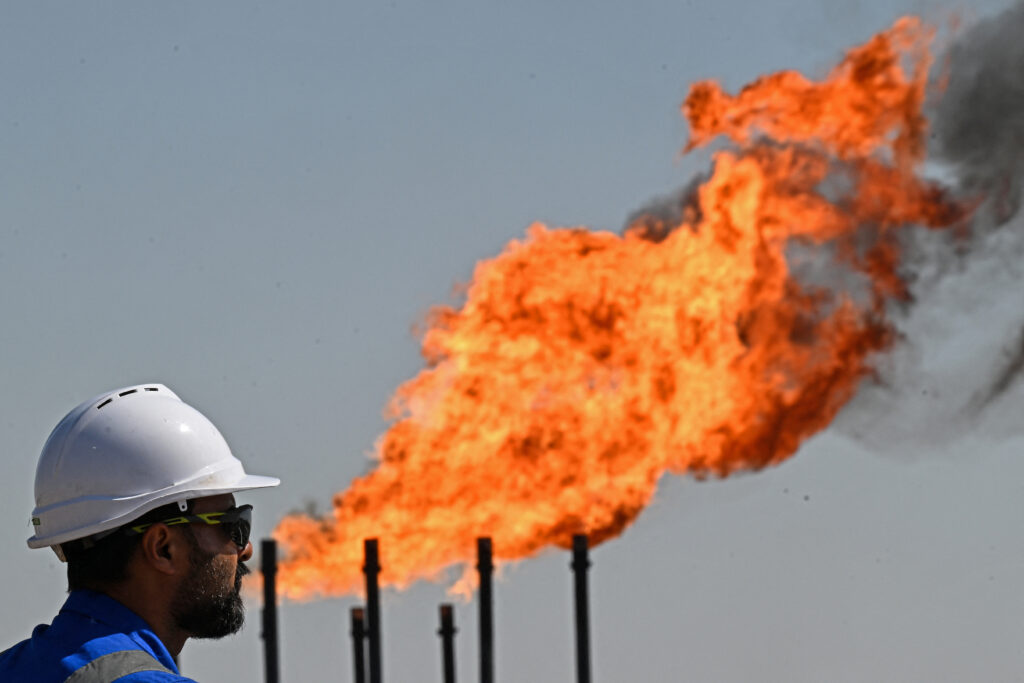
Image Caption: An employee of Basra Oil Company, inspects the Nahr Bin Umar Oil and Gas Field on the outskirts of the southern Iraqi city of Basra on 29 April 2026.
About the Author
Dr Li-Chen Sim is an Assistant Professor at Khalifa University in the UAE and an Associate Fellow at the Middle East Institute in Washington, DC.