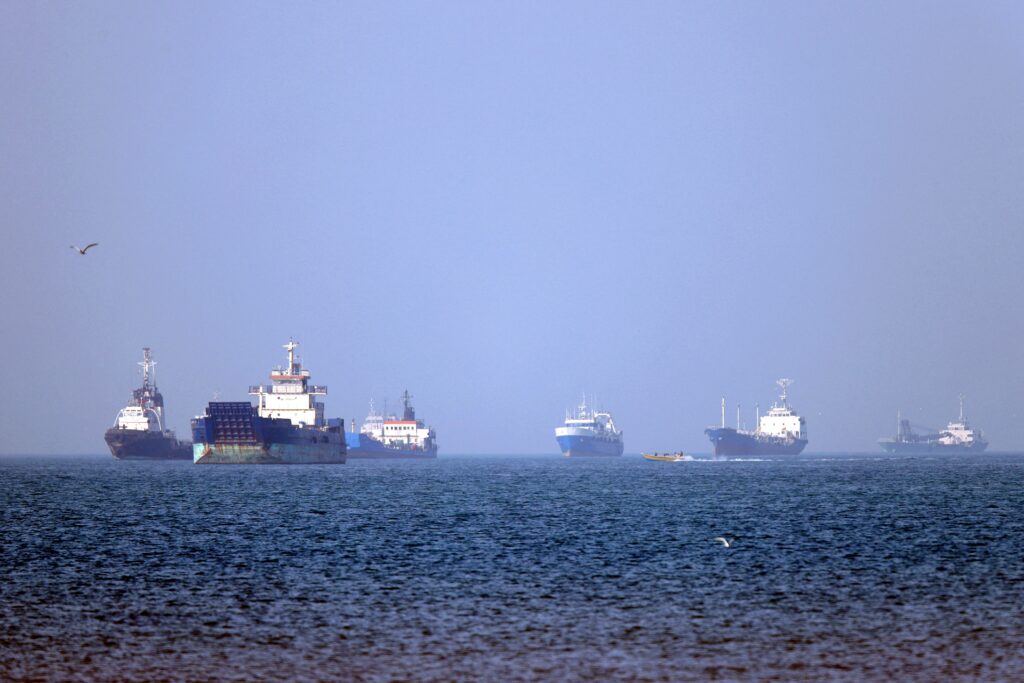
In March, Iran announced that Japanese vessels would be allowed to transit the Strait of Hormuz. Weeks later, Iranian authorities claimed that 32 commercial vessels — including oil tankers and container ships — had crossed the waterway after receiving clearance coordinated by the Islamic Revolutionary Guard Corps. In May, Tehran formalised the Persian Gulf Strait Authority, a new body tasked with regulating maritime traffic through one of the world’s most important energy chokepoints. Washington responded immediately, imposing sanctions on the agency and entities cooperating with it in an effort to prevent Iran from institutionalising control over regional energy flows.
The episode revealed an uncomfortable reality for US policymakers: Even as Washington escalated economic pressure, Asian states adjusted to decisions being made in Tehran, rather than in the US. China continued purchasing Iranian oil while openly rejecting unilateral American sanctions, invoking its anti-sanctions law and relying on alternative trading networks. India reduced imports under sanctions pressure, but maintained strategic connectivity through the Chabahar port, and returned to Iranian energy when restrictions eased, suggesting that diversification did not eliminate the strategic value of engagement with Tehran. Likewise, Pakistan negotiated arrangements with Iran to secure maritime access, while Japan sought direct assurances from Tehran for safe passage through the Strait of Hormuz.
The question is therefore not whether sanctions continue to impose costs. It is whether they still shape Asian behaviour in the relatively predictable ways Washington came to expect. For most of the sanctions era, US leverage worked by narrowing choices. Asian importers diversified energy purchases, redirected supply chains, and recalibrated diplomatic engagement to preserve access to the US financial system, and avoid secondary sanctions. Some countries objected and responded differently, but the overall direction of adjustment remained broadly predictable, and largely aligned with US incentives.
The current US-Israel war against Iran war suggests that things have changed. Previous sanctions cycles revolved around supply: If Iranian crude became inaccessible, states could turn elsewhere. Today, the constraint is increasingly access itself. Energy can be purchased from Saudi Arabia, the United Arab Emirates, Iraq, or Qatar, but much of it still depends on secure passage through Hormuz. As wartime disruptions intensified, concerns over transit, maritime security, and economic stability increasingly outweighed formal sanctions compliance. This does not mean US economic power is weakening. Rather, it suggests that sanctions are becoming less effective at structuring regional outcomes when access to strategic waterways and energy security as an economic imperative become overriding national interests. Iran, therefore, offers a test case for the changing limits of US economic influence in Asia — not because sanctions no longer matter, but because access to energy is shaping regional outcomes as much as sanctions themselves.
How US Sanctions Shaped Asia’s Energy Choices
The effectiveness of American sanctions on Iran has historically rested less on direct coercion than on Washington’s ability to shape the choices of third countries. Rather than physically restricting trade, sanctions leveraged the centrality of the US dollar, access to American markets, and the reach of the global financial system to raise the costs of engagement with Tehran. Banks, insurers, refiners, shipping firms, and governments faced a familiar calculation: Maintain commercial ties with Iran, or preserve access to the US-dominated global financial system.
This architecture expanded gradually over two decades. Beginning in the early 2000s, concerns over Iran’s nuclear programme led to successive rounds of US and international sanctions targeting banking, energy, shipping, and financial transactions. The pressure eased temporarily following the 2015 Joint Comprehensive Plan of Action (JCPOA), before Washington’s withdrawal from it in 2018 restored and widened restrictions under the “maximum pressure” campaign. These measures extended beyond Iranian entities themselves to include secondary sanctions targeting foreign firms and states engaging in Iranian trade.
The effects of this pressure campaign became especially visible across Asia. Rather than demanding uniform compliance, Washington relied on calibrated adjustment through sanctions waivers, exemptions, and phased reductions in imports. Following the re-imposition of sanctions in 2018, countries including India, Japan, and South Korea were temporarily permitted to continue limited purchases under Significant Reduction Exemptions (SREs), creating incentives to reduce dependence gradually, rather than sever ties abruptly.
India illustrates how this Asian mechanism operated in practice. In 2018-19, India imported approximately 24 million tonnes of Iranian crude, or roughly 10-12 per cent of New Delhi’s total oil imports. After US waivers expired in May 2019, Indian imports of Iranian crude declined sharply to negligible levels, as refiners redirected purchases towards Saudi Arabia, Iraq, the UAE, the United States, and, later, discounted Russian crude.
However, reduced oil dependence did not translate into disengagement from Iran. India preserved strategic connectivitythrough Chabahar, accelerating port development even after sanctions were reimposed, and assuming operational control of part of the Shahid Beheshti terminal in late 2018 under a sanctions exemption framework. Rather than severing ties, India adjusted the pace and terms of engagement with Tehran.
India and China: Uneven Responses, Unequal Capacities
States across Asia did not respond uniformly: Their ability to absorb pressure, diversify energy supplies, and sustain alternative economic relationships produced markedly different outcomes under the same sanctions regime.
India occupied an intermediate position within Asia’s energy hierarchy: Large enough to diversify under sanctions pressure, but not insulated enough to ignore it. As the world’s third-largest energy consumer, India was once among Iran’s most important oil buyers, with Iranian crude accounting for roughly 11.5 per cent of total imports at its peak, owing to compatibility with Indian refineries, favourable pricing, and flexible payment arrangements. Following the reimposition of sanctions, New Delhi reduced direct dependence on Iranian crude and diversified towards alternative suppliers while preserving broader strategic links with Tehran. However, diversification did not eliminate the importance of geography or access. As disruptions around the Strait of Hormuz intensified and supply pressures mounted, Indian refiners returned to Iranian crude in April this year after a seven-year gap, showcasing the limits of sanctions-driven adjustment when energy security and transit concerns became more acute. India’s response therefore reflected constrained adaptation: Compliance where necessary, diversification where possible, and continued efforts to preserve strategic flexibility in its relationship with Iran.
China occupied the opposite position within Asia’s energy hierarchy. Rather than reducing exposure to Iran under sanctions pressure, Beijing expanded economic engagement while developing mechanisms that lowered vulnerability to external restrictions. China is Iran’s largest trading partner and principal oil buyer, accounting for more than 80 per cent of Iran’s shipped oil exports and providing Tehran with tens of billions of dollars in annual revenue. In 2025, China imported approximately 1.38 million barrels per day of Iranian crude — around 13.4 per cent of its seaborne oil imports — with much of this trade routed through intermediary firms, shadow shipping networks, and alternative financial arrangements that reduced exposure to formal US sanctions channels.
This adjustment was institutional as much as commercial. Following the re-imposition of US sanctions in 2018-19, China’s major state-owned refiners largely withdrew from direct purchases, while independent “teapot” refiners in Shandong — responsible for roughly one-quarter of national refining capacity — absorbed sanctions risks in exchange for discounted Iranian crude estimated at US$8-10 below global benchmarks. Beyond oil, Beijing and Tehran deepened cooperation through the 25-year Comprehensive Strategic Partnership Agreement of 2021, which covered economic, technological, and security ties. China’s response therefore reflected strategic circumvention, rather than constrained adaptation: Instead of reducing exposure, Beijing expanded the capacity to sustain engagement with Iran on terms insulated from US pressure.
The Wider Asia Pattern
Beyond China and India, a broader Asian pattern reveals the same hierarchy operating through different forms of vulnerability. States remained responsive to US sanctions, but differed significantly in their capacity to absorb pressure, diversify supplies, and manage disruptions.
Japan represents the compliant but exposed end of Asia’s energy hierarchy. Its energy relationship with Iran was progressively restructured under US pressure: Iran once supplied more than 10 per cent of Japanese crude imports, but successive sanctions narrowed engagement until imports were fully suspended in 2019. Yet sanctions compliance did not eliminate vulnerability. Japan imports more than 85 per cent of its total energy consumption, while approximately 94 per cent of its crude oil imports originate in the Middle East, and around 93 per cent transits through the Strait of Hormuz. Recent disruptions prompted Tokyo to draw roughly 80 million barrels from its strategic reserve to stabilise markets and contain price shocks. It suggests that even highly-aligned US partners remain vulnerable once access through strategic waterways, rather than the availability of energy itself, becomes the central constraint.
South Korea demonstrates a different form of constraint. Like India, Seoul initially adjusted through US sanctions waivers before reducing Iranian imports under renewed pressure. Yet compliance did not eliminate vulnerability. Around 70 per cent of South Korea’s crude oil imports continue to transit through the Strait of Hormuz, leaving the country exposed to disruptions beyond sanctions compliance alone. During the recent crisis, 26 South Korean vessels were reportedly stranded in the Gulf, while the Korean won fell to a 17-year low amid downward revisions to growth expectations and rising inflation concerns. The effects extended beyond crude supplies: Approximately 35 per cent of South Korea’s naphtha imports and nearly 65 per cent of its helium supplies — critical inputs for petrochemicals and semiconductor production — were affected by disruptions in Gulf transit.
Meanwhile, Pakistan reveals itself as the most vulnerable country within Asia’s energy hierarchy, even though a solar boom has helped to blunt some of the impact of the current crisis. Nonetheless, without China’s capacity to circumvent pressure or Japan and South Korea’s ability to absorb shocks, Islamabad faced narrower choices shaped by energy shortages and economic vulnerability. Pakistan imports roughly 85 per cent of its crude oil, and remains heavily dependent on LNG, leaving it particularly exposed to disruptions originating in the Gulf. The Iran-Pakistan pipeline, signed in 2009 to address chronic shortages, remained largely stalled under US sanctions pressure despite substantial Iranian investment. As disruptions around the Strait of Hormuz pushed Pakistan’s weekly oil import bill from roughly US$300 million to US$800 million, Islamabad increasingly turned towards direct accommodation with Tehran to preserve energy access, including arrangements facilitating LNG cargoes and vessel transit.
What This Means for US Sanctions Power
The preceding cases suggest that the most important change is not that sanctions affect countries differently — this has always been true. Nor is it that sanctions no longer impose costs. Rather, what appears to be changing amid the war in the Middle East is Washington’s ability to translate economic power and maximum pressure into the kinds of regional outcomes it historically expected in Asia. This historically meant gradual reductions in dependence on Iranian energy, diversification towards alternative suppliers, and adjustments that remained broadly compatible with US sanctions architecture through waivers, dollar-based financial channels, and established energy trade networks.
The current war suggests that the challenge for Washington is not whether sanctions continue to constrain behavior, but whether they continue to do so in ways that remain compatible with the energy security priorities of regional states. Earlier sanctions cycles largely operated through supply substitution: Countries reduced exposure to Iran, diversified suppliers, and adjusted economic relationships while remaining broadly responsive to US incentives. That model depended on an important assumption — that alternative supply remained available and accessible at manageable economic cost. But when access itself becomes uncertain, states increasingly prioritise energy security and economic resilience over strict sanctions alignment.
Economic coercion remains most effective when it raises the costs of non-compliance without imposing larger collateral costs on partners than the behaviour it seeks to change. When sanctions align with national energy security priorities, states comply. When they begin to threaten access itself, adaptation, accommodation, and direct engagement become more attractive. Washington therefore retains considerable capacity to impose costs, but less ability to ensure that those costs translate into the political outcomes it intends. Asia’s energy hierarchy persists. What may be changing is not American power itself, but the conditions under which that power produces compliance.
Hormuz Leverage and the Changing Conditions of US Sanctions Power
The ongoing conflict in the Middle East does not signal a permanent American decline, nor does it mean Asian states are pursuing a policy of systematic decoupling. However, it exposes a structural shift where the rising collateral costs of compliance complicate Washington’s ability to translate economic power into predictable regional outcomes.
When wartime disruptions threaten basic economic stability, partners find themselves balancing long-term strategic alignment against immediate domestic priorities. If Washington enforces strict compliance without accounting for these localised vulnerabilities, it risks eroding the long-term deterrent effect of its financial statecraft. Rather than a total break from the US financial system, this friction creates a more fragmented regional environment that undercuts the long-term reach and enforcement of Washington’s own unilateral leverage.
To preserve the structural integrity of its sanctions power, Washington must move past its current reliance on reactive, short-term emergency waivers and instead pivot towards a formalised strategy of strategic modulation. While the United States has solidified its position as the world’s premier energy exporter, its current supply architecture does not automatically insulate vulnerable Asian partners from localised shocks. Washington can bridge this gap by transitioning from temporary, erratic maritime exemptions to predictable, tailored energy clauses that prevent allies from seeking desperate, non-compliant workarounds. Concurrently, the US can actively weaponise its dominant export capacity by underwriting regional energy security —guaranteeing alternative supply lines and providing financial backstops during maritime crises. Ultimately, balancing alliance stability with uniform enforcement allows it to lower the domestic costs of alignment for its partners, preserving long-term American financial leverage.
Image Caption: Vessels are seen anchored in the Strait of Hormuz, off the port city of Khasab on Oman’s northern Musandam Peninsula on 17 May 2026. Photo: AFP
About the Author
Gopi Bhamidipati is a scholar of international relations and a non-resident senior fellow at the Newlines Institute for Strategy and Policy in Washington, D.C. He holds a Ph.D. from Virginia Tech and specialises in Middle East geopolitics and India’s foreign policy.