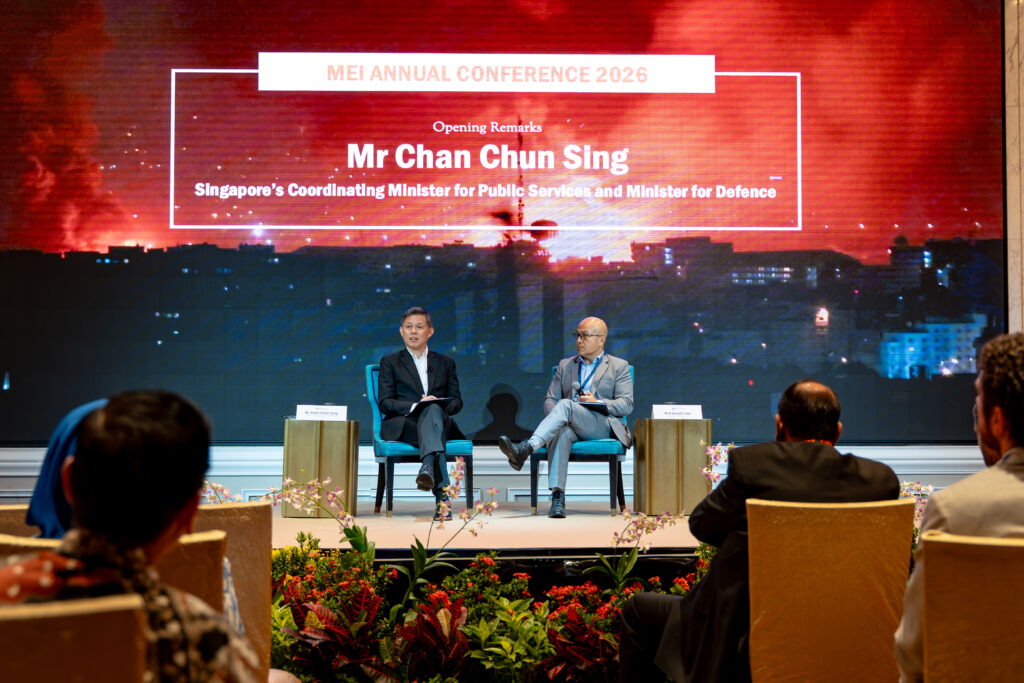
The Middle East Institute’s Annual Conference 2026 provided a platform to examine both the immediate consequences of the United States-Israeli war against Iran, and the broader transformations occurring across the Gulf and the wider Asian geopolitical landscape. Although public discourse has largely centred on military operations and energy markets, the conference tackled more comprehensive questions regarding the future of Iran-Gulf relations, the influence of external powers, and the strategies states are employing to adapt to an increasingly uncertain regional environment.
A central theme of the conference was the evolving relationship between Iran and the Gulf states. The conflict revealed a significant paradox: Despite sustained efforts by Gulf countries to reduce tensions with Tehran — including the Saudi-Iran rapprochement, ongoing engagement by the United Arab Emirates, and mediation by Oman and Qatar — critical Gulf infrastructure remained a target of Iranian retaliation as hostilities escalated. This suggests that while diplomatic engagement with Iran is necessary, it is insufficient to ensure security. Given Iran’s geographic proximity and enduring regional influence, Gulf states must continue to engage with Tehran. However, the conflict is expected to prompt increased investment in deterrence, missile defence, intelligence cooperation, cyber resilience, and the protection of critical infrastructure. As a result, the future regional order may be characterised by ongoing engagement with Iran, but clouded by diminished levels of trust.
The conference further underscored the continued centrality of the United States in the Gulf security architecture. Despite frustrations with Washington’s management of the conflict and broader concerns about American reliability, discussions revealed no viable alternative to the US’ role. The United States remains the primary provider of military capabilities, deterrence, and security guarantees that underpin the regional order. Consequently, the principal challenge for Gulf states is not to replace the United States, but to manage their dependence while seeking to reduce vulnerabilities and enhance strategic autonomy. The conflict also revealed a deeper tension within the regional order. While many Gulf states have invested years in de-escalating tensions with Tehran and restoring diplomatic relations, it remains unclear whose preferences guided Washington’s decision to pursue military escalation. One interpretation is that American and Israeli policymakers operated under the assumption that Gulf states ultimately favoured a weakened Iran or regime change, irrespective of their public emphasis on stability and dialogue. This perspective aligns with the longstanding Gulf security architecture, which has prioritised deterring Iran, countering the Axis of Resistance, and relying on American military capabilities and Israeli intelligence. However, the priorities of many Gulf states have shifted towards emphasising stability, economic transformation, investment confidence, and regional connectivity alongside traditional military deterrence. The conflict thus raises critical questions about whether the foundational assumptions of the current security architecture remain aligned with the evolving priorities of the states it is intended to protect.
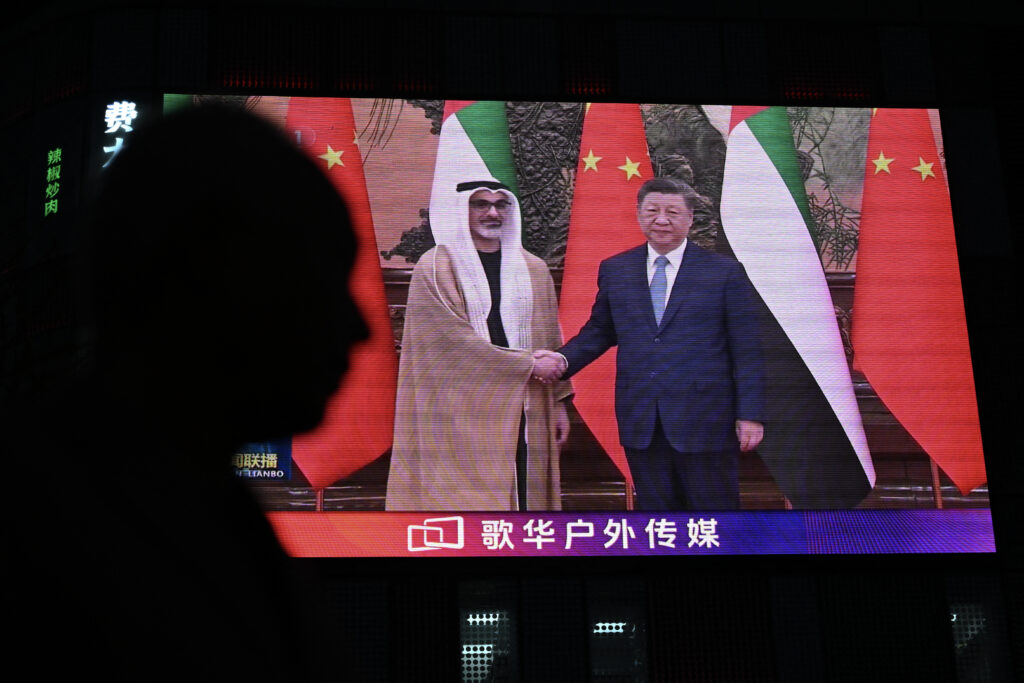
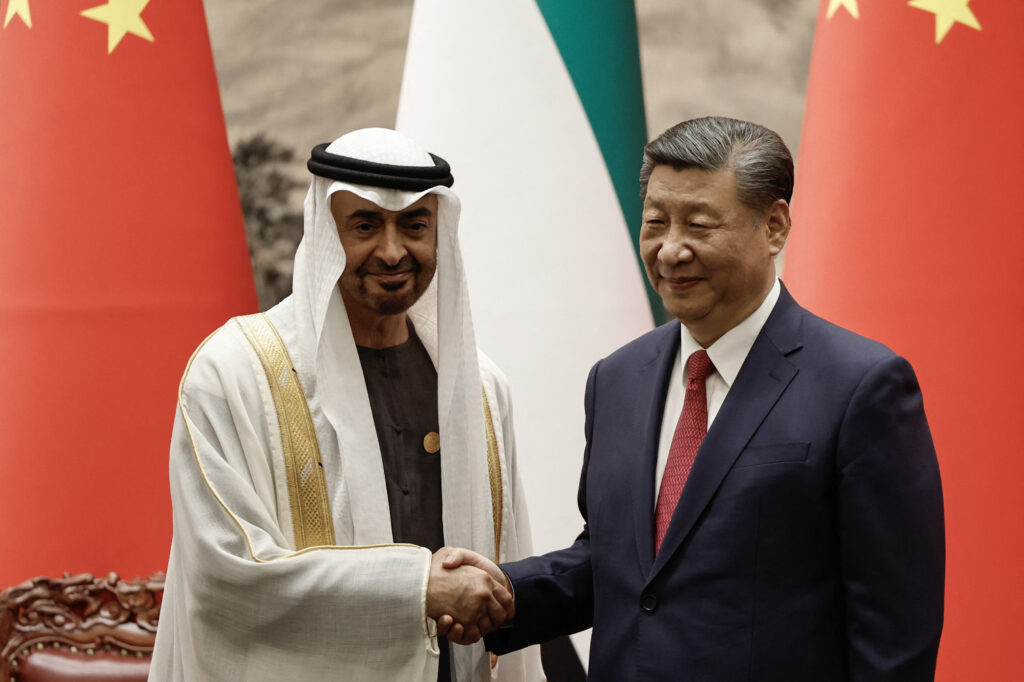
The conference discussions on China generated more questions than definitive answers regarding Beijing’s regional role. While one view among participants characterised China as a primarily transactional actor motivated by economic interests, energy security, and the protection of trade routes, this perspective does not fully explain China’s diplomatic activism on issues such as the Israel-Palestine conflict or its role in facilitating the Saudi-Iran rapprochement. At the same time, there was little indication that China seeks to assume the role traditionally played by the United States as the region’s principal security provider. Unlike Washington, Beijing has shown little appetite for developing an extensive network of military commitments, alliances, intelligence, partnerships, or security guarantees in the Middle East.
Instead, the discussions suggested that China may be advancing a different model of regional influence. Rather than competing directly with United States in the field of security provider, Beijing appears to position itself as a diplomatic actor that emphasises dialogue, mediation, economics, cooperation, and respect for sovereignty. In this sense, China’s growing role may be less about replacing American leadership than about offering an alternative approach to regional engagement. Whether such a model can prove effective during periods of crisis remains an open question. The conference discussions highlighted not only the uncertainty surrounding China’s long-term ambitions, but also the broader question of whether diplomacy and economic influence can generate the same degree of regional order that has traditionally been underpinned by military power.
A particularly thought-provoking discussion focused on India and the varying conceptualisations of Iran’s role in the international system. While Gulf and Western perspectives often frame Iran primarily within a Middle Eastern context, India’s strategic outlook is notably broader. For New Delhi, Iran serves as a strategic nexus connecting Pakistan, Afghanistan, Central Asia, and wider Eurasian connectivity corridors. This viewpoint aligns with India’s longstanding interest in securing continental access beyond Pakistan and maintaining connections to Afghanistan and Central Asia. From this perspective, Iran is not solely a Middle Eastern actor, but a key component of a broader Asian strategic landscape. The discussion underscored that geopolitical regions are not fixed constructs; states interpret and organise strategic space differently, resulting in divergent approaches to the same actor.
This observation reflects a broader trend identified during the conference: The increasing “Asianisation” of Middle Eastern geopolitics. Developments in the Gulf are both influencing and being influenced by the interests of Asian powers. China, India, Japan, South Korea, Asean member states, and Gulf economies are becoming more interconnected through energy flows, trade, investment, infrastructure, and connectivity initiatives. Consequently, the future of the Gulf is no longer determined exclusively by Washington, Tehran, Riyadh, or Tel Aviv, but is increasingly shaped by the perspectives and interests of Asian powers.
The economic discussions were equally revealing. While rising energy prices and disruptions to maritime trade received considerable attention, the longer-term implications appear to extend far beyond temporary market volatility. The conflict exposed the vulnerability of economic models built upon assumptions of stability, secure infrastructure, and uninterrupted connectivity. Airports, ports, desalination facilities, logistics hubs, digital infrastructure, and energy installations all emerged as potential targets during periods of conflict. As a result, Gulf states are likely to place greater emphasis on resilience, redundancy, and diversification. Energy security is no longer solely about access to oil and gas supplies. It increasingly involves diversifying export routes, investing in alternative energy sources, protecting critical infrastructure, and developing more robust regional connectivity networks.
Taken together, the conference highlighted that the most significant consequence of the war may not be a dramatic geopolitical realignment, but rather a recalibration of risk. Gulf states are unlikely to abandon engagement with Iran, unlikely to replace the United States as their principal security partner, and unlikely to see China emerge as a comprehensive security player. Instead, they appear to be adapting to a more uncertain environment in which diplomacy remains necessary, deterrence remains essential, and resilience has become a central component of national security.
Perhaps the most important takeaway from the conference is that the war did not signal the end of Gulf hedging, but rather its transformation. The conflict exposed the limits of engagement without deterrence, and demonstrated that deterrence alone cannot provide a sustainable foundation for regional stability. The challenge for Gulf states moving forward will be to balance both imperatives, while navigating an increasingly interconnected geopolitical landscape that extends far beyond the Middle East itself.
Image Caption: During the opening session of the conference, Minister Chan Chun Sing, seen here with MEI Chairman Joseph Liow, touched on several issues thrown up by the war against Iran. These included the future of Unclos, how history has continued to shape fractiousness in the Middle East, and Singapore’s approach to the changing world order.
About the Author
Nazhath Faheema is a PhD student in International Relations at the S. Rajaratnam School of International Studies, Nanyang Technological University, Singapore. Her research examines how material and ideational factors interact in shaping foreign policy and diplomatic behaviour.