The signing of the US-Iran memorandum of understanding is a welcome development. It pauses hostilities, opens the Straits of Hormuz, stabilises energy prices, and provides a pathway for further negotiations between the adversaries. No doubt, global energy and financial markets have responded positively as a result. Yet the MOU is but a stop-gap that sheds little light on longer term scenarios and consequences. The fact is that the situation remains clouded with no less uncertainty.
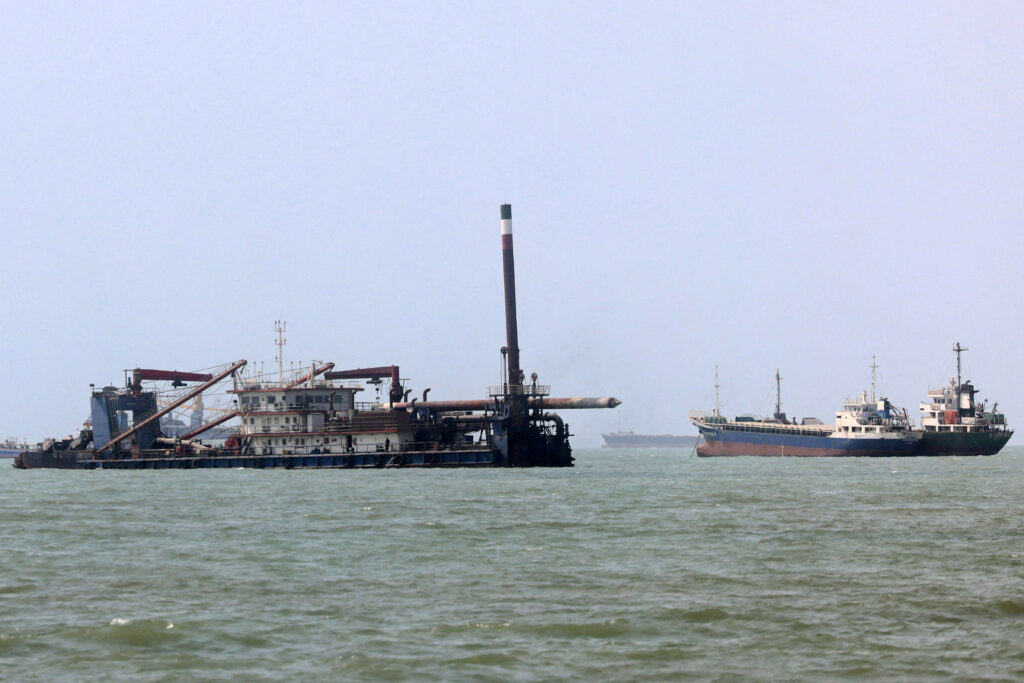
Under the MOU, Iran undertakes to reopen the Straits of Hormuz and not to charge tolls on shipping for the 60-day duration of the ceasefire. It is highly unlikely that Tehran will allow this presumed short-term “return to normalcy” to become a permanent state of affairs – in fact, it already said it plans to introduce maritime fees in the strait after the 60-day negotiating period ends. The war has revealed to Tehran that its control of the Straits arguably affords them greater leverage in dealing with their external environment than their stockpile of enriched uranium. They will not cede that easily.
This leads to the second unknown – the future of Iran’s nuclear capabilities. One of the Trump administration’s many stated objectives for the war was to rid Iran of nuclear capability once and for all, including enrichment. Whether strategically and tactically, it is difficult to see how this can be achieved. Iran surely will not surrender its nuclear ambitions willingly. Given its sense of vulnerability, doubtless rendered more acute by events since June last year, the logic of securing nuclear weapons capability has likely grown sharper, certainly in the minds of regime hardliners who continue to wield power.
To further obfuscate matters, President Trump has himself started to waver on the question of Iranian enrichment of uranium and rebuilding of its ballistic missile capabilities, which he evidently is now prepared to countenance. This does not sit well with Republican party elders and his allies in Israel.
The Israel factor is the third unknown at this point. Both Washington and Tel Aviv were lock-step when they attacked Iran. Operational coordination at the beginning of the war was at a level never before experienced by the two militaries together. But political objectives have since diverged in fundamental ways. Put simply, the U.S. needs this war to end, but Israel wants this war to continue. Israel is not party to the negotiations with Iran, and has insisted that its ongoing conflict with Hezbollah should be taken off the table in Washington-Tehran talks. This is not a view that President Trump shares, and he has been openly critical of Israel for insisting so. For its part, there is little indication that Israel has any intention to cease hostilities against Hezbollah, or vice-versa for that matter. Another concern that Israel has is that should the financial terms of the MOU come into effect, what began as (in their view) a war for regime change in Iran would end up bolstering the legitimacy of the regime instead by way of the lifting of sanctions and a flood of investments for reconstruction.
All this is to say while we welcome the reprieve of the MOU, the hard work on resolving the underlying issues of the conflict has only just begun. We are merely at the end of the beginning – if that, since talks that were to have begun were suddenly, and inexplicably, called off – and it is hardly time to uncork the champagne.
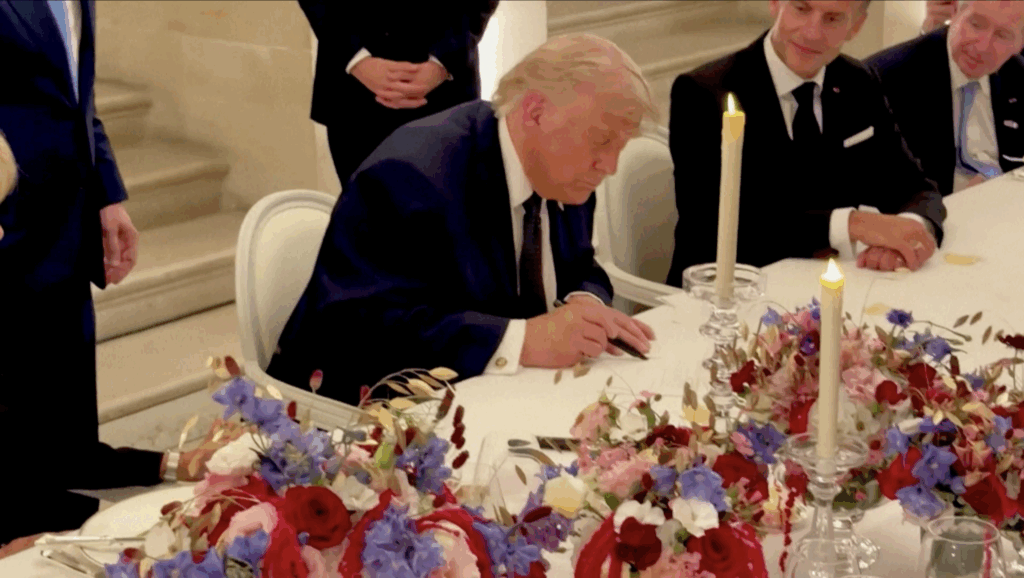
Image Caption: Screengrab of US President Donald Trump signing a deal to end the Middle East war during a candlelit dinner at the Palace of Versailles following a G7 summit. Photo: AFP
About the Author
Prof Joseph Liow (Joseph Chinyong Liow) is Tan Kah Kee Chair in Comparative and International Politics, and Professor and former Dean at the College of Humanities, Arts, and Social Sciences, and also the S. Rajaratnam School of International Studies. He is concurrently Chairman of the Middle East Institute, National University of Singapore. He held the inaugural Lee Kuan Yew Chair in Southeast Asia Studies at the Brookings Institution, Washington DC, where he was also a Senior Fellow in the Foreign Policy Program.
Joseph’s research interests encompass Muslim politics and social movements in Southeast Asia and the geopolitics and geoeconomics of the Asia-Pacific region.