Energy at Risk: Transition and Security after the Closure of the Strait of Hormuz
- Mohammad Hazrati & Zeynab Malakouti
- -
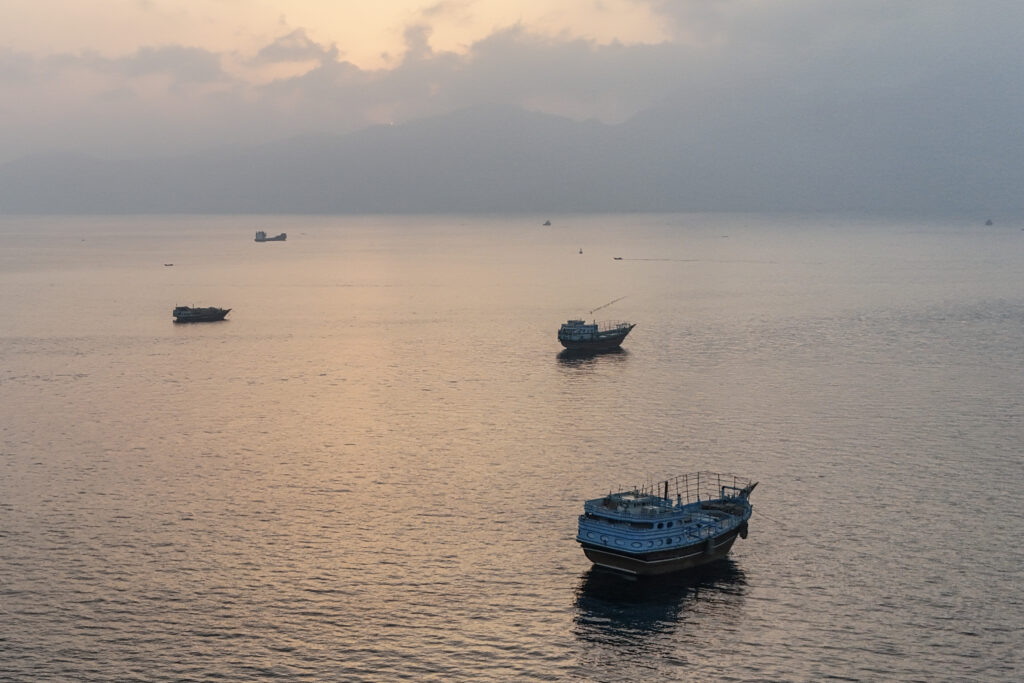
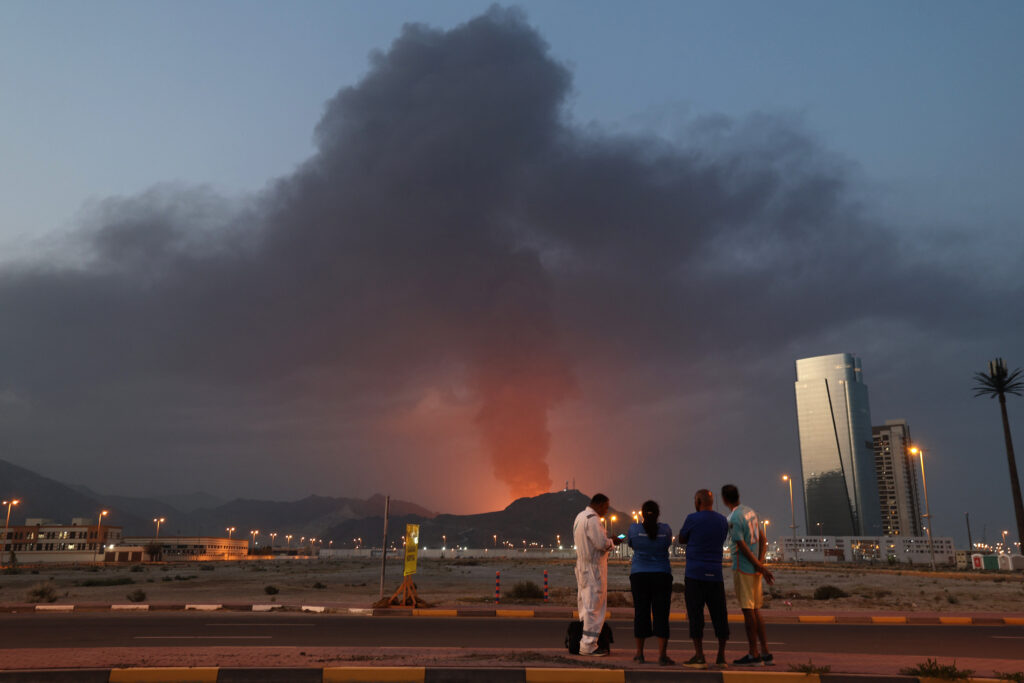
Iran’s actions to limit passage through the Strait of Hormuz in response to the United States-Israel war against it have created the largest supply shock in the history of the global oil market, affecting countries across Europe, Asia, and the Middle East and North Africa (Mena).
Despite its scale, energy shocks have not been unprecedented — the most recent example is the crisis that erupted following the Russian invasion of Ukraine in 2022, when many countries, particularly in Europe, were heavily affected due to their dependence on Moscow’s oil and gas supplies. In the current crisis, countries in the Mena region have been affected in different ways. Among oil and gas exporters, Oman, Saudi Arabia, and the UAE have alternative export routes through pipelines and ports. In contrast, Iraq, Kuwait, and Qatar have been more constrained, thus losing significant amounts of revenue. For importing countries, the situation has become even more acute, as it directly affects their energy affordability and security.
Prior to the current crisis, the primary drivers of the energy transition varied across countries —ranging from climate change and environmental concerns, particularly for small island developing states, to energy security. Now, energy security may emerge as a key motivation for accelerating the transition in the wake of the Hormuz crisis. The central question of this piece is: How will the current crisis affect energy transition plans and partnerships in the short- and long-term in the Mena region?
Resilient States in Times of Energy Crisis
Countries that have increased their deployment of renewable energy and diversified their energy sources in recent years have demonstrated greater resilience, and have been better insulated from the most severe effects of the crisis.
As an example, China and Pakistan have demonstrated comparatively greater resilience, partly due to higher levels of deployment of renewable energy, electric vehicles, and battery technologies. In the Mena region, the case of Lebanon is also particularly noteworthy. Although it has faced a severe energy crisis, the situation would have been even worse without decentralised production systems, such as rooftop solar panels, which partly compensated for the collapse of the country’s electricity sector. In rural Lebanon, around 90 per cent of households have solar panels installed on their rooftops. It should be noted, however, that these countries have nonetheless faced severe energy crises; the point, rather, is that without the deployment of renewable energy systems, the situation would likely have been significantly worse.
Limits of the Coal-to-Gas Transition
On the other hand, there are the countries that have regarded natural gas as a transitional “bridge fuel”, and have planned, or have already begun, to shift away from coal-fired power generation towards greater reliance on natural gas, including liquefied natural gas (LNG) imports.
As an example, recent years have seen notable developments in the use of natural gas in Asia as a means of supporting both energy security and the energy transition. But Asian markets account for approximately 83 per cent of LNG exported through the Strait of Hormuz, and these countries will remain highly dependent on the Strait in the near future. This dependence leads to delays in the phasing-out of coal-fired power plants, or even to policies aimed at increasing coal output to ensure energy security, as has happened in South Korea and the Philippines. The current crisis shows that the shift from coal to natural gas appears, in hindsight, to have been a fragile strategy, not only for energy security, but also for climate objectives.
In the post-war period, even if countries fully internalise the lessons learned from the current crisis, the transition to renewable energy will take time. In the interim, they will likely need to rebuild depleted strategic energy reserves and address persistent physical supply shortages through imports of oil and gas from the Gulf, one of the few regions capable of supplying large volumes in the short term. In the Mena region, dependence on oil and gas for electricity generation alone remains particularly high, ranging from nearly 100 per cent in countries such as Libya, Kuwait, and Bahrain, to over 90 per cent in Algeria and Tunisia. This highlights that, as in many other parts of the world, these countries are likely to remain reliant on oil and gas — particularly on supplies transiting the Strait of Hormuz — at least in the short term.
Even in the EU, despite its comprehensive, legally binding framework for achieving climate neutrality by 2050, the energy transition will take decades under ideal conditions. The EU is also likely to remain reliant on high-density energy sources for hard-to-abate sectors such as aviation, shipping, and heavy industry. However, this should not justify delaying or deprioritising the transition to renewable energy.
Green Transition, New Dependency
According to Fatih Birol, executive director of the International Energy Agency (IEA), countries’ responses to the 2026 energy crisis are likely to include an acceleration of renewable energy deployment, not only to reduce emissions, but also to mitigate geopolitical risks.
However, this transition is no panacea for the challenge of energy security. The transition to a clean energy system isrequiring vast quantities of critical minerals, of which China maintains a near-monopoly, particularly in the processing and refining of several key minerals. The extent to which such acceleration is feasible depends critically on countries’ fiscal space and institutional capacity to support large-scale investments in clean energy infrastructure.
Production of many energy transition minerals is more concentrated than that of oil or natural gas. This concentration becomes even more pronounced in refining and processing, where China is the leading refiner for 19 out of 20strategically-important minerals, with an average market share of approximately 70 per cent. In the case of rare-earth elements (REEs) — a group of 17 critical metals — China’s share of global refining capacity rises to nearly 90 per cent. Beijing’s advantage lies not only in its market share, but also in its deeply embedded industrial know-how. In many cases, countries’ relative success in deploying renewable energy has been facilitated by the availability of high-quality, affordable Chinese solar components.
The IEA has repeatedly highlighted the risks associated with such high levels of supply concentration in the processing and refining stages; Beijing has already demonstrated both the willingness and the capacity to wield its strategic dominance over critical minerals in response to perceived threats to its national security. In October 2025, and as a response to United States tariffs, China significantly expanded its export control regime, tightening restrictions on REEs. Although some of these restrictions have been suspended until November 2026, the episode illustrates how control over critical minerals can be transformed into geopolitical leverage, with the potential to disrupt supply chains and send shockwaves through the global economy.
China-Russia-Iran: Threat or Opportunity?
It appears that, both for now and in the foreseeable future, countries such as China, Russia, and Iran will remain central to global energy security and transition, albeit in different ways. China dominates the critical minerals supply chain and renewable technologies, while Russia remains a key oil and gas exporter, and Iran has demonstrated an ability to assert a measure of control over a major maritime chokepoint despite its adversary’s overwhelming military superiority.
Ensuring energy security and a reliable pathway for the energy transition in Mena countries will depend on the careful management of regional and global relationships, which is essential for navigating geopolitical tensions and related challenges. As competition among major powers, particularly China, Russia, and the US, intensifies, alongside American-led efforts to constrain Beijing’s regional role, Mena countries are likely to face increasing pressure to balance competing external influences while safeguarding their core national interests.
In this context, a fundamental principle of international politics should guide policymaking: International partnerships should be shaped by enduring interests rather than fixed alliances. Recent developments illustrate this dynamic. Canada, traditionally viewed as a close US ally, has reached a preliminary “landmark” trade agreement with China aimed at resetting bilateral relations, which have gone through an extended rocky period. Similarly, the visit of Spanish Prime Minister Pedro Sánchez to China in April 2026 sought to expand cooperation, including in green energy. At the regional level, Mena countries must also reassess their relations with Iran, particularly given its continued influence over the Strait of Hormuz. Alternative routes remain limited, costly, and, in many cases, impractical. As a result, ongoing physical supply constraints mean that many countries will continue to depend on oil and gas flows from the Strait.
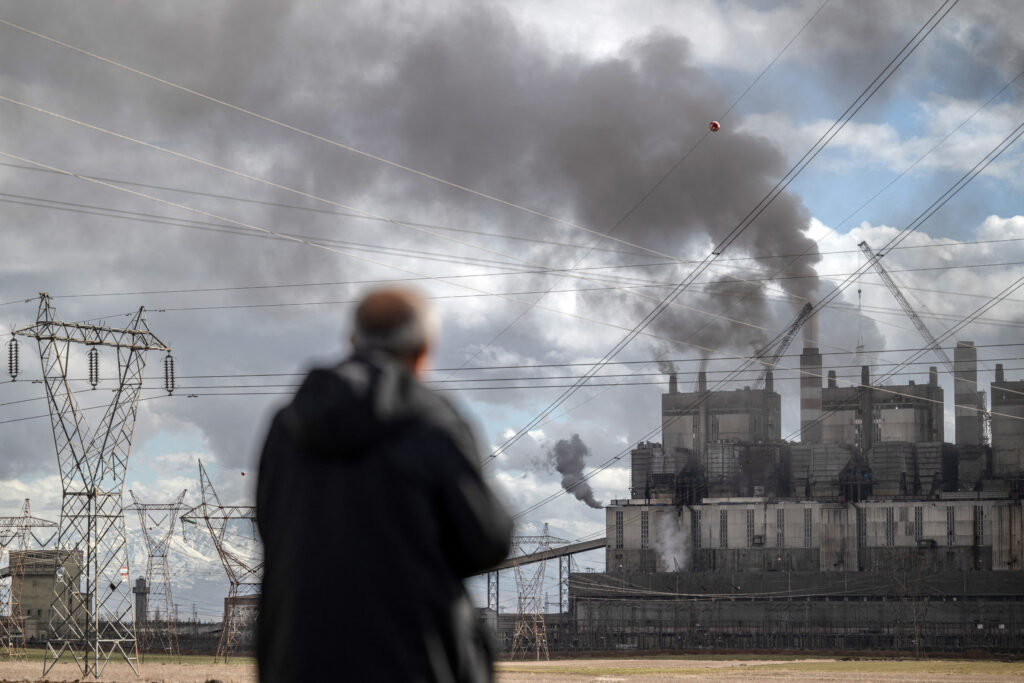
Image Caption: A man looking at the clouds of water vapour rising from the Afsin-Elbistan coal-based power plant in Elbistan on 11 February 2026.. Photo: AFP
About the Author
Dr Mohammad Hazrati is a Senior Research Fellow at the Centre for International Law-NUS, specialising in energy, environmental, and climate change law and policy.
Dr Zeynab Malakouti is a Research Affiliate at the Middle East Institute-NUS. She holds a PhD in International Law from the University of Leeds, UK and an LLM in Human Rights from the University of Reading, UK.