*The writer was a speaker at MEI’s Annual Conference this year – this article expands on his perspectives.
The closure of the Strait of Hormuz following the latest Middle East conflict precipitated a global energy and supply shock. Headlines have understandably focused on oil prices, shipping disruption, inflation risks, and the immediate consequences for global trade. Yet for businesses operating in South-east Asia, the more important story may not be the disruption itself, but how the shock is being absorbed, redistributed, and translated into lasting changes in the operating environment.
From a business-risk perspective, three developments stand out. First, the shock is being distributed asymmetrically and unevenly across households, businesses, and government balance sheets. Second, energy and supply chains are being re-engineered for resilience, rather than pure efficiency. Third, governments are becoming more interventionist as they seek to manage the economic and political consequences of the crisis. Together, these shifts suggest that businesses are entering a period characterised not by a single economic shock, but by a more complex and costly operating environment.
Uneven Distribution of Pressure
One of the most striking features of the Hormuz crisis is that it has not manifested as a single, uniform shock across South-east Asia. Instead, the pressure has been redistributed across households, businesses, and government.
This matters because it changes how companies should assess risk. Traditional energy shocks tend to be associated with inflation, slower growth, and weaker consumer demand. While those dynamics are certainly present, the current situation is more nuanced. Governments across the region have actively intervened to cushion consumers from the full impact of rising fuel and energy costs. In doing so, they have changed where the economic pain is felt, and how it appears.
At the household level, consumers are experiencing higher costs, but often less severely than headline global energy prices would suggest — although Singapore’s recent announcement of a record 17 per cent rise in electricity tariffs came as a shock, and prompted a flurry of energy-saving tips and a hunt for fixed-price plans. In several countries, fuel subsidies, price stabilisation mechanisms, tax reductions, and administered pricing frameworks have prevented international energy costs from being fully passed through to retail markets.
At the business level, however, cost pressures are much more visible. Rising fuel prices continue to affect transportation, logistics, manufacturing, freight, power generation, and a wide range of imported inputs. Yet the ability of firms to pass those costs onto customers remains uneven. Competitive pressures, consumer sensitivity to price increases, and government intervention often limit how much costs can be transferred downstream. As a result, many companies find themselves absorbing higher operating expenses directly through tighter margins.
The impact is particularly evident in sectors that are energy-intensive, logistics-dependent, or heavily exposed to international trade. Transport operators face higher fuel costs even where fare increases are restricted or delayed. Manufacturers continue to contend with elevated freight and feedstock costs ,while retail prices adjust slowly. Export-oriented sectors face higher shipping and insurance costs, while domestic services may remain comparatively insulated.
Governments, meanwhile, are absorbing another share of the burden. Subsidies, fuel funds, tax relief measures, and other interventions help moderate the immediate impact on consumers, but they also place strain on public finances. Price pressure does not disappear — it is simply shifted from one balance sheet to another.
For businesses, the practical implication is that the greatest risk may not be a sudden economic downturn. Instead, the more likely scenario is a gradual squeeze in which costs rise, margins tighten, demand softens incrementally, and policy responses evolve over time. The challenge is therefore less about surviving a single shock, and more about navigating an extended period of uneven pressure.
Re-engineering Energy and Supply Chains
The second major consequence of the Middle East conflict is that it has accelerated a broader shift already underway across Asia: The move from cost-optimised systems toward resilience-oriented ones.
For decades, many energy and supply chains were designed around efficiency. Companies prioritised lower costs, just-in-time inventory practices, concentrated sourcing arrangements, and streamlined logistics routes. These approaches delivered significant benefits during periods of stability, but also created vulnerabilities that become visible during disruptions.
The closure of the Strait of Hormuz exposed the extent to which many Asian economies remain dependent on concentrated energy sources and critical maritime chokepoints. The issue is not merely dependence on the Middle East itself, but dependence on a limited number of routes, suppliers, and assumptions regarding uninterrupted trade flows.
In response, governments and businesses have increasingly prioritised diversification. Across the region, countries are actively seeking to reduce dependence on any single source of supply. Singapore has pursued broader LNG sourcing options beyond traditional suppliers. India and the Philippines have expanded imports from alternative crude suppliers, including Russia. The Philippines is accelerating the use of solar. Vietnam has directed fuel traders and refiners to diversify import sources while ensuring compliance with reserve requirements and supply obligations.
At the same time, redundancy has also become a strategic priority. Governments are increasing inventory buffers, strengthening fuel reserve requirements, building contingency plans, and developing alternative supply arrangements. At the same time, countries are investing in alternative forms of resilience, including domestic fuel substitution and energy diversification.
The cumulative effect of these measures is significant. Supply chains that were previously optimised around efficiency are becoming more diversified, more redundant, and more resilient. They are also becoming more expensive.
For businesses, resilience increasingly requires accepting trade-offs between efficiency and security. Firms may need to diversify suppliers, maintain greater inventory levels, build flexibility into contracts, and invest more heavily in business continuity planning. Those decisions can increase costs in the short term, but may also reduce exposure to future disruptions.
Government Interventionism
An increasingly important development is the growing role of governments in shaping economic outcomes. As costs rise and pressures accumulate, governments across South-east Asia have demonstrated a willingness to intervene directly in markets to manage economic and political consequences. While these interventions often support stability, they also create a more active —and sometimes less predictable — policy environment for businesses.
Subsidies and price controls represent the most visible example. Yet intervention extends well beyond price management. Governments are increasingly stepping into operational aspects of energy markets through supply directives, reserve requirements, emergency powers, demand-management initiatives, and export restrictions.
For businesses, the key implication is that policy itself is becoming a more important source of risk. Historically, firms often treated regulation as a relatively stable backdrop against which commercial decisions were made. Increasingly, however, government intervention influences prices, availability of goods, transportation costs, sourcing decisions, and market access. Businesses face not only market risk, but also uncertainty regarding how governments may respond to future pressures.
Looking Ahead
The closure of the Strait of Hormuz has undoubtedly created immediate economic disruptions. Yet focusing solely on the shock risks missing the more important story.
What South-east Asia is experiencing is not simply a temporary energy crisis. It is a broader adjustment in how economic pressure is distributed, how supply chains are designed, and how governments manage economic and political consequences.
For businesses, this means that resilience can no longer be viewed solely through the lens of supply-chain continuity. It increasingly requires understanding fiscal pressures, political trade-offs, regulatory responses, and evolving geopolitical relationships.
The ultimate lesson from the Hormuz crisis may therefore be that the most important consequence is not disruption itself. It is re-engineering. And that re-engineering is likely to define the business environment across South-east Asia long after the immediate crisis has passed.
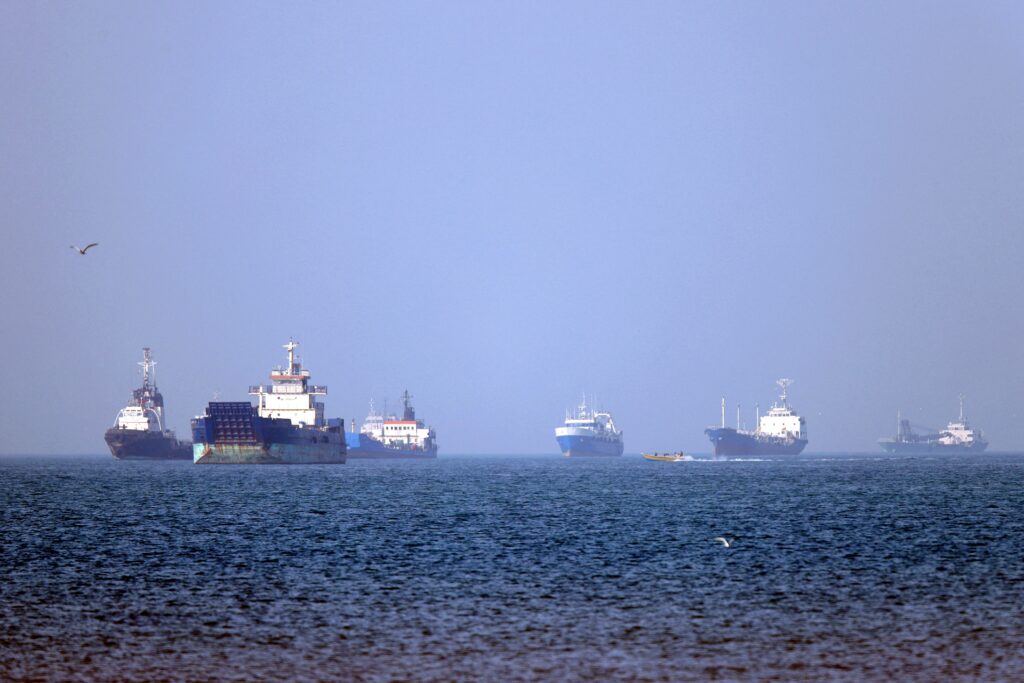
Image Caption: This aerial photograph shows boats anchored off Oman’s northern Musandam Peninsula near the Strait of Hormuz on 27 June 2026. Photo: AFP