
Why the US-Iran MOU Can Be a Game-Changer
- Mohammad Eslami & Zeynab Malakouti
- -
After more than 100 days of bloodshed, a naval blockade, the closure of the Strait of Hormuz, and crippling effects on the global economy, United States President Donald Trump and his Iranian counterpart, Masoud Pezeshkian, signed a Memorandum of Understanding (MOU) on 17 June. The MOU established a 60-day window for negotiations over Iran’s nuclear programme, halted military operations on all fronts, including Lebanon, affirmed mutual respect for sovereignty, and provided for the re-opening of the Strait of Hormuz, as well as the lifting of the US naval blockade.
Given the halting nature of progress — Iran closed the Strait shortly after the MOU was signed, and both sides traded attacks after — policymakers will rightly have doubts about whether the fragile arrangement will hold. An equally valid question would be how the document was achieved at all. After a war of choice waged with maximalist, unrealistic objectives, such as regime change, the emergence of a diplomatic path demands explanation. The answer lies in five structural factors, each addressing a fatal flaw that had doomed previous efforts. Together, they explain not only why the MOU materialised, but whether the 60-day marathon ahead can lead to a durable final agreement.
High-Level Authority at the Table
The current US-Iran negotiations are a deliberate break from conventional diplomacy, bringing the process to the highest political levels on both sides. In the previous round of talks, both the direction of the diplomacy and the outcomes of each round were undermined by domestic politics on both sides.
The negotiations that led to the 2015 nuclear deal — the Joint Comprehensive Plan of Action (JCPOA) — for example, were undermined by internal political divisions in the United States, most notably opposition from Republicans, resulting in President Trump’s withdrawal from the agreement after his election. A similar dynamic unfolded in Tehran, where President Hassan Rouhani’s administration and Foreign Minister Javad Zarif faced persistent difficulties in securing support from the Iranian Parliament for the accord. Even during the brief period in which the JCPOA was in force, Iranian hardliners worked to prevent the implementation of the agreement.
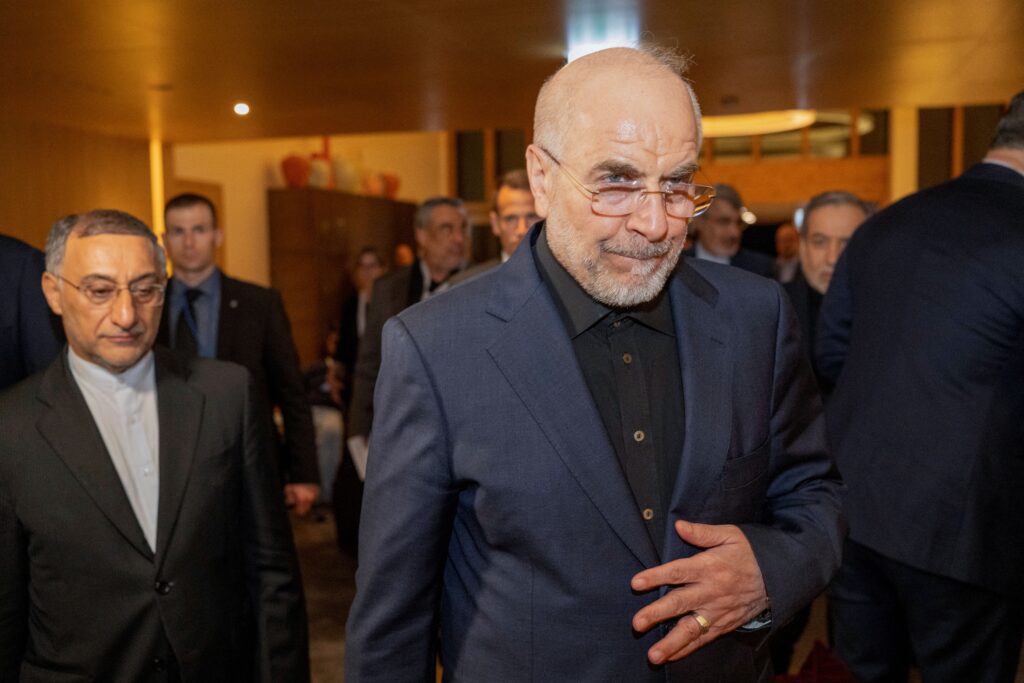
This time, both sides have invested more political capital in the process. For Tehran, the negotiator is Mohammad Bagher Ghalibaf, the speaker of the Iranian parliament. He is not a typical diplomat, but a former high-ranking commander of the Islamic Revolutionary Guard Corps (IRGC), a veteran of the Iran-Iraq War, and one of the closest figures to both the late Supreme Leader and the current one, Ayatollah Mojtaba Khamenei. His unique position — connecting the IRGC, parliament, and the Supreme Leader — may give him a level of protection from domestic criticism that no regular diplomat could have. On the other side, Washington is represented by Vice-President J.D. Vance. While the Vice-Presidency is often a ceremonial role, Mr Vance goes into negotiations with direct access to the president, and has a role that goes beyond the State Department. He is one of the key figures in Mr Trump’s inner circle, and does not have to jump through the usual bureaucratic hoops. Mr Vance has an added advantage: His emergence as the sole voice in the US president’s inner circle who voiced opposition to the war before it began may give him more gravitas in the eyes of the Iranian negotiators, unlike Steve Witkoff and Jared Kushner, hawks who were at the table with the Islamic Republic until shortly before the first bombs dropped.
The elevation of Mr Ghalibaf and Mr Vance to lead the negotiations signals to both sides that a basic level of trust has been established. Their involvement also underscores that the talks have entered a new and more consequential phase, distinct from the pre-war negotiations conducted by Foreign Minister Abbas Aragchi, and Messrs Witkoff and Kushner. However, whether this high-level investment can survive the domestic pressures on both sides remains the central question of the 60-day marathon ahead.
A Regional Insurance Policy
The negotiations did not push regional actors to the margins. Iran understood from the outset that Israel would seek to undermine any diplomatic track. Tehran therefore made two strategic calculations. First, a sustainable regional peace would not unfold without a durable ceasefire in Lebanon, and an Israeli withdrawal from territory it occupied in the country. Second, a bilateral agreement with Washington would remain vulnerable without a parallel agreement with other actors to protect it.
The result was deliberate: Iran designed regional side agreements. Many US commitments that could not be incorporated into the text of the MoU were instead negotiated with Iran through Qatar and Pakistan. In turn, these countries proposed a broader regional security arrangement involving Iran, which would ultimately be supported by deeper economic cooperation, including the unfreezing of Tehran’s assets with the assistance of Qatar, and cooperation among Pakistan, Saudi Arabia, and China behind the scenes.
By embedding the agreement in a regional architecture, Iran secured a layer of protection that the JCPOA never had. The MoU is no longer merely a bilateral agreement; it is also a regional compact that requires protection and support from regional parties.
According to some reports, there are deals between regional countries. One example is Qatar’s reported willingness to provide Iran with a credit line backed by a portion of its frozen assets. This arrangement addresses a political dilemma for President Trump. Having previously criticised the Obama Administration for releasing billions of dollars to Iran under the JCPOA, he can now argue that the United States is not transferring funds to Tehran; instead, Qatar is facilitating Iran’s access to its own assets. For Iran, these bilateral arrangements also provide a form of insurance.
Hormuz as a Calibration Mechanism
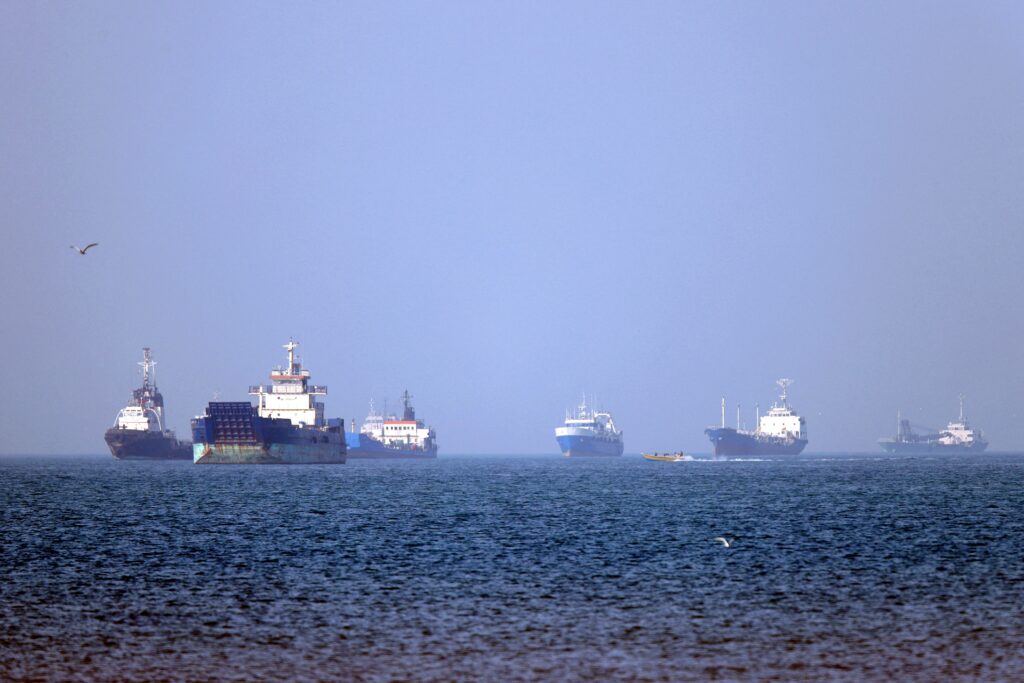
The third structural factor is the most tangible: Iran’s leverage over the Strait of Hormuz did not merely facilitate the MoU — it enabled both sides to sequence their commitments with a precision that previous negotiations lacked. This leverage functioned as an “adjustment screw”, enabling Iran to calibrate the pace and terms of implementation, as demonstrated by its rejection of the proposed southern shipping route along Oman’s coast developed by the International Maritime Organization.
What remains unresolved, however, is the future governance of the waterway beyond the 60-day window. The MoU commits Iran to negotiating with Oman and the other Persian Gulf littoral states on the long-term governance of maritime activities and services. It also appears that the parties have reached an understanding in principle to introduce service feesfor vessels transiting the Strait of Hormuz. Tehran has made clear that the status quo will not return; the situation in the Strait will be different from what existed before the war. The US, however, has signalled that it will not tolerate such a situation. Control over Hormuz is Iran’s leverage in the difficult negotiations ahead, but is also a source of internal dissension, and could become a liability.
Reversal of Economic Logic
The fourth structural factor represents a fundamental inversion of Iran’s negotiating doctrine. In previous rounds — most notably during the JCPOA negotiations — Tehran followed a familiar sequence: Negotiate first, commit to constraints, and then wait for the other party to deliver economic benefits. That approach proved ineffective in Tehran’s view. Iran made irreversible nuclear concessions, only to watch the United States withdraw from the agreement and reimpose sanctions. The economic relief never happened, but Iran’s commitments remained.
This time, Iran reversed the equation. Economic benefits were no longer treated as a reward for compliance. They became a pre-condition for negotiation itself — a step during the talks, not after them.
Recognition of Reality
The fifth factor is the most decisive one: After more than two decades of unilateral and international sanctions, along with the American “maximum pressure” campaign, and two wars, the United States has finally arrived at a recognition that should have been obvious long ago: There is no military solution to the Iranian question, and there is no sanctions regime that will produce capitulation.
This recognition did not come easily. It was not the product of strategic foresight or diplomatic wisdom. It was the outcome of failure; the naval blockade did not re-open the Strait of Hormuz, the bombing campaigns did not destroy Iran’s nuclear programme, and the maximum pressure campaign did not produce a more compliant negotiating partner. What it produced was resistance: Deeper, more organised, and more resilient than the US had anticipated. The MoU is an acknowledgment of this reality.
The 60-day Window: A Test, Not a Gift
The question now is whether this recognition can survive the hard marathon ahead. The 60-day window is not a gift. It is a test. The five factors that produced the MoU — high-level authority, regional compensation, Hormuz leverage, reversed economic logic, and Washington’s acknowledgment of reality — must now carry the process through a far more difficult phase. The working groups will discuss nuclear inspections, sanctions relief, and maritime security. The political leadership will face domestic opposition on both sides. Israel will continue its efforts at sabotage. The path to a final agreement is steep, narrow, and uncertain.
But for the first time in decades, there is a path. That, in itself, is an achievement. Whether it leads to a durable settlement or merely a pause before the next round of conflict depends on whether both sides can sustain the logic that brought them to this point. The five pillars are not guarantees. They are conditions. Without them, the MoU will produce an agreement. With them, there is a chance for a different future.
Image Caption: Speaker of the Parliament of Iran, Mohammad Bagher Ghalibaf arriving at the Burgenstock resort in Obbuergen, near Lucerne on 21 June 2026. Photo: AFP
About the Author
Mohammad Eslami is a PhD Candidate and Research Fellow at the University of Tehran. He is a co-author of “The Second Europe”, a study of Iranian-European nuclear negotiations, and was formerly editor-in-chief of Khorasan Diplomatic Magazine.
Dr Zeynab Malakouti is a Research Affiliate at the Middle East Institute-NUS. She holds a PhD in International Law from the University of Leeds, UK and an LLM in Human Rights from the University of Reading, UK.
More in This Series
- By Reza Asadian and Hamid Bahrami
- -
- Mohammad Eslami and Zeynab Malakouti
- -