The Iran War Is Closer Than It Looks: Four Takeaways from the MEI–BISA Seminar Series
- Ellina Khrais-Azibi & Liu Jia
- -
Missed our webinar series on the war on Iran? Here is what the experts said, and why it matters for Asia.
Asia knows the war on Iran matters: Most of the oil and gas that leaves the Gulf heads here. What is less obvious is how far the effects reach, from shipping costs to food supply chains, to the calculations of Asia’s biggest power.
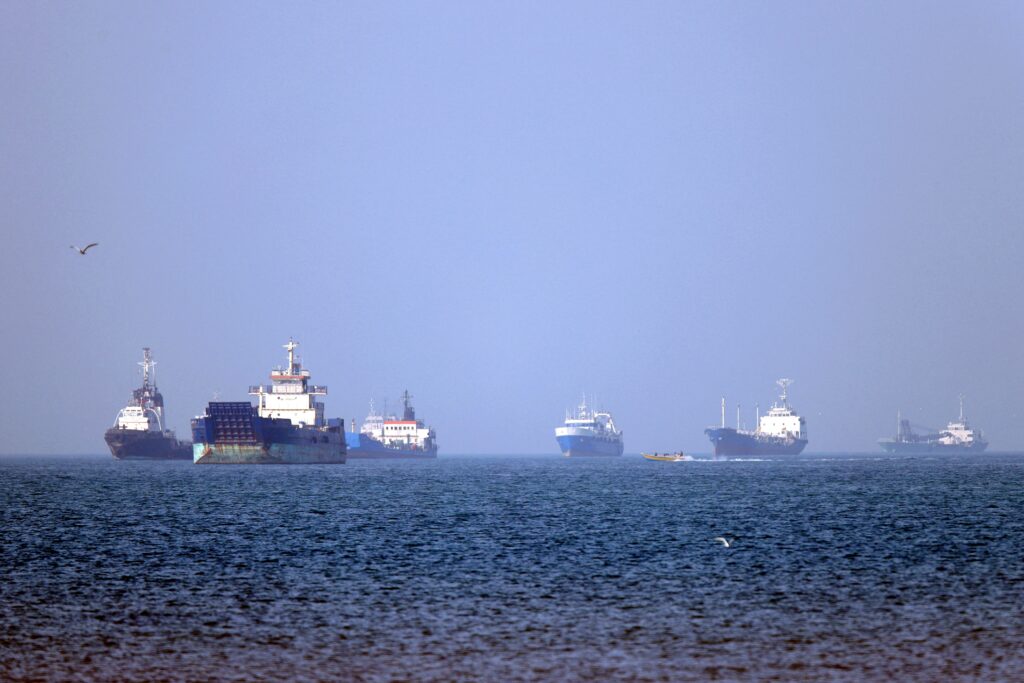
That was the thread running through four seminars held by the Middle East Institute at NUS and the British International Studies Association between 22 September and 13 October 2026. The war against Iran began on 28 February this year, when US and Israeli strikes killed the Islamic Republic’s Supreme Leader, Ayatollah Ali Khamenei, and several other top leadership and military figures. Iran hit back at Israel, at US bases and civilian targets in its Gulf neighbours, and eventually shut the Strait of Hormuz, the narrow channel that carries a large share of the world’s oil. Here’s what we can learn from each of the talks:
1. Iran: The Bombs that Rallied a Country
Washington and Israel bet that killing Iran’s leaders would bring the regime down. The country was already in turmoil, after massive protests over worsening economic conditions that began late last year spawned a crackdown in which thousands of people were reportedly killed. Remove the top, the thinking went, and an angry public would do the rest.
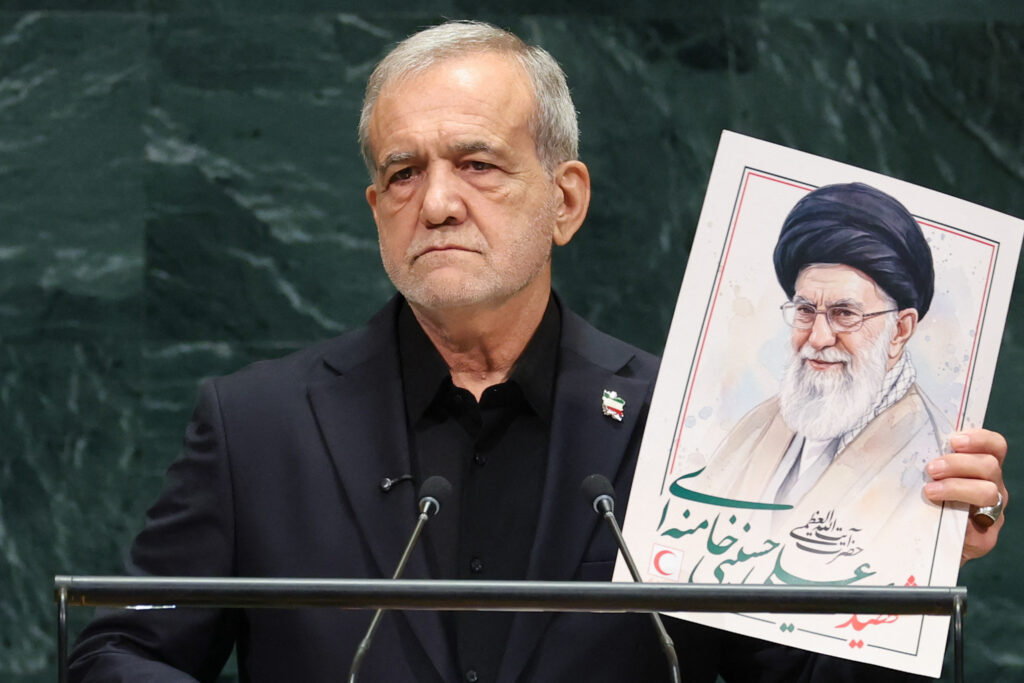
It did not work out that way. The US and Israeli strikes killed civilians and hit schools and bridges, as well as military sites, and the panel argued that many Iranians came to see the war as an attack on their country, not just their government. The regime has used that surge of nationalism to justify a harder line.
But with so many senior figures dead, Iran’s power structure is still being reshuffled, and the problems that drove people onto the streets, from a failing economy to corruption, have not gone away. Wartime patriotism, the speakers suggested, can carry the government for now, but not forever.
2. The Gulf: America’s Umbrella Leaks, but Nobody is Throwing it Away
For decades, the Gulf monarchies relied on a simple formula to keep the peace: American protection, an uneasy truce with Iran, and cooperation among themselves. Wang Tingyi of the UAE’s Anwar Gargash Diplomatic Academy argued that all three have failed. US bases became targets instead of shields, Iran turned its missiles on its neighbours, and the six Gulf states are openly divided. By his count, the UAE alone absorbed close to half of all the missiles and drones Iran fired.
So is the Gulf ditching Washington? No. American air defences stopped more than 93 per cent of what was fired at the UAE, he said, and nobody else can supply that. Expect “US plus” instead: America stays at the centre, while the Gulf adds partners such as Europe, India, Pakistan, and South Korea. A new defence pact between Saudi Arabia, Turkey and Pakistan, signed in August, provides a clue to the shifting winds, even though it has borne little fruit as Riyadh was targeted by the Houthis in Yemen, whose patron is Iran.
Do not expect peace soon, either. Everyone, Washington and Tehran included, is talking, said Sara Bazoobandi of Kiel University, but both sides think they can win by holding out.
3. Energy: Why the War in the Gulf will Hit Your Grocery Bill
Oil is flowing again, noted Adam Hanieh of SOAS University of London, but shipping, tanker-to-tanker transfers and insurance now make up about a third of the price of a delivered barrel. The bigger worry is what else the Gulf sells: Nearly half the world’s exported sulphur, used in fertiliser and in processing the nickel Indonesia mines for electric vehicle batteries. Its price has doubled or tripled in six months. As an example, Prof Hanieh mentioned that even Thailand’s rice trade is exposed, because the plastic sacks it ships the grain in are largely made from Gulf petrochemicals. The hit to food prices may only arrive next year, and hardest in poorer countries.
The Gulf’s reputation for reliability is also under strain. Qatar’s lesson from the 2017 blockade, said Rory Miller of Georgetown University in Qatar, was that being plugged into the world keeps you safe. But the war has, for the first time, raised doubts about Qatar as a dependable gas supplier, a worry for the Asian buyers who take most of its LNG.
Akram Zaoui of ORF Middle East tracked where trade is going instead: Overland, through Omani ports, Saudi roads and Egypt–Saudi pipelines. The higher price of risk, he argued, will push Gulf money towards resilience.
4. China: Everywhere, but Committed to Little
China is the world’s biggest oil importer, gets about half its crude from the Gulf, and talks to every side. So why has it not done more? Feng Zhang of NUS’ East Asian Institute described Beijing’s approach as engaging everyone, through aid, peace proposals and UN votes, while avoiding security commitments. China can pass messages to Iran, but that does not mean Tehran listens. His verdict: “China’s regional importance exceeds its ability to secure the conditions on which it depends.”
Gulf governments have noticed. China does far more business with Saudi Arabia and the UAE than with Iran, said Ali Bakir of the Middle East Council on Global Affairs, and they expected Beijing at least to press Tehran to keep Hormuz open. Instead, in April, China and Russia vetoed a UN resolution on protecting shipping in the strait.
The irony, Dr Bakir argued, is that this could push the Gulf back towards Washington, since its plan to rely less on the US by courting China now looks weaker. If the frustration lasts, India, a major trading partner backed by the US and Europe, could gain. Andrea Ghiselli of the University of Exeter cautioned that the Gulf will still need Chinese money and engineers to rebuild.
The Bottom Line
The experts disagreed on plenty, but they agreed that the Gulf’s old security arrangements are broken, and nothing has replaced them. Asia is deeply exposed, and no Asian power, China included, is ready or able to keep the sea lanes open. For now, the Gulf will keep leaning on a United States it trusts less than before.
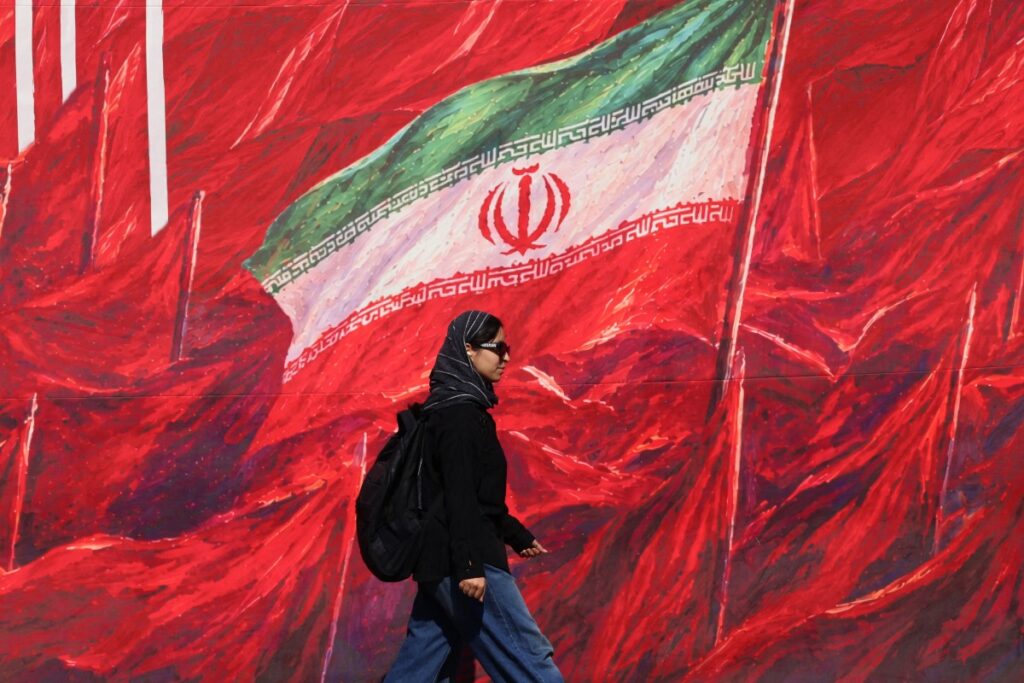
Image Caption: A woman walks past a mural bearing the Iranian national flag in Tehran on 26 October 2026. Photo: AFP
About the Authors
Liu Jia is Research Fellow at the Middle East Institute, NUS. Jia earned her PhD in Government and International Affairs from Durham University, where she was honoured to be the H.H. Sheikh Nasser al-Mohammad al-Sabah Doctoral Fellow. Prior to her doctoral studies, Jia completed a Master’s degree in Middle Eastern Studies at Lund University and a Master’s in Research Methods (International Relations). Jia has also studied in China, Iran, Jordan, worked in the UAE, and well-travelled across the West Asia/Middle East. She speaks Chinese, English, Farsi, and is learning Arabic. Jia’s research focuses on two major areas: the politics of Persian speaking world and China-West Asia/Middle East relations.
More in This Series
- By Reza Asadian and Hamid Bahrami
- -