The unprecedented territorial gains by the Houthis, the Shia-Islamist rebel group in Yemen which has recently seized control over the Bab al-Mandab Strait and is headed towards a full-blown war with Saudi Arabia, is a development that weaponises one of the most strategic waterways in the world. The group’s takeover and expanding influence among extremist groups in the region allows them to leverage the Red Sea as a conduit for weapons proliferation, illicit finance, and maritime terrorism that threatens global security and trade.
A Fractured Yemen: Proxy Wars and Houthi Maritime Expansion
The latest turn of events began with the crisis surrounding the Mahan Air flight on 13 July 2026, which was prevented from landing in Sanaa and diverted to Hodeidah. It brought an end to the de-escalation between the Houthis in Yemen and Saudi Arabia — Riyadh announced shortly after that it had intercepted a missile aimed at Abha airport in the Asir Province. The confrontation is rooted in a much longer conflict that began when the Houthis seized Sanaa in 2014 and took control of northern Yemen. Fearful of growing Iranian influence and chaos along its highly porous 1,300-kilometre border with Yemen, Saudi Arabia led a military intervention in March 2015 to dismantle Houthi capabilities, restore the government, and encourage a political transition. The resulting civil war triggered one of the world’s largest humanitarian crises, displacing over 5.2 million individuals in Yemen, and led to years of bitter fighting and devastating air strikes by Saudi Arabia and its coalition partners, including the United Arab Emirates (UAE).
Eventually, the divergence of objectives between Saudi Arabia and the UAE transformed Yemen into a proxy battleground. While Saudi Arabia views a stable, unified Yemen as an essential national security buffer, the UAE- backed local separatist groups like the Southern Transitional Council (STC) in an effort to secure vital maritime trade routes. Tensions intensified in late 2025 and early 2026, as the STC sought to drive Saudi-backed government forces out of Al Mahrah and Hadhramaut. Direct Saudi intervention ultimately forced the STC to dissolve and prompted the UAE to withdraw its forces. Meanwhile, the Islamic Revolutionary Guard Corps (IRGC)-backed Houthis remained in control of the northwest, where most of the Yemeni population lives. Although a United Nations (UN)-brokered truce maintained relative peace from 2022, renewed fighting had displaced more than 130,000 Yemenis since early September 2026, according to a UN report, with another 10,000 anticipated to be displaced to Djibouti. Yemen has consequently evolved into a deeply fragmented proxy theatre in which various actors compete to advance their own agendas by capitalising on the country’s internal cleavages.
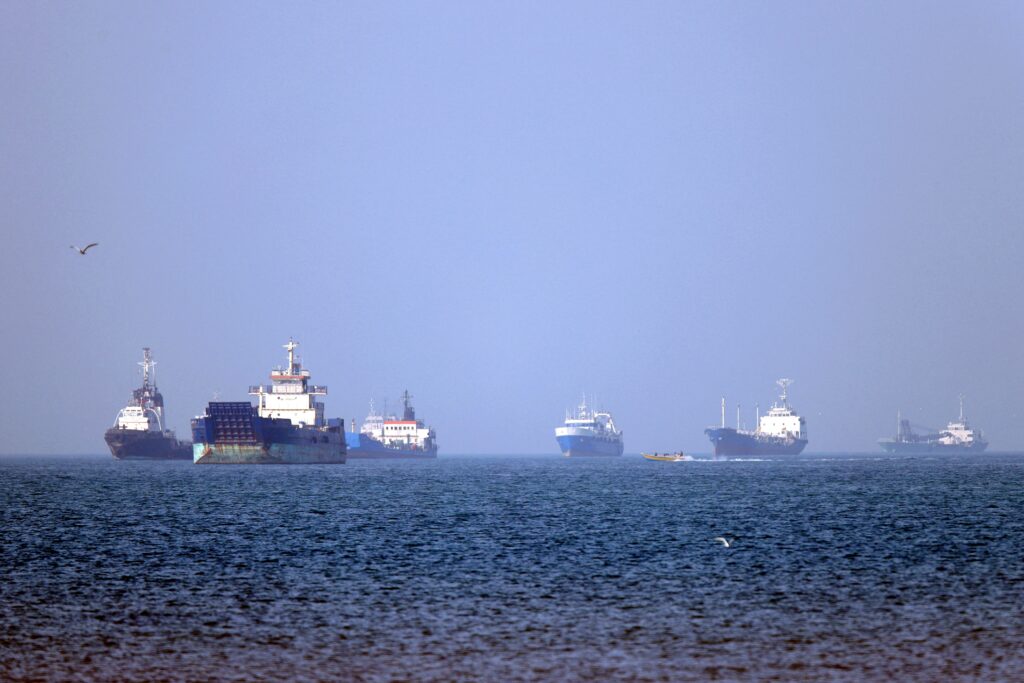
In the latest round of fighting, the Houthis struck an airport in Riyadh, and Saudi-led forces responded by hitting a similar facility in Sanaa. Since then, Saudi Arabia has said that it has continued to be the target of Houthi drone and missile attacks. The escalation followed fighting in September, when Saudi-backed Yemeni forces destroyed Houthi vehicles and weaponry, and eliminated several fighters. The rebel group retaliated by securing vital tactical, operational, and strategic gains by capturing the western coast, almost without resistance. Its control of the port city of Mokha, the coastal stripextending towards Bab al-Mandab, and the Greater and Lesser Hanish Islands represents a critical shift, allowing the Houthis to consolidate their defensive positions and tighten their hold over the vital Red Sea shipping route. This compounds global trade vulnerabilities already exacerbated by Iranian control over the Strait of Hormuz. If retained, these territorial gains would further embolden the Houthis, and could spawn greater collaboration among regional rebel groups and drive further regional instability.
Tactical Alliances with Al-Qaeda and the Islamic State
This growing regional instability is further reflected in the Houthis’ cooperation with Sunni jihadist militant groups such as Al-Qaeda (AQ) and the Islamic State (IS), which the group increasingly views as useful tools for advancing its military and political agenda. Although ideological and theological differences, and outright animosity, exist between IS and the Houthis, both groups have entered into an opportunistic collaboration — facilitated by AQ — that is driven primarily by shared interests in recruitment and territorial expansion. Evidence of operational ties between the Houthis and these terrorist groups came to light in 2025, when the Yemeni Armed Forces (YAF) dismantled a terrorist cell in Taiz led by Amjad Khaled, a former commander who joined the Houthis. The neutralised network was responsible for numerous targeted assassinations across multiple provinces in Yemen. The most prominent among these was the 2023 assassination of Moayad Hamidi, the Director of the UN’s World Food Programme, in the city of al-Turbah. The YAF confirmed that Khaled facilitated direct collaboration between Houthi commanders and operatives from both IS and AQ. By leveraging concepts like the “common enemy” and “alliances of necessity”, the militia has justified its collaboration with these terrorist groups to counter Western influence. This shared anti-Western sentiment acts as a unifying bridge that transcends their sectarian and other differences.
According to a report, the Houthis have converted prisons into clandestine facilities to recycle AQ and IS terrorists and train them to be internal security and field personnel reporting to their Security and Intelligence Service. These detainees are given salaries of up to US$260 per month, along with weapons and protection, in exchange for engaging on the battlefronts in Marib, Al Bayda, Shabwa, Abyan, and Hadhramaut. The group has also established secret camps in Saada, Amran, and Dhamar to indoctrinate them militarily and ideologically. Such collaborations represent a threat not only to Yemen’s security, but beyond. Given the fragility of the Yemeni state and its decentralised territorial control, extremist groups like AQ and IS risk consolidating safe havens under the Houthi’s protection within Yemen before transforming into trans-national threats exported across the wider Middle East region.
Expanding Houthi Cooperation with Al-Shabaab
Extending this strategy beyond Yemen, the Houthis have also sought a partnership with Al-Shabaab, the AQ-affiliated Sunni militant group based in Somalia, despite their ideological differences. It is worth noting that the clashes on Yemen’s western coast have brought to light evidence of cross-militant cooperation between both groups, following the discovery of Al-Shabaab militants among Houthi fighter casualties. The Houthis have supplied advanced weaponry, explosive technology, and specialised drone training to the AQ-affiliated group, which needs to strengthen its arsenal, in exchange for logistical assistance to deploy maritime radar systems. Jibril Yahya Ali, a Somali terrorist linked to the al-Shabaab, was the primary liaison between the two factions from 2023 until his death in a targeted United States strike last February. This could turn Bab al-Mandab into a second Strait of Hormuz, with repercussions for international navigation and trade. The coordinated militant presence on both sides of the Gulf of Aden threatens to compromise the security of the Bab al-Mandab Strait and vital global energy corridors. The collaboration between the Houthis and Al-Shabaab empowers the Somali extremist group to scale up its offensive operations in the Horn of Africa, given that up to 1,500 fighters from it have undergone Houthi-conducted training on advanced military hardware and drone technology. It also offers the Houthis an expanded platform to choke critical maritime routes in the Red Sea and western Indian Ocean. Besides, it also provides the Houthis with a vital and political foothold in Africa, advancing its expanding agenda beyond Yemen’s borders, while intensifying pressure on Bab al-Mandeb Strait.
Iran’s IRGC Blueprint in Yemen
While the Houthis have formed their own regional alliances, their territorial gains along the southern Tihama coastline toward the Bab al-Mandab Strait have been underpinned by active operational guidance from the IRGC, whose Quds Force provides specialised training and tactical oversight to groups within the “Axis of Resistance”. Reports indicate that IRGC advisers are present in Yemen; some arrived on a Mahan Air flight and played a major role in supporting the Houthis in their bid to open another front in their war with the US. Among them is Abdul Reza Shahlai, also known as Hajj Yusef or the “Shadow Man”, a high-ranking Quds Force commander who is believed to be the central figure orchestrating Houthi operations along Yemen’s western coast. He is perceived as the “de facto field military commander”of the Houthis and was the architect of the group’s overthrow of the internationally-recognised government in Yemen. He recently returned to Yemen more than a year after he left the country, following the escalation of events in Gaza, Lebanon, and Iran. These developments prompted Tehran to recall experts, advisers and military leaders from Yemen, including Shahlai. Despite the recall, the IRGC ensures that a core cell of instructors remains behind to maintain influence and manipulate events through the Houthis. Reports also indicated that Hezbollah members were present in Yemen to support the Houthis.[1]
Supported by Iran, But Acting Independently
Despite the IRGC’s influence, the Houthis have been described as an independent actor, shaping a narrative aligned to their own interests. The group has been leveraging religious rhetoric, anti-establishment grievances, and opposition to foreign intervention, specifically targeting Saudi and Western policies to broaden its ideological appeal beyond its traditional Zaydi Shia base to gain wider legitimacy within Yemen. By framing their military campaigns as a righteous defence against external aggression and internal corruption, the group has successfully institutionalised its political influence. Statements by the group’s leader Abdul-Malik al-Houthi characterise the fighting as being against the enemies of Islam, including “Zionist Jews and the infidel West led by the United States and those loyal to them”.
Although the Yemeni Presidential Leadership Council, a supreme council formed by presidential decree in April 2022 as part of a political solution to the civil war, has offered a general amnesty to Houthi fighters to lay down their arms, its effectiveness remains uncertain. The Houthi leadership continues to frame the conflict as a patriotic crusade against foreign intervention and Saudi hegemony, rather than a civil war.
This fusion of ideological outreach and opportunistic military expansion has enabled the Houthis to consolidate power, capitalising on the vacuum left by the fractured Yemeni government, a perceived ally of the West. Amid the ongoing conflict, the group has increasingly relied on digital media to promote its domestic legitimacy across Yemen by circulating videos and imagery of captured Saudi-backed government forces alongside seized military hardware such as advanced weaponry, US-made missiles, and M-ATV vehicles at Mokha, near Bab al-Mandab. The group seeks to frame itself as a capable, sovereign defender of the nation. This strategy is designed to appeal to the local population by discrediting the internationally-recognised government and demonstrating tangible victories against foreign-backed adversaries.
The Houthis’ Expanding Weapons Capabilities
Alongside their efforts to construct domestic legitimacy, the Houthis have advanced their weapons capabilities since the 2022 truce, increasingly developing weapons systems and producing parts within areas under its control, rather than relying solely on imports. With substantial IRGC support, the group has become more capable of conducting long-range strikes against Israel, targeting Red Sea shipping with sea drones, and using artificial intelligence and other tools to develop more advanced weapons to reduce its dependence on Tehran.
Yemen initially served as a laboratory for honing Iranian warfare techniques, but has increasingly become a weapons manufacturing site, with larger parts now produced in Houthi-controlled areas rather than shipped from Iran. The IRGC has encouraged the Houthis to establish additional supply chains, including from China, while continuing to provide advanced weaponry, training, and intelligence. This support has helped transform the Houthis into a potent regional force, and continues to serve Iran’s wider geopolitical goals: Draining Western resources, bypassing economic sanctions, and creating an enduring maritime security crisis in the vital Bab el-Mandab Strait.
Houthi Recruitment of Minors and the Militarisation of Schools
As the Houthis consolidate legitimacy and expand their weapons capabilities, they have sped up recruitment of vulnerable children and youth. In Sanaa, a Houthi recruiter reportedly attempted to enlist a 16-year-old boy (Abdulkarim) by offering weapons, military training, and a salary of US$215 to fight on the front line in Marib. Although his father intervened, the incident shows how economic hardship, social pressure, and ideology have shaped decisions. For parents struggling to afford flour and clean water, promised salaries can represent a desperate lifeline.
Recruiters also weaponise religious faith: In a viral social media video, another 16-year-old recruit described a small metal key in his hand as the “key to heaven”, illustrating the psychological manipulation used to transform impoverished children into instruments of violent extremism and cannon fodder. Despite having signed a UN action plan in 2022 to end child recruitment, the Houthis have reportedly deployed 4,000 recruits, many of them children, to training camps since July 2026; reports also indicate that more than 4,700 children across Yemen have been killed in fighting since 2015.
The Houthis have expanded this campaign into schools in Amran Governorate, north of Sanaa, and other areas under their control, distributing military-style forms to students at various educational levels to broaden their recruitment base and compensate for fighter shortages. The Jihadi Circle and General Mobilization Authority, in coordination with the Houthi-controlled education authority, have reportedly registered students under the “Mobilisation and Alert Forces” in preparation for combat courses and mobilisation programmes, after which some may be sent to the front lines. Houthi supervisors have also intensified school visits in Amran to collect students’ information and recruit them for military activities and courses. As battlefield losses increase, the expansion of recruitment to younger age groups raises serious concerns that schools are being transformed into platforms for mobilisation, exposing children and adolescents to pressure to participate in military activities.
Key Takeaways
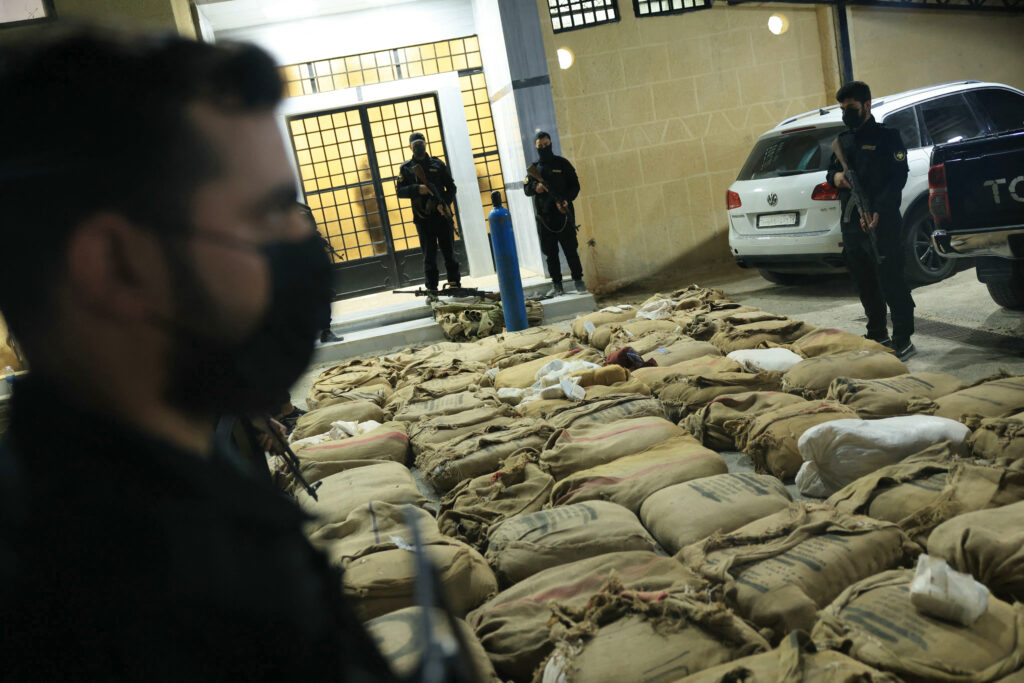
The Houthis’ control over large parts of the Yemeni coast on the Red Sea and the Bab al-Mandab Strait marks an important shift in the local and regional balance of power. By securing control over vital ports and sea lanes, the Houthis have expanded the capabilities of terrorist trafficking networks smuggling weapons, personnel, technology, and funds between Yemen and Somalia. The partnership between the Houthis and Al-Shabaab raises fears that this could lead to the formation of a logistical corridor connecting Yemen to the Horn of Africa. Government forces, particularly those in Taiz, Ma’rib, Al Dhale’e and Al Jawf, must therefore unite to form a strong opposition to retain territories seized by the Houthis.
The governance crisis in Yemen and renewed conflict opens up safe havens for AQ in the Arabian Peninsula. These will allow the terrorist group to operate and expand its reach, potentially dragging the security of the entire region into a deeper cycle of instability.
While the Houthis continue to seize more territories in Yemen, the militarisation of educational spaces is compounding the security crisis by institutionalising violent extremism. Through recruitment and ideological indoctrination in schools, the Houthis are engineering a deeply radicalised generation of future combatants, transforming educational infrastructure into an incubator for asymmetric warfare and regional terrorism that could spill over into neighbouring countries.
As for the Houthi-Saudi conflict, an uncontained ground war would shatter fragile domestic truces, reigniting multi-front fighting across Yemen while drawing surrounding Gulf states directly into defensive combat operations. This would not only drain Saudi economic resources earmarked for Vision 2030 development projects — which have already been dented by conflict in the region — but also trigger massive refugee crises, provoke sectarian tensions, and permanently alter the geopolitical balance of power in the Red Sea basin.
The Houthi attacks on several Saudi cities that wounded more than 70 people, including women and children, have raised concerns about the possibility of activating the August 2026 Mecca Agreement for Common Defence between Saudi Arabia, Turkey, and Pakistan. However, a Pakistani Foreign Ministry statement on 10 September confirmed that the Mecca Agreement is a defence alliance, and there are no plans to expand it at the present time despite the reported deployment of thousands of fighters from the country. European allies including France, Britain, Italy and Greece responded to Saudi requests by dispatching air defence systems, aircraft, and military personnel to safeguard the oil facilities in the Red Sea port city of Yanbu. This intervention is aimed at protecting their own energy supplies, and should not be confused for allegiance to Saudi Arabia. It is thus unlikely that the signatories of the Mecca Agreement, or the Kingdom’s European allies, would get involved in the ongoing battle between the Saudis and the Houthis. This leaves Saudi Arabia with few alternatives. One of the most viable, yet complicated, options is to pivot towards direct diplomatic engagement with the Houthis to safeguard its territory.
The situation in Yemen highlights the need for a concerted joint military approach by Arab nations to develop a unified force rather than relying on external forces, particularly the US, given its selective reticence in its role as their primary security guarantor. And although UN Security Council condemnations of Houthi attacks against Saudi Arabia are necessary, they lack the enforcement power to alter the group’s behaviour. A comprehensive framework and unified diplomatic front against external sponsors are therefore needed to bridge the gap between rhetorical and tangible deterrence. With limited options, Riyadh has shifted towards indirectly assisting the recognised Yemeni government through tactical intelligence, advanced weaponry, and naval protection. However, whether this escalation will force a Houthi withdrawal or allow the group to adapt and cement its territorial control remains uncertain.
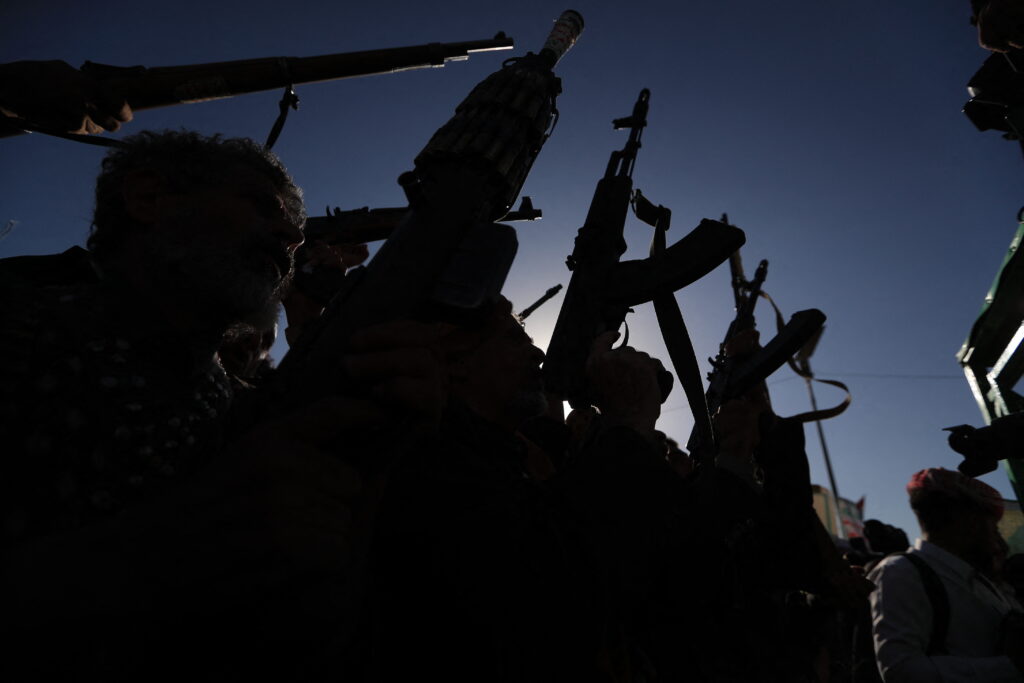
Image Caption: Supporters of the Houthi authorities brandish their weapons during a protest against Saudi intervention in Yemen, in Sanaa on 9 October 2026. Photo: AFP
About the Author
Dr Ghada Farag Sayed Soliman is a Research Fellow in the International Centre for Political Violence and Terrorism Research at S. Rajaratnam School of International Studies (RSIS), Nanyang Technological University (NTU), Singapore. Her research focuses on extremism in the Middle East and North Africa region.