In early April, with oil approaching US$120 a barrel and the US mid-term elections on the horizon, President Donald Trump accepted a ceasefire in the war against Iran on terms far closer to Tehran’s conditions than to his own stated aims. That ceasefire — which broke down shortly after — was followed by a second truce in June, which produced a 14-point Memorandum of Understanding (MoU). These bought his administration time. Oil has not returned to April’s price levels since. But that time is now running out, and Washington has spent all of it debating the wrong question.
That debate has focused on what the Islamic Republic will do next. But a more important question about context has not been asked: Who in Iran is deciding? The answer has changed twice since the spring, and it is changing again.
Who Decided the Ceasefires
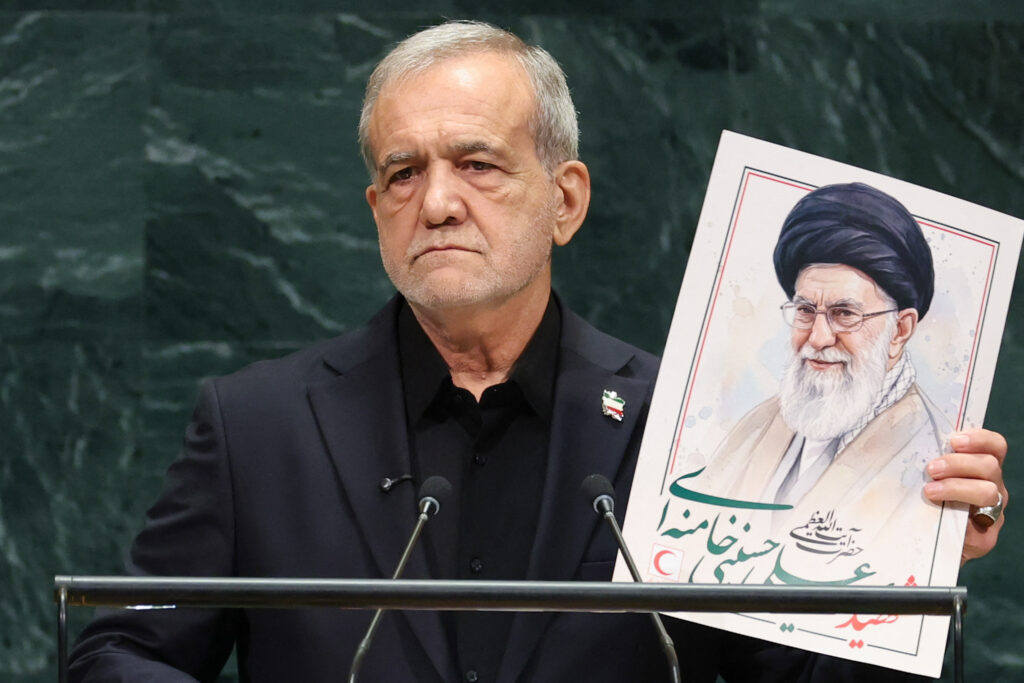
The conventional wisdom is that Iran’s Supreme Leader makes the decisions, and the government executes. This was never fully accurate, and it is now badly out of date. Iran has a new Supreme Leader: Ayatollah Mojtaba Khamenei succeeded his father after Ali Khamenei and several other senior figures were assassinated on the first day of the war. Since then, the body that has made Iran’s consequential wartime choices, including the April ceasefire, the June truce that produced the 14-point MoU, and the suspension of parliament, was not the Supreme Leader. It was the Supreme National Security Council (SNSC).
One detail makes the shift concrete. Hamid Pourmohammadi, head of Iran’s Planning and Budget Organisation and himself a council member, recently described wartime decision-making in unusual terms: The new Supreme Leader had agreed to accept decisions carried by a super-majority of the council. In other words, a qualified majority of the SNSC could carry a decision Ayatollah Mojtaba Khamanei did not support.
A Supreme Leader who commits in advance to a voting threshold is not exercising the authority his predecessor held. Instead, he is buying legitimacy while he consolidates his position. Ali Khamenei never needed such an arrangement.
This arrangement explains both the speed at which the April ceasefire was arrived at, and its fragility. Four figures close to the leadership were killed in the early stages of the war: Ali Larijani, the Supreme Leader’s representative on the council; Chief of Staff Abdolrahim Mousavi; Islamic Revolutionary Guard Corps (IRGC) commander Mohammad Pakpour; and Intelligence Minister Esmail Khatib. Their deaths removed much of the Supreme Leader’s own network from the room and left the government-centred diplomatic camp as the strongest bloc on the council — briefly. The pause that allowed Washington to step back from a war whose strategic aims it could not achieve at a cost Iran was willing to pay was not produced by American pressure or American diplomacy. It was produced by a vacuum inside the SNSC.
The decisions taken in that window were made on borrowed authority. The April agreement was reached quickly because there was only one opposition voice in the SNSC who represented the Supreme Leader: Saeed Jalili. The ceasefire collapsed at the first dispute over interpretation. When the June truce and MoU were implemented, Ayatollah Mojtaba Khamenei publicly distanced himself from them, saying that he, “as a matter of principle, held a different view”. Iran’s Assembly of Experts has since warned repeatedly against any disobedience of his decrees. A leader who has to say that is telling his own system that a decision it took was not his.
Why the Price of a Deal has Changed
The question now is not whether Tehran has further hardened its stance. It is whether the Iran that Washington faces today differs from the Iran of April and June in ways that raise the price of an agreement. There are three reasons to think it does.
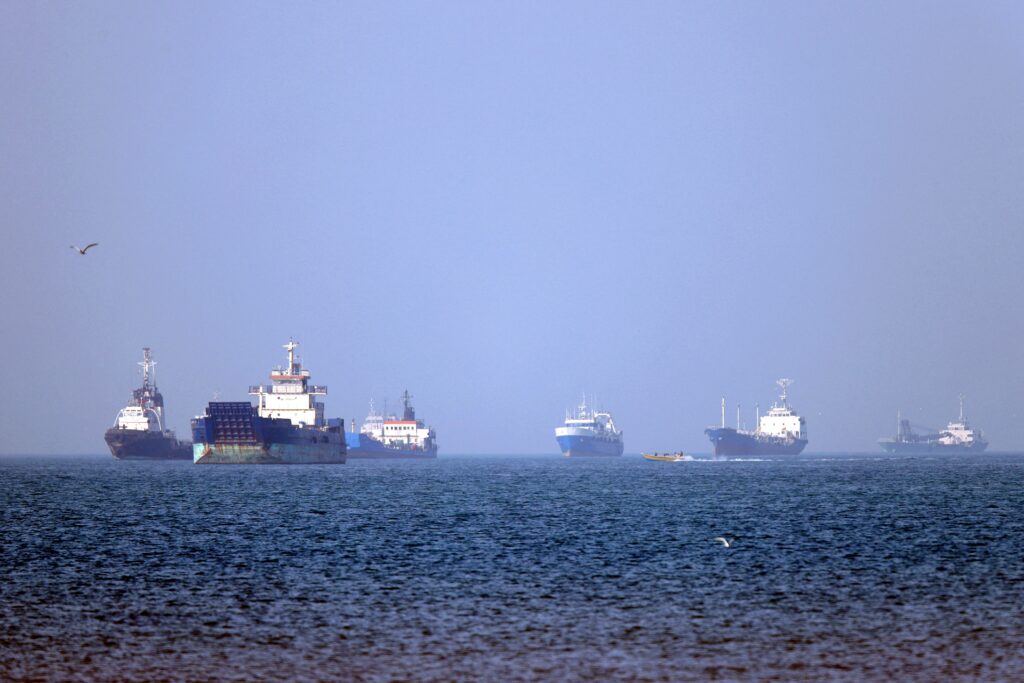
The first is that the council’s composition is changing, and with it, the arithmetic. A leader who accepts a super-majority threshold has conceded that he cannot yet carry the council alone. That concession has a shelf life. It ends either when he revokes it or, more likely, when the majority that made decisions he opposed no longer exists. The signs are already visible. In August, Mohammad-Bagher Zolqadr was replaced as council secretary by Mohsen Rezaei, a figure known for his confrontational posture towards the United States. The time it took to name a successor, and the internal campaign against Mr Rezaei that followed his appointment, point to a contested process, rather than a routine one. But since his appointment, the IRGC has acted with a freer hand in the Strait of Hormuz, as intensifying strikes on vessels that ignore its designated routes on a daily basis. When this process of change is complete, the body that delivered the ceasefires will no longer exist.
The second is that the diplomatic camp has lost its clout. Its case inside the system was institutional, rather than ideological: Negotiation delivers results that confrontation cannot. The MoU was its test case, and its collapse was that camp’s failure. A faction can survive being outvoted. But getting its way and delivering an outcome that changed nothing may prove fatal. Its opponents now hold concrete evidence for their argument that negotiating with the United States leads nowhere.
The third is the one Washington should find least comfortable. The earlier agreements were approved quickly, and disintegrated at the first argument over interpretation. The lesson available to any Iranian official is that the fast channel does not produce durable outcomes. Any future agreement will therefore be routed through every institution with a claim to a voice in it: The government, the SNSC, parliament, the Guardian Council, and the Expediency Council. Its price will be set by the most reluctant participant, rather than the most willing. That is not obstruction. It is a system correcting for the failure it has just experienced.
There is an apparent paradox here. A consolidated Iran should be a better negotiating partner, not a worse one: A leader who controls the council can deliver the consent the MoU lacked. But the system is becoming more coherent in its preferences and more demanding in its procedures at the same time, and capacity and willingness are moving in opposite directions. The leader now assembling that capacity owes his position to the camp that reads the war as proof that escalation works, and negotiation does not. He will be more able to deliver an agreement, but will be less enamoured of the terms that Washington has so far been prepared to offer.
What Pressure Can and Cannot Reach
Washington has relied on two instruments — apart from combat power — in a bid to achieve its desired outcomes in the war: It has killed the people making the decisions, and squeezed the economy that funds them. Both raise the cost of Iran’s choices. But neither affects what actually determines them: Whether a camp can assemble a council majority, hold it, and make its decisions binding.
None of this means Iran’s economy is sound. It is in serious difficulty, and sanctions have done real damage. But the depth of the crisis owes more to Tehran than to Washington. As the Iranian economist Saeed Laylaz has argued, inflation is being driven by the huge volume of liquidity injected into the economy through the government’s lack of fiscal discipline and economic corruption, which makes it, in his words, “essentially an internal problem, not an external one”. Sanctions were a shock; domestic mismanagement turned a containable shock into a crisis. Nor is a naval blockade the end of the story. Iran’s land and rail links to Russia, Central Asia and China cannot replace seaborne trade, but they are sufficient to prevent the economic paralysis that maximum pressure is designed to produce.
Crucially, the camp now gaining control does not dispute that the economy has absorbed serious damage. But it argues that the damage is survivable, and that Iran’s leverage is appreciating faster than its economy is deteriorating. Raising costs on an adversary that has already accepted them does not buy a concession. It buys a longer war on the same terms. Thus, while sanctions relief gives the diplomatic camp powerful reasons to say “yes” to a deal, but does not move the needle for those opposed. Iran’s changing institutional structure means the latter camp has even more reason to block a deal on terms set by the US.
Will the US Mid-Terms Change the Calculus?
That being said, Iran does not hold every card. The United States retains formidable ones: The sanctions regime, a military posture that encircles Iran from the south, and the option of backing armed opposition groups along Iran’s eastern borders. Whether either side can hold out indefinitely remains an open question.
Some in Washington also expect the balance to shift after the mid-terms. A president who no longer has to face voters for the rest of his term, the argument runs, will be less constrained by high oil prices and other domestic political considerations. Iran’s Hormuz card, meanwhile, is losing its value as the US military, Gulf states, and markets adapt. This misreads both sides of the equation. The electoral constraint was only one of several that the US has had to deal with. Experts reveal that months of war have drawn down American munitions stocks, and Tehran has made clear that any escalation would be met with strikes on Gulf oil facilities and desalination plants, a threat Washington’s Gulf partners take seriously, and have reportedly conveyed to the administration. None of these constraints expires in November. Nor has Iran’s leverage in Hormuz ever rested on closure alone. It rests on a credible threat to the region’s critical infrastructure. Indeed, the period in which Iran could be pressured into submission appears to be over. It is becoming clearer that nothing short of an all-out military campaign will change Iran’s calculus — but doing so would make an already unpopular war totally unpalatable to the American public, and even Mr Trump’s most fervent political allies.
What a Durable Deal Would Require
Successful diplomacy does not require Iran’s factions to agree about what the war meant. That will not happen. It requires an outcome that gives each major centre of power enough reason not to veto it, which is a different and more expensive thing than an offer a weaker camp can be persuaded to accept.
In practice, that means four things. First, Washington would need to accept that the war did not achieve its strategic objectives, and scale its demands to that reality. Second, the terms would need to address the core demands of the nascent power of the camp that is coalescing around the Supreme Leader and Mr Rezaei. Above all, this will require credible guarantees against renewed attack, so that politicians can present the agreement as a vindication of resistance, rather than a retreat from it. Third, the agreement would need to deliver early, verifiable sanctions relief, so that the diplomatic camp can show that negotiation produces results. Fourth, it would need to be ratified through both countries’ formal institutions, and matched by an American commitment designed to outlast the current administration, since it was the collapse of the MoU that discredited diplomacy in the first place.
These elements are less contradictory than they appear. A deal that meets the new power base’s essential terms, but is negotiated through the diplomatic channel and then honoured by Washington, would restore that channel’s credibility while denying its opponents a reason to veto it. Without such a deal, the newly-empowered camp will continue to gain influence — and it has shown itself willing to climb the escalation ladder.
Of course, Washington has its own demands, too. It will not accede to Iran’s conditions without the opportunity to claim the outcome as a win, however it is couched. The choice in front of President Trump is therefore no longer between pressure and diplomacy. It is recognising that Iran’s system is becoming more coherent each week, and paying a higher price than it did in April or June for an agreement now, an even more costly one later, or no deal at all.
* Dr Reza Asadian is a senior researcher at Keio Research Institute. Hamid Bahrami is an international relations analyst and PhD candidate at the University of St Andrews.
Photo caption: Iranian President Masoud Pezeshkian holding up a photo of slain Supreme Leader Ali Khamenei while addressing the United Nations General Assembly in New York City late last month.