
MEI – BISA Seminar Series 2026


Series Summary 

This four-part seminar series, a collaboration between the Middle East Institute (MEI) and the British International Studies Association (BISA), examines the cascading consequences of a US-Israeli war against Iran that erupted in early 2026. Structured across four thematic sessions, the series traces the conflict’s impact from Iran’s domestic political transformation and the restructuring of Gulf regional security, through the disruption of global energy markets and Gulf economic stability, to the broader reconfiguration of the global strategic order. By bringing together leading scholars from institutions across Asia, Europe, the Middle East, and Australia, the series offers a comprehensive, multi-layered analysis of a major geopolitical crisis and its far-reaching ramifications.


Seminar Two: Restructuring Regional Security Reconfiguration in the Gulf

  • Date: 29th September 2026

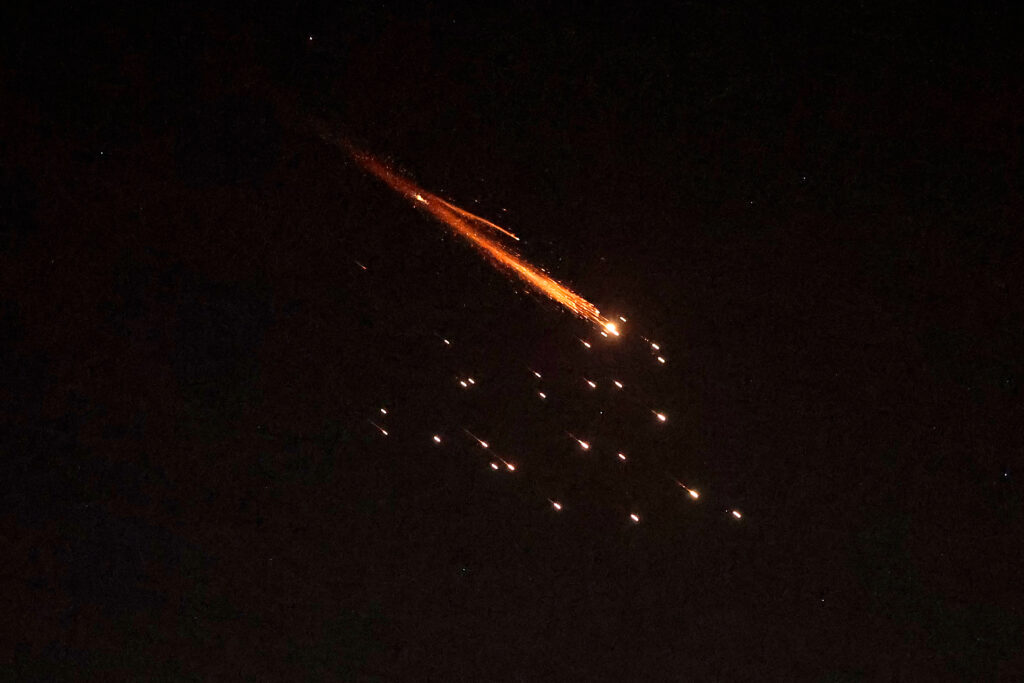
  • Focus: Following the outbreak of the US–Israeli war against Iran on 28 February, Iran responded with military strikes against both the United States and Israel, including attacks on US military facilities in the Gulf. The conflict rapidly escalated, with civilian infrastructure becoming a primary target.

    The escalation of hostilities has had far-reaching consequences for the Gulf region. Iran’s retaliatory strikes targeted not only US military bases but also civilian infrastructure in Gulf states, transforming the conflict into a broader regional confrontation with significant implications for security, geopolitics, and economic stability. These developments have introduced renewed instability into intra-regional relations. As a result, Gulf countries are compelled to reassess their defence strategies. This seminar explores the long-term geopolitical and security implications for the region.

  • Please find speakers’ bio here.

[Register here for Session Two]


Seminar Three: The War and the Disruption of Global Energy Markets and Gulf Economic Stability

  • Date: 6th October 2026

  • Focus: Following the outbreak of the US–Israeli war against Iran, Iran responded with military strikes against both the United States and Israel, including attacks on US military facilities in the Gulf. The war’s impact extends beyond the immediate region, particularly through Iran’s closure of the Strait of Hormuz, a critical artery for global oil transportation. This action has intensified geopolitical tensions and disrupted energy markets, contributing to a sharp rise in global oil prices and increasing inflationary pressures worldwide. In the new round of attacks after the ceasefire, Houthis also closed the Strait of Bab el-Mandeb, further limiting international trade routes, particularly the oil route.

    With the security threat, the region has experienced significant outflows of foreign investment and labour, raising concerns about the resilience and sustainability of Gulf economies under conditions of prolonged conflict. The Gulf states, in response, have sought solutions to address the security issues exposed in the face of the war. This seminar addresses both the regional economic consequences of the war and the regional response.

  • Please find speakers’ bio here

[Register here for Session Three]


Seminar Four: The War and its Implications for the Global Strategic Order

  • Date: 13th October 2026
  • Focus: Following the outbreak of the US–Israeli war against Iran on 28 February, Iran responded with military strikes against both the United States and Israel, including attacks on US military facilities in the Gulf. The expansion of the conflict into a broader regional war has generated significant implications for the global order. The vulnerability of Gulf states, despite their substantial investment in US defence systems, has raised critical questions about the effectiveness of existing security arrangements. These developments have prompted US allies worldwide to reassess their defence postures and strategic alignments. Furthermore, the two regional wars – the Russia-Ukraine war and the US-Israeli-Iran war show an alarming trend towards convergence, with Ukraine hitting an Iranian ship and the Gulf states purchasing Ukrainian counter-drone expertise. This seminar explores how major powers are adapting to these challenges and considers the potential implications for future geopolitical and economic configurations.
  • Please find speakers’ bio here.

[Register here for Session Four]


This series will be held via Zoom on four consecutive Tuesdays beginning 22 September 2026, from 5:00 PM–6:30 PM (Singapore time) | 10:00 AM–11:30 AM (London time).

These sessions are free to attend, but registration is required. Zoom links will be emailed to registered participants 2 days before each session.

—————————————————————————————————————————————-
Seminar One: The War and Shifting Political Landscape in Iran
  • Date: 22nd September 2026

  • Focus: Following the outbreak of the US–Israeli war against Iran on 28 February—marked by the assassination of Iran’s Supreme Leader, Ayatollah Khamenei, alongside senior political figures, military commanders, and nuclear scientists—Iran responded with military strikes against both the United States and Israel, including attacks on US military facilities in the Gulf. The conflict rapidly escalated, with civilian infrastructure becoming a primary target.

    Beyond its immediate destruction, the war has significantly reshaped Iranian society. Pre-war public dissent has largely been redirected toward resistance against foreign invasions, signalling a notable shift in the domestic political landscape. Anti-government movements now face a dual challenge: confronting state repression while navigating the effects of external military aggression. Meanwhile, the elimination of key leadership figures has disrupted existing political structures. While new leadership is emerging, it remains uncertain whether this leadership can maintain political cohesion during the war and in the post-war period. This seminar examines these evolving socio-political dynamics within Iran.

  • Please find speakers’ bio here.


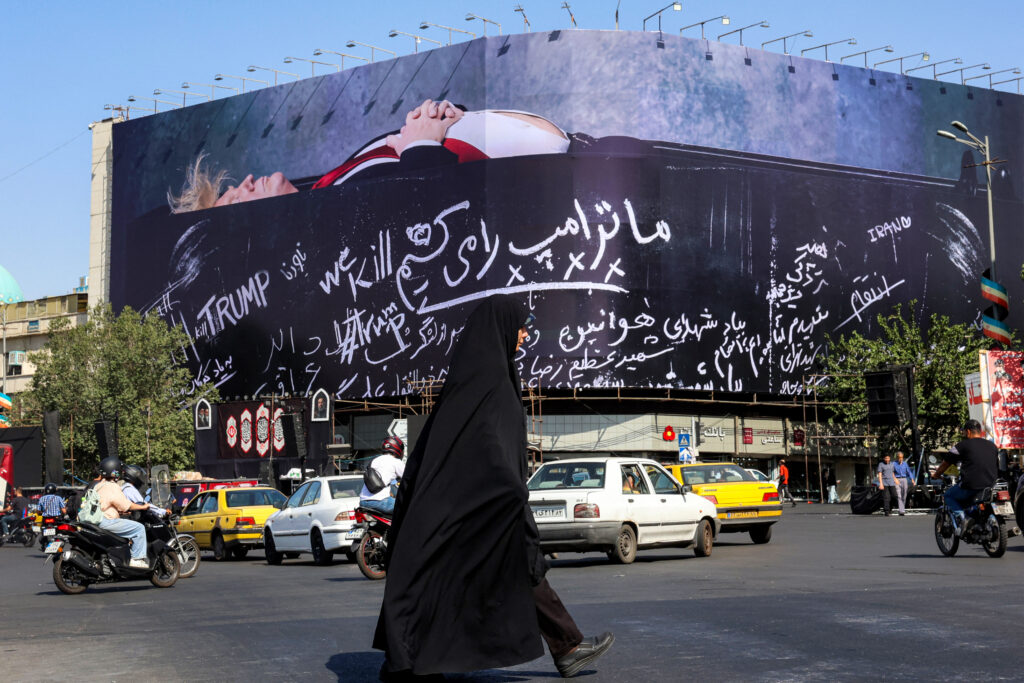
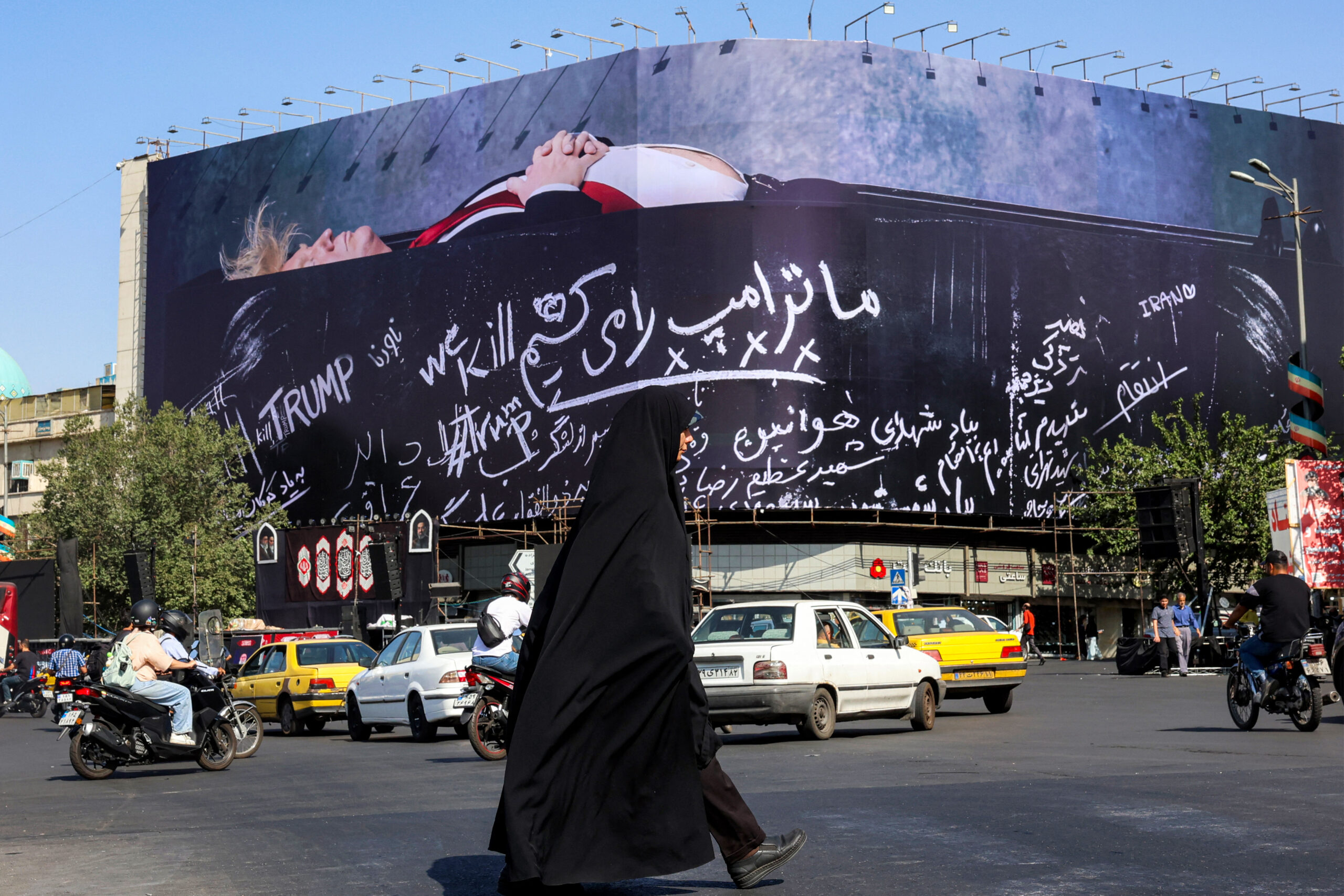
Photo caption: A woman crosses Tehran’s Enghelab Square on July 15, 2026, past a giant anti-US billboard featuring US president Donald Trump in a coffin with text in Persian reading “We Kill Trump”. Hostilities renewed between Iran and the US, endangering a memorandum of understanding, reached in June with Qatari and Pakistani mediation, aimed at ending the war. The confrontation resumed on July 7 after attacks on ships in the Gulf, which Iran has attributed to Iran. (Photo by AFP) /

About the Speakers
Session Two Speakers

Dr. Sara Bazoobandi
Researcher
Institute for Security Policy at Kiel University (ISPK)

Sara Bazoobandi is a researcher at the Institute for Security Policy of Kiel University in Germany. She was previously a Marie Curie fellow at the German Institute of Global and Area Studies working on Iran’s economic diversification and economic resilience strategies. Additionally, she is a visiting fellow at Arab Gulf States Institute in Washington, and ISPI in Milan. Over the past decade, she has worked as a consultant for various global clients in both public and private sector. Between 2013 and 2018, she was a senior lecturer in international political economy at Regent’s University London. Prior to that, she was a scholar at the Middle East Institute of the National University of Singapore.

In recent years, she has worked on technological advancement across the MENA region, and globally. She worked on a project funded by Euromesco in which she examined intersection of geopolitics of economic digitalisation and digital sovereignty in the Middle East North Africa region, focusing on technological governance. She has also worked, along a group of GIGA researchers in a project funded by the Federal Foreign Office in Germany, titled Digital Transformation Lab (DigiTraL). Her contribution is focused on digital diplomacy and statecraft in the global Gulf Cooperation Countries (GCC), particularly focusing on China-GCC technological collaboration and Emerging Defense Technologies in the Middle East. In addition, she is working on autocratic application of Artificial Intelligence (AI) and AI governance.

Dr Alam Saleh
Honorary Senior Lecturer
the Australian National University

Dr Alam Saleh is Honorary Senior Lecturer in Iranian Studies at the Australian National University and Reviews Editor of the British Journal of Middle Eastern Studies. He holds a PhD, MA and BA in Politics and International Studies from the University of Leeds and is a Fellow of the Higher Education Academy. He has taught International Relations, Security Studies and Middle East Politics at leading UK universities, including Lancaster, Exeter, Durham, Leeds and Bradford. His research and policy engagement spans Iran, the Middle East and regional security, and has included work with the UK Ministry of Defence, NATO, the European Council on Foreign Relations and UNICEF.

Dr. Wang Tingyi
Research Fellow
Anwar Gargash Diplomatic Academy

Dr. Wang Tingyi is a Research Fellow at the Anwar Gargash Diplomatic Academy in the United Arab Emirates and a Senior Associate Fellow at the King Faisal Center for Research and Islamic Studies in Saudi Arabia. His research focuses on Gulf geopolitics, foreign policy dynamics, great-power competition, and the intersections of politics, economics, and technology in the Middle East. Previously, Dr. Wang was a Postdoctoral Fellow at St Antony’s College, University of Oxford, a Visiting Research Fellow at Princeton University, and an Assistant Professor at Tsinghua University.

[Moderator] Dr. Betul Dogan-Akkas
Assistant Professor of International Relations and Deputy Director of the Center for Middle Eastern Studies
Ankara University

Dr. Betul Dogan-Akkas is an Assistant Professor of International Relations and Deputy Director of the Center for Middle Eastern Studies at Ankara University, Türkiye. She is a researcher of the Gulf Arab states holding a joint degree PhD in Gulf Studies from Durham University and Qatar University. Dogan-Akkas also covers the involvement of the GCC states in the Yemen war and Turkey-GCC relations.

Event Details

via Zoom

Related Events