Why the Gulf, India, and China Are Pricing Hope and Misreading the Energy Shock
- Gopi Bhamidipati
- -
Oil prices, which have been on a dizzying ride of late — rising or falling in response to developments in the United States-Israel war with Iran — have captured most of the headlines about the conflict, and function as proxies for its economic cost. When President Donald Trump announced on 19 April that the United States had intercepted and fired on an Iran-flagged cargo ship, for example, global oil prices immediately rose in Asian trading, with Brent crude futures climbing 4.74 per cent to US$94.66 a barrel, and West Texas Intermediate up 5.6 per cent to US$88.55.
Just a day earlier, prices plummeted to their lowest point in weeks after Iran said the Strait of Hormuz was open for passage, and Mr Trump said he expected to reach a deal to end the war soon. Brent crude, the international benchmark, fell more than 9 per cent to US$90.38 a barrel, taking it below US$91 for the first time since March 10, while West Texas Intermediate (WTI) dropped to around US$84. These swings reflect a market that is reacting quickly to diplomatic signals — pricing in resolution before conditions on the ground have changed materially. A ceasefire, however, is not a resolution.
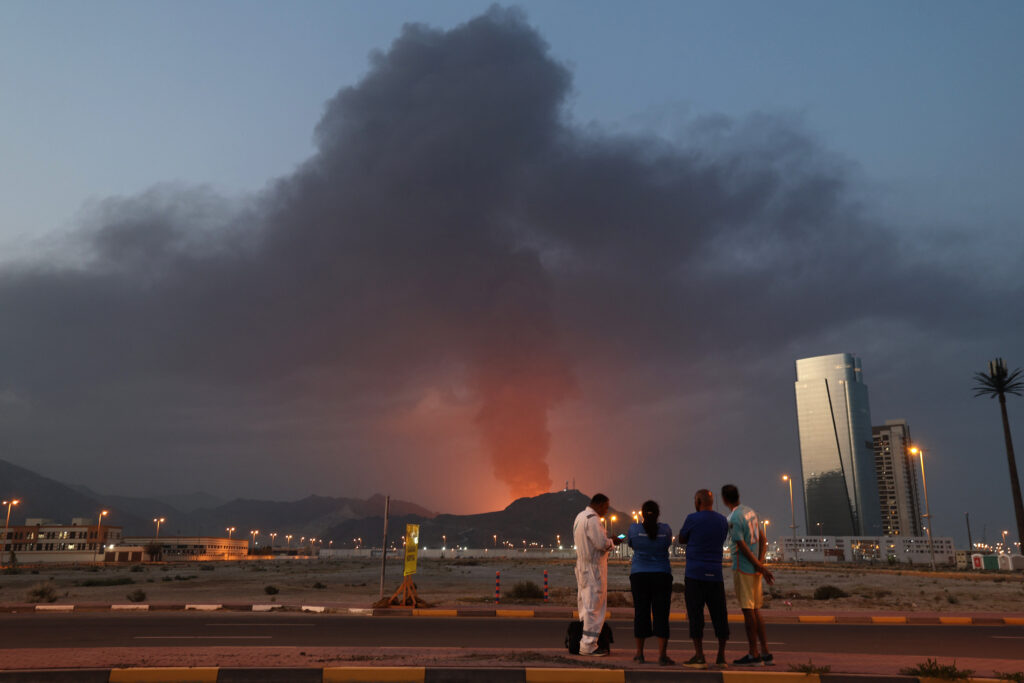
These swings, however, do not reflect what the physical market is signalling which is much more ominous. Crude available to refiners has tightened sharply, with Dated Brent rising to around US$120 per barrel, about 65 per cent above pre-war levels, and some cargoes have briefly approached US$150. At the same time, futures prices remain closer to US$95-100, continuing to reflect expectations of near-term easing. The gap is not technical. Nearly a fifth of global oil flows have been disrupted, around nine million barrels per day of production has been shut in, and cumulative supply losses have exceeded 600 million barrels. The result is a pricing system that captures the shock, but not its duration.
Even if hostilities were to end abruptly, the system would not return to normal in step. The disruption is no longer limited to flows, but is embedded in the system itself. According to the Pentagon, clearing naval mines in the Strait of Hormuz alone could take up to six months, keeping traffic constrained well beyond any ceasefire. At the same time, more than 80 energy facilities across the region have been attacked, with over a third severely damaged, and total losses estimated between $34 billion and $58 billion, with some repairs expected to take years. Key infrastructure across the Gulf, including refineries, gas processing plants, pipelines, and export terminals in Saudi Arabia, the United Arab Emirates, Qatar, Kuwait, and Bahrain, have been repeatedly hit, with some facilities operating at reduced capacity or under force majeure conditions. These are not disruptions that can be unwound quickly. Even if a peace agreement is reached, restoring production capacity, clearing blocked routes, and bringing damaged facilities back online will take time. In practice, the lag between disruption and recovery is measured in months, and in some cases, years, not days. This is the gap that markets are failing to capture: Not the scale of the shock, but its duration.
Mirroring this reality, the responses of the major oil-producing states in the Gulf, as well as India, and China, their biggest customers, are being shaped by the assumption that the disruption will remain temporary. Despite differences in capacity, each energy producer and consuming state is prioritising short-term stabilisation through supply management, fiscal cushioning, or strategic buffers, rather than preparing for the sustained constraint signalled by infrastructure damage, disrupted shipping routes, limited rerouting capacity, and tightening downstream supply. The result is a shared orientation towards managing immediate pressure, reflecting conditions in physical markets while deferring deeper adjustment, and reinforcing the short-term trends embedded in futures pricing.
Where Markets and States Are Getting It Wrong
Markets are not ignoring disruption; they are misjudging its duration, and that misjudgement is shaping policy behaviour. Futures prices, by design, embed expectations about conditions a few months ahead. In this crisis, that forward-looking structure amplifies a bias towards political resolution. Futures markets price expectations, while physical markets operate under immediate constraints. Diplomatic signals, however tentative, are quickly translated into expectations of easing supply, even when underlying conditions have yet to adjust.
Recent movements illustrate this clearly. Oil and equity markets have swung repeatedly on news of potential talks or ceasefire signals. Indian equities, for example, have rallied on expectations of easing tensions, with the Sensex rising 666 points to 79,186, and the Nifty gaining over 167 points. These reactions reflect a tendency to price in resolution ahead of evidence, rather than a stable reading of fundamentals.
The contrast with physical conditions is stark. A significant share of global oil and LNG flows remains disrupted through the Strait of Hormuz, even as diplomatic progress remains uncertain. Yet futures markets continue to signal a relatively quick stabilisation. The gap is not simply between price and supply, but between priced recovery and actual conditions.
This matters because these signals shape decisions beyond trading floors. Governments and firms use them to guide inventories, pricing, subsidies, and production. When disruption is expected to be short-lived, responses focus on stabilisation, rather than structural adjustment.
The risk is a growing misalignment between expectations of rapid recovery and the slower pace of system adjustment. As disruptions persist and buffers erode, the gap between priced recovery and actual conditions will narrow abruptly, forcing markets and policy responses to catch up to constraints that are already visible in damaged infrastructure, constrained export routes, and delayed production recovery across the system.
Gulf, India and China: Absorbing the Immediate Shock, Delaying Long-Term Adjustment
In the Gulf Cooperation Council, producers are operating under tightening structural constraints rather than strategic choice. Disruptions in the Strait of Hormuz, which carries over a fifth of global oil flows, have forced selective cargo allocation, prioritizing key Asian buyers while others face delays. Even as Opec+ announced a modest output increase of about 206,000 barrels per day in March, spare capacity remained limited, with only Saudi Arabia and the UAE able to raise production meaningfully, and even they faced export bottlenecks due to disrupted routes. Attacks on infrastructure across the United Arab Emirates, Qatar, Bahrain, and Kuwait further constrained output. In practice, Gulf producers are managing scarcity rather than preparing for prolonged disruption.
India’s response reflects a similar short-term orientation. With over 88.5 per cent of its crude sourced from the Gulf, policymakers in New Delhi have focused on cushioning the shock through fuel tax adjustments, subsidies, and a US$6.2 billion stabilization fund, rather than preparing for sustained supply disruption. While these measures have helped contain inflationary pressures, structural dependence remains unchanged, and disruptions through the Strait of Hormuz are extending beyond oil, affecting fertilizers, the supply of liquified petroleum gas (LPG), and industrial inputs. Yet, market sentiment has moved in the opposite direction — as noted above, Indian equities have rallied on expectations of easing tensions. The divergence highlights a broader pattern: Policy and market responses remain anchored in expectations of stabilisation, even though the signs are all there that this will take a while.
Meanwhile, China’s response has been shaped by its ability to delay adjustment. With around 120 days of crude reserves, equivalent to roughly 1.39 billion barrels, and diversified supply routes, including pipelines from Russia and Central Asia, Beijing has been able to cushion the immediate shock. Crude imports remained broadly stable in March, at around 11.77 million barrels per day, reflecting cargoes loaded before the disruption. However, underlying pressures are emerging. Refinery runs have fallen by 2.2 per cent to 14.52 million barrels per day, natural gas imports have declined by over 10 per cent year-on-year, and export growth has slowed to 2.5 per cent, a five-month low. These blows are being absorbed through reduced industrial activity and inventory drawdowns, rather than structural recalibration. China’s buffers have delayed the impact, but they have also reinforced a strategy that assumes disruption can be managed, rather than fundamentally reshaped.
The Cost of Misreading the Energy Shock
The risk, therefore, is not simply one of misreading volatility, but of misalignment. When expectations of recovery continue to outpace the realities of disruption, both markets and states begin to operate on a timeline that the physical system cannot sustain. For Gulf producers, this means managing constrained supply while assuming flows will normalise before deeper adjustments to export capacity or routing become necessary. For India, it means continuing to absorb price shocks through fiscal and monetary tools without addressing the structural risks of prolonged supply tightness. For China, it means relying on reserves and diversification to delay adjustment, even as underlying dependence on vulnerable energy routes remains unchanged.
What follows is unlikely to be a smooth adjustment. As supply constraints persist and buffers are drawn down, the gap between priced recovery and actual conditions will narrow: Not gradually, but abruptly. In such a scenario, delayed responses will give way to reactive ones, amplifying price pressures, supply shortages, and economic stress across an already interconnected system. The cost of acting too late will be significantly higher than the cost of adjusting earlier, particularly for economies where energy remains central to industrial output and growth.
This moment, therefore, is less about whether the disruption will pass, and more about whether major energy actors are preparing for the likelihood that it will endure. For decision-makers in the Gulf, India, and China, and other energy-dependent markets, the challenge is not simply to manage the present shock, but to recognize when short-term strategies begin to obscure longer-term risks. Without that shift, the tendency to price for resolution will continue to delay the adjustments needed to navigate a more prolonged and uncertain energy landscape.
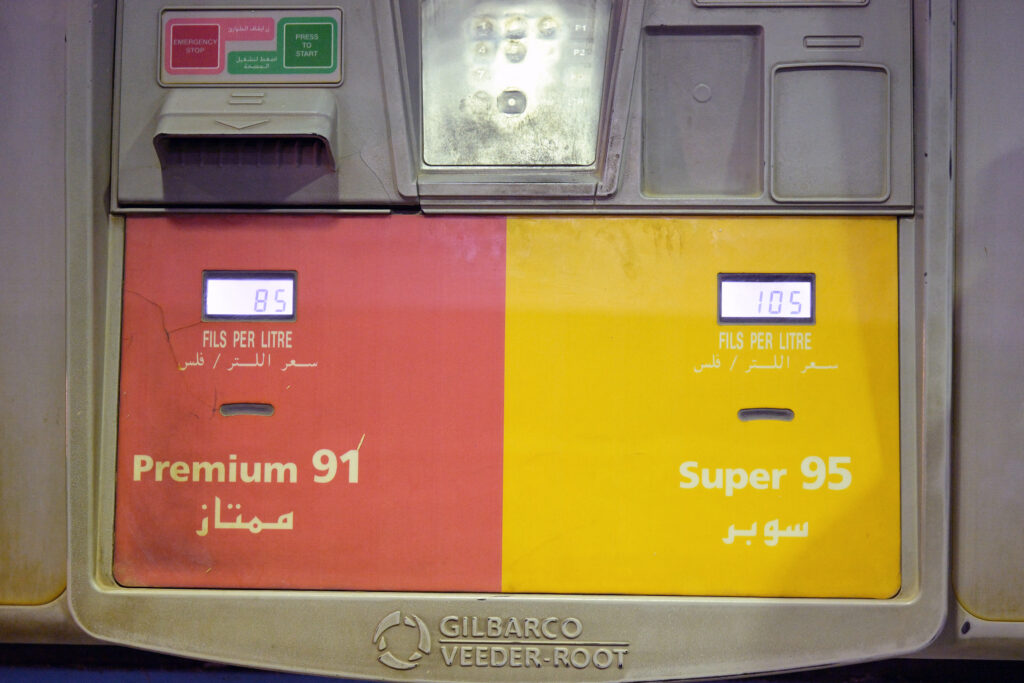
Image Caption: A fuel pump displays the price per liter for different gasoline grades at a gas station in Kuwait City on 10 March 2026. The Iran war sent oil prices soaring on 9 March, after Tehran marked the appointment of its new supreme leader with a new barrage of missiles targeting Israel and the Gulf energy industry. Photo: AFP
About the Author
Gopi Bhamidipati is a scholar of international relations and a non-resident senior fellow at the Newlines Institute for Strategy and Policy in Washington, D.C. He holds a Ph.D. from Virginia Tech and specialises in Middle East geopolitics and India’s foreign policy.


More in This Series
- Alfred Schipke, Michelle Teo, Yu Hong, Fang Guo, and Lin Jing
- -