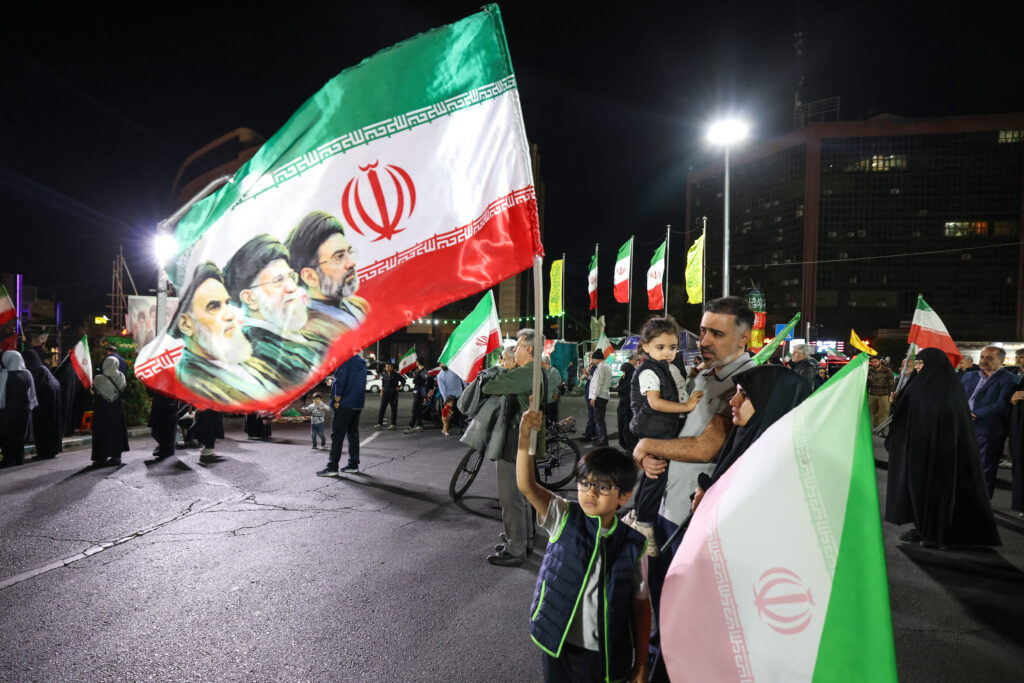
Since the 1979 Islamic Revolution, Iran has experienced three wars that have been imposed on it: The eight‑year conflict with Iraq in the 1980s, the June 2025 12‑Day War, and the current one with the United States and Israel that is still unfolding. War has been a structuring condition for the country, shaping both the Islamic Republic and its citizens. Through each of these conflicts, Iranian nationalism has persisted, but its intensity and political meaning have shifted. In the current war, nationalism appears more contested than ever before, as the state’s calls for unity collide with growing distrust of the regime due to accumulated traumas of violence, sanctions, domestic repression, and social and economic grievances. Past wounds intensify present fear such that today’s wartime nationalism is not only marked by pride and love of homeland, but also by a ruptured relationship between the state and its people, and the human cost of war. This has created an ambivalent nationalism: Initially subdued by distrust and anger over repressive domestic policies, and later shifting towards a more defensive nationalism, particularly when the US and Israel began hitting civilian infrastructure such as bridges, oil facilities, and even universities. This ambivalent nationalism likely reached its emotional peak following US President Donald Trump’s threat to “wipe out the whole civilisation”, a moment that visibly galvanised public sentiment.
Drawing on the three wartime episodes, war trauma is understood as a social mechanism that reproduces and mutates Iranian nationalism over time. Each episode reactivates earlier variants of “sacred defence”, while transforming the very boundaries of belonging – who is counted as part of the nation, what is defended, and how much people are willing to endure in its name. In this analysis, trauma is conceptualised not primarily as individual post-traumatic stress disorder (PTSD), but as the ways in which mass experiences of violence, loss, and fear are narrated, institutionalised, and transmitted across generations.[1] This framework underpins the episode‑based analysis of how wartime experiences reshape Iranian nationalism by drawing on secondary scholarship, surveys and polling data, contemporary reportage (news, interviews, and on‑the‑ground accounts), and cultural texts. Adopting an episode‑based approach allows Iranian nationalism to be understood not as a static sentiment, but as a historically contingent formation, continually reshaped at each wartime juncture through the interaction between accumulated trauma and state practices.
The Iran-Iraq War: Foundational Trauma, Coherent Nationalism
The Iran-Iraq War erupted after the Islamic Republic was newly established, and fragile internally. But after eight years of resistance, the regime emerged stronger. It learned to govern through siege, centralise power via revolutionary institutions, and frame “defence” as a religious duty. For many who lived through it, war trauma — displacement, bombardment, chemical attacks, personal loss and the grief that accompanied it — was absorbed into everyday life, and woven into narratives of sacrifice, survival, and national resilience. Veterans returned with visible injuries and invisible psychological wounds; children from border regions carried memories of sirens and shelters into adulthood.
Despite disappointment with the revolution and its unfulfilled promises, much of society in the 1980s rallied around the state[2]. They accepted the war as a necessary defence of both Iran and Islam, mobilising through the Basij and mosque networks. In this episode, war trauma was absorbed by nationalism through sanctification and commemoration: Death became martyrdom, fear became proof of faith, and endurance was framed as a defining national victory. Through a dense apparatus of commemorations and Martyrs’ Foundations, the state worked to keep the Iran‑Iraq War present in the public space, transforming the residue of war into durable, state-led mobilisation[3]. At the same time, the memories of siege, sacrifice, and unaddressed grief formed a foundational layer of collective trauma that never fully healed. Nasim Marashi’s 2017 novel Haras (Pruning)[4] is only one example — it depicted the war’s “after lives” as ongoing haunting, especially in border cities, where mothers were presented as constant mourners, and the landscape itself bore the scars of war long after the ceasefire. Another cultural strand, “sacred defence cinema”, repeatedly returned to wounded veterans, marginalised war families, and post-war corruption while reproducing official narratives of martyrdom and sacrifice, revealing how the same commemorative mechanism kept trauma present, but never fully resolved it.
In the Iran-Iraq war, war trauma was not simply experienced, but structured through state practices into a relatively coherent “sacred defence” nationalism, generating a reservoir of meanings and effects that not only consolidated the regime, but was also reactivated in subsequent wars.
The 12‑Day War (June 2025): Humiliation, Defensive Nationalism
In June 2025, Israel launched large‑scale surprise airstrikes on Iranian territory, targeting nuclear and military facilities, and killing senior figures, including Islamic Revolutionary Guard Corps (IRGC) commanders and nuclear scientists. The US joined in later, conducting air strikes using so-called bunker-buster bombs on Iranian nuclear facilities which were buried deep underground. The assault exposed the regime’s military vulnerabilities and intelligence-security failures — perhaps most notably by the fact that some of the attacks were carried out from within Iran. In response, the leadership doubled down on securitisation and “resistance” rhetoric, once again trying to transform a strategic setback into a story of heroic endurance.
Among civilians, the dominant feelings were fear, anxiety about the future, and anger at an attack from foreigners, though domestic failures were also blamed. Perhaps surprisingly to outsiders, many Iranians, despite disgruntlement with the leadership over crippling economic woes, and harsh repression of discontent, rallied around the flag. With the rise of nationalist sentiments, many opposed the bombing “for Iran”, rather than for the Islamic Republic, suggesting that, whatever their view of the regime, foreign strikes on Iranian territory and facilities violated their sense of national dignity. They expressed a wounded nationalism that was clearly distinct from loyalty to the regime: Surveys and studies of Iranian public opinion show the differentiation between “the Iranian people” and “the government”, while still demanding that the country be defended against outsiders. During this episode, the shock of vulnerability, exacerbated by security failures and combined with fear and humiliation, produced a reflex of defensive unity, even among critics of the regime.
The state tried to appropriate this surge of nationalism to repair its legitimacy — damaged by crippling economic woes, and the violent putdown of protests during and after the “Women, Life, Freedom” movement of 2022 — blending pre‑Islamic symbols and invocations of an ancient Iranian nation into its Islamic rhetoric. However, some critics and opponents read such gestures as opportunistic, given the regime’s long history of suppressing secular and pre‑Islamic symbols of Iranian identity. Surveys conducted after the war showed that dissatisfaction with the government and strong support for political change persisted despite the nationalist reflex. The short war added a new layer of trauma to the memory of earlier sacrifices, accentuating further bitterness and distrust.
The Current War (2026): Layered Trauma, Fractured Nationalism
In the current US-Israel war against Iran, the Islamic Republic has once again reactivated its familiar doctrine of heroic resistance, shaped by previous experiences. Similar to the 1980s’ concept of “sacred defence”, it defines victory as survival — manifested in the capacity to endure more pain than its adversaries — and aims to turn external pressure into renewed national cohesion. Yet, the social and political landscape in Iran today is radically different from that of the 1980s. Today’s conflict has landed on a society already bruised by earlier war trauma, which has been magnified by decades of sanctions, corruption, and repeated uprisings (from the 2009 Green Movement, to the “Woman, Life, Freedom” protests, and the mass demonstrations of January 2026), all of which were put down by widespread arrests, torture, and executions, causing pervasive fear. The repression of the January 2026 unrest, described as the deadliest in the Islamic Republic’s history, has itself widened the profound rupture between the state and society.
In this context, the reactivation of resistance rhetoric generates an ambivalent response: For some, it revives older, affective patterns of siege and endurance; for others, it sharpens a sense of betrayal, as the state recently showed no mercy on its own citizens. The then Supreme Leader, Ali Khamenei, instructed security forces to “crush” the mass demonstrations of January 2026 “by any means necessary”. In an attempt to bridge the divide, state-driven media — TV, state Telegram accounts, and official and affiliated channels — have depicted Iranian unity and seamless mobilisation through large, televised demonstrations, choreographed elegies, and highly-produced propaganda videos. Their central narrative is that of resilience, emphasising that the people’s unity and steadfastness will withstand hardship and bombing. Yet these outlets reveal more about the reach of the security and propaganda apparatus than the full spectrum of public feeling. In practice, two factors have silenced the voices of many: The Internet blackouts, which restrict communication and alternative narratives, and a pervasive climate of fear engendered by the twin threats of violent internal repression and bombardment from foreign enemies that discourages people from gathering in the streets.
Taken together, the result is a set of deep, layered fractures, visible in Iranians’ diverse sentiments and reactions towards the current war. These inter-related fractures can be read as effects of accumulated wartime and repression‑related trauma, redistributed through politics, emotions, and generations.
Political Fracture
At the political level, an accumulated sense of betrayal and repression-related trauma blocks an outpouring of rallying around the flag. There is a clear divide between the supporters of the regime and its “scared resistance” project, and those who reject it. But most people’s responses fall into grey zones, rather than neat camps of loyalists and their opponents. Even within the pro-regime camp, a fissure can be seen: Hardliners press for maximal confrontation; more pragmatic conservatives seek to preserve the Islamic Republic through tactical compromise in foreign policy. Meanwhile, the marginalised mainstream reformists still try to frame the war as proof that Iran’s survival depends on de‑escalation, diplomacy, and political opening. The same fault lines are visible in elite debates over any ceasefire or truce with the United States: Pragmatists push for a face‑saving pause, while hardliners warn that compromise would betray their fundamental principle of anti-imperialism. In the case of the succession of Mojtaba Khamenei to the position of Supreme Leader, this has been widely read as a consolidation of the hardline Islamic Revolutionary Guard Corps’ influence over the rest.
Among regime opponents, the reactions diverge as well: Some, despite resenting the regime, feel compelled to defend “Iran” against foreign attack, insisting that outsiders’ bombs can never be a path to liberation; others view any form of nationalism as complicity in prolonging an abusive state, and refuse to suspend their opposition for the sake of “national unity”. Another group, which initially saw the war as an opportunity to topple the regime, now finds that early hope curdling into anger at the mounting destruction of infrastructure. Others experience deeper fear and disillusionment, as they anticipate that the war will eventually end with the same (if not harsher) regime in power.
There is also a divide between exiled Iranians who have welcomed US-Israeli strikes as a necessary step towards regime change, and those who oppose any foreign military action, insisting that liberation should not come at the cost of bombing their homeland. Diaspora debates over intervention “at any cost”, and those who are simultaneously anti‑regime and anti‑war, intensify the existing tension over the war, deepening mistrust and adding another layer of strain to an already-fractured political field.
However, as the war has dragged on, expanding to strikes on civilian infrastructure, combined with President Donald Trump’s erratic and often insulting statements about Iran, attitudes have begun to shift. Initially, many people expressed fear, exhaustion and suspicion, insisting that they simply wish to have a normal life in their homeland. But as the war escalated, a more conventional defensive nationalism has re‑emerged as a form of unity under fire. As ordinary Iranians witness the country being destroyed before their eyes — and the entrenchment of the regime — trauma, fear of destruction, and an uncertain future have combined to energise nationalism. One example is the musician Ali Ghamsari, who staged a sit‑in at the Damavand power plant to play his instrument in front of the threatened facility, hoping that this would deter a US or Israeli attack[5]. Another is the human chain that formed on a bridge on the night President Trump threatened to destroy Iran’s “whole civilisation”. These scenes offer micro‑cases of ambivalent, bottom‑up deterrent nationalism, spurring ordinary people to physically protect infrastructure. Whatever their motivations — whether to avoid further war trauma or to defend against foreign forces — Iranians are motivated by a love for the homeland, even if this love has been altered by accumulated trauma and repression, becoming more defensive and fragmented, rather than celebratory. Paradoxically, this posture bolsters the leadership they oppose.
Emotional Fracture
The political fractures generate corresponding emotional ones. Emotional fractures reveal how people live with what is happening to Iran and to their own lives while cumulative trauma and political splits reshape their psyches, bodies, and relationships. The same divides over resistance, intervention, or “normal life” are lived as clashing mixtures of fear, rage, helplessness, and hope, both inside and outside the country. People experience different constellations of memories, fantasies, and sentiments through which they relate to “Iran” as an object of love, anger, shame, or grief. These are not only political positions, but also different internalised images of the country. As journalists and psychologists suggest, such divergent attachments generateemotional turmoil: Each side may feel morally bound to defend against the other’s reactions — whether anger, caution, or celebration — as a betrayal of what is truly at stake.
Within Iran, these tensions are lived most immediately under conditions of uncertainty, danger, and loss. Divergent understandings of what it means to resist or survive can generate acute strain in everyday life. As one Iranian journalist wrote on X in Farsi, translated as: “For more than a month, we’ve gone to sleep to the sound of fighter jets and explosions, woken up to the same sounds, and, amid all this fear, tried to carry on something resembling ‘life’.” For some, this takes the form of defensive nationalism as a determination not to see Iran humiliated, even under a hated regime. For others, the same history of loss and fear crystallises into radical anti‑regime anger or numbing withdrawal, a refusal to keep paying the price for endless “resistance”.
Emotional fracture is even visible among families and friends who have different interpretations of what it means to protect their lives and “their” Iran. Rows that end with heated phrases such as “you’re no longer my sister”, or silent Nowruz tables, where family members avoid eye contact over the war, show how everyday bonds of trust and affection are being torn. The fracture also runs through the self: Some feel momentary relief at the regime’s vulnerability, only to have it overtaken by shame as they witness civilian suffering. Among Iranians outside Iran, this can take the form of guilt at being spared the dangers faced by loved ones, and embarrassment or distress when others in the diaspora publicly celebrate the war, as if their private grief and anxiety do not count.
Closely related is the psychological burden. The same fractures that divide politics and emotions also show up in the minds of Iranians. Psychologists and clinicians warn that decades of repression, combined with the trauma of the current war, have produced a shared, if uneven, mental health crisis. The Iranian Red Crescent Society has reported more than 130,000 calls to its psychological support helpline as of March 31. Mental health experts describe a surge in anxiety, depression, and post‑traumatic symptoms in Iran, where speaking openly about psychological suffering remains stigmatised. International health bodies likewise speak of a “silent epidemic” of trauma-related disorder in women. For many, the psychological strains of the current warare the realities shaping their everyday life, even as its full effects remain to be seen.
In this sense, emotional fracture is another facet of the transformation of wartime nationalism. Attachment to Iran endures, but is overshadowed by disagreements and divergent emotions over how it should be protected, and what costs can still be borne. These tensions leave individuals and communities navigating not only external conflict, but also divisions within themselves and those closest to them.
Inter-generational Fracture
The war has also exposed an inter-generational fracture. The generation that lived through the revolution, ideological purges, and the 1980s war developed a mindset centred on survival and caution, seeing adaptability and endurance as essential strategies. Socially, many internalised the belief that change should be gradual or negotiated, fearing the chaos and disintegration that would accompany regime collapse. By contrast, the younger generation has known only an Iran beset by sanctions and economic crisis, and a government which has not delivered on their aspirations, but continues to oppress them and police their lives. For this group, which is digitally-savvy, the Internet and social media function as windows to the outside world, one that promises infinite possibilities.
Having inherited the unresolved war trauma from their elders, they filter it through frustration, distrust, and an urgent demand for change. For them, violence has been experienced primarily as internal — beatings in the streets, imprisonment, censorship. Their resistance takes the form of daily non‑compliance with enforced norms about how they dress, socialise with the opposite sex, and organise their leisure time, among other things. They are more openly defiant, less persuaded by revolutionary slogans, and more convinced that the regime itself is responsible for the unending cycle of conflict.[6] Many in this generation thus feel more disillusioned and less nationalistically attached. As one young Iranian who was contacted put it: “For my parents, if there is no Iran, may my body not exist (a well-known verse from famed Persian poet Ferdowsi that ties the self to the country)[7]; for us, if there is no life or future, I don’t know what Iran is even supposed to mean anymore.”
The political, emotional, and inter-generational fractures suggest that wartime nationalism in Iran has become deeply contested and fragmented. Each episode is read as a moment when earlier languages of defence and sacrifice are activated, disputed, and partially transformed. The past taught many Iranians how to survive; the present is forcing them to ask what that survival costs are, and whether they are still willing to endure it under an ambivalent nationalist narrative. The war will eventually end, but these fractures and their associated trauma will endure, shaping which memories are carried forward, who still feels included in “the nation”, and what kinds of futures Iranians can imagine.
End Notes
[1] Impact of intergenerational trauma on second-generation descendants: a systematic review – PMC & article_1735892486.pdf
[2] For further reading: Abrahamian, Erland. A History of Modern Iran. Cambridge University Press, 2008; Ebadi, Shirin. Iran Awakening: A Memoir of Revolution and Hope. Random House, 2006.
[3] Kadivar, Mohammad Ali, and Saber Khani. The Politics of War Commemoration in Iran. SocArXiv, 2026. Available at The Politics of War Commemoration in Iran | Society
[4] Marashi, Nasim. Haras (Pruning). Cheshmeh Publishing, 2017.
[5] Musician sits‑in in front of Iran’s Damavand power plant to protest against US threat to bomb infrastructure
[6] To better understand how the generational change in Iran: Iran’s Emerging Generation and Track II Diplomacy: New Pathways for Global Engagement – World Geostrategic Insights & Iran: revolt crushed but crisis unresolved – CIVICUS LENS
[7] Ferdowsi, the 10th–11th century epic poet and author of the Shahnameh (Book of Kings), whose work has been central to the formation of modern Iranian national identity.
Image Caption: People wave flags as they rally in support of Iran’s supreme leader Ayatollah Mojtaba Khamenei at Sadeghyeh Square in Tehran on 27 April 2026. Photo: AFP