
Why Xi’s Visit to Egypt Bears Watching
- Jia Liu
- -
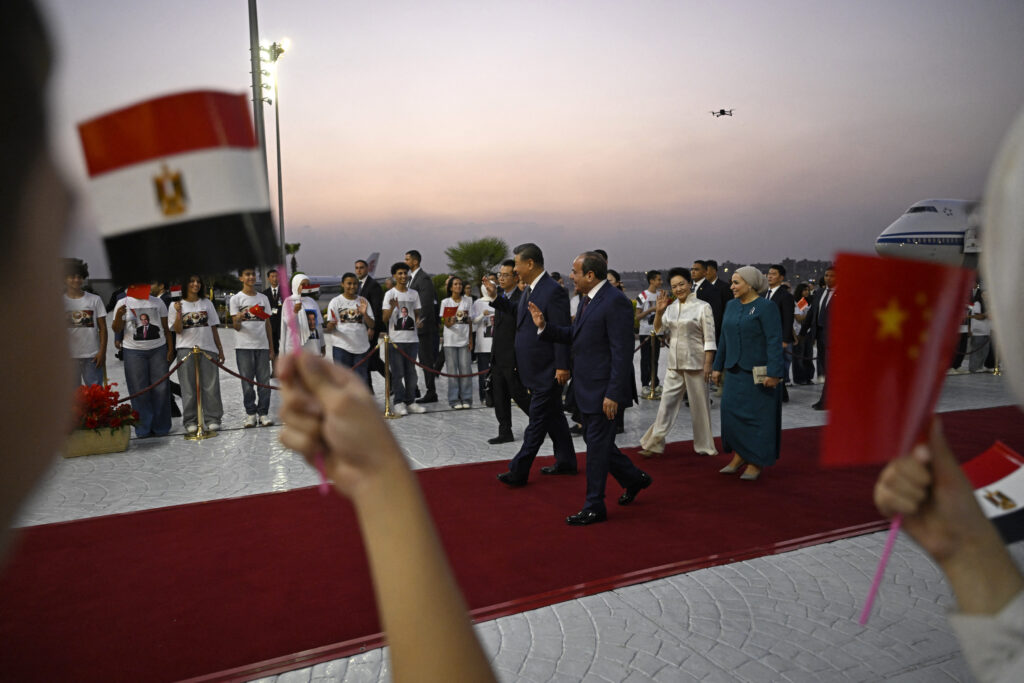
On 1 September 2026, Chinese President Xi Jinping began a three-day visit to Egypt, highlighting China’s continued strategic interest in the Middle East. The visit comes as the conflict against Iran has settled into a “no war, no peace” stalemate, characterised by sporadic, reciprocal attacks, including two rounds just this week. While it is difficult to ascertain the political deals being negotiated behind closed doors, Mr Xi’s decision to visit Egypt amid the ongoing tensions, nonetheless signals a clear political intention. China may seek to project its views and expand its influence through Egypt — a regional actor with significant political influence, longstanding relations with China, and, most importantly, working relationships with the major parties involved in the region’s conflicts. Egypt is not only a long-standing mediator between Israel and Palestine but also maintains close relations with the Gulf states. Despite having had no formal diplomatic relations with Iran for more than three decades, Cairo has reportedly conveyed messages between Washington and Tehran, helping facilitate an agreement between the warring sides.[1]
The Chinese Perspective
The war has posed significant risks to China’s economic interests — a substantial share of its imported oil comes from the Middle East, particularly the Gulf, and Beijing has extensive economic investments and commercial interests across the region. China’s oil stockpiles have helped sustain domestic supply during the current conflict, but strategic reserves cannot provide a permanent solution to prolonged disruptions. It has been reportedly estimated that Beijing’s oil stockpiles could sustain domestic needs oil for six months[2] — which is precisely the juncture at which the current conflict sits. Although it imports oil from countries outside the Middle East, these sources cannot fully substitute for supplies from the Gulf. As the war shows no immediate sign of ending, the prolonged disruption of energy supplies could therefore impose enormous costs on China’s economy.
Moreover, the Russia-Ukraine war and the conflict in the Gulf increasingly show signs of becoming interconnected, raising the risk of their escalation into a broader cross-regional conflict. Recent developments point to growing linkages between the two. For example, in July 2026, Ukraine reportedly attacked an Iranian vessel in the Caspian Sea,[3] while the United Arab Emirates has also reportedly purchased Ukrainian anti-drone weapons.[4] After the recent Shanghai Cooperation Organisation (SCO) summit, Russian President Vladimir Putin met his Iranian counterpart, Masoud Pezeshkian, and pledged his continued support for the country, underscoring the deepening strategic links between both sides.[5] Their growing interconnections could sustain hostilities, further destabilising energy markets and trade routes, with potentially significant repercussions for the global economy — an international economic environment on which China has relied heavily for decades to sustain its economic growth. This vulnerability is particularly significant given the continued weakness of China’s domestic consumer demand in the post-Covid period.[6] With external demand and exports remaining important drivers of economic growth,[7] China has a strong stake in the stability of the global economy, and has thus shown strong interest in ending the current conflict and restoring regional stability.
Why Egypt?
Though the war against Iran hurts its interests, China is reluctant to assume the role of direct mediator between Iran and the United States. Assuming such a role would require China to make political, diplomatic, and potentially security-related commitments, which would constitute a significant expenditure of strategic resources. For example, Iran might expect China to provide or guarantee some form of security support, potentially drawing Beijing more directly into the conflict. At the same time, China is engaged in broader strategic and economic competition with the United States, which has given rise to trade tensions and sharpening moves in high-technology sectors. China may therefore be reluctant to undertake diplomatic initiatives that could be perceived as serving US interests, while simultaneously being unwilling to compromise on key economic, financial, and technological interests merely to facilitate a peace deal between Washington and Tehran. This helps explain why Beijing has devoted considerable effort to maintaining constructive relations with both countries while deliberately refraining from assuming a formal mediating role.
Instead, China appears more inclined to work through regional actors capable of performing intermediary or mediating functions, such as Pakistan, thereby allowing Beijing to project influence without assuming the full political and security costs of direct involvement. Egypt is particularly significant in this context because of its longstanding diplomatic and mediating role in the Arab-Israeli conflict and its ability to maintain communications with multiple regional and international actors. Egypt also played a role in supporting the restoration of Saudi-Iranian diplomatic relations in 2023. Afterwards, Egypt and Iran also began engaging in contacts aimed at normalising their relationship, which had remained frozen for decades.[8] The state also maintains strong security relations with the US. Cairo also reportedly conveyed messages between the US and Iran earlier this year in an effort to facilitate a peace agreement.[9] At the same time, Cairo has maintained a relatively low-profile approach, likely seeking to avoid antagonising Israel, which regards the Islamic Republic of Iran as an existential threat.[10] It is therefore reasonable to assume that Egypt and Iran have already signalled mutual goodwill,[11] even if they have yet to fully restore diplomatic relations, given the importance of Egyptian-Israeli relationship. Egypt’s position therefore gives it potential value as an intermediary through which China can engage with a broader range of regional actors — and, indirectly, with the US itself.
Egypt is a significant regional state for China, although it is neither its most important regional economic nor political partner. The Gulf states, particularly Saudi Arabia and the United Arab Emirates, have considerably greater economic significance for China, and Beijing also maintains close relations with Iran. However, a presidential visit by Mr Xi to either Iran or one of the major Gulf states during the current war could constitute a significant political signal, and risk being interpreted as China taking sides. Egypt, by contrast, offers Beijing a comparatively balanced diplomatic platform. Cairo has its own interest in preventing further regional escalation. At the same time, it has maintained close relations with China and has continued to develop the bilateral relationship. This combination makes Egypt a potentially useful political partner through which China can project its preferences while minimising the risk of alienating other regional actors.
A Potentially Valuable Channel for Beijing
The Trump administration’s recent return to the “maximum pressure” campaign on Iran represents, in some respects, a return to the broader logic of the sanctions-based approach pursued by previous US administrations, including those of Barack Obama and Joe Biden. However, the current situation differs significantly from earlier rounds — Iran has exerted strategic pressure of its own in the Strait of Hormuz, impacting the global economy, and a new generation of hardliners in the Iranian leadership has given little indication it intends to compromise on its leverage.
Over the past decade, China has had to constrain some of its economic engagement with Iran because of the risks posed by US secondary sanctions. Chinese companies, including Huawei, reduced aspects of their operations in Iran during periods of intensified US sanctions pressure. However, China’s strategic position vis-à-vis the United States has changed substantially over the past decade. China is now more capable of resisting US economic pressure, and has not merely opposed the application of unilateral American sanctions against Iran; it has also expressed sympathy for Tehran’s position and criticised the military campaign against it. This position was demonstrated particularly clearly in May 2026, when China’s Ministry of Commerce issued Announcement No. 21 of 2026, invoking a blocking order in response to US sanctions imposed on five Chinese enterprises over their involvement in Iranian oil transactions.[12] This was a relatively strong institutional response, and provides important evidence of Beijing’s unwillingness to accept the extraterritorial application of US sanctions against Chinese firms engaged in trade with Iran.
If China and other major regional powers continue to maintain economic relations with Iran, the effectiveness of US sanctions is likely to be constrained. China’s position is particularly important because of its economic weight and role in the international market for Iranian oil. Although the UAE has already begun taking steps consistent with US calls to reduce its economic ties with Iran, other Gulf states have moved more cautiously. While none is willing to risk antagonising the Trump administration, they also recognise that Iran’s new hardline leadership may not hesitate to target them if it deems such action necessary. Against this backdrop, their preference for a political resolution to the conflict is clear. Egypt provides China with a potentially valuable channel through which to project its views on the conflict without assuming the costs of direct mediation.
Conclusion
Mr Xi’s visit to Egypt should therefore be understood not simply as a bilateral diplomatic engagement, but also as part of China’s broader strategy of managing the regional consequences of the war. Rather than directly positioning itself between Iran and the United States, Beijing may seek to work through regional actors such as Egypt to promote de-escalation, protect its economic interests, and preserve its relations with competing regional powers. Egypt’s value to China lies precisely in its ability to maintain communication across regional divisions, making Cairo a useful diplomatic window through which Beijing can project influence while preserving strategic flexibility.
Image Caption: China’s President Xi Jinping walks along with his Egyptian counterpart, Mr Abdel Fattah al-Sisi, followed by their wives Peng Liyuan and Entissar Amer upon their arrival at the Cairo International Airport on 1 September 2026. Photo: AFP
About the Author
Jia Liu is a Research Fellow at the Middle East Institute
References
Angie Omar. “Egypt’s Discreet Role in the Ceasefire with Iran.” Carnegie Middle East Center, April 16, 2026. https://carnegieendowment.org/middle-east/diwan/2026/04/egypt-discrete-role-in-the-ceasefire-with-iran.
Betty Wang and team. “China’s Export Boom: Masking Deeper Economic Strains.” CKGSB Knowledge, May 22, 2026. https://english.ckgsb.edu.cn/knowledge/article/china-export-boom-economic-strains/.
“Iran Accuses Ukraine of Deadly Attack on Caspian Commercial Vessel.” July 25, 2026. https://www.aljazeera.com/news/2026/7/25/iran-accuses-ukraine-of-deadly-attack-on-caspian-commercial-vessel.
Ministry of Commerce, PRC. “Ministry of Commerce Announcement No. 21 of 2026 Announced a Blocking Order against the United States’ Sanctions on Five Chinese Companies Related to Iranian Oil.(商务部公告2026年第21号 公布关于美国对5家中国企业实施涉伊朗石油制裁措施的阻断禁令).” May 2, 2026. https://www.mofcom.gov.cn:8443/zwgk/zcfb/art/2026/art_0ff88c45f1974962a539775085014888.html.
Ofir Winter and Raz Zimmt. “Normalization between Egypt and Iran, and the Implications for Israel.” The Institute for National Security Studies, June 29, 2023. https://www.inss.org.il/publication/egypt-iran/.
Singapore Management University. “Analysis: Reserves Can Last for Six Months; China Will Not Face Oil Shortage Crisis.” March 10, 2026. https://business.smu.edu.sg/news/analysis-reserves-can-last-six-months-china-will-not-face-oil-shortage-crisis.
South China Morning Post. “China’s Domestic Demand Further Weakens in July, Analysts Bet on Extra Stimulus.” August 17, 2026. https://www.scmp.com/economy/economic-indicators/article/3364266/chinas-domestic-demand-stays-muted-july-retail-sales-miss-expectations.
State Information Service Your Gateway to Egypt. “Egypt, Iran Reaffirm Commitment to Deepening Cooperation.” December 7, 2025. https://sis.gov.eg/en/media-center/news/egypt-iran-reaffirm-commitment-to-deepening-cooperation/.
The New York Times. “Putin Pledges Increased Strikes in Ukraine and Support for Iran.” September 2, 2026. https://www.nytimes.com/2026/09/01/world/europe/putin-ukraine-iran.html.
Ukraine Business News. “The UAE Is Actively Purchasing Ukrainian Drones but Faces Challenges Integrating Them into Its Air Defense.” June 5, 2026. https://ubn.news/the-uae-is-actively-purchasing-ukrainian-drones-but-faces-challenges-integrating-them-into-its-air-defense/.
Xinhua News. “Bishkek Declaration on the 25th Anniversary of the Shanghai Cooperation Organisation (上海合作组织二十五周年比什凯克宣言).” September 1, 2026. https://www.xinhuanet.com/20260901/40792b0b0bbd42fb9a1ea3ac4c83bb2b/c.html.
Xinhua News. “Xi Jinping’s Speech at the ‘Shanghai Cooperation Organisation Plus’ Meeting (习近平在‘上海合作组织+’会议上的讲话).” September 1, 2026. http://www.news.cn/20260901/b60da7729ff7410f9dd0e56620bcf733/c.html.
[1] Angie Omar, “Egypt’s Discreet Role in the Ceasefire with Iran.”
[2] Singapore Management University, “Analysis: Reserves Can Last for Six Months; China Will Not Face Oil Shortage Crisis.”
[3] “Iran Accuses Ukraine of Deadly Attack on Caspian Commercial Vessel.”
[4] Ukraine Business News, “The UAE Is Actively Purchasing Ukrainian Drones but Faces Challenges Integrating Them into Its Air Defense.”
[5] The New York Times, “Putin Pledges Increased Strikes in Ukraine and Support for Iran.”
[6] South China Morning Post, “China’s Domestic Demand Further Weakens in July, Analysts Bet on Extra Stimulus.”
[7] Betty Wang and team, “China’s Export Boom: Masking Deeper Economic Strains.”
[8] Ofir Winter and Raz Zimmt, “Normalization between Egypt and Iran, and the Implications for Israel.”
[9] Angie Omar, “Egypt’s Discreet Role in the Ceasefire with Iran.”
[10] Angie Omar, “Egypt’s Discreet Role in the Ceasefire with Iran.”
[11] State Information Service Your Gateway to Egypt, “Egypt, Iran Reaffirm Commitment to Deepening Cooperation.”
[12] Ministry of Commerce, PRC, “Ministry of Commerce Announcement No. 21 of 2026 Announced a Blocking Order against the United States’ Sanctions on Five Chinese Companies Related to Iranian Oil.(商务部公告2026年第21号 公布关于美国对5家中国企业实施涉伊朗石油制裁措施的阻断禁令).”

More in This Series
- Mohammad Eslami and Zeynab Malakouti
- -
- Alfred Schipke, Michelle Teo, Yu Hong, Fang Guo, and Lin Jing
- -