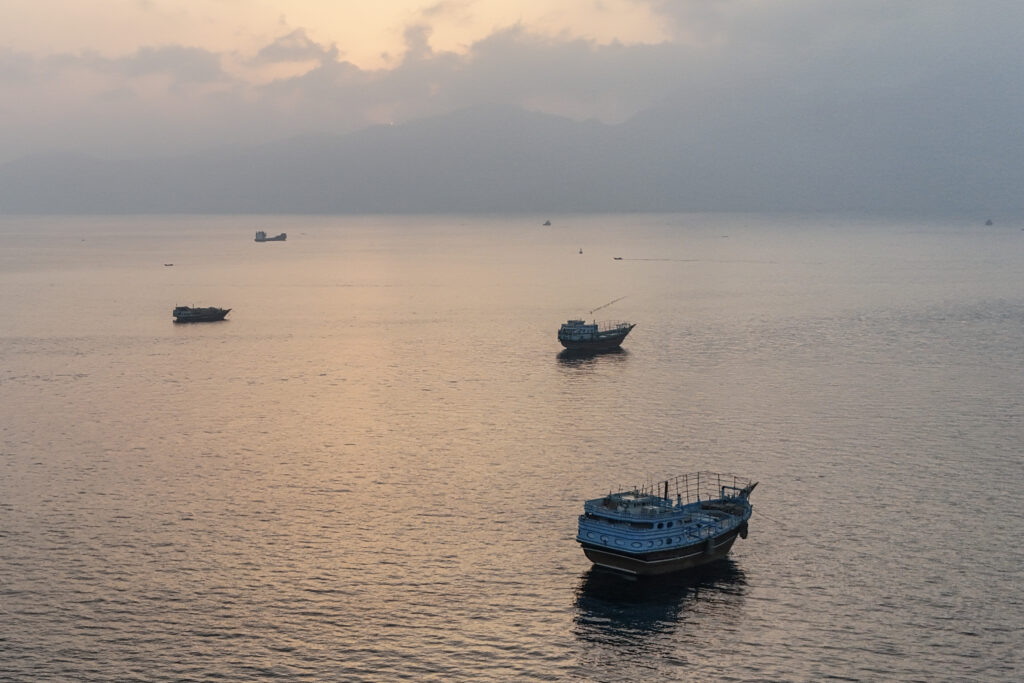
The Iran war has turned the Gulf into a contested maritime battlespace, where access itself — not just supply — is being weaponised. The Strait of Hormuz is no longer just a critical artery of global trade, but a coercive lever, exposing the United Arab Emirates (UAE) and other Gulf states to sustained disruption, surging insurance costs, and direct attacks on critical infrastructure. This is not a temporary shock, but an evolution towards the more systematic use of maritime insecurity as an instrument of statecraft — linking disruption at sea with warfare and strategic signalling. Maritime risk has escalated from a commercial hazard to an overt military threat, and energy security is now inseparable from maritime security and credible deterrence. This is not the first time the Strait has been threatened or disrupted. Military colleges around the world have war-gamed this scenario for decades. Yet, when it happened, the world was ill-prepared to deal with it. The crisis has exposed the limits of existing deterrence and preparedness frameworks. For Gulf states, the security of energy flows now outweighs the volume of exports — forcing a costly but necessary shift towards redundancy, resilience, and greater regional self-reliance in an increasingly volatile security environment.
Under international law, the Strait of Hormuz is a “strait used for international navigation”. Transit passage through such a body of water is a right of navigation, not a commercial favour extended by a coastal state. It is not Iran’s sovereign toll gate, or private cash machine. Geography gives Iran one side of the coastline and the Gulf states the other; it does not confer the right to invoice or charge for innocent passage. Charging vessels for transiting is in clear violation of the United Nations Convention on the Law of the Sea (Unclos) and International Maritime Organization (IMO) conventions. A “permission/payment-based” access or tollway that introduces selective maritime access based on political alignment is not in anyone’s interests. But we are where we are because international institutions and laws, without enforcement mechanisms, are impotent. Alliance responses are fragmented. So, the real crisis is in the collapse of confidence — legal and commercial — that underpins freedom of navigation, a core American strategic principle. Abandoning it would create strategic openings for other powers, such as China in the Taiwan Strait.
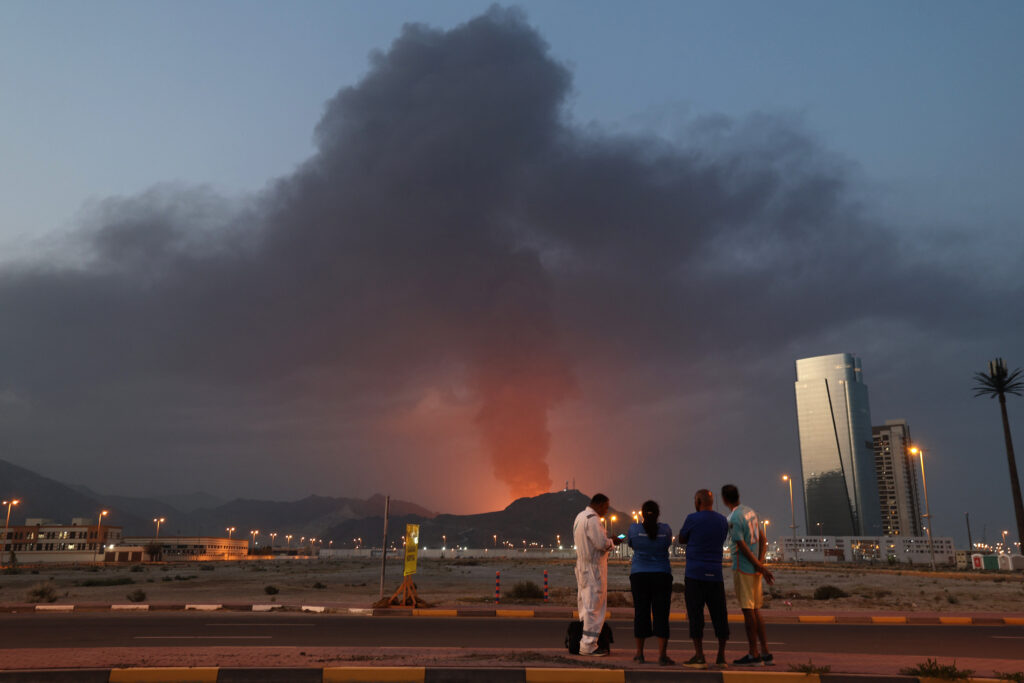
From a foreign policy perspective, Iran’s use of the Strait of Hormuz as an instrument of coercion has shattered decades of Gulf hedging and neutrality strategies, making their worst-case scenario a reality. Still, the Gulf Cooperation Council (GCC) states have pursued a policy of strategic restraint, rather than direct participation in the conflict, in order to avoid becoming the primary battleground. But their animosity towards and distrust of Iran — sparked by attacks on civilian infrastructure — will last for decades, no matter the fate of the Islamic Republic. Should Qatar or Oman cut deals with Tehran, they would do so under conditions of structural asymmetry, shaped by Iran’s capacity to weaponise access to the Strait and modulate escalation, thereby narrowing their effective bargaining space.. As the Gulf’s premier financial centre and a critical global shipping and transit hub, the UAE has borne the brunt of Iran’s coercive strategy aimed at pressuring the United States and Israel. Strategic hubs like Jebel Ali in Dubai and Fujairah have faced operational suspensions or targeted attacks, impacting their roles as global logistics and refuelling centres. Major disruptions have occurred, leading QatarEnergy to declare force majeure on some long-term LNG contracts, and wildly fluctuating oil prices, among others.
Even though only a small fraction of Iranian weaponry has hit its targets, these successes have shattered the Gulf’s carefully-cultivated image as an island of tranquillity and a haven for investment in a turbulent region, sending shockwaves across global energy, industrial and financial markets. Even limited strikes on high-value assets can trigger disproportionate market reactions, and spark a global economic slowdown. The Gulf countries will now have to rethink their long-term economic plans, especially the 2030 or 2040 “visions” built on the premise of peace and stability. But this would require a paradigm shift. Going forward, the protection of critical infrastructure, and economic and societal resilience, will be more important than economic growth. The Gulf states will thus need to strike a far tighter balance between economic ambitions, deterrence, and diversified strategic alliances.
From a security perspective, the high interception rates of incoming missiles and drones have not masked a more important reality: Even limited successes against high-value assets expose gaps in air and missile defence architecture. The GCC’s defence has long been based on external security guarantees and forward-deployed Western forces, but recent conflicts have exposed their limits —US bases have become targets rather than shields, deterrence has proven porous, and some Gulf states have questioned the effectiveness of the very security architecture they depend on. Another concern is that Washington may prioritise global stability over regional security interests. Gulf states will thus need do more to defend themselves. Their longer-term response will be self-strengthening and security diversification, even if the absence of credible alternatives will force them to rely on existing partners for now. Given their ties with Iran, China and Russia will remain constrained as security providers. Instead, the Gulf states might follow the lead of countries such as the United Kingdom, Ukraine, France, South Korea, Turkey, and India, which are expanding defence cooperation, particularly in high-demand areas such as integrated air and missile defence, counter-drone systems, and mine countermeasure capabilities.
In this context, the core vulnerability of the 21st-Century maritime system lies not in the open ocean, but in narrow chokepoints such as the Strait of Hormuz, the Bab el-Mandeb, and Strait of Malacca. Here, the limits of military power are stark. Anti-access/area denial (A2/AD) tools —mines, drones, missiles, and fast attack craft — create a high-risk operating environment where even powerful navies cannot guarantee safety. A weaker state can impose disproportionate disruption through sea-denial tactics without ever defeating a superior navy. Iran’s strategy of “coercion without control” shows the effectiveness of asymmetric “chokepoint warfare”, in which sea denial, rather than sea control, is sufficient to paralyse the global economy. Hormuz is now viewed as Tehran’s “golden strategic asset”, and it has deployed tactics such as harassment, seizures, and warning shots to exploit it. In other words, littoral warfare waged with asymmetric low-cost technologies such as drones, mines, and mobile missile systems can offset traditional naval dominance by imposing disproportionate costs, constraining high-end platforms, and enabling effective sea-denial against superior fleets. The implications are global. The weaponisation of chokepoints enables selective access — privileging friendly states, while excluding adversaries — allowing geography to be leveraged for maximum effect. What is particularly concerning is that what Iran is doing in Hormuz is replicable elsewhere, for example, by China in the Taiwan Strait, or the South China Sea. The danger is a shift towards a fragmented maritime order, where access becomes conditional and might is right.
More importantly, the Hormuz disruption demonstrates that the contemporary maritime order is far more fragile than commonly assumed, especially in contested littorals. It rests on three implicit assumptions: (1) That freedom of navigation is enforceable at acceptable cost; (2) that naval superiority ensures access; and (3) that markets can absorb geopolitical risk without systemic disruption. All three assumptions are now under strain. The limits of military power are evident in the rise of anti-access/area denial (A2/AD) capabilities. As noted earlier, mines, drones, missiles, and small boats create a high-risk operating environment in which even powerful navies cannot guarantee safe passage. Commercial fragility is clear from the surge in war-risk premiums. When insurance costs skyrocket, crews and shipowners refuse transit, and shipping halts even before bombs or mines explode. Even after the fighting stops, higher baseline costs and risk premiums are likely to persist. Maritime security is therefore as much financial as it is military. For developing economies, the consequences are severe: Higher energy costs, disrupted fertiliser and food supply chains, and heightened risks of macroeconomic instability, famine, and political unrest.
So Where Does This Lead Us, and What Does it Portend?
In the near term, the region must accept the tyranny of geography: Most GCC states remain structurally dependent on the Strait of Hormuz. There is no scalable substitute for it. However, vulnerability is uneven. The UAE is somewhat better positioned than Kuwait and Qatar, due to partial bypass capacity and a diversified logistics infrastructure, while Saudi Arabia also retains limited alternatives. The Emirates’ relative advantage rests on infrastructure such as Fujairah (located outside Hormuz), Saudi Arabia’s on east-west pipeline capacity. Yet these alternatives are insufficient to offset full-scale disruption. They reduce risk at the margins, but do not eliminate systemic exposure. Critical infrastructure and logistics hubs have therefore become high-value targets in any sustained escalation. The UAE may be less structurally vulnerable than other GCC peers, but its economy is more vulnerable due to its role as a global trade, finance, aviation, and logistics hub.
Over the longer term, resilience will require a hybrid architecture of land–sea connectivity. This includes expanded Hormuz-bypass capacity, enhanced pipeline networks (including the Saudi east-west and UAE-Oman corridors), overland links to Red Sea and Indian Ocean ports, and greater airlift capacity for critical supplies. Rerouting maritime traffic around the Cape of Good Hope remains a fallback option, but it is costly, inefficient, and capacity-constrained. Oman’s strategic importance is also likely to increase, given its three Indian Ocean ports that could facilitate direct export routes for Saudi, Qatari, and Emirati hydrocarbons. At the same time, the stalled India-Middle East-Europe Economic Corridor (Imec) could gain a new lease of life, since its geopolitical value lies in bypassing all three critical chokepoints — the Strait of Hormuz, Bab el-Mandeb, and the Suez Canal — through integrated railroads and maritime links extending to the Mediterranean. More broadly, the current crisis is likely to accelerate global energy diversification, and reinforce the long-term shift toward renewables. Over time, it will contribute to a reconfiguration of global energy flows and a more fragmented, multi-corridor trade architecture.
In the energy sector, Gulf states must accelerate logistics diversification by shifting flows towards Red Sea routes, contingent on mitigating the Houthi threat, overland corridors, and east coast ports in Oman and the UAE. These adaptations improve resilience, but come at the cost of higher complexity and reduced efficiency, compared to pre-conflict trade flows. A multi-route logistics architecture is needed even if it is structurally less efficient than the previous single-corridor system. The strategic priority is to reduce dependence on the Strait of Hormuz by building redundancy across export and import pathways. This requires three parallel tracks: (1) Expanding Fujairah’s capacity and connectivity; (2) accelerating integration of overland and east coast corridors through Oman and the UAE; and (3) developing strategic storage buffers for hydrocarbons and critical inputs. Together, these measures harden ports, terminals, and logistics hubs against disruption while improving systemic resilience. At the same time, Gulf states need to invest in enabling mechanisms that preserve commercial viability under stress — particularly crisis insurance frameworks and risk-sharing instruments that prevent market paralysis during conflict episodes. The objective should be to eliminate the single point-of-failure dependence on Hormuz and replace it with a distributed, multi-node energy and logistics system spanning sea, land, and storage networks.
For the UAE, specifically, the war has clarified several realities. First, while it retains a relative resilience advantage due to Fujairah and diversified infrastructure, it is still highly exposed to instability in Hormuz. Secondly, it should evolve into a hybrid security-logistics power, where energy flows, infrastructure protection, and strategic deterrence are tightly integrated.
Militarily, maritime security has shifted from a law-enforcement paradigm to a warfighting environment, requiring higher-intensity assets, coordination, and command integration. The Gulf maritime domain is now a contested conflict zone, not a policing space. Therefore, the GCC states must prepare for high-end littoral warfare. This requires enhanced mine and underwater drone countermeasures, improved escort capabilities, and updated doctrines for operating under persistent threat conditions. It also demands advance planning for ad-hoc multinational maritime security coalitions.
More importantly, air and missile defence require integration with maritime operations. Missile and drone defence systems must also be tied directly to the protection of commercial ports, storage facilities, terminals, and logistics infrastructure. Security planning must be embedded into economic and supply-chain resilience strategies with a clear objective: Absorbing volatility without systemic disruption, and sustaining the country’s role as a global logistics hub even under conflict conditions.
At the regional level, the GCC should prioritise regional frameworks for shared surveillance, coordinated naval escorts, and joint crisis response mechanisms. The objective should be to move towards a collective deterrence posture that reduces fragmentation and improves response speed. This includes strengthening naval and air-sea denial capabilities, investing in counter-drone systems, mine countermeasures, and convoy protection architectures, and deepening maritime coordination across the GCC and key external partners. This also entails a shift from being security consumers to security providers. Recent conflict dynamics have made it imperative for the Gulf states to strive for greater intra-GCC alignment, including shared air-defence assets and more integrated missile defence postures to protect critical infrastructure. Yet even basic coordination has historically proven difficult, and political fragmentation, divergent threat perceptions, and sovereignty sensitivities are likely to impede the level of operational integration required. In fact, current conflict dynamics — alongside the UAE’s exit from Opec — may further exacerbate intra-Gulf divergences and rivalries, complicating prospects for deeper cooperation.
At the global level, there is a parallel need to strengthen the implementation of Unclos-based norms through state practice and cooperative mechanisms, ensuring that the existing legal framework keeps pace with technological change and emerging hybrid maritime threats. More broadly, the strategic imperative is to reduce over-dependence on chokepoints like the Strait of Hormuz and prepare for a more distributed post-chokepoint energy and trade architecture. If managed effectively, this shift would also deter future attempts to weaponise maritime chokepoints as instruments of systemic economic coercion.
Conclusion
The conflict demonstrates a fundamental inversion: Economic strength in peacetime becomes strategic vulnerability in wartime. The Strait of Hormuz and Bab el-Mandeb have proven highly exposed to disruption, where even limited drone and missile activity can trigger “self-closure” by commercial actors, fragmenting global energy flows without requiring sustained blockade.
Critical infrastructure has also become part of the deterrence equation. Energy facilities —refineries, gas processing plants, and export terminals — are no longer purely economic assets, but instruments of signalling and coercion within a broader grey-zone and hybrid conflict environment. Maritime security, in turn, has shifted decisively from piracy management to state-on-state competition, where sea denial, rather than sea control, shapes outcomes.
In the short term, global energy flows remain structurally dependent on Hormuz, while alternative routes via pipelines, the Red Sea, and Fujairah remain constrained by scale, cost, and logistical complexity. As a result, energy markets are likely to remain structurally risk-priced, with volatility increasingly driven by security dynamics rather than fundamentals of supply and demand. The longer-term implication is more profound: The Gulf’s energy future — and the Gulf states’ power and prosperity — will be defined less by the “volume of exports” and more by the ability to ensure the “security of flow.” In this emerging order, resilience, redundancy, and contested access — not efficiency alone — will define strategic and economic power.
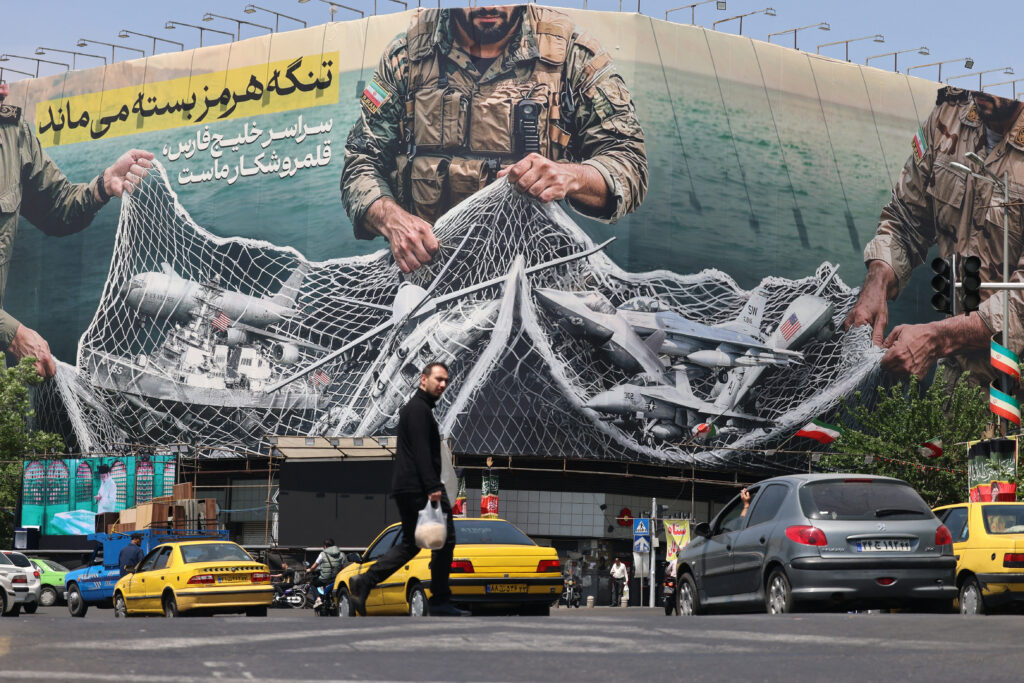
Image Caption: Vehicles drive past a giant billboard reading ‘The Strait of Hormuz remains closed’ at the Revolution Square in Tehran on 28 April 2026. Photo: AFP
About the Author