
The Board of Peace’s Unfinishable Business
- Clemens Chay
- -
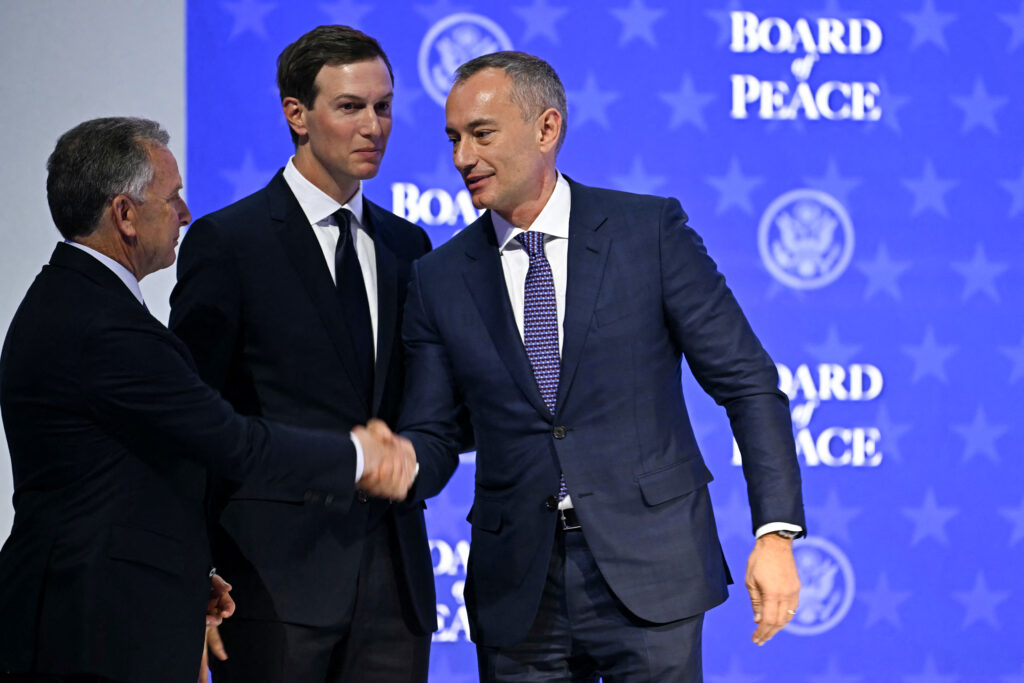
Speaking at the Hili Forum in Abu Dhabi on 7 September, Nickolay Mladenov, the High Representative for Gaza and Director-General of the United States-proposed Board of Peace, acknowledged that the Strip’s recovery remains “very far from a required political solution”, and that it has yet to achieve any meaningful sense of political stability. The admission qualifies an earlier declaration made by US President Donald Trump in late July, when he took to Truth Social toannounce a “HISTORIC agreement for the COMPLETE DISARMAMENT of Hamas and all other armed groups in Gaza”. The Board of Peace lauded the breakthrough, with police-held weapons expected to be transferred first, followed by the decommissioning of heavy arms. One Hamas official told Al Jazeera that all efforts had gone towards reaching “the best possible formula that was achievable”. Mr Mladenov himself wrote on X at the time that “implementation and verification have to be real”, while “(Israeli) withdrawal must move in lockstep with decommissioning.”
But that process, now codified in a 15-point Gaza Roadmap, has yet to bear fruit. Hamas confirmed agreement only through mediators, without issuing a direct official statement, and laid down its conditions: Ceasefire compliance, increased aid flows into Gaza, and an Israeli troop pullback. Israeli Prime Minister Benjamin Netanyahu, who had met Mr Trump in Washington days before the declared agreement, remained publicly silent until nine days after the announcement, when he opened a government meeting by declaring that “Israel does not accept the 15-point document”. The Israel Defense Forces (IDF), he insisted, would not withdraw “until Hamas is genuinely disarmed — not fictitiously disarmed”.
The gap between announcement and reality could not be starker. The roadmap is now caught between two intractable political constraints: Mr Netanyahu’s battle for political survival ahead of the 27 October elections, and Hamas’ own manoeuvring to retain relevance by conditioning compliance on Israeli steps that have yet to materialise.
Hamas’ 15-point Cover
The 15-point roadmap (per Articles 2 and 3) envisions a phased, reciprocal process linking the cessation of military operations by Israel, Hamas, and Palestinian factions — and therein lies the fundamental basis of contestation. Who stops first? Hamas’ dissolution of its Gaza-based government in August — nominally to hand over administrative authority after almost two decades in power — now appears as more of a tactical manoeuvre than a genuine concession. By dissolving first, Hamas signalled that the ball was now in Israel’s court, projecting compliance with the US-brokered plan while applying indirect pressure on Tel Aviv to reduce its military presence in Gaza.
The ground sentiment captured in the Palestinian Center for Policy and Survey Research’s August survey reinforces this reading. Hamas’ popularity has fallen sharply — confidence in its ability to represent Palestinians dropped from 41 per cent to 28 per cent — yet 72 per cent of respondents still opposed disarming before Israel fully withdrew from the Strip. The Board’s own plan fared little better, receiving only 24 per cent trust on the ground. Hamas is thus wresting what is left of its relevance from a position of popular weakness but tactical cunning: It can afford to appear cooperative because Palestinian public opinion will not permit the disarmament its cooperation nominally promises.
The roadmap’s own language compounds this. Rather than mandating “disarmament”, the text calls for weapons to be “decommissioned and stored” under Palestinian supervision — a formulation Hamas interprets as controlled storage inside Gaza, whereas Israel insists on complete physical removal from the territory. The semantic gap is not incidental, but follows the logic of a sequencing trap. Hamas can endorse the plan in good faith, knowing that Israel’s failure to withdraw positions it as the obstacle, and forecloses the very implementation Tel Aviv demands.
Netanyahu’s Political Gambit and Ground Implications
Israel’s rejection of the 15-point plan is inseparable from Mr Netanyahu’s own political fortunes. Ahead of the 27 Oct elections, he has declared that as long as he remains prime minister, there will be no Palestinian state — “not in Gaza, and not in Judea and Samaria”. The statement’s intended audience is his governing coalition, whose survival depends on maximalist demands. Bezalel Smotrich and Itamar Ben-Gvir, his far-right ministers and coalition partners, have made clear that concessions on Gaza withdrawal would cost Mr Netanyahu their seats. In July, both ministers led thousands of settlers to the Gaza perimeter, demanding the re-establishment of Israeli settlements. In the West Bank, settler violence has reached an average of 6.6 incidents per day in 2026, prompting six countries — the United Kingdom, France, Canada, Australia, New Zealand, and Norway — to sanction both ministers for inciting extremist violence. More recently, 12 countries have also sanctioned trade with Israeli settlements in the West Bank.
But far from keeping settlement plans off the Cabinet agenda, Mr Netanyahu has presided over a July decision to budget 1.3 billion shekels (US$434 million) for establishing 34 new settlements, alongside the latest calls by the head of an Israeli settlements council in the West Bank to launch a military operation to dismantle the Palestinian Authority. These decisions serve as political currency for Mr Smotrich and Mr Ben-Gvir, while drawing mounting international condemnation.
Five polls paint a highly-fragmented electoral picture: No bloc commands a clear path to a simple majority of 61 seats, so a broad coalition or unity government appears the most likely outcome. Retired Brigadier-General Ofer Winter’s launch of Amcha Yisrael (People of Israel) has shaken the arithmetic of the right — polling at four to eight seats, it risks siphoning votes from Mr Netanyahu’s Likud party. But the more consequential threat comes from the opposition: Another retired general, Gadi Eisenkot, has vaulted his Yashar party ahead of Likud, and 48 per cent of polled respondents viewed the former IDF Chief of Staff as a more suitable prime minister than Mr Netanyahu, who was endorsed by just 37 per cent.
A September JPPI survey found that 59 per cent of Israelis would not agree to an IDF withdrawal from Gaza without retaining a security perimeter. No leading candidate backs a Palestinian state, and the Board’s roadmap — premised on territorial flexibility — also appears to have no political constituency in the current cycle.
These dynamics translate directly into consequences on the ground. The Board’s Gaza fund has not received the monetary contributions it has claimed, leaving reconstruction financing frozen. The National Committee for the Administration of Gaza remains unable to enter the Strip, its mandate contingent on a political framework that neither party has accepted.
Progress on the International Stabilization Force, meanwhile, remains limited. Morocco, Kosovo and Albania recently signed Participating Country Agreements, while Israel’s Cabinet approved the ISF’s entry into areas of Gaza outside Israeli military control in late July — but made this strictly conditional on full IDF coordination. Indonesia’s pledge of up to 8,000 troops — the largest commitment by far — remains on indefinite hold, leaving the force well short of the 20,000 envisioned at launch. The actions of the world’s largest Muslim-majority nation are instructive. Jakarta’s decision reflected not only the distraction from the Iran conflict, but acute domestic pressure. President Prabowo Subianto even had to hold a meeting with more than 50 leaders of major Islamic organisations to convince them that Indonesia was prepared to withdraw from the Board if it did not benefit Palestine.
Trump, Netanyahu, and Gazans
Mr Netanyahu’s rigidity on Gaza contrasts with his willingness to fold to American pressure elsewhere. After Israel struck Doha in September 2025, killing a Qatari security officer, the Prime Minister formally apologised to his counterpart in a Trump-brokered trilateral call. The apology sparked a fierce backlash from Mr Smotrich, who called it “a grovelling apology to a state that supports terrorism”. On Iran and Lebanon, Mr Trump pressured the Israeli leader into accepting ceasefires, which Mr Netanyahu framed publicly as “tactical disagreements“ with a friend, thus absorbing the political cost at home while accommodating American priorities.
Where Gaza is concerned, he will not budge. His stance is tied to the demands of his coalition, his voter base, and a public whose security calculus was fundamentally re-ordered by the terrorist attacks of 7 October, 2023 — a trauma that has made any arrangement perceived as leaving Hamas intact politically untenable. That Washington continues to supply the Israeli military with arms regardless is telling: The Trump Administration’s approval of a US$2.8 billion arms package for Israel — including 40,000 one-ton bombs — underscores that pressure on the roadmap does not necessarily preclude its steadfast support to Israel.
For the two million Gazans caught in the middle, the United Nations has described the humanitarian situation as at an “absolute breaking point”, with the upcoming cold season set to compound their misery. Aid remains largely inaccessible despite mediation by Egypt, Qatar, and Turkey.
Meanwhile, a pattern of privatised and politicised relief has taken shape: The Board of Peace’s reconstruction fund, Jared Kushner’s “Gaza Riviera“ real estate vision, and the now-defunct Gaza Humanitarian Foundation — an Israeli and US-backed entity that UN experts described as “a non-governmental organisation created by Israel, with US support, to allegedly distribute aid in Gaza” — together raise serious questions about whether privatisation of aid has become a substitute for, rather than a facilitator of, conflict resolution.
The Board must press harder on Israel to relinquish control over the Strip, and engage more seriously with peacebuilding processes — in particular the Disarmament, Demobilisation and Reintegration (DDR) programmes that design context-specific pathways for members of armed groups. Without that pressure, it risks becoming an instrument of management their reliance on Washington, the Board’s membership is largely composed of smaller states — Albania, Bulgaria, Cambodia, El Salvador, Mongolia, Paraguay, among others — whose presence provides political cover, rather than substantive capacity. The Board’s founding premise that broad international legitimacy could be assembled around an American-led initiative outside the UN has not survived contact with the region’s realities.
The scale of the task is captured in a Pew Research Center survey that was conducted in the spring and published this month: Only 17 per cent of Israelis and 21 per cent of Palestinians in the West Bank and East Jerusalem believe Israel and a Palestinian state could exist together in peace. That shared, symmetrical despair is the environment in which the Board must operate. Whether pledged resources can be converted into genuine leverage — over Israel as much as Hamas — is the question on which its legacy will ultimately rest.
Image Caption: US Special Envoy Steve Witkoff (L) shakes hands with Nickolay Mladenov, Bulgarian High Representative for Gaza (R) next to US businessman Jared Kushner at the “Board of Peace” meeting during the World Economic Forum (WEF) annual meeting in Davos on 22 January 2026.
About the Author
Clemens Chay is Senior Fellow for Geopolitics at the Observer Research Foundation Middle East.
More in This Series
- By Reza Asadian and Hamid Bahrami
- -
- Mohammad Eslami and Zeynab Malakouti
- -