On 21 October, defence officials from Qatar, Turkey, Pakistan, and Indonesia signed the “Badr” memorandum in Doha, pledging to deepen cooperation in defence production, training, and research. However, the text was notably light on specifics, and named no products. Regardless, the signature matters well beyond the defence industry. It squarely places Indonesia, under President Prabowo Subianto, inside a steadily growing web of ties with Middle Eastern powers. This raises two questions. Firstly, in what ways does the memorandum support Indonesia’s defence modernisation ambitions? Second, what does it say about Indonesia’s place in the current geopolitics of the Middle East?
Strategic Autonomy: Indonesia and the Middle East Under Prabowo
President Prabowo has signalled his ambition to modernise Indonesia’s defence forces by procuring a range of military platforms, including Rafale fighter jets and the Giuseppe Garibaldi aircraft carrier, and by expanding the organisational structure of the military. In doing so, Indonesia appears to be maintaining its strategy of diversifying arms procurement, which forms part of the country’s broader pursuit of strategic autonomy. The Badr memorandum, which centres on defence cooperation, could therefore serve as an opportunity to support Indonesia’s defence modernisation goals. Indonesia is also no stranger to Turkey in this regard, having recently acquired several Turkish-made platforms.
For Jakarta, Badr is best understood as the latest step in an established pattern of diversification, rather than a sudden turning point. Under Mr Prabowo, Indonesia has steadily expanded relationships with other middle powers, most visibly by joining BRICS in January 2025. The Middle East has since become a central arena for this strategy. Indonesia signed the charter of the United States-led Board of Peace at Davos in January 2026, pledged up to 8,000 personnel to the International Stabilisation Force (ISF) in Gaza the following month, and had earlier agreed to buy 48 Kaan fighter jets from Turkey in 2025. These moves built on the commercial ties with the United Arab Emirates and Qatar that began under former President Joko “Jokowi” Widodo, and have continued to expand. Not everything has gone smoothly, however. Deployment to the ISF was subsequently put on hold in March, with regional security risks cited as the reason.
That said, it would be a mistake to read too much into the Doha initiative. Indonesia was represented by Deputy Defence Minister Yusuf Jauhari, whose portfolio covers the defence industry and logistics, rather than strategy or doctrine, which sit with his counterpart, Richard Tampubolon. The choice of signatory tracks the memorandum’s content fairly precisely: This was an industrial undertaking, signed by the official whose responsibilities fall in this area, unlike the other signatories, who were all full defence ministers. Analysts quoted by Al Jazeera described a division of labour in which Turkey supplies the hardware and technology, Qatar provides investment and demand, and Pakistan and Indonesia contribute manufacturing capacity, skilled labour, and large domestic markets. On that reading, Indonesia is chiefly a buyer and a source of scale, rather than a new defence partner. Furthermore, the bilateral arrangements that matter most, from the Kaan jets to a jointly-built tank, had already existed.
Even if Badr were to eventually acquire something of a mutual-defence character — such as the Mecca Agreement between Saudi Arabia, Pakistan, and Turkey — Indonesia would contribute numbers, rather than capabilities. Essentially, Badr formalises a structure that bundles existing deals together. Since the agreement takes the form of a memorandum of understanding, it is also less politically risky for the current administration. A future government that dislikes it in its current form could amend or revoke it relatively easily.
Why the Alignment Framing Does Not Hold
What actually matters more is what Indonesia does not want the pact to signal. A grouping built around Ankara and Doha invites being read as a Sunni Islamist bloc set against the emerging Indo-Abrahamic convergence applied to the Mecca agreement — something commentaries in India have touched on. Indeed, media in India have cast the Badr MoU as an expansion of an emerging “Islamic Nato”, and as an extension of the Mecca Defence Alliance. These articles have raised New Delhi’s concerns, which rest less on the memorandum itself than on what Turkish and Qatari industrial support might eventually do for Pakistan’s capabilities.
However, the inference is weaker than it looks, for three reasons.
First, Indonesia is legally bound by its bebas aktif (free and active) doctrine, and is understandably reluctant to be cast in either camp. Pakistan offers a useful contrast: As a signatory to the Mecca Agreement, it is obliged to assist the others if they are attacked — just as it would expect the Saudis and Turks to come to its aid if it is. Indonesia has taken no comparable step.
Second, Indonesia remains open for cooperation with its various Middle Eastern counterparts. This stance is reflected in President Prabowo’s meetings with his Middle Eastern counterparts (see Figure 1). Under him, Indonesia’s engagement with the Middle East has focused largely on strengthening bilateral relations, deepening economic cooperation, addressing the Palestinian question, and expanding energy partnerships (see Figure 2). Pursuing this agenda requires Indonesia to retain the independence to engage with every country in the region on its own terms.
Third, an official alignment could undermine Indonesia’s ability to pursue its national interests. As Figure 2 shows, Indonesia’s engagements with its Middle Eastern counterparts span a wide range of issues, and maintaining good relations with all parties, including partners outside the region, is necessary if it is to serve Jakarta’s array of interests.
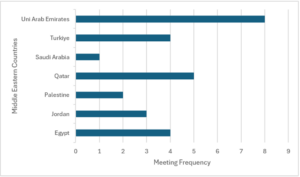
Figure 1: President Prabowo’s Meetings with Middle East Country Officials (October 2024-September 2026) – Compiled by the authors from various news sources
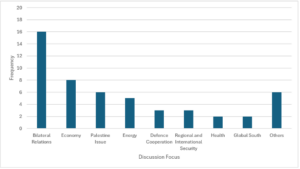
Figure 2: President Prabowo’s Discussion Focus with Middle Eastern Country Officials (October 2024-September 2026) – Compiled by the authors from various news sources
Formal Alliances a No-Go for Jakarta
That being the case, it would be wise to expect a rebalancing pattern soon. Each move that appears to align Indonesia with one camp is likely to be followed swiftly by another that restores the balance, whether through new MoUs or high-level visits to other Middle Eastern capitals. Abu Dhabi is the likeliest next stop, given the Prabowo administration’s evident wish to be friends with all sides, as in its open offer to mediate between Washington and Tehran — which drew a cool response from both parties. Furthermore, with the rift between Riyadh and Abu Dhabi growing, especially on Yemen.Indonesia has to balance the interests of the two regional powers against its burgeoning relationships with Ankara and Doha. Ultimately, being friends with all sides is easier to declare than to execute.
Forging deeper cooperation with Turkey and Qatar may therefore represent something of a median position of sorts. Both, like Pakistan, run relatively independent foreign policies in the Middle East. None of the three has broken with Washington, even where each has its quarrels, and one analyst cited by Al Jazeera cautions that the Doha pact is no break with the United States. Qatar is unlikely to abandon its US relationship, and Turkey seeks technological independence within Nato, rather than autonomy from it. Qatar and Turkey have also kept working channels to Israel despite their sharp criticism of its conduct, all three remain on workable terms with Tehran, and while neither has warm ties with the UAE, they are not openly hostile to it either. Whether this grouping is quickly becoming the most convenient one for Indonesia to fall back on remains to be seen. The Board of Peace, which has drawn criticism from Muslim groups at home, and which Mr Prabowo has said Indonesia would quit if it ceased to benefit Palestinians, shows how rapidly other options can become costly.
Taken together, Badr is best read as hedging, rather than alignment: A way for Indonesia to quietly add partners without shedding any. Indonesia’s nod to the Badr agreement provides an opportunity to uphold the country’s defence modernisation ambitions and desire to acquire cutting-edge military technology. Nonetheless, Indonesia remains keeping itself open to all parties in the Middle East. Thus, forging formal alliances, especially with specific axes involved in a regional rivalry, would be the last thing Jakarta wants to pursue. Ultimately, the Doha signature itself is easy to over-read. The more informative signal instead will be Jakarta’s next move, and whom it chooses to visit or sign with in its wake.
Image Caption: Screenshot of representatives (from left) Turkey, Qatar, Pakistan and Indonesia at the signing of the Badr Memorandum of Understanding in Doha on 21 October 2026. Photo: X/Ministry of Defense, Qatar
About the Author
Muhammad Garda Ramadhito is an Associate Research Fellow with the Indonesia Programme, S. Rajaratnam School of International Studies (RSIS).
Adhi Priamarizki is a Senior Associate Fellow with the Indonesia Programme, RSIS.