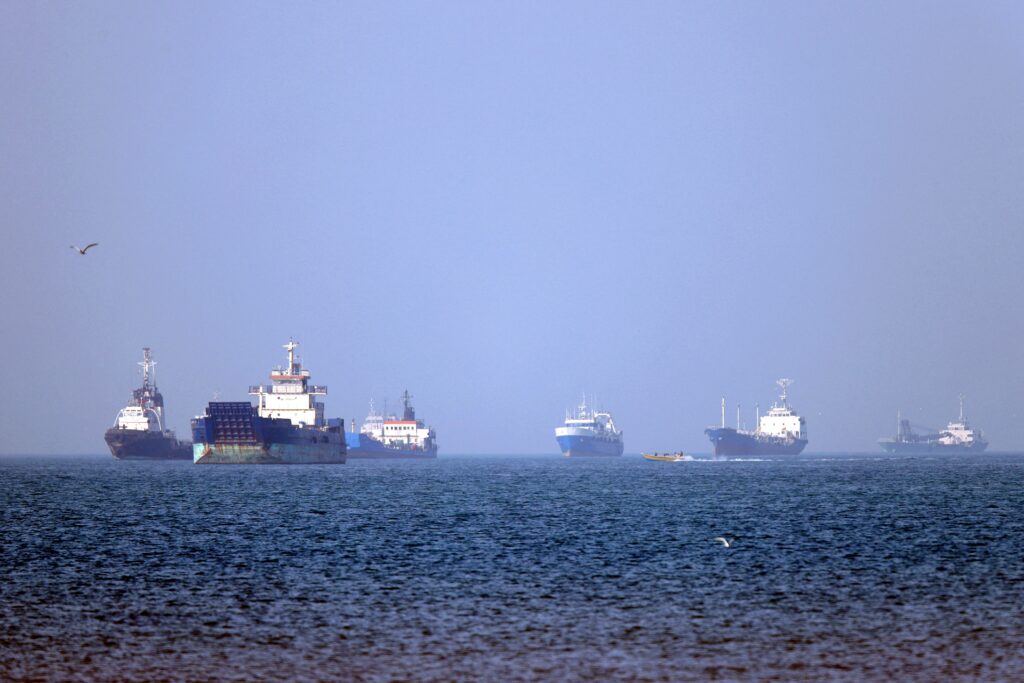
If geographical features could receive awards, the Strait of Hormuz would be the laureate of 2026, not because it is a fashionable tourist destination, or that it has the kind of visual imagery that easily captures global recognition. Hormuz has become famous for a less celebratory reason. The US-Iran war has brought the Strait into the global consciousness, turning a place long known to historians, mariners, and regional communities into a name repeated in newsrooms, markets, and private conversations.
In news graphics, the narrow water passage between Iran and Oman is depicted in maps often overlaid with arrows, tanker icons, naval symbols, warning colours, and fluctuating oil-price charts. It is further described as a “chokepoint” — a geographic bottleneck through which energy, commerce, and strategic power must pass. The Strait of Hormuz is the only sea passage connecting the Persian Gulf to the Gulf of Oman and the Arabian Sea. In 2024, for example, around 20 million barrels of oil per day moved through it, equivalent to approximately one-fifth of global petroleum consumption. It also carried about one-fifth of the global liquefied natural gas (LNG) trade.
These facts make it strategically indispensable. But the term “chokepoint” is inadequate. It represents Hormuz in a linear sequence: Ships, oil, territory, leverage, and reduces a historically layered maritime site to a risk that must be managed. It also raises necessary questions: Who can close the passage, which ships may pass, what will happen to oil prices, and how far naval power can go.
But these questions obscure an older and more complex history. The significance of the Strait did not begin with petroleum, nor can its meaning be exhausted by oil transit. In fact, because of its strategic location, Hormuz has been contested for centuries. Although its political and economic role has changed, from being a medieval maritime trade hub to a modern-day energy corridor, its geographical location has repeatedly made it a target of competition by imperial, national, and global powers. The history of the Strait shows how successive powers have tried to translate this geographical advantage into political authority: Through customs regulations, fortifications, naval power, alliances, commercial rules, and, in the current age, energy leverage. But the same history tells us that while access can be controlled and weaponised, it can never be converted into uncontested dominance.
Historical Background: Access, Contest, and Control
Hormuz’s importance predates the petroleum age by centuries. Its strategic importance stems from its location, which has long linked the Iranian plateau, Arabia, Mesopotamia, East Africa, South Asia, and, later, European maritime empires. Archaeological evidence points to trading connections with India by the first millennium BCE. During the Achaemenid Persian Empire (550-330 BCE), the Persian Gulf formed part of a broader imperial and maritime world, serving as an important corridor of communication between Babylonia and regions farther east, including India. Achaemenid political control over the Gulf was exercised through a combination of imperial authority and existing local political structures, allowing the empire to benefit from the region’s ports, maritime connections, and commercial networks (Potts, 2021). The waters around what would come to be known as the Strait of Hormuz were already part of a landscape of settlement, maritime contact, and long-distance exchange. This shows that access to the Gulf has had long-standing commercial and political importance. At the same time, the goods, political powers, commercial networks, and strategic purposes attached to that passage have changed across successive historical periods. From the late Achaemenid and early Hellenistic periods (around 300 BCE) through the intervening Parthian, Sasanian, and early Islamic eras, the powers, commodities, and forms of authority changed over time, but the underlying problem remained: Access to the Gulf was valuable enough to invite repeated efforts to regulate, exploit, and contest it.
By the 13th Century, the Kingdom of Hormuz had become a major maritime and commercial centre. Its location allowed rulers and merchants to mediate commerce between Iran, Arabia, India, East Africa, and the wider Indian Ocean. A multitude of goods passed through these waters: Horses bred in Arabia and Persia, for instance, were exported through Hormuz to Indian markets, while merchants arriving from India brought textiles, spices, rice, sugar, and metals. Chinese silk and ceramics also circulated through the same networks. The kingdom’s prosperity, therefore, rested not only on the movement of goods, but also on its capacity to tax, broker, protect, regulate, and, at times, restrict maritime exchanges. Customs revenue and commercial brokerage enabled Hormuzi rulers to extract wealth from the passage, and to assert influence over the commercial life of the Gulf.
By this time, the Strait also entered travellers’ narratives as a multicultural crossroads. In the late 13th Century, Marco Polo described the Hormuz harbour as a place where merchants arrived from India bearing spices, pearls, precious stones, silk, gold cloth, and elephant tusks. His emphasis was on redistribution — these goods were sold to merchants, who carried them onward to the wider world. The 15th-Century Russian traveller Afanasy Nikitin also described it as an immense emporium visited by merchants from around the world. A later expression of Hormuz’s wealth and cosmopolitan character appeared in the 16th Century writings of the Portuguese historian João de Barros, who referred to it as a “precious stone” set in the “ring” that is the world.[1] As diverse workers — sailors, merchants, marine pilots, translators, brokers, customs officials, shipbuilders, and migrant traders — congregated, so cultural traditions intersected.
This commercial prosperity eventually attracted imperial ambition. In the early 16th Century, Portuguese forces under Afonso de Albuquerque captured Hormuz and established control over the island and its trade. Portugal aimed to establish a network of fortified positions to exercise control over key commercial routes: Goa on the west coast of India, Malacca in South-east Asia, and Hormuz at the entrance to the Persian Gulf. They sought control of Hormuz because it was a major international market, and capturing it offered influence over a crucial commercial route. Portugal did not need to take over every commercial activity in Hormuz to benefit from it. The Portuguese built a fortress and used their naval presence to assert authority over maritime access, customs, and commercial movement between the Gulf and the Indian Ocean.[2] (Couto & Loureiro, 2008)
Portuguese conquest did not engender complete local submission. The Hormuzi ruling house[3] initially accepted Portuguese supremacy under coercion, agreeing to pay tribute, grant customs concessions, and build a fortress. However, Lisbon’s demands generated resistance: A local revolt took place in 1521-22, even as Hormuz continued to prosper as an international trading centre. Merchant communities did not disappear. Many opposed the disruption of established trade patterns, and some adapted by seeking alternate routes or forming agreements with the Portuguese to preserve their commercial activities. In this sense, the Portuguese episode is a historical precursor to a recurring feature of Hormuz’s later geopolitics: It was an attempt by outside powers to turn geographical advantage into political dominance, to regulate maritime passage, impose commercial rules, collect revenue, and secure an advantage over regional and imperial rivals.
But Portuguese Hormuz demonstrates the limits of this project. Portugal ruled the islands in Hormuz for more than a century, yet its position remained dependent on naval capacity, fort maintenance, commercial arrangements with local actors, and shifting regional power balances. It faced Ottoman competition in the Gulf and sustained Safavid hostility to foreign control, showing that such dominance depended on force, negotiation, and local cooperation, and was not uncontested.
In 1622, the Safavid Persian authorities, allied with the English East India Company, captured Hormuz from Portugal following a bloody siege and battle. Persia’s recovery of strategic islands in the Strait from European dominance was a significant assertion of Safavid power, but the victory was double-edged. The Safavids used English naval support to dislodge Portugal, thereby regaining political authority over the island and reshaping Gulf commerce. In return, the English East India Company gained access, privileges, and a durable foothold in Safavid Persia. The English had their own interests: For them, wresting control over the gateway to the Persian Gulf from the Portuguese would open new trade opportunities, increase their share of lucrative regional commerce, and provide strategic influence in the area. (Razzari, 2016)
The victory helped shift commercial activity towards Bandar Abbas, a port city on the Iranian mainland. The Portuguese fortress lost its centrality, but the region’s strategic and commercial importance did not disappear. In the long term, the capture of Hormuz set the stage for increased English influence in Persian affairs, and contributed to the gradual transformation of Gulf trade networks and regional politics for centuries to come.
The 19th and 20th Centuries changed the political economy of Hormuz once again. Britain’s rise in the Gulf was tied to protecting imperial sea routes to India, suppressing piracy, and building treaty-based relationships with rulers on the Arabian side of the Gulf. (Onley, 2009) British naval power reshaped the legal and military conditions under which access to the Gulf was managed. Yet, this did not produce uniform British control or eliminate regional agency. Local actors worked within, resisted, and sometimes benefited from this unequal order. British campaigns against the Qawasim and the General Treaty of 1820 illustrate its coercive foundation. Britain used military force and then imposed maritime restrictions that limited the Qawasim’s autonomy. The Al Bu Saʿid rulers of Muscat remained formally independent, but British support increasingly helped them secure their position. (Owtram, 2021)
Persian authorities likewise pursued their own interests at the Gulf’s entrance. Under a 1794 lease, the Sultan of Muscat administered Bandar Abbas on the Persian coast, but the Qajar government repeatedly sought to restore direct authority over the port. An 1855 agreement limited the remaining lease period, and Persia regained full control in 1868.[4] This episode shows that the 19th-Century Gulf was not simply divided between British power and local rulers: Persian, Omani, and Arab authorities all contested authority, trade, and access around the Strait. The broader result was an increasingly treaty-bound and militarised regional order in which Britain exercised exceptional influence, but did not fully eliminate local political competition. For Hormuz, its strategic importance was no longer dependent on its commercial value. It also depended on the political and legal arrangements governing navigation, coastal authority, and external intervention across the wider Gulf.
Between the First and Second World Wars, the question of authority in the Gulf became increasingly tied to national sovereignty and territorial claims. The region moved from older patterns of cross-Gulf commercial interdependence and fluid identity towards a more politically-divided order shaped by Iranian state-building, British intervention, and the changing position of Gulf Arab rulers. For Iranian authorities under Reza Khan, and then his son, the Gulf coast, islands, and maritime routes were part of a wider project to strengthen central state authority and assert national sovereignty. Hormuz was therefore embedded in a more contested political landscape even before the expansion of petroleum exports magnified its global importance. (Mueller, 2020)
Since the 1930s, oil has transformed the global stakes of Hormuz. Once large-scale petroleum extraction and export began across the Gulf, Hormuz became not simply an entrance to commercial ports, but the principal maritime outlet for an energy-producing region central to industrial economies. The cargo changed from horses, pearls, silk, spices, and ceramics to crude oil, liquefied natural gas, and, later, fertiliser and industrial inputs. This transformation changed the political significance of the Strait as much as its commercial function. Gulf economies became increasingly dependent on uninterrupted hydrocarbon exports, while oil-importing industrial states acquired a strong interest in keeping the passage open. Hormuz therefore emerged as a strategic transit chokepoint: A narrow passage through which a disproportionately large share of essential, internationally-traded energy supplies had to travel. Its security became linked to naval power, regional rivalries, international law, and the wider stability of global energy markets.
Although Hormuz’s political economy has evolved from a medieval trading centre to a modern energy corridor, its significance has consistently rested on its geographical position at the meeting point of the Gulf and the wider Indian Ocean. The modern image of Hormuz as an energy checkpoint is therefore only one layer of its history. Beneath it lie older worlds of trade, migration, translation, and maritime knowledge. To understand Hormuz in 2026 is to recognise both realities: A strategic corridor whose disruption can shake the global economy, and a historical threshold in which power has always been partial, contingent, and interdependent. As such, Iran and the United States would be wise to recognise that any attempt to assert control is constrained by the competing interests of rival powers, neighbouring sovereignties, the legal frameworks governing maritime space, the adaptive strategies of commercial actors, and the broader consequences that disruption within the Strait may generate beyond its immediate geographical boundaries. History reinforces that no actor can treat access as a purely unilateral matter.
Cultural Background: Maritime Exchange, Mobility, and Exchange
Apart from its age-old history as the locus of competition, the Strait also has rich cultural and linguistic shades. The etymology of the name “Hormuz” (also known as Hormoz or Ormuz) is uncertain: One proposed derivation connects it to “Ohrmazd”, a Middle Persian term associated with Ahura Mazda, the central divinity of Zoroastrian tradition, while other explanations link it to the fertile landscape, which gave rise to date-palm plantations. The uncertainty itself is revealing. Like the region, Hormuz has been shaped by overlapping linguistic, religious, and cultural worlds, rather than by a single fixed inheritance. Read metaphorically, the possible link to Ahura Mazda offers a useful contrast with the present crisis. Ahura Mazda is associated with wisdom and order; the contemporary Strait, by contrast, is frequently represented through uncertainty, escalation, economic risk, and military tension.
Long before it became a global energy chokepoint, Hormuz developed through the movement of merchants, sailors, pilgrims, administrators, soldiers, and migrants. They linked Persian, Arab, South Asian, East African, and, later, European worlds, making the Strait a site of exchange as well as rivalry. The same maritime networks that made Hormuz commercially and strategically valuable also generated social contacts and cultural translations — languages, religious and social practices, material culture, commercial knowledge, and lore. Hormuz was repeatedly shaped by multilingual intermediaries; it became a place where cultural differences had to be translated into practical forms of cooperation.
As part of the wider Gulf, Hormuz was a transnational crossroads among South Asian and African communities as well as Jewish, Christian, Zoroastrian, and Muslim populations. Armenian merchants from New Julfa, for example, used Gulf ports and Indian Ocean routes as part of commercial networks linking Iran with South Asia, Russia, the Mediterranean, Amsterdam, London, Manila, and Acapulco. Such networks show how commercial ties could cross imperial and political boundaries, carrying not only commodities but also people, information, languages, and cultural practices. (Aslanian, 2014)
Later evidence from the 18th-Century Gulf illustrates the durability of this maritime social world. Iranian, Arab, Armenian, Jewish, Hindu, Multani, Gujarati, and European traders and mariners connected through port-to-port trade, shared shipping enterprises, political alliances, and, among some notable families, marriage. Although this evidence concerns a later period and the wider Gulf rather than Hormuz alone, it demonstrates how maritime affiliation could be shaped by commercial partnership and seafaring experience, as well as by language, religion, or origin. Hormuz belonged to this broader world of negotiated and connected port societies. (Ricks, 2012)
This interconnectivity did not disappear with the rise of modern national boundaries. Cross-Gulf family, commercial, and cultural ties continue to link southern Iran with Dubai, Sharjah, Muscat, Bahrain, and other ports on the Arabian Peninsula. Many families in the United Arab Emirates trace histories of migration, trade, and kinship to Iran, East Africa, Baluchistan, and the wider Indian Ocean, while southern Iran remains home to Arab communities. Huwala populations, as one example, were shaped by long-standing maritime mobility. These relationships challenge any simple division between the two sides of the Gulf, and instead indicate the fluidity and hybridity of cultural identities around it. In short, the Gulf connected, rather than separated, the communities living along its shores.
During the current war, disruption to ferry and shipping routes, airspace restrictions, economic hardship, and limits on digital communication have affected the everyday lives of coastal communities across the Gulf. On Iranian islands near Hormuz, the suspension of ferry services, the collapse of tourism income, and fishing restrictions have reduced livelihoods and made it more difficult for families to stay connected across the water. Qeshm Island reveals the wider human and environmental stakes of disruption in the Strait. Located along the Strait of Hormuz, the island’s fisheries, passenger piers, tourism economy, and United Nations Education, Scientific and Cultural Organisation(Unesco)-recognised geological and ecological landscapes depend on safe maritime access and functioning local infrastructure. The war has turned this community and heritage landscape into a frontline space, illustrating that conflict in Hormuz threatens not only energy flows, but also the everyday social, economic, and environmental life of the coastal region.
The cultural value of Hormuz also lies in the maritime knowledge developed by its coastal communities. On Qeshm and along the northern Gulf coast, the traditional construction and sailing of wooden lenj boats has preserved boatbuilding, navigation, weather forecasting, fishing, pearl diving, and other skills. This knowledge includes specialised vocabulary, oral traditions, festivals, and sea songs, highlighting that the same sea passage has shaped social memory and cultural practice. Unesco inscribed the traditional skills of building and sailing lenj boats in the Persian Gulf on its List of Intangible Cultural Heritage in 2011, recognising both their regional importance and their vulnerability to modern economic and technological change.
For Iranian communities in Dubai[5] and elsewhere in the UAE, conflict has also intensified uncertainty around travel, business, family contact, and social belonging. The crisis therefore extends beyond oil transit and naval strategy, threatening the human networks that have historically connected Gulf communities and made the Strait of Hormuz a shared cultural space.
Hormuz: Beyond the Chokepoint
Hormuz’s history demonstrates the limits of control. Order in the Strait cannot mean the dominance of one state or external power over a passage. It is a negotiated condition that enables different peoples, vessels, goods, and ideas to move through shared waters. Geography makes this interdependence unavoidable: The Strait connects the Persian Gulf with the Gulf of Oman and the Arabian Sea, and its economic consequences reach far beyond the states on its shores.
A cultural reading of Hormuz recovers what the contemporary vocabulary of blockade, deterrence, and oil prices often leaves out. The Strait is a shared cultural space as much as a strategic waterway. Its value is found in the movement of people, in cross-Gulf family and merchant networks, in coastal livelihoods, and in maritime and sailing skills. To militarise or monopolise the Strait is therefore not merely to interrupt shipping, but also threatens the circulation of labour, knowledge, language, memory, and cultural practice on which the region has depended for centuries.
Perhaps Hormuz does deserve the imaginary prize of 2026: One for provocation. It raises a difficult question: What happens when a world built on integration begins to organise itself around possession and exclusion? Hormuz is as much a theatre of perception as it is a sea lane. Its significance lies not only in what happens there, but in what the possibility of disruption does to those who live near and far. It has been valuable for centuries not because it can be permanently dominated, but because it connects different societies, economies, and cultural worlds. Its history suggests that durable order will come not from suppressing movement or claiming absolute control, but from cooperation and recognition of the interdependence that the Strait makes impossible to ignore.
Hormuz has long been contested. Its history shows that attempts to dominate may generate a temporary advantage, but also give rise to resistance, and consequences that extend far beyond the Strait, limiting its value. A state, be it Iran or the United States, may be able to threaten shipping, interrupt passage, or impose costs on an adversary, but it cannot fully control the consequences of its actions, as the current war has shown. Raw power can create a crisis, but it cannot necessarily determine how that crisis will end.
* The writer is Research Affiliate at the Middle East Institute, National University of Singapore (NUS). Her research examines culture, politics, and identity across the Middle East and South-east Asia.
References:
Aslanian, S. D. (2014). From the Indian Ocean to the Mediterranean: The global trade networks of Armenian merchants from New Julfa. University of California Press.
Couto, D., & Loureiro, R. M. (Eds.) (2008). Revisiting Hormuz: Portuguese interactions in the Persian Gulf region in the early modern period. Harrassowitz Verlag.
Mueller, C. (2020). The origins of the Arab-Iranian conflict: Nationalism and sovereignty in the Gulf between the World Wars. Cambridge University Press.
Onley, J. (2009). Britain and the Gulf shaikhdoms, 1820–1971: The politics of protection (CIRS Occasional Paper No. 4). Center for International and Regional Studies, Georgetown University School of Foreign Service in Qatar. Britain and the Gulf Shaikhdoms, 1820 – 1971
Owtram, F. (2021, November 19). British power, the Al Bu Sa‘id Sultanate, and the Musandam Peninsula, 1800–1932. Qatar Digital Library.
Potts, D. T. (2021). The Persian Gulf. In B. Jacobs & R. Rollinger (Eds.), A companion to the Achaemenid Persian Empire (Vol. 1, pp. 519–528). Wiley. https://doi.org/10.1002/9781119071860.ch37
Razzari, D. B. (2016). “The Gulfe of Persia devours all”: English merchants in Safavīd Persia, 1616–1650 [Doctoral dissertation, University of California, Riverside]. eScholarship
Ricks, T. M. (2012). Notables, merchants, and shaykhs of Southern Iran and its ports: Politics and trade in the Persian Gulf, AD 1729–1789. Gorgias Press.
[1] Cited in the Preface of Couto & Loureiro (2008) translated from “Si terrarum orbis, quacqua patet annulus esset / Illius Ormisum gemma decusque foret.”
[2] More on the Portuguese control over the Gulf, see The beginning of Portuguese control over the ports of the Arabian Gulf
[3] The Hormuzi ruling dynasty governed the Kingdom of Hormuz, a commercial and political power centred on Hormuz and connected to ports on both sides of the Gulf. In 1507, the kingdom was formally ruled by King Seyf al-Din Abu Nadar (1505–1514). Still effective political power was exercised by his powerful vizier, Khwāja ʿAṭāʾ, a eunuch of Bengali origin who had risen to prominence at the Hormuzi court.
[4] De Planhol, X. (n.d.). Bandar-e ʿAbbās(i) i. The city. Encyclopedia Iranica. https://www.iranicaonline.org/articles/bandar-e-abbasi
[5] The Bastaki merchant families offer one clear example. Originating from Southern Iran, they began settling in Dubai from the late nineteenth century and established the Bastakiya quarter. Some maintained commercial offices in Bombay, Calcutta, Karachi, Bahrain, Kuwait, and other trading centres, allowing capital, commodities, and information to circulate across the Indian Ocean and Gulf.
Photo caption: Vessels anchored in the Strait of Hormuz, near Bandar Abbas, recently. Since antiquity, various powers have sought to wrest control of the Strait because of its strategic location. But Hormuz has also been a cultural and social gateway, enriching the world.