Strategic Paralysis in Gaza: The Cracks in the Trump-Netanyahu Alliance
- Evangeline Cheng
- -
As Operation Gideon’s Chariots — Israel’s renewed offensive in Gaza — intensifies, the country’s deployment of overwhelming military force stands in stark contrast to Donald Trump’s pursuit of quick diplomatic wins. The heretofore ironclad US-Israeli alignment appears to be fraying on several fronts: From Gaza, to Yemen, to Iran, Washington and Tel Aviv have pursued very different outcomes.
Indeed, Mr Trump’s Middle East diplomacy has increasingly sidelined Israel. By engaging directly with Hamas through Qatari intermediaries to secure the release of American hostage Edan Alexander, for instance, the US President has again demonstrated his willingness to bypass allies and go it alone to pursue his ambition of being seen as a historic dealmaker.
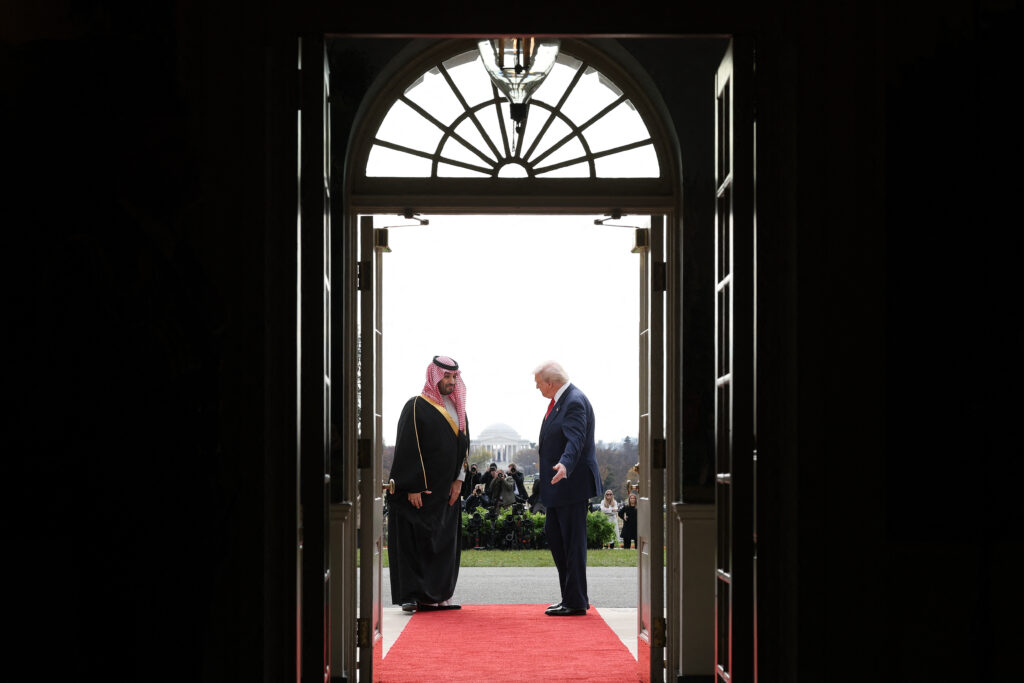
The contours of this recalibrated strategy became more apparent during his recent tour of the Middle East, which featured stops in Saudi Arabia, Qatar, and the United Arab Emirates, while notably omitting Israel. Rather than insisting on Israeli-Arab normalisation as a prerequisite for broader deals, Mr Trump appears more interested in furthering ties with the Gulf states through economic and other means. Of equal note was Vice-President J.D. Vance’s decision against visiting Israel because of the renewed offensive in Gaza. Taken together, the moves suggest a strategic repositioning in which traditional alliance structures are subordinated to the pursuit of wider regional influence.
The administration’s nuclear negotiations with Iran are another case in point. Israel reportedly planned to take advantage of Iran’s weakened military and strike its nuclear facilities — with US help — but were rebuffed by Mr Trump, who favoured diplomacy instead. This shift implies that Israel’s long-standing threat perceptions are no longer the dominant lens through which Washington views the alliance. For Israeli Prime Minister Benjamin Netanyahu, whose avowed aim is to prevent Iranian nuclear capability, the pursuit of a deal he is vehemently opposed to is a severe setback.
The unilateral US ceasefire deal with Yemen’s Houthi rebels further underscores this divergence. The truce protects American interests, but leaves Israel vulnerable — as several Houthi attacks, one of which resulted in the temporary closure of Ben-Gurion Airport in Tel Aviv, revealed. Taken together, these episodes reveal a widening gap between Mr Trump’s ambitions and Israel’s security-driven agenda.
Parallel Political Constraints
The fraying of the US-Israel alliance cannot be understood without accounting for domestic political imperatives on both sides. Both leaders are boxed in by local imperatives that leave little room for compromise. Mr Netanyahu faces a collapsing consensus at home and increasing international criticism, while Mr Trump, still in the infancy of his second term, is battling swooning approval ratings by doubling down on campaign promises. Mr Netanyahu remains encumbered by a coalition whose survival depends on the backing of far-right factions opposed to any form of compromise with Hamas — or Palestinians. Political survival, in his case, has become inextricably linked to the continuation of the conflict, irrespective of its strategic utility. With corruption charges looming should he lose power, the Gaza war has become central to the Israeli PM’s political survival.
This collides with mounting public pressure, as over 70 per cent of Israelis support a deal exchanging prisoners for hostages. Worse, there is growing criticism within Israel about the way the war is being fought. A ceasefire earlier this year in exchange for the release of hostages only underscored Prime Minister Netanyahu’s political vulnerability. Faced with staunch opposition from far-right coalition partners like Itamar Ben-Gvir and Bezalel Smotrich, Mr Netanyahu was compelled to make concessions to maintain coalition stability. These included delaying the ceasefire’s implementation and increasing funding for settlements — moves that aligned with his allies’ ideological positions and secured their continued support. This dynamic reveals how Mr Netanyahu’s reliance on the far-right for political survival may constrain his policy options, potentially hampering Israel’s broader strategic objectives.
The economic dimension cannot be overlooked, either. Israel’s economy is groaning under the weight of the war. Disruptions to the labour market — a direct result of many reservists being called to the front repeatedly — lower investment, and the shuttering of many businesses present serious challenges to the economy’s future health.
On the American front, the diplomatic overtures — carefully framed as “peace through strength” — reflect an effort to court Mr Trump’s Maga base, which is wary of endless wars in the Middle East, while preserving his image as the sole arbiter of US power.
This balancing act has resulted in casualties. Traditional pro-Israel figures within Mr Trump’s camp have been sidelined. Former National Security Adviser Mike Waltz has been the most notable victim: Though “Signalgate” lit the spark, Mr Trump resisted numerous calls to fire him over that embarrassment, choosing only to act after it was revealed that his aide was coordinating with Israel on Iran behind the President’s back. It marks a shift: Loyalty to Mr Trump’s agenda outweighs long-standing ideological alignments. In this context, support for Israel is no longer unconditional — it is transactional, filtered through the lens of the President’s personal and political calculus.
A Crisis Without Exit
These parallel dynamics have ensured that neither leader is in a position to accommodate the other’s priorities. Mr Netanyahu cannot consider a ceasefire without the elimination of Hamas, while Mr Trump is reluctant to support continued military operations that could complicate his broader agenda for the region.
This divergence now risks not only prolonging the war in Gaza, but also redefining the architecture of US-Israel relations. With neither leader able to accommodate the other’s red lines, the alliance has entered a period of strategic paralysis. What once appeared as an unshakeable partnership is now increasingly subject to transactional logic and political contingency. In the absence of a shared vision or mutually acceptable off-ramp, the rift may deepen, complicating both the management of this crisis and the future regional order.
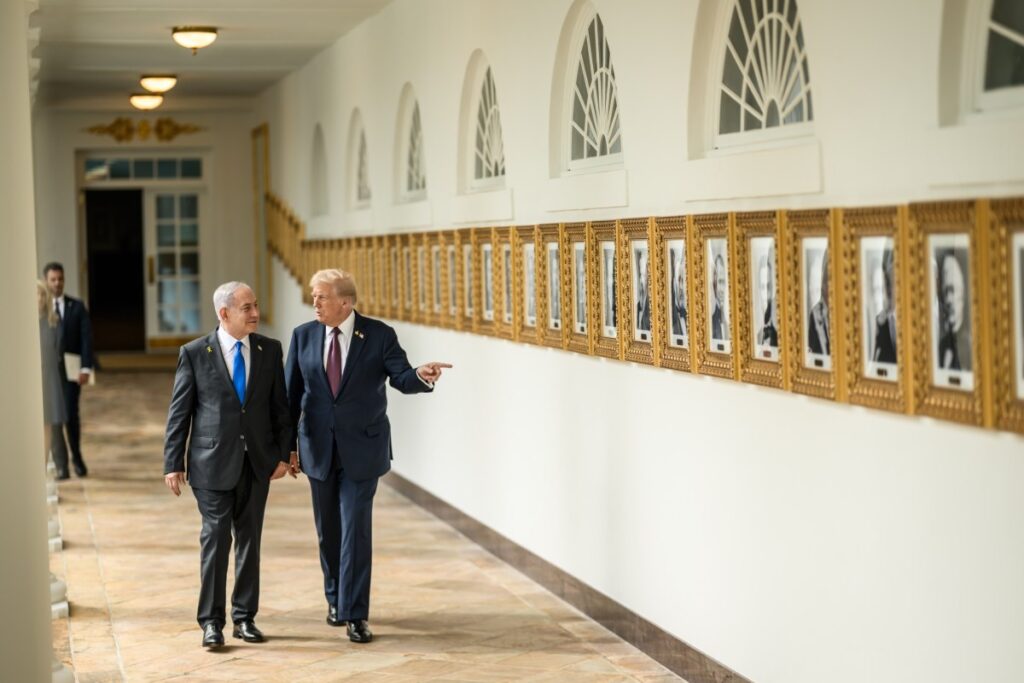
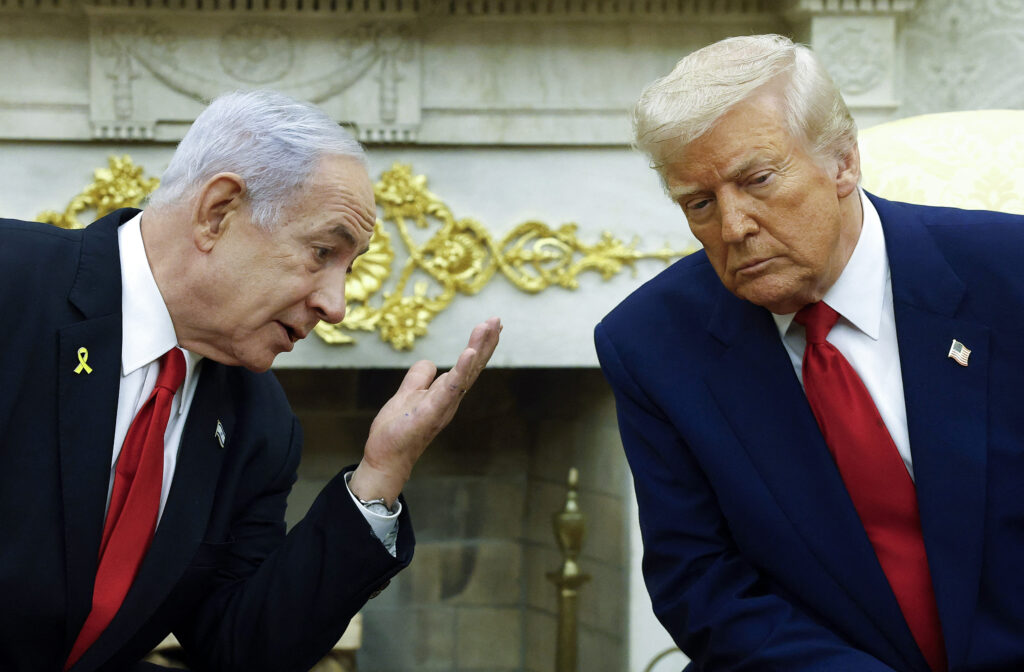
Image Caption: Israeli Prime Minister Benjamin (L) talks to U.S. President Donald Trump during a meeting in the Oval Office of the White House on April 7, 2025 in Washington, DC. President Trump is meeting with Netanyahu to discuss ongoing efforts to release Israeli hostages from Gaza and newly imposed U.S. tariffs. Kevin Dietsch/Getty Images/AFP (Photo by Kevin Dietsch / GETTY IMAGES NORTH AMERICA / Getty Images via AFP)
About the Author
Evangeline is a research associate at Middle East Institute, National University of Singapore. Prior to her current role, she spent a large part of her career in learning and development, focusing on workplace learning and action research projects. She is particularly interested in exploring the traditional and emerging alliances within the geopolitical landscape of the Middle East. Evangeline holds a bachelor’s degree in communication studies and a master’s degree in Asian studies from Nanyang Technological University.