THE ARAB UPRISING: THE ROOTS, THE DYNAMICS AND THE PERSPECTIVES
Abstract
The sudden burst of the Arab uprising, its fast-spreading across the Arab world and even beyond, and its apparent disorganization are the characteristics of a complex phenomenon making the recognition of an emerging pattern to understand the correlation between the local individual level and the global collective level, and the dynamics of its evolution , a highly risky and difficult exercise. Cognitive biases and truncated thinking focusing on one aspect or one level and ignoring the others may lead to misperception, misinterpretation and eventually ethical mistakes.
In this brief presentation, Professor Ghaziri will touch on a few questions that would raise awareness and initiate debate and discussion. He will also highlight the Lebanese and Syrian cases as a focal point for geopolitical struggle and deep indigenous transformation to illustrate the complexity of the crisis.
Among the questions to be examined:
What is the role of religion in the Arab uprising? Is it true that we are experiencing a de-islamisation of Arab societies? Are they following the path of European societies towards modernization leading to a forced integration in the ultra-liberal and global new order?
Are the Arab societies hopelessly trapped with no better choices than secular dictatorship and Islamic totalitarism? Is it a clash between Islam and modernity, in which case are we heading towards more chaos, violence and unleashing of destructive forces, or towards the emergence of a new response to this challenging situation?
About the Speakers
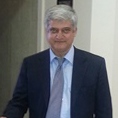
Professor Hassan Ghaziri, Director, Beirut Research Innovation Center
Hassan Ghaziri is the director of the Beirut Research and innovation Center (BRIC), an Innovative Research Hub at the service of the Middle-East societies and a forum for free open minded and critical thinking. He is also the president of ASDEAM a Swiss foundation aiming at cross-fertilizing disciplines to analyze and investigate the complex relationship between the Islamic world and the West. He was professor of Knowledge and Decision Systems at the American University of Beirut and member of AUB senate, the Swiss Federal Institute of technology-Lausanne, and visiting scholar at INSEAD Fontainebleau France and Kyoto University Japan. He co-authored a book by Prentice-Hall on Knowledge Management (KM) adopted by many universities in the US, India and China, in addition to many publications and interventions in several universities and companies to promote the concepts and the tools of KM , raise awareness, and analyze the readiness of developing countries for the Knowledge society