- 02 Sep 2025
MEI Annual Conference 2025
[MEI Flagship Event]
The war in Gaza triggered by Hamas’ attacks on Israel in October 2023 sparked several massive aftershocks that have redrawn the geopolitical map of the Middle East. After decimating Hamas, the Israel Defense Forces went on to effectively neuter Hezbollah in Lebanon, depriving Iran of its most potent forward threat to Israel. The overthrow of the Assad regime in Syria last December further weakened the so-called Axis of Resistance. With Iran at its most vulnerable in decades, Israel took the fight to the Islamic Republic in a 12-day offensive in June that left its chief regional foe reeling.
The aftermath of the violence has significantly altered the balance of power in the Middle East. Israel has emerged as the primary security power in the region, Iran has seen its influence evaporate, and other countries are calibrating their responses to the new reality. How do Arab states, particularly those in the Gulf, which have only recently moved to détente with Iran, respond to Israel’s rise in tandem?
The Middle East Institute’s Annual Conference 2025 unpacked the effects of a re-ordered region on the rest of the world via three panels staffed with experts. These panels examined the impact of the far-reaching changes brought about by almost two years of war.
Mr K Shanmugam, Coordinating Minister for National Security and Minister for Home Affairs, opened the conference.
This event was held both in-person and online via Zoom on Tuesday, 2 September 2025, from 9:00 AM to 3:30 PM (SGT).
Please click here for conference programme.
Get Ready to Dive Deeper than the Discussion.
Drawing on his discussion at MEI’s Annual Conference, Alam Saleh explores how the 12-Day War has forced Iran to recalibrate its foreign policy amid global shifts, regional realignments, and domestic crises – to read, click here.
Asaad Alshamlan argued that the Middle East cannot be explained by a single grand narrative, highlighting four forces—Gulf–Arab disparities, state fragility, US–China rivalry, and the unresolved Palestinian question—which shape the region’s complex landscape. This MEI Persepectives article builds upon his arguments – read here.
Ambassador Barbara Leaf reflects on her analysis from the conference to unpack why the Middle East has never truly been an arena for “Great Power Competition,” despite frequent claims to the contrary – head here to read.
Based on the insights he delivered at the event, Mohammed Baharoon unpacks how regional powers, global actors, and non-state players are fueling a revival of old imperial ambitions while introducing new, economy-driven “quantum politics” in the Middle East – read the full piece here.
Syria’s new rulers have scored some successes in moving the country out of international isolation. But, Nanar Hawach argues, they risk these gains because of a series of mis-steps domestically. Expanding on his remarks at MEI’s Annual Conference, he charts a course forward. Read his remarks here.
Read an in-depth analysis by Neri Zilber—building on his insights from MEI’s Annual Conference—as he examines how the 7 October Hamas attack reshaped Israel’s domestic politics, drove a shift in its military doctrine, and altered the regional balance – click here.
Zhaoyi Zhu’s MEI Perspectives piece dives into how China’s rivalry with the US drives its Middle East policy, with Beijing prioritising its Gulf partners, maintaining conditional ties with Israel, and engaging cautiously with Iran.
Chris Coulter builds on her insights and examines Europe’s recalibration in the Middle East, from deepening Gulf engagement to managing the Gaza crisis and the Iranian dilemma, all amid the pressures of the war in Ukraine and shifting US priorities. For more, click here.
Your Front-Row Seat to the Conference! Watch the videos below.
Minister Shanmugam’s opening remarks
Minister Shanmugam’s Q&A session
Panel 1: Winners and Losers in a New Regional Order
Panel 2: Middle East and External Powers
No Time to Watch? Plug In and Catch Up – Annual Conference Podcasts Now Streaming!
Minister Shanmumgam’s Opening Remarks
MEI Annual Conference 2025 – Panel 1
MEI Annual Conference 2025 – Panel 2
MEI Annual Conference 2025 – Panel 3
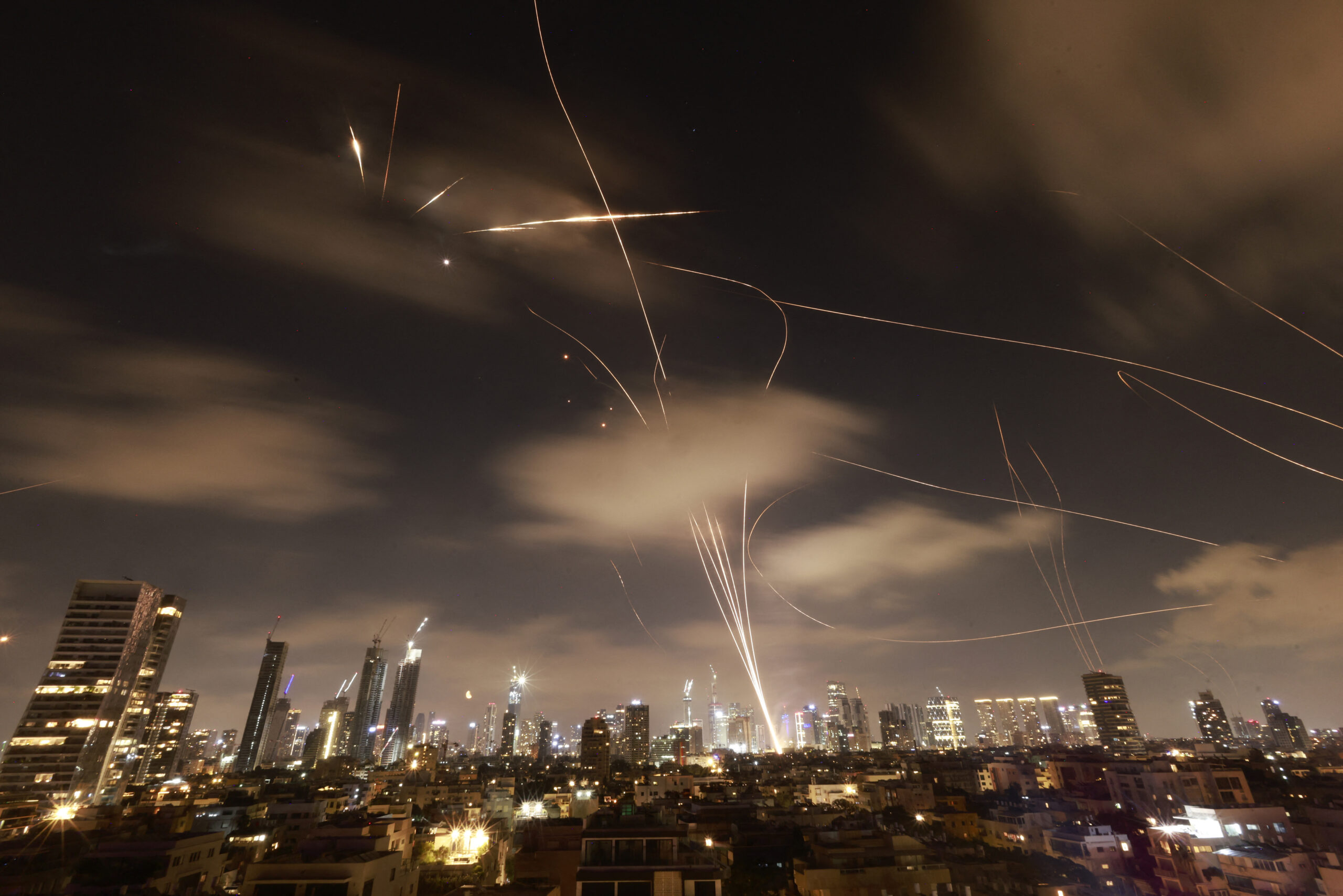
Image Caption: Israeli air defence systems are activated to intercept Iranian missiles over the Israeli city of Tel Aviv early on June 18, 2025. Israel and Iran exchanged fire again on June 17, the fifth day of strikes in their most intense confrontation in history, fuelling fears of a drawn-out conflict that could engulf the Middle East. Photo: AFP
About the Speakers
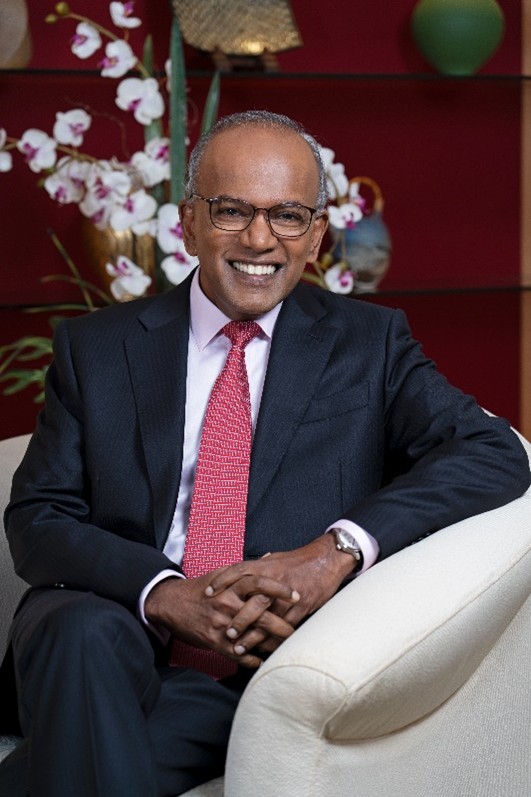
Coordinating Minister for National Security and Minister for Home Affairs
Mr K Shanmugam is the Coordinating Minister for National Security, and concurrently, has been the Minister for Home Affairs since Oct 2015. He has also previously been the Minister for Law (2008–2025), and the Minister for Foreign Affairs (2011–2015).
As Minister for Home Affairs, he has transformed Singapore’s counter-terrorism capabilities, introduced rapid response forces, and passed legislation to counter racial and religious extremism. He has also passed legislation to guard Singapore against foreign interference in domestic politics and hostile information campaigns.
As Law Minister, he put in place important legislative measures, including dealing with falsehoods against Government, protecting individuals from bullying and stalking, and various other measures relating to the criminal and family justice system.
Before entering Cabinet, Mr Shanmugam was a Senior Counsel of the Supreme Court of Singapore, and was consistently recognised as one of Singapore’s top advocates.
Event Details
Orchard Hotel Singapore
Level 3 Ballroom 1
442 Orchard Rd, Singapore 238879
2) Online via Zoom
[Please register via RED LINK on the left for Zoom participants.]