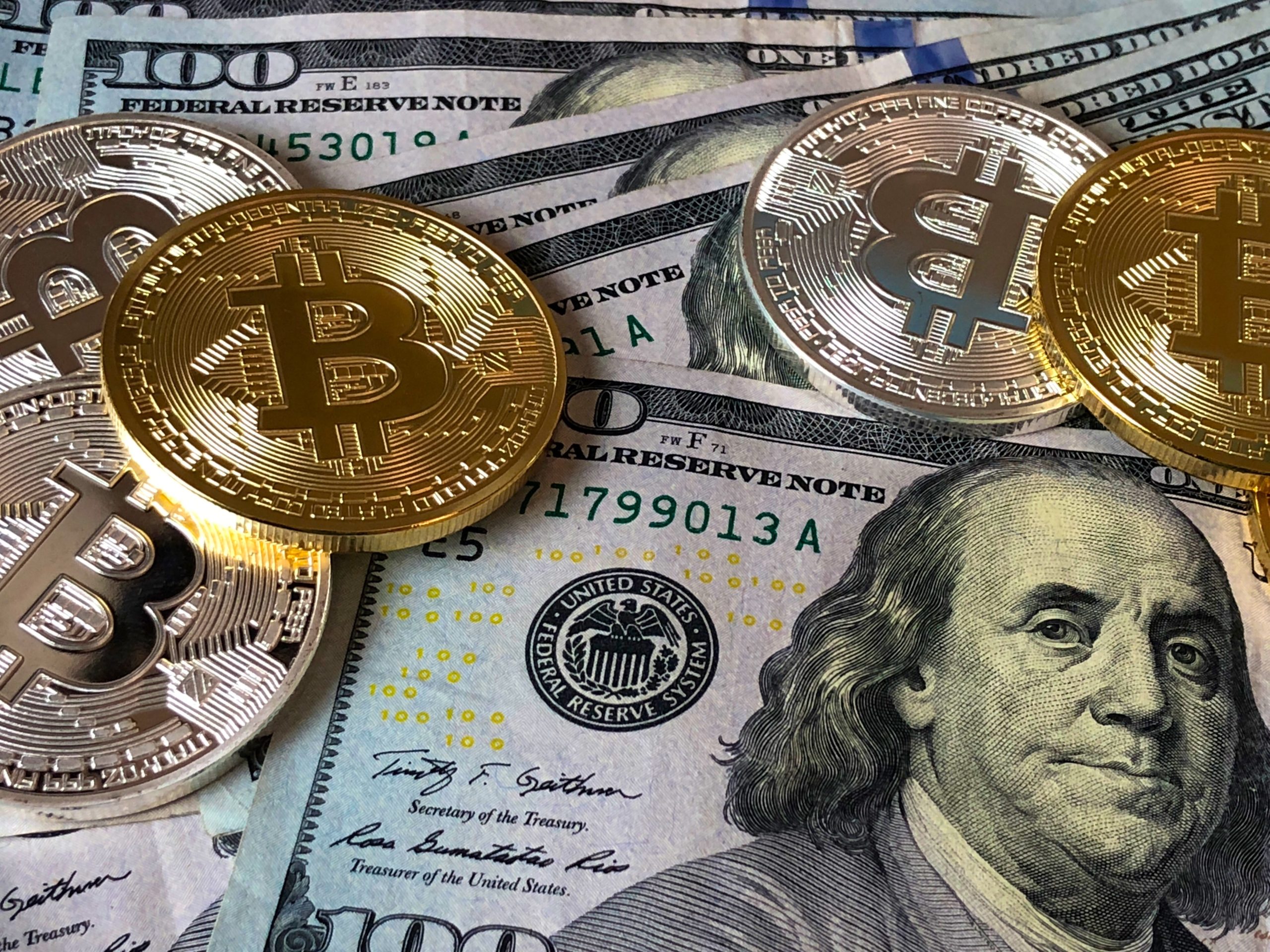


China is at the forefront of the application of digital technologies in the financial sector – in securing benefits, regulating risks and in experimentation. Private companies Alibaba and Tencent spearheaded the introduction of e-payments within China but are now subject to increasing regulation. At the same time, Beijing has moved to clamp down on cryptocurrencies such as bitcoin mining and trading for reasons of financial stability, control and energy consumption.
In parallel, China has piloted the introduction of its own Central Bank Digital Currency (CBDC), known as the e-RMB, e-CNY or DC/EP (digital currency/electronic payment). This is a pilot that had 261 million individual participants as of January 2022. The main focus for the e-yuan is domestic, and serves as a component of China’s society-wide digital transformation.
However, the e-CNY is also, in the words of the People’s Bank of China, ‘ready for cross-border use’. China has already launched m-CBDC Bridge, a project on cross-border digital currency payment with the United Arab Emirates (UAE), Hong Kong and Thailand. The Monetary Authority of Singapore (MAS) estimates that using the e-CNY between Singapore and China could bring savings of 3-5% of Singapore’s gross domestic product. The MAS is assessing the economic case for a retail CBDC in Singapore and its potential implications for financial stability and monetary policy.
Worldwide, 90 countries are exploring their own digital currencies including the UAE and Kingdom of Saudi Arabia. There are ambitious plans to accelerate fintech transformation across the Gulf.
At the same time, Fed Chairman Jerome Powell has stated that he does not believe that China’s early adoption of a digital currency threatens the dollar’s role as the main global reserve currency. The UK’s House of Lords has concluded that CBDCs may be ‘a solution in search of a problem’ and are fraught with risks.
In this seminar, three experts will explore the potential economic and geopolitical impact of China’s initiatives in digital finance and the opportunities, risks and choices for countries in the Middle East. The seminar will address questions, including:
- Who benefits from the greater use of digital currencies and what are the risks?
- Will the e-CNY re-energise the internationalisation of the renminbi?
- Does it matter if the e-US dollar and e-Euro only come into being in 10 years’ time?
- Do China’s controls on cryptocurrencies matter for the rest of the world?
- Does every country need its own digital currency and why?
- What role will digital currencies play in Islamic finance and its institutions?
This public talk was conducted online via Zoom on Tuesday, 7 June 2022, from 5.00 pm to 6.30 pm (SGT).
Image Caption by: David McBee/pexels
Listen to the full event here:
Watch the full event here:
Read the Summary of Event Proceedings:
By Simran Kaur
Intern, Middle East Institute, National University of Singapore
In its simplest terms, a Central Bank Digital Currency (CBDC) is digital money backed by a central bank. It is distinguished into two forms: retail CBDC, which is used by individuals as an alternative method to pay businesses or each other; and wholesale CBDC, which is used by major financial institutions. This webinar will explore the political, economic and geopolitical impact of China’s endeavours with CBDC, particularly focused on retail CBDC.
MEI Principal Research Fellow Alessandro Arduino, who moderated the session, reminds that CBDC is not a cryptocurrency nor is it catered to the crypto world. While cryptocurrencies do not have a central regulating authority, CBDC is based on a country’s currency value and, as mentioned, is issued by the bank. As we transitioned from the metal coin towards paper money, CBDC is in the midst of our next progression toward digital money.
China is a front-runner in the global race accelerating towards a digitised economy. The country already boasts an advanced digital payment system developed by private providers that are commonly used by the population. Professor Xiao Geng references Alibaba, Tencent, and WeChat Pay as examples. On this basis, the development of CBDC would combat the growing monopoly of said digital payment providers. He elaborates that China also envisions CBDC assisting the implementation of monetary policy, such that the system is utilised to effectively distribute money.
The digital yuan––also referred to as e-CNY––is issued by the People’s Bank of China. The e-CNY has been described as “ready for cross-border use.” Evidently, China has launched a pilot project called Multiple CBDC Bridge (mCBDC), a cross-border digital currency payment between China, Thailand, Hong Kong and the UAE. Dr Alessandro Arduino says there is a lot of potentiality in this endeavour, particularly for states in the Gulf that are transitioning towards a post-oil economy. In an environment where FinTech plays an integral role in goal progression, the development of CBDC could be a pivotal moment of change.
While digital payment is well-established in China, Mr Andrew Cainey describes cross-border international payments as messy and convoluted. They often require separate paper or message verification and it is difficult to transfer between currencies that are not the US dollar. He explains that the development of a well-connected mBridge would address these issues. Mr Cainey adds that there are approximately a hundred central banks that are developing their own version of the CBDC. Rather than basing it on the digital US dollar, they are looking toward creating it in their own currency. Thus, the innovation of connection through mCBDC is certainly significant.
Dr P S Srinivas states that the development of CBDC is countries’ genuine preparation for an imminent digital future, rather than competition with China. He explains that about 90 per cent of banks surveyed for international settlements were working towards some form of CBDC development. A quarter of them are in the advanced stages of issuing a CBDC, and two-thirds were hoping to debut their digital currency in the next five years. He elaborates that cash is declining as a global phenomenon and that many commercial banks are already in the form of digital reserves. In Singapore, for example, 92 per cent of the money supply is digital. In the US, only 20 per cent of transactions occur in cash. Thus, to all intents and purposes, Dr Srinivas believes that countries are motivated by domestic objectives to develop a digital economy that is backed by the full faith and credit of the government. He further cites some of the incentives:
- The increasing popularity of cryptocurrency may expose the state’s payment system to risks. The development of CBDC may address some of these risks.
- CBDC diminishes the risk of currency substitution if citizens choose to utilise a foreign digital currency for domestic transactions.
- In developing countries, financial inclusion is an issue. CBDC attempts to ensure payment infrastructure is accessible to all citizens.
- CBCD may reduce illegal activities such as money laundering.
- When natural disasters occur, it can be difficult to rely on physical cash to deliver beneficiary aid to affected people. Dr Srinivas shares that CBDC ensured payment infrastructure was maintained in the Bahamas during their 2019 hurricane.
The internationalisation of the Chinese renminbi (RMB) refers to the project to promote global use and full convertibility of the RMB. Professor Xiao Geng explains that the rise of the digital age will assist this goal. Mr Cainey elaborates that classically, the term “internationalisation” refers to the use of the currency as a reserve asset. In the same way that the dollar took over the pound sterling, there is potential for the RMB to do the same. He suggests that if the CBDC is sufficiently developed, it may be convenient for consumers to perform transactions in RMB, giving China an edge in this endeavour. However, China is simultaneously heavily engaged in the operationalisation of working across digital currencies; hence, the need to transact via RMB is extracted entirely.
Mr Cainey shares that many economies across the world would agree with the development of an alternative digital currency as a network design that is dependent on a single chain through the US fails to be resilient in times of financial crisis. Thus, the CBDC is beneficial in the provision of a resilient, decentralised economy that allows different countries to transact directly with one another. He acknowledges lobbying groups in the US that call to ban the digital RMB from Google and Apple platforms in fear of Chinese surveillance but Mr Cainey believes that such a concern has little basis in fact.
Q&A Session
When is the pilot period of the digital RMB expected to end? Since China is a pioneer in issuing digital currency, what practices from their pilot run will be key takeaways for other countries learning from the Chinese experience?
Professor Xiao Geng believes that the biggest lesson is that digital currency is public infrastructure. While theoretically, it can replace a lot of systems, it does not aim to disrupt the existing order (i.e. commercial banking and other financial systems).
Will China’s adoption of a digital currency threaten the US dollar’s role as the main global reserve currency?
Dr Cainey explains that while the RMB is relevant in international trade because it may be more convenient, it does not necessarily mean that people will want to hold on to the RMB once their transaction has occurred. He adds that it took 50 years for the US dollar to take over the pound sterling as the main global reserve currency. It is possible that the RMB may do the same in 50 years but regardless, it is not something that can happen overnight by its very nature.
Who is going to benefit from greater use of digital currency?
Dr Srinivas says that because it is a digital foundation for a much more efficient payment mechanism, the general economy will benefit. However, it may benefit certain sectors more than others. He explains that the Monetary Authority of Singapore requires businesses to receive cash in SGD; however, it is not necessary that they receive money in hard cash. Thus, CBD allows other alternatives.
Both Russia and Iran are excluded from global finance. Can they benefit from Chinese CBDC?
Dr Srinivas believes Chinese financial institutions and firms have not gone out of the way to assist Russia in recent times. He does not see the existence of a digital economy as a means for states to evade––or help others evade––sanctions.