- 02 Jun 2020
Dissecting and Unpacking the United Arab Emirates’ Foreign Policy
Abstract
The United Arab Emirates (UAE) has been pursuing an active foreign policy within the Middle East and beyond. The young state made of the seven-member federation that was established in 1971 is now taking centre stage at both regional and international fora and attracting much attention. This event will discuss the evolution and the dynamics of the UAE’s foreign policy and its growing regional and global role as well as the use of its multifaceted statecraft. It will attempt to explain the visible rise of the UAE as an active and assertive political, economic, military and diplomatic power that is taking a lead in regional affairs and shaping events over the past 15 years.
Join us for this public talk on 2 Jun, 4pm to 6pm (SGT), which will be conducted online via Zoom. All are welcome to participate. An e-invite will be sent to you near the event date.
This event is free, however, registration is compulsory.
Registration is now closed.
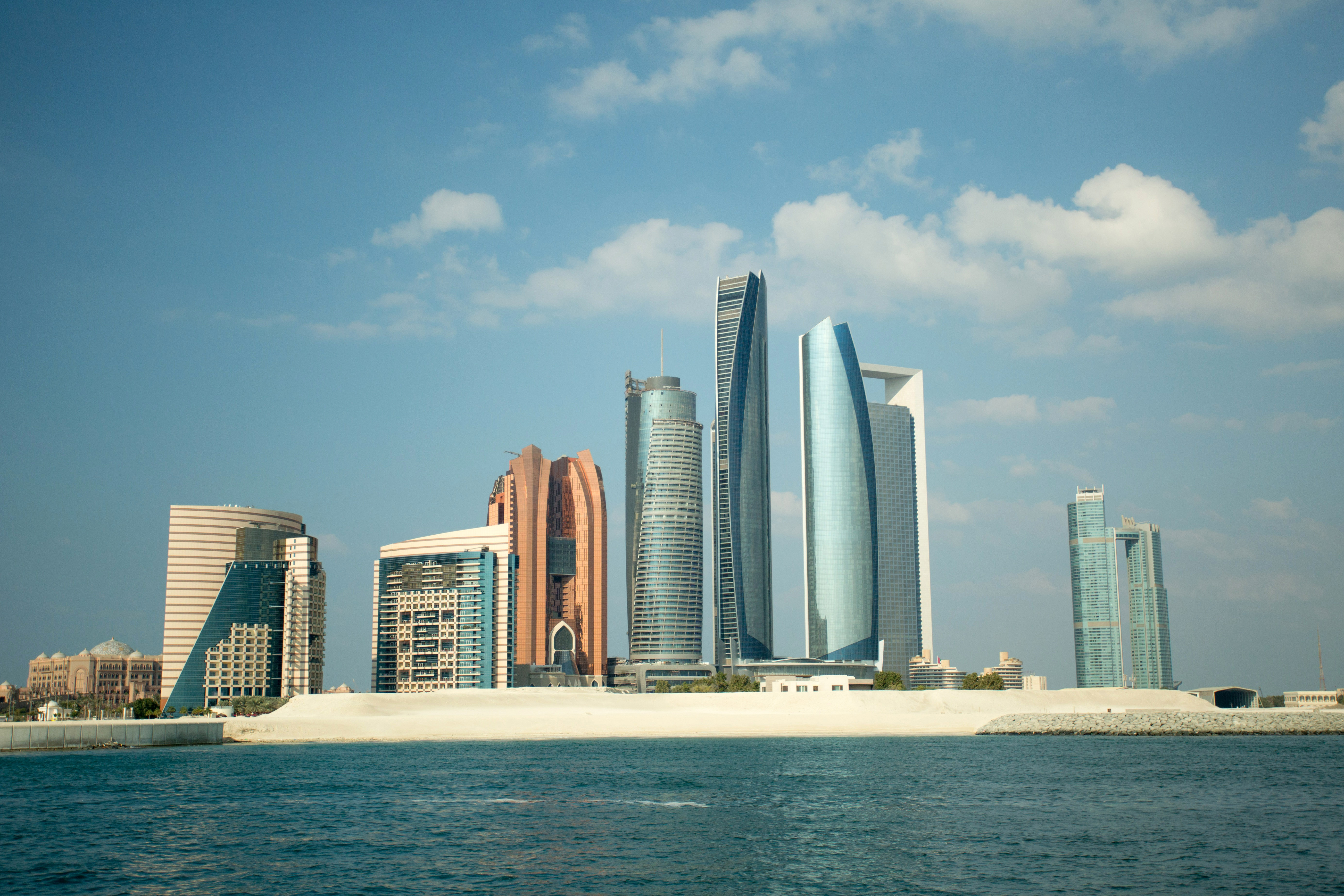
Image caption: Skyscrapers and skyline of Abu Dhabi in United Arab Emirates, UAE. Photo: neildodhia.
Listen to the full event here:
Read Event Summary:
By Faruq Yunus Alsagoff
Intern, Middle East Institute, National University of Singapore
In this session moderated by MEI Visiting Research Professor Abdullah Saleh Abdullah Ba Abood, seven panelists broke down the various dimensions of the United Arab Emirates’ foreign policy in the face of emerging global political, economic and security trends, and discussed the advantages of the federation’s increasingly diversified foreign policy at the international as well as the regional levels. They also elaborated on the motivations behind the UAE’s flexible stance on managing its relations with other states.
Dr Abdulkhaleq Abdulla
Professor of Political Science, New York University
The driving force of UAE’s foreign policy could be understood through what Dr Abulkhaleq called the “UAE momentum”, which manifests itself politically, economically and socially.
Politically speaking, one important factor shaping the UAE’s foreign policy lies in its changing status from a “small state” to that of a “middle power”. It is increasingly seen as a trendsetter internationally and in the region, boasting a growing arsenal of strong connections shared with global powerhouses.
Economically, the UAE has moved beyond an exclusively oil-based economy and has developed into a logistical hub and financial centre. Having achieved economic success, the federation is capable of leveraging these resources and successes to further spur itself as an emerging force in the globalised world.
Finally, the social force of UAE’s shift from a “typically tribal” society to a cosmopolitan, open, and modern society has allowed it to deepen its relationships within the international community and build more effective ties with countries all over the world.
These three dimensions of the “UAE momentum” work together to drive the state as a cosmopolitan middle power, with confidence at its heart. It has pushed the UAE to be more proactive and assertive with its abilities on the global stage, allowing it to take up a more leading role than it previously did.
Dr Ebtesam Al-Ketbi
Founder and President, Emirates Policy Centre, UAE
The UAE’s development of partnerships and alliances have always been hinged upon common interests and goals, said Dr Ebtesam. These relations are strategic, always beneficial to both sides and serve as opportunities for the UAE to enhance its status regionally and internationally.
She then elaborated on the importance of the UAE’s relationship with “greater Western states”, most notably the United States. This partnership has played a key role in UAE’s success as it has become the biggest market for US communities in the Gulf region over the last decade, contributing greatly to job creation in the federation. Dr Ebtesam said their strong bilateral relationship was based on several elements like high mutual confidence, transparency and common values.
The increasingly proactive role of the UAE allows it to take some of the burden off the Western nations by helping to solve contemporary issues, and in turn assert itself and its influence all around. This, however, does not exclude the UAE from building relations with other great powers. It approaches regional and global shifts with flexibility and seeks to adapt to those changes accordingly. These strategic relationships thus reflect its stance on foreign policy and its defence doctrine.
Dr Mohamed bin Binhuwaidin
Associate Professor and Chairman, Department of Government and Security, UAE University
The UAE’s new assertive stance on the international scene is not something that it could have achieved on its own. It required the support of major powerhouses like the US and China, said Dr Mohamed.
Building on the importance of UAE’s relationship with the East, especially China, he spoke about strategic interests shared by both countries and how the UAE could benefit strategically and economically from improving relations with the Asian superpower.
Strategically, China’s strong ties with Iran could mean that it may have some leverage over the latter, something which the UAE needs to consider. Chinese ambitions to assertive itself globally also needs to be taken into account, especially with China’s interest in Africa, a region important to the UAE.
Like the UAE, China is also concerned with countering extremist threats, so these shared sympathies provide the necessary security motivations for both parties to co-operate in the face of incumbent terrorist threats.
Lastly, China is seen as one of the largest consumers of energy, while the UAE is one of the leading producers of it globally. This relationship thus needs to be maintained to sustain UAE’s economic policy internationally.
Dr N Janardhan
Senior Research Fellow, Gulf–Asia Programme, Emirates Diplomatic Academy, Abu Dhabi
Dr Janardhan described the shift in UAE’s foreign policy as a movement from ideology-based approach towards an issue-based one. It has changed its policy from seeking the mediation of others to mediating for others. The usage of niche diplomacy and nation branding has allowed it to polish its reputation and become an example for other states to look up to when solving the contemporary global issues of the day.
The UAE’s “Look East” policy has seen the federation strengthening its relations with Eastern countries like India, Japan and China. This would only intensify in the coming years, says Dr Janardhan, given the nature of the fourth industrial revolution with Asia at its forefront. It also serves to show the UAE that “modernisation is no longer the same as westernisation”, especially given the failure of several major international actors like the US in certain respects. Contemporary issues require diversification in their solutions, which means that the UAE can no longer afford to use a one-size-fits all approach to solving them.
As for ties between UAE and West Asia, relations with India is increasingly important, with UAE–India partnerships moving past solely economic relations towards the strategic and security dimensions. Given the nature of both countries’ complex relationships with other states, a large part of their success can therefore be attributed to their respect of each other’s strategic autonomy.
Najla M Al Qasemi
Director, Global Affairs Division, B’Huth, UAE
Ms Najla described the UAE’s policy towards international organisations (IOs) the last 30 years as “doing its homework”. The federation spent a significant portion of its efforts engaging with IOs and learning how to deal with them. Initially participating in IOs as part of the Arab League, the UAE has taken on a more assertive stance and participates actively on its own accord in the effort to solve regional issues. This new demand for the UAE to be a part of solutions related to regional problems shows the commitment of the UAE in solving them.
Using humanitarian aid as an example, Ms Najla illustrated how the UAE has changed its foreign policy. Initially, humanitarian efforts and involvement by the UAE was approached only bilaterally. Nowadays, the UAE is working with various different IOs to solve a plethora of contemporary issues plaguing the region.
Mr Mohamed Baharoon
Policy Consultant & Director-General of B’huth, UAE
To Mr Baharoon, the UAE’s flexible foreign policy doctrine reflects its understanding of the region as one which is shifting its stance from a bipolar world view into a multipolar one. This highlights the growing value and importance of middle powers as forces of change.
He stressed the importance of building networks, which explains the good relationship between the UAE and major world superpowers like the US, Russia, China and the EU. One of the main guiding principles for this is that of responsibility in both domestic and foreign policy. Staying as far as possible from being “wagon-riders”, the UAE aims to share responsibility through sharing the burdens of solving international problems in the realms of security and economy.
He then mentioned how the federation is a very strong supporter of the idea of the “nation-state” and denounces transnational movements like the Muslim Brotherhood. The nation-state is seen as a key building block of the current world order, and the UAE aims to respect this system in order to solve problems fairly and effectively. Only then would states be able to establish strong networks with one another. In turn, states would be able to connect more deeply and achieve the target of international and regional stability.
This stability also bleeds into the “spirit of investment”, where the UAE emphasises competitiveness between states economically. In all, the UAE sees its prosperity as part of the prosperity of the world around it, shifting its foreign policy to support what it believes could achieve stability for the region and for the international community.
Dr Khaled Almezaini
Assistant Professor, Zayed University, UAE
The use of foreign aid as a political tool is one of the reasons for UAE’s success regionally and internationally, according to Dr Almezaini. He mentioned how the federation’s foreign aid policy in the last 3 decades has been argued by most policy experts to have only political motivations, and serves to boost UAE’s presence in the region and improve its standing among its neighbours.
Instead of a strictly political dimension to UAE’s foreign aid, Dr Almezaini argued the motivations were also cultural. Arab nationalism is cited as one of the most salient forces in increasing foreign aid to Muslim and Arab countries.
Nonetheless, the UAE’s increasingly proactive efforts to provide foreign aid and participate in IOs has resulted in a greater inclusion in the international community and contributed greatly to the stability of the region.
Key Questions from the Question and Answer Session
Posing a question to the panellists, Dr Khaled Almezaini asked about the sustainability of UAE’s changing foreign policy and the use of hedging, given its diversified nature and possible problems of consistency in the long run.
In response, Dr Mohamed Binhuwaidin brought in the alliance security dilemma, where small states which partner bigger states could face problems of abandonment or getting entrapped in conflict with the bigger states’ enemies.
He went on to explain that the reasons for hedging is because in an increasingly multipolar world, a state cannot put all of its eggs into one basket. Although the UAE has to develop strong relations with great powers, it must, in the end, consider its own interests both in the short and long run to reduce the risk of overdependence on others.
Thus, the policy of hedging serves as a consistent approach which acknowledges the limitations of these partnerships and allows the UAE to continue pursuing its own interests, making it sustainable for the foreseeable future, said Dr Binhuwaidin.
About the Speakers
Retired Professor of Political Science
Author of The Gulf Moment
Dr Ebtesam Al-Ketbi
Founder and President
Emirates Policy Centre
Mr Mohammed Baharoon
Analyst and Policy Consultant
Director-General of b’huth
Dr Mohamed bin Huwaidin
Associate Professor and Chair
Department of Government and Society, UAE University
Dr N Janardhan
Senior Research Fellow
Gulf–Asia Programme
Emirates Diplomatic Academy, Abu Dhabi
Dr Khaled Almezaini
Assistant Professor
Zayed University, UAE
Najla M Al Qasemi
Director (Global Affairs Division)
b’huth
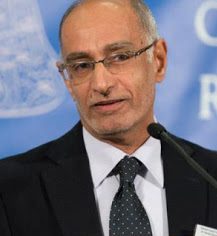
Dr Abdulkhaleq Abdulla is a retired professor of political science. He was a senior fellow at the London School of Economics and Political Science and served as chairman of the Arab Council for Social Science.
He is a member of the International Association of Political Science and was the director of Gulf Research Unit, Sharjah for 10 years. He was also a visiting professor at the Center for Contemporary Arab Studies, Georgetown University.
Professor Abdulla holds PhD in political science from Georgetown University and an MA from the American University. He is a UAE national born in 1953 and was a Fulbright scholar.
His research interests include issues of political changes in the Gulf and the Arab World. He is the author of several books; The Gulf Moment published in 2018 is his latest. He has published more than 50 articles and writes regular op-eds for various media outlets.
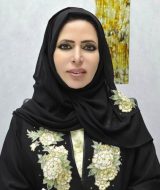
Dr Ebtesam Al-Ketbi is the founder and president of the Emirates Policy Centre, and the first Arab woman to lead a think tank. She is a professor of political science at United Arab Emirates University and a member of the Consultative Commission of the Gulf Cooperation Council.
She has served in several capacities, including: as the secretary-general of the Gulf Development Forum; as a member of the board of trustees of the Arab Organisation for Transparency; and as a member of the core team behind the 2006 Arab Human Development Report, among others.
She is a founding member of the Emirates Human Rights Association. She has published a number of papers, including “The Security Dimensions of Military Relations Between GCC countries and the USA”; “The Global Community and the War on Terrorism: Threat or Opportunity?” and “Democratic Transformations in GCC Countries”. She earned her PhD in political science from Cairo University.
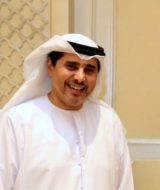
Mr Mohammed Baharoon is the director-general of b’huth, a Dubai-based independent public policy research centre and think tank established with Dr Ahmed Al Mansoori in 2002. Dr Baharoon received his master’s degree in English literature from Texas Tech University in 1995 and his English major from Kuwait University in 1987. This led to a career in media where he worked as a reporter for Al-Arabi magazine, which was a premier cultural monthly in the Arab world. Dr Baharoon continued his media career as a writer for Al-Ittihad newspaper and then as an editor for Gulf Defence magazine.
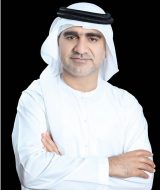
Dr Mohamed Bin Huwaidin is an associate professor of political science and chair of the Department of Government and Society in UAE University. He specialises in international politics of the Arabian Gulf region. His research explores the issue of Gulf security and the determinants of big powers interest in the region. He received his PhD from University of Durham, UK, and his MA from Northern Arizona University, USA. He specialises in the security of the Gulf region and its relations with the big powers, especially China.
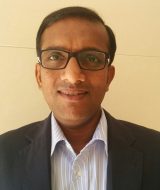
Dr N Janardhan is a senior research fellow in the Gulf–Asia programme at the Emirates Diplomatic Academy, Abu Dhabi. With over 20 years of regional expertise, he analyses and unravels the evolving multi-dimensional partnerships between the countries of the Gulf and Asia.
His academic publications include A New Gulf Security Architecture: Prospects and Challenges for an Asian Role (ed, Gerlach); India and the Gulf: What Next? (ed, Gulf Research Centre Cambridge); and Boom amid Gloom: Spirit of Possibility in the 21st Century Gulf (Ithaca).
With a PhD from Jawaharlal Nehru University, New Delhi, Dr Janardhan is also the managing assistant editor of the Journal of Arabian Studies (Routledge). In his previous stints, he has served as a political analyst in government and private institutions in the United Arab Emirates and India. His forthcoming book is titled “Gulf’s Pivot to Asia: From Transactional to Strategic Relations”.
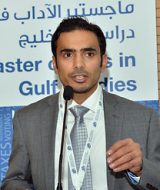
Dr Khaled Almezaini is an assistant professor at Zayed University, UAE, and author of The UAE and Foreign Policy: Foreign Aid, Identities and Interests. He received his PhD in 2009 from the University of Exeter.
He was a research associate at Cambridge University and a research fellow at London School of Economics and Political Science. In the last five years, he taught the Gulf studies programme at Qatar University (QU), of which he was the coordinator. He also taught international relations and Middle East politics at different universities including the University of Cambridge, University of Edinburgh, University of Exeter and Sciences Po.
His publications, research, and teaching interests include political economy of the Gulf, international relations of the Gulf and comparative politics. His forthcoming book is “The Politics of Aid: The Foreign Aid Programs of the Gulf States”.
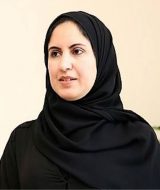
Najla M. Al Qasemi commenced her professional journey working as researcher assistance at the Emirates Centre for Strategic Studies. In 2002, she worked with the United Arab Emirates Ministry for Foreign Affairs as the USA Desk Officer. In 2004, she worked as an expert in the UAE Mission to the UN in Geneva. She was appointed as the UAE’s Ambassador to Sweden, Finland, and Denmark in 2008 and was transferred to Portugal in 2014. After returning to the UAE, she worked at Zayyed University as an instructor in the International Affairs Department since August 2016 for two years. And in July 2018, she joined Dubai Public Policy Centre.