- 06 Feb 2014
Escaping the West? Iran’s foreign policy towards Asia
ABSTRACT
Iran is mostly seen as a Middle Eastern country only dominated by its relationships at its West: with the Arab world (in particular Saudi Arabia and Syria), Turkey, Israel, Europe, and most importantly, the US. This approach inevitably presents Tehran in the perpetual opposition with other nations, and dominated by its tensions with Washington and Israel. It does not take into account the fact that the Iranians have also a long History of relations with their Asians neighbors; the strong links there are between Tajikistan, Afghanistan, even Pakistan in one hand, and Iran in another hand; and the importance of Iranian policy to help stabilize the Afghan regional environment. Last, but not least, this Euro-centric approach totally ignores the role of China as a major power in this part of the world. Iranian diplomatic and political choices are not only the interest of Europe and North America, but also for South, Central, and East Asias. Didier Chaudet focused on the Iranian foreign policy towards its East, with a particular focus on its immediate Asian neighborhood (post-Soviet Central Asia, the Indian subcontinent) and its relationship to China. Turned East, can Iran escape its difficult relationship to the West and help us better understand its diplomacy and national interests?
About the Speakers
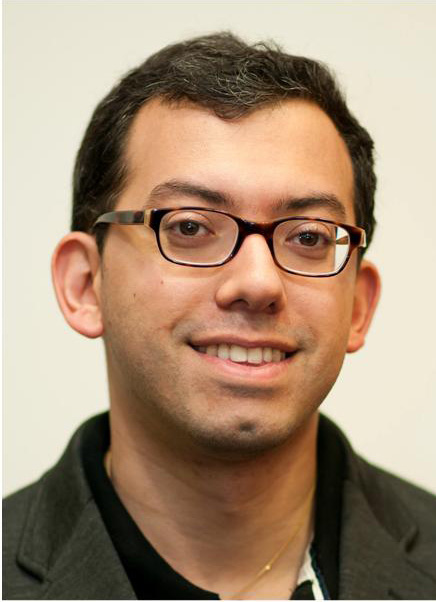
Didier Chaudet, Head of the Programme on Iranian and South Asian Studies at European Institute for Prospective and Security (IPSE), a French think tank based in Paris, joined Islamabad Policy Research Institute (IPRI) on October 15, 2013 as a Visiting Research Fellow for six months. IPRI is an important think tank in Pakistan, focusing on security, diplomacy, social, economic, and political issues in Pakistan and its regional environment, with a strong South Asian focus. Previously, Chaudet had been a Research Fellow at the Institute for South Asian Studies (ISAS) at the National University of Singapore (2012-2013), in charge of Pakistani affairs and Afghan diplomatic and security-related issues; a Lecturer at the Institute for Political Studies in Paris (2007-2011), teaching about Pakistan, Afghanistan, and Central Asia; a Research Fellow at the French Institute for International Relations (IFRI), one of the most important think tanks in Paris (2008), in charge of Central Asian and Afghan affairs; and a Fox Fellow at Yale University (2006-2007). Currently, he is working specifically on Pakistani political and diplomatic affairs. He has two books to his credit (in French, English, and Romanian languages), and is completing the third one (on Iranian foreign policy towards Central and South Asia, in French language). He has also published four book chapters, as well as 20 academic articles. So far Chaudet has given 60 talks at international and European conferences, mostly in English. He is a regular contributor to the Huffington Post (French and Canadian versions) and currently writes weekly articles on South-West Asian Chronicles. He also writes for The News, and is regularly interviewed by the French-speaking media on Pakistani, Afghan, Iranian and Central Asian affairs. Iran is mostly seen as a Middle Eastern country only dominated by its relationships at its West: with the Arab world (in particular Saudi Arabia and Syria), Turkey, Israel, Europe, and most importantly, the US. This approach inevitably presents Tehran in the perpetual opposition with other nations, and dominated by its tensions with Washington and Israel. It does not take into account the fact that the Iranians have also a long History of relations with their Asians neighbors; the strong links there are between Tajikistan, Afghanistan, even Pakistan in one hand, and Iran in another hand; and the importance of Iranian policy to help stabilize the Afghan regional environment. Last, but not least, this Euro-centric approach totally ignores the role of China as a major power in this part of the world. Iranian diplomatic and political choices are not only the interest of Europe and North America, but also for South, Central, and East Asias. Didier Chaudet will focus on the Iranian foreign policy towards its East, with a particular focus on its immediate Asian neighborhood (post-Soviet Central Asia, the Indian subcontinent) and its relationship to China. Turned East, can Iran escape its difficult relationship to the West and help us better understand its diplomacy and national interests?