
- 22 Sep 2026
MEI – BISA Seminar Series 2026
Series Summary
This four-part seminar series, a collaboration between the Middle East Institute (MEI) and the British International Studies Association (BISA), examines the cascading consequences of a US-Israeli war against Iran that erupted in early 2026. Structured across four thematic sessions, the series traces the conflict’s impact from Iran’s domestic political transformation and the restructuring of Gulf regional security, through the disruption of global energy markets and Gulf economic stability, to the broader reconfiguration of the global strategic order. By bringing together leading scholars from institutions across Asia, Europe, the Middle East, and Australia, the series offers a comprehensive, multi-layered analysis of a major geopolitical crisis and its far-reaching ramifications.
-
Date: 22nd September 2026
-
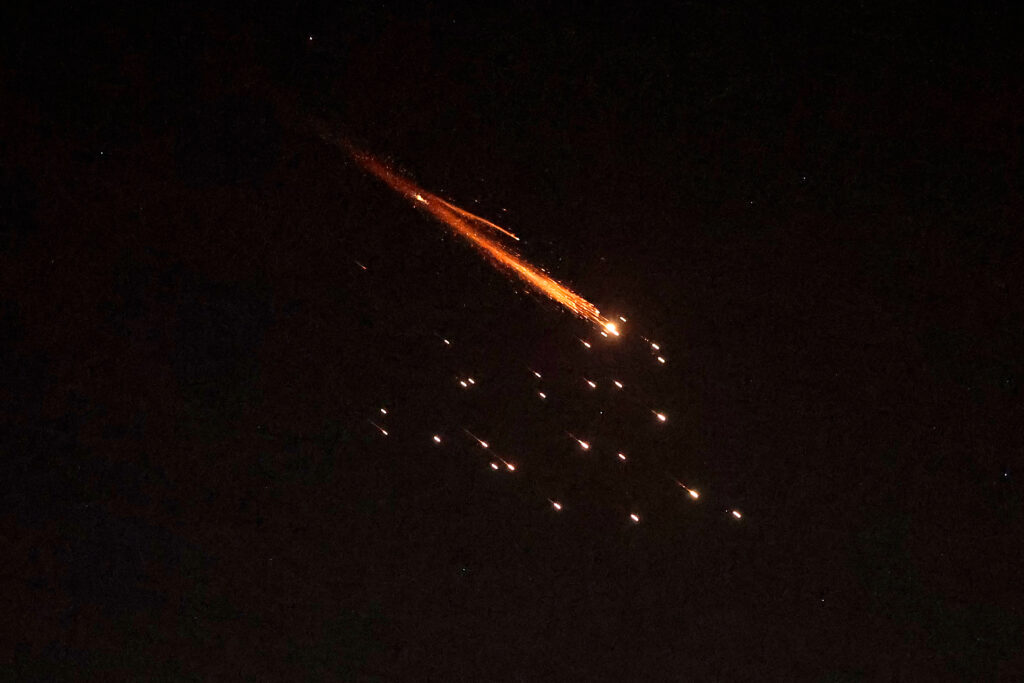
Focus: Following the outbreak of the US–Israeli war against Iran on 28 February—marked by the assassination of Iran’s Supreme Leader, Ayatollah Khamenei, alongside senior political figures, military commanders, and nuclear scientists—Iran responded with military strikes against both the United States and Israel, including attacks on US military facilities in the Gulf. The conflict rapidly escalated, with civilian infrastructure becoming a primary target.
Beyond its immediate destruction, the war has significantly reshaped Iranian society. Pre-war public dissent has largely been redirected toward resistance against foreign invasions, signalling a notable shift in the domestic political landscape. Anti-government movements now face a dual challenge: confronting state repression while navigating the effects of external military aggression. Meanwhile, the elimination of key leadership figures has disrupted existing political structures. While new leadership is emerging, it remains uncertain whether this leadership can maintain political cohesion during the war and in the post-war period. This seminar examines these evolving socio-political dynamics within Iran.
[Register below]
Seminar Two: Restructuring Regional Security Reconfiguration in the Gulf
-
Date: 29th September 2026
-
Focus: Following the outbreak of the US–Israeli war against Iran on 28 February, Iran responded with military strikes against both the United States and Israel, including attacks on US military facilities in the Gulf. The conflict rapidly escalated, with civilian infrastructure becoming a primary target.
The escalation of hostilities has had far-reaching consequences for the Gulf region. Iran’s retaliatory strikes targeted not only US military bases but also civilian infrastructure in Gulf states, transforming the conflict into a broader regional confrontation with significant implications for security, geopolitics, and economic stability. These developments have introduced renewed instability into intra-regional relations. As a result, Gulf countries are compelled to reassess their defence strategies. This seminar explores the long-term geopolitical and security implications for the region.
[Register below]
Seminar Three: The War and the Disruption of Global Energy Markets and Gulf Economic Stability
-
Date: 6th October 2026
-
Focus: Analyses the economic consequences of the war, particularly the disruption of global energy markets due to Iran’s closure of the Strait of Hormuz. It also discusses the impact on Gulf economies, including the outflow of foreign investment and labour, and examines the regional responses to these economic and security challenges.
[Register below]
Seminar Four: The War and its Implications for the Global Strategic Order
-
Date: 13th October 2026
-
Focus: Investigates the war’s wider implications for the global strategic order. It questions the effectiveness of existing US security guarantees, prompting US allies to reassess their defence postures. It also explores the convergence of this conflict with the Russia-Ukraine war and how major powers are adapting to the shifting geopolitical landscape.
-
Moderator: Dr. Ferran Perez (Durham University)
This series will be held via Zoom on four consecutive Tuesdays beginning 22 September 2026, from 5:00 PM–6:30 PM (Singapore time) | 10:00 AM–11:30 AM (London time).
These sessions are free to attend, but registration is required. Zoom links will be emailed to registered participants closer to each session.
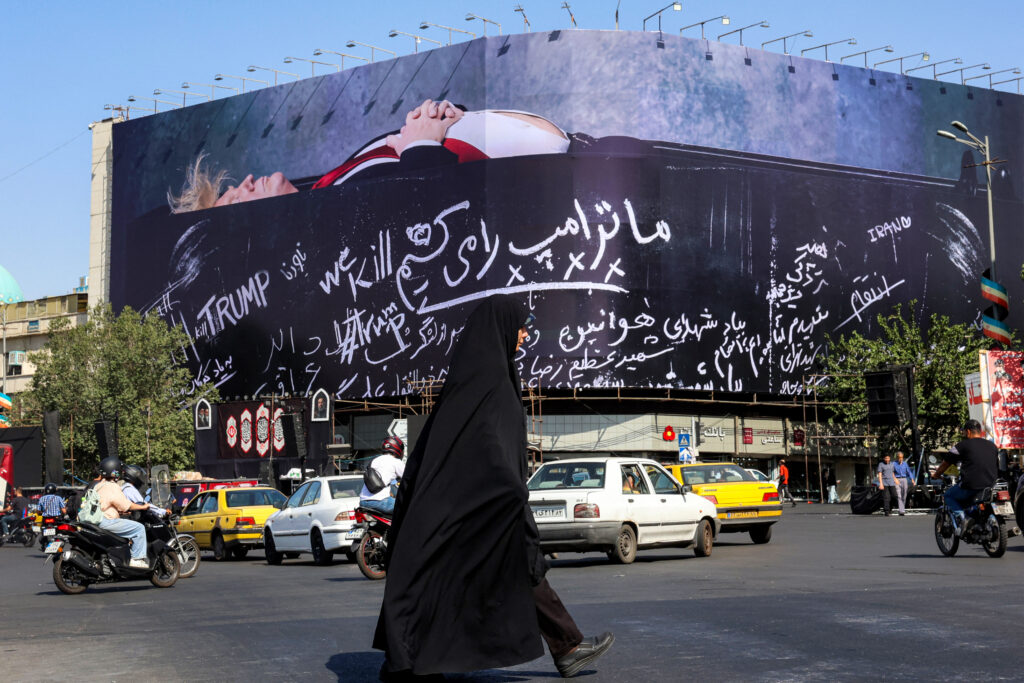
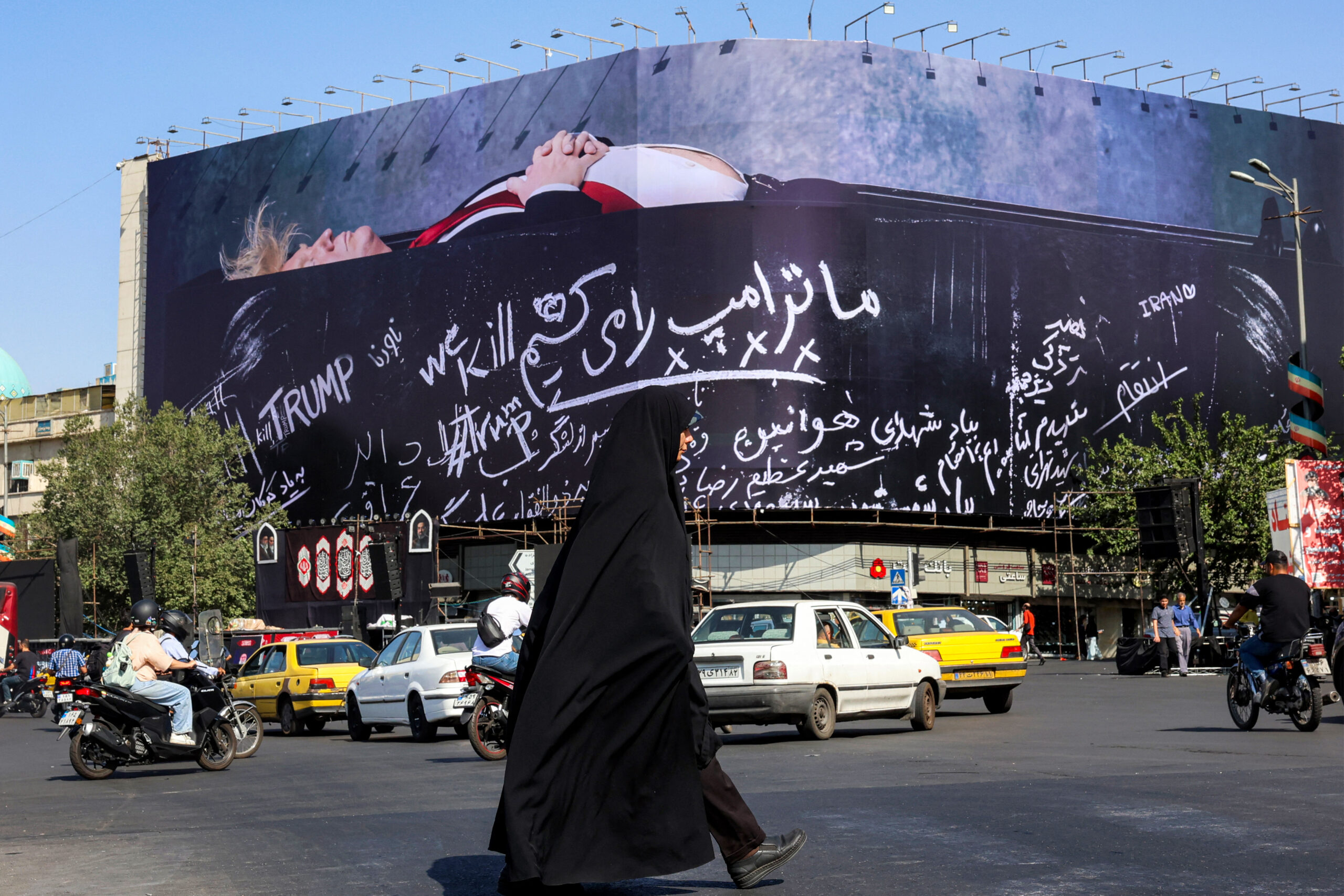
Photo caption: A woman crosses Tehran’s Enghelab Square on July 15, 2026, past a giant anti-US billboard featuring US president Donald Trump in a coffin with text in Persian reading “We Kill Trump”. Hostilities renewed between Iran and the US, endangering a memorandum of understanding, reached in June with Qatari and Pakistani mediation, aimed at ending the war. The confrontation resumed on July 7 after attacks on ships in the Gulf, which Iran has attributed to Iran. (Photo by AFP) /

About the Speakers
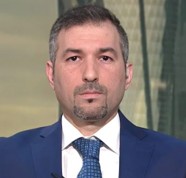
Dr. Arash Reisinezhad
Visiting Assistant Professor
Tufts University
Arash Reisinezhad is a visiting assistant professor at The Fletcher School at Tufts University. His research interests include geopolitics, security and strategic studies, foreign policy analysis, and Middle East politics. He is currently developing two book projects on Iran-China relations and the transforming geopolitics of the Middle East, along with two paper projects on Iran’s nuclear program and the Iran War. He teaches courses on Middle East politics and the Great Power Competition. Reisinezhad is a trusted voice on emergent issues in the Middle East. His writing is frequently published in global media outlets and top academic journals. Reisinezhad is also a visiting fellow at the London School of Economics’ Middle East Centre as well as a visiting scholar at Harvard University. Additionally, he has received fellowships from Harvard University. He is the author of The Shah of Iran, the Iraqi Kurds, and the Lebanese Shia (Palgrave Macmillan, 2018) and Iran and the Silk Road: From Road Geopolitics to Road Diplomacy (University of Tehran Press).
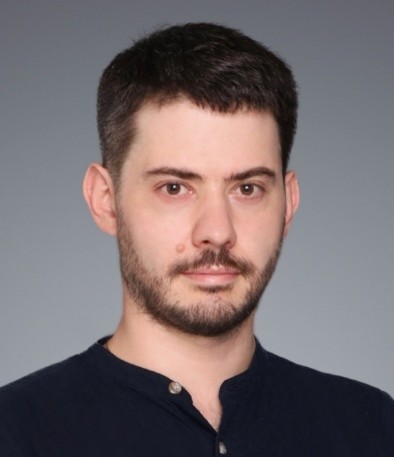
Director
the Persian Gulf Studies Group at the Center for Scientific Research and Middle East Strategic Studies, Iran
Javad Heiran-Nia, Ph.D. in International Relations, is the Director of the Persian Gulf Studies Group at the Center for Scientific Research and Middle East Strategic Studies in Iran. He has served as a Current Affairs Analyst at the Cambridge Middle East and North Africa Forum. He is the author of the book Iran and the Security Order in the Persian Gulf: The Presidency of Hassan Rouhani, published by Routledge on July 29, 2024. His articles have appeared in outlets such as the Atlantic Council, Stimson Center, National Interest, Middle East Policy, Cambridge Middle East and North Africa Forum, Insight Turkey, Iran and the Caucasus Journal, Contemporary Review of the Middle East, and Strategic Analysis. Heiran-Nia’s commentary and interviews have been featured by leading media outlets, including Bloomberg Asharq, Al Arabiya, Al Jazeera, Newsweek, Anadolu Agency, The Asahi Shimbun, The Yomiuri Shimbun, Qatar Alaraby TV, Expresso, The National, and The New Arab. He has participated in and spoken at prestigious conferences at Princeton University, Cambridge University, Georgetown University, Qatar University, and other academic institutions, as well as think tanks such as the Sasakawa Peace Foundation (Japan), the Iranian Studies Unit of the Arab Center for Research and Policy Studies (Doha, Qatar), and YCAPS’ Europe Chapter at the Stockholm Center for South Asian and Indo-Pacific Affairs.
Research Affiliate
Middle East Institute, NUS
Dr. Zeynab Malakouti is a Research Affiliate at the Middle East Institute, National University of Singapore, and a Senior Fellow at the Global Peace Institute, UK. She holds a PhD in International Law from the University of Leeds, UK. Previously, she served as an Assistant Professor at the UNESCO Chair for Human Rights, Peace and Democracy in Iran. Her interdisciplinary research lies at the intersection of international law and international relations, with particular expertise on Iran. Her latest book, Counter-Terrorism Financing and Iran, was published by Routledge.
Research Fellow
Middle East Institute, NUS
Liu Jia is Research Fellow at the Middle East Institute, NUS. Jia earned her PhD in Government and International Affairs from Durham University, where she was honoured to be the H.H. Sheikh Nasser al-Mohammad al-Sabah Doctoral Fellow. Prior to her doctoral studies, Jia completed a Master’s degree in Middle Eastern Studies at Lund University and a Master’s in Research Methods (International Relations). Jia has also studied in China, Iran, Jordan, worked in the UAE, and well-travelled across the West Asia/Middle East. She speaks Chinese, English, Farsi, and is learning Arabic. Jia’s research focuses on two major areas: the politics of Persian speaking world and China-West Asia/Middle East relations.