Tethered to Power: Egypt’s $35 Billion Deal
- Evangeline Cheng
- -
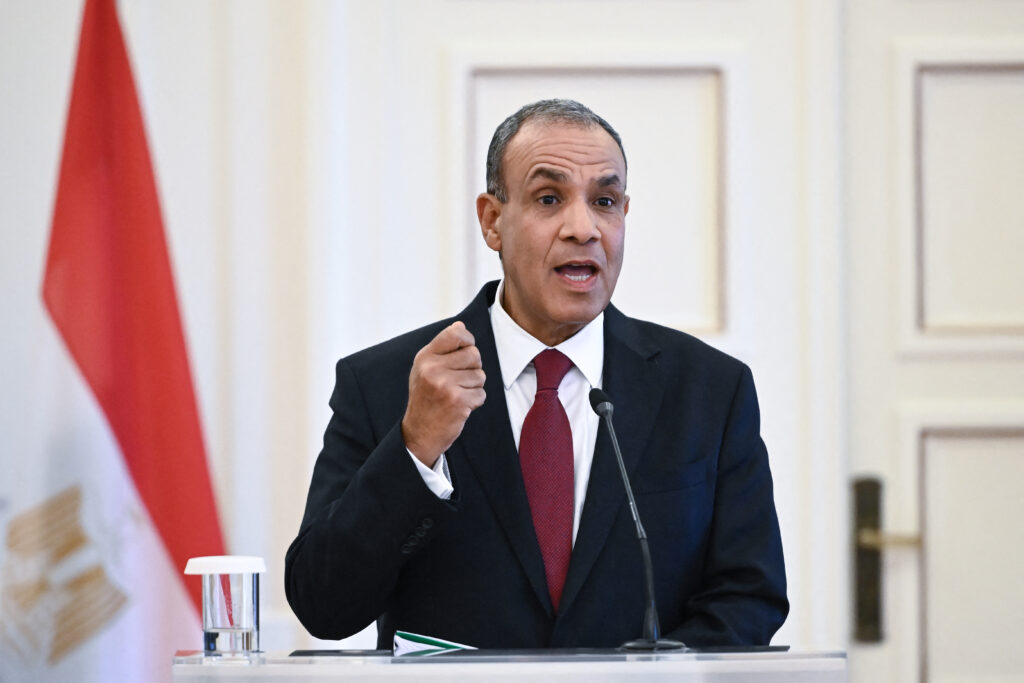
Last week, Egyptian Foreign Minister Badr Abdelatty declared that any mass displacement of Palestinians from Gaza was a “red line”, warning that “any single party” — an obvious reference to Israel — attempting such a move would be threatening the country’s sovereignty and security. For all the tough talk on Gaza, however, it was business as usual in other aspects of the Cairo-Tel Aviv relationship: Just days earlier, both sides signed a US$35 billion deal to import Israeli natural gas through 2040.
The August 2025 agreement highlights the urgency of Egypt’s energy needs: Israel managed to extract a 14 per cent premium from Cairo compared to previous contracts. The deal is designed to bolster gas supplies to Egypt’s liquefaction terminals, enabling re-exports to Europe while shoring up dwindling domestic reserves. Currently, Israeli gas accounts for approximately 15 per cent of Egypt’s annual consumption, amounting to roughly 10 billion cubic metres a year. Under the new agreement, imports are expected to climb steadily, reaching around 12 billion cubic metres cm annually by 2030. Over the full 15-year term, the deal will deliver some 130 billion cubic metres in total — locking Egypt into dependence on Israeli gas well into the 2040s. Though cheaper than liquefied natural gas (LNG) imports, this reliance exposes Egypt to unavoidable geopolitical risk: In an increasingly volatile region, stable gas flows are not a given. In June 2025, amid escalating hostilities between Israel and Iran, gas deliveries from the Leviathan and Karish fields were suspended, and resumed only after a ceasefire brokered by the United States took hold. When Israel went to war with Hamas after the 7 October 2023 attacks, the conflict forced Chevron to halt operations at the Tamar field, triggering widespread energy shortages across Egypt. These episodes laid bare a stark reality: Egypt’s energy security now hinges on Israeli political and military decisions, not its strategic planning.
Compounding this exposure is Egypt’s own declining production. Domestic gas output has dropped more than 40 per cent from early-decade highs — falling from 6,133 million cubic metres in March 2021 to 3,545 million cubic metres by May 2025. The Zohr field, touted as a “game-changer” when first discovered, has consistently underperformed: Production has declined, and ageing infrastructure and other challenges have combined to make it anything but the magic bullet it was supposed to be. Meanwhile, domestic electricity demand continues to rise, driven by gas-fired power stations that supply three-quarters of national generation. Interruptions to Israeli supply have already caused outages in critical sectors such as fertiliser and petrochemical production, threatening industrial stability. With its population swelling from 100 million in 2015 to 115 million today, Egypt faces rising summer consumption peaks that risk triggering social unrest. Domestic blackouts have already lasted up to six hours in some areas, disproportionately affecting rural governorates and key industrial sectors.
The energy situation is only one facet of Egypt’s precarious economic position. Since late 2023, Houthi attacks on Red Sea shipping have forced global maritime traffic to reroute around the Cape of Good Hope, cutting Suez Canal revenues by an estimated 60 per cent — roughly US$7 billion annually. Egypt’s LNG import bill is projected to rise to US$19 billion this year, up from $12 billion in 2024, reflecting declining domestic production and the need to fill a daily gas deficit of 1.6 billion cubic feet. Two of Egypt’s primary sources of hard currency — Suez tolls and energy exports — have thus come under simultaneous strain. Meanwhile, the costs of imported gas continue to rise, even as Egypt’s economic options narrow.
Egypt’s dependency on Israel extends well beyond energy. Counter-terrorism operations in northern Sinai rely heavily on Israeli intelligence support, including drone surveillance and coordinated air campaigns targeting ISIS-affiliated groups. Border security along the volatile Gaza-Sinai frontier is deeply integrated with Israeli systems. Cairo has destroyed over 1,500 smuggling tunnels and established a 13.5 km² buffer zone along the border, reinforced by a five-metre-high concrete wall. Even as it condemns Israeli actions publicly, Egypt’s internal security architecture remains tightly entwined with its neighbour’s.
This contradiction lies at the heart of Egypt’s Gaza policy. While publicly rejecting any notion of forced displacement and warning of “unacceptable security risks”, Egypt faces growing criticism over its own handling of humanitarian access. Since Israeli forces seized the Gazan side of the Rafah crossing in 2024, Egyptian authorities have had limited control over aid flows. Thousands of lorries carrying supplies remain stalled, fuelling accusations that Cairo’s operational alignment with Israel makes it complicit in the deepening humanitarian crisis, despite its rhetorical support for the Palestinian cause.
Cairo has sought to counter perceptions of complicity by positioning itself as Gaza’s indispensable mediator. It has publicly backed South Africa’s genocide case against Israel at the International Court of Justice, and remains a central player in ceasefire talks and hostage negotiations. Egypt has convened Palestinian and Qatari delegations to discuss ceasefire efforts, presenting itself as the essential broker in the conflict. Even as Egypt builds higher barriers and reinforces its border infrastructure, it presents itself as Gaza’s lifeline. This paradox captures its delicate balancing act: Public statements and mediation signal agency, but structural dependencies on Israel constrain Cairo’s freedom of action.
This paradox finds its clearest expression in Egypt’s energy ties. By enabling Israeli gas to flow through the Idku and Damietta LNG terminals, Egypt transforms what should be a sovereign asset into a platform for Israeli regional influence. The infrastructure meant to secure Egypt’s economic resilience simultaneously enhances Israel’s strategic reach across global energy markets. In this “cold peace” arrangement, the balance of power has shifted: Israel’s decisions, rather than Cairo’s strategy, now largely determine Egypt’s energy, security, and economic stability.
Egypt is not alone in this regard. Across the region and elsewhere, public criticism of Israeli actions has been getting an airing. Behind the scenes, however, economic, security, and other priorities take precedence over humanitarian concerns. In other words: Pro-Palestinian diplomacy is performative; economics, energy, and security concerns are about survival.
Image Caption: Egypt’s Foreign Minister Badr Abdelatty addresses the audience during a press statement with Greece’s Foreign Minister following their meeting in Athens on 6 August 2025. Photo: AFP
About the Author
Evangeline is a research associate at Middle East Institute, National University of Singapore. Prior to her current role, she spent a large part of her career in learning and development, focusing on workplace learning and action research projects. She is particularly interested in exploring the traditional and emerging alliances within the geopolitical landscape of the Middle East. Evangeline holds a bachelor’s degree in communication studies and a master’s degree in Asian studies from Nanyang Technological University.

More in This Series
- Huzeir Ezekiel Dzulhisham
- -