Northern Emirates Emerge as New Bridges in China-UAE Economic Ties
- Minghao Sun
- -
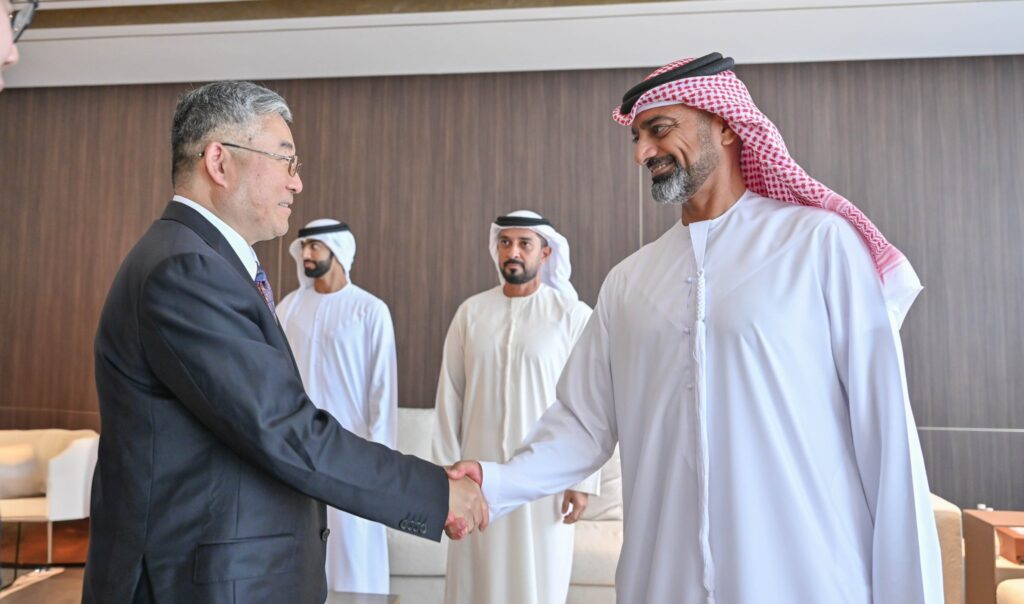
On May 25, the Crown Prince of Ajman, one of the seven emirates that make up the United Arab Emirates, led a high-level delegation to the Chinese city of Chongqing. The group met Yuan Jiajun, the city’s Party Secretary, to enhance cooperation in strategic sectors such as advanced manufacturing and renewable energy.
The visit adds to a growing series of high-level exchanges between the UAE and China, reflecting the evolution of one of the strongest economic relationships in the region. China is now the UAE’s largest trading partner, and its third-largest source of foreign investment, with bilateral investment stock reaching US$10.3 billion.
Traditionally, most bilateral economic engagement between the two countries has flowed through Abu Dhabi and Dubai. Whether hosting Chinese delegations and enterprises or sending Emirati funds and officials to China, these two powerhouses have long enjoyed the media spotlight and international attention.
Less noticed, however, is the quiet emergence of other Emirates — particularly Sharjah, Ras Al Khaimah, and Ajman — as active players in the China-UAE relationship. As they pursue their own economic transitions, these emirates are increasingly turning east.
Under the UAE’s federal system, all seven emirates enjoy significant autonomy in driving investment promotion. This independence also comes with greater responsibility. Attracting foreign investors and securing tangible projects often requires pro-active outreach, including high-level delegations and official visits to strategic markets.
More critically, this autonomy compels each emirate to carve out a distinct economic identity. As the Gulf region pivots away from oil dependency, the pressure is mounting for emirates apart from Dubai and Abu Dhabi to define their own sectoral specializations and competitive edge. Sharjah, for example, sees itself as the cultural hub of the UAE, while Ras Al Khaimah seeks to build stronger tourism and advanced manufacturing capabilities. Even Umm Al Quwain, the emirate with the lowest GDP, published a “blue economy” strategy that focuses on sustainable development and tourism.
In this context, many are increasingly looking to China, not only for capital, but also for technology transfer and development experience. The itineraries of recent visiting delegations reflect these strategic aims, offering a window into how each emirate seeks to position itself in the next phase of economic transformation.
Sharjah, the cultural and educational centre of the UAE, led a seven-day delegation with an impressive number of 18 government entities. To capitalise on its unique positioning, the emirate extended its visit beyond Beijing and Shanghai to include Shandong, one of China’s historic centres of culture and learning.
Uniquely, the delegation featured leaders from Sharjah’s museum and archaeology authorities, as well as academic institutions, adding a cultural and scholarly dimension to what are often investment-driven missions. The visit culminated in a memorandum of understanding with Shandong province emphasising cultural exchange and cooperation between universities.
Sharjah’s northern neighbour, Ras Al Khaimah, opted for a different path. The emirate has a stronger focus on advanced manufacturing, SMEs, and innovation, which is reflected in the five-year-strategy of its flagship free zone, the Ras Al Khaimah Economic Zone.
To attract Chinese capital and expertise, the emirate’s ruler, Sheikh Saud bin Saqr Al Qasimi, paid two official visits to Guangdong and Fujian in 2024. Both provinces are among China’s most dynamic manufacturing and export-oriented regions. His meetings included leading firms such as Midea, Huawei, and Xpeng. While Emirati rulers occasionally undertake such visits, the frequency and scope of Ras Al Khaimah’s outreach suggest a growing ambition to embed Chinese industrial players in its economic landscape.
For these smaller emirates, deepening ties with China is a promising path. Chinese capital, industrial capacity, and technology could serve as vital catalysts to accelerate their economic diversification.
Amid intense domestic competition and manufacturing overcapacity, Chinese companies are searching for growing and dynamic markets outside the country. They are also looking for safer and more welcoming markets that allow them to circumvent the tariff war with the United States. The Gulf Cooperation Council region offers both, offering a growing consumer base and connectivity to other frontier markets.
But despite growing interest from the northern Emirates, large-scale Chinese industrial and innovation-driven projects continue to gravitate towards Abu Dhabi and Dubai. For example, Chinese leaders in the electric vehicle, air mobility technology, and photovoltaic sectors are mostly concentrated in Abu Dhabi, especially in the China-UAE industrial capacity cooperation zone in Khalifa Industrial Zone. Convenient infrastructure, easier licensing and registration processes, and existing Chinese-speaking business networks are all crucial enablers for these companies.
Nevertheless, as Dubai and Abu Dhabi become increasingly saturated and expensive to operate in, Sharjah, Ras Al Khaimah, and Ajman can position themselves as more cost-effective alternatives. But to truly become competitive, they need offerings beyond cost.
These emirates can start with generous land deals, cheaper warehousing costs, financial incentives, and streamlined licensing procedures to attract Chinese investors and companies. Such advantages are particularly appealing for Chinese SMEs, which are expanding overseas to capture growing markets, but remain sensitive to costs.
The investment promotion agencies and free zone authorities would then play a crucial role in offering these perks and convincing Chinese companies of their attractiveness. It is their job to convince investors, craft customized incentives, and provide one-stop-shop treatment. The free zone authorities and investment promotion agencies can also hire Chinese-speaking professionals to facilitate business interactions, both within UAE and outside it. For example, Ajman free zone has already set up a free zone office in Shenzhen to double down on its investment promotion effort in China.
At a time when the global economy faces mounting uncertainties and fragmentation, China has increasingly turned to the UAE for economic and strategic cooperation. Whether the northern emirates can emerge as major pillars of this partnership remains to be seen. However, their recent moves signal that they remain ready to seize the opportunity.
Image Caption: Sheikh Ammar bin Humaid Al Nuaimi, Crown Prince of Ajman and Chairman of the Ajman Executive Council, receiving Zhang Xiaolun, member of the National Political Committee of China’s ruling party, at Ajman Ruler’s Court in 2024. Photo: UAE Media Office
About the Author
Minghao Sun is a public policy consultant advising government clients across the Gulf Cooperation Council