Israel’s Actions in Syria Risk Greater Instability in Region
- Mohamed Nabil Al-Bandary
- -
Introduction
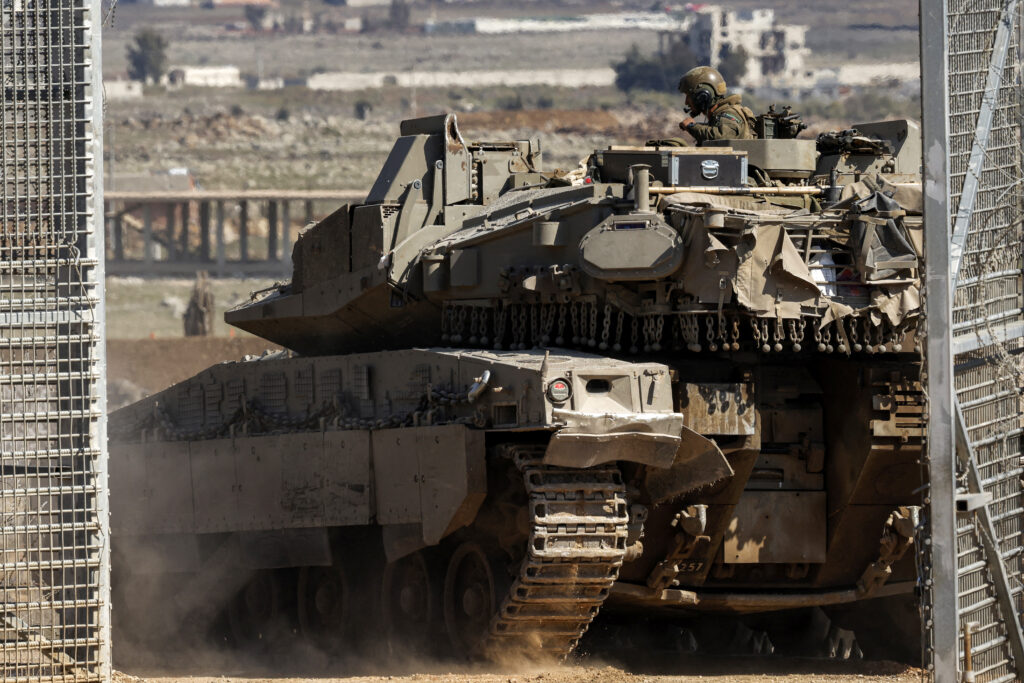
Following the collapse of the former Syrian president Bashar Al-Assad’s rule and his subsequent flight to Russia, the Israeli army announced in a statement on December 8, 2024, that its forces had taken control of territory on the Syrian side of the border in the Golan Heights. Israel’s public broadcaster also reported that the country’s political leadership was considering expanding the army’s presence in the Syrian Golan to “prevent rebel forces from entering the area”.
Israel also declared that the 1974 disengagement agreement with Syria had effectively collapsed. In outlining the reasons, Prime Minister Benjamin Netanyahu said “our primary objective is to protect our borders”, adding that “this area had been governed by a buffer zone established under the 1974 disengagement accord, but that agreement has broken down, and Syrian soldiers have abandoned their positions”.
Since Mr Al-Assad’s fall, Israel has intensified its airstrikes across Syria, launching approximately 500 raids on various targets with the stated aim of dismantling the capabilities of the Syrian military and armed forces, according to several officials. Among the most notable of these was the 3 April, 2025 strike on military positions affiliated with the Syrian Army’s 1st Division near the city of al-Kiswah in western rural Damascus, as well as those of the 75th Brigade in the town of al-Muqaylibah in the Damascus countryside.
Israel’s Objectives and the Game of Interests
From the very outset of its air campaign, Israel made its primary objectives clear. According to Axios, Israeli officials conveyed messages in the days following Mr Assad’s ouster to several Syrian opposition factions — including Hay’at Tahrir al-Sham, whose leader, Ahmad al-Sharaa, is now the country’s president — warning them that if they approached the border in a way that violated the ceasefire agreement between Israel and Syria, retaliatory measures would be taken.
An Israeli official told the Yedioth Ahronoth newspaper on 10 December, 2024 that Israel’s foremost objective in Syria is to seize areas of strategic fire control and surveillance, estimated to span between 500 metres and several kilometres. The second goal, the official explained, is to destroy strategic weapons, including chemical capabilities. The third, and arguably most significant politically, is “protecting minorities, not because Israel needs to, but because the world needs to safeguard this principle”.
Israeli apprehensions have grown over the transitional Syrian government led by President Al-Sharaa, primarily due to his hardline Islamist background. Israel considers his government a potential terrorist threat. Despite messages of reassurance from Damascus — including “warm messages” relayed through the Trump Administration and public statements by the new governor of Damascus expressing a desire for peace, Israeli Foreign Minister Gideon Sa’ar dismissed these as mere attempts to whitewash the image of the new Syrian regime in the West.
Speaking at a press briefing on 28 Dec, 2024, Mr Sa’ar said: “The new regime in Syria is nothing more than a terrorist gang we’ve known from their time in Idlib. The only difference now is that they’ve taken control of Damascus. Yes, the West is impressed by the peaceful handover of power, but we must remember: This is not a democratically-elected government.”
What troubles Israel most is President al-Sharaa’s jihadist background and former ties to Al-Qaeda. Despite his public disavowal of the group, Al-Qaeda issued a congratulatory message following his rise to power. Additionally, extremist factions and ideological hardliners were among the most jubilant over the group’s takeover in Syria.
Israel’s second major concern is Turkey’s growing presence in Syria. Since Mr Assad’s fall and the dissolution of Tahrir al-Sham, which was incorporated into the Syrian state on 29 January this year, Ankara has steadily expanded its political influence as Russia’s and Iran’s presence has declined. Turkey has moved to solidify its role as a key regional power capable of redrawing Syria’s balance of influence. To this end, Ankara has been advancing a political discourse centred on cooperation, offering military training and governance support to the interim Syrian leadership. The process began with the reopening of the Turkish Embassy in Damascus, and includes long-term plans for strategic collaboration across various sectors.
Turkey has also intensified preparations to establish an airbase in Palmyra, in the Homs governate. The Turkish Ministry of Defence announced that it was considering a request from Damascus’ interim administration to build a training facility there. Reports indicated that Turkish military convoys entered northern Syria late in the night of 1 April, likely transporting logistical and technical equipment to the T-4 airbase in Palmyra.
Amid continued Israeli airstrikes, tensions between Ankara and Tel Aviv have escalated. Turkey has accused Israel of undermining Syria’s stability, while Israel claims Turkey is playing a “destabilising role” and turning Syria into a “Turkish protectorate”. In a statement issued on 3 April, Turkey’s Foreign Ministry condemned Israel for “undermining efforts to restore stability in Syria”, asserting that it “has become the greatest threat to regional security through its repeated attacks on the sovereignty and territorial integrity of neighbouring countries”.
On the same day, Israel launched intensified airstrikes in Syria, describing them as a warning to the new Islamist leadership in Damascus. Tel Aviv also accused Ankara of seeking to impose its will on Syria. At a press conference in Paris on 3 April 3, Mr Sa’ar stated that “Turkey is doing everything it can to turn Syria into a Turkish protectorate, and it’s clear that this is their intention”.
In summary, Israel’s core concerns in Syria revolve around two key developments: The growing Turkish-Syrian rapprochement across security, political, and economic spheres, and President Al-Sharaa’s jihadist background and previous affiliation with al-Qaeda. These dynamics, in Israel’s view, provide justification for its deepening military involvement in Syria, an intervention that has been met with broad Arab and Islamic condemnation.
Implications of the Israeli Incursion into Syria
Following Israel’s control over the 75-km buffer zone stretching from Mount Hermon to the Jordanian border, it expanded its reach by nearly 20 km into southern Syria, drawing close to the capital, Damascus. This approach is likely to fuel instability in southern Syria in the coming period. The key implications of Israel’s deepening military presence on the country’s stability and geopolitical rivalries can be summarised as follows:
- An Attempted Iranian Re-entry into the Syrian Arena: The chaos caused by Israel’s strikes on Syria’s military infrastructure is expected to weaken the country’s ability to resist Iran’s reassertion of influence. Tehran is now seeking to exploit these developments to restore its foothold. In this context, Syrian media reported on 4 March the establishment of the “Military Council for the Liberation of Syria”, led by General Ghiath Suleiman Dalla, following a call by the Iran-linked “Alawite Islamic Council” for public protests against the new regime. Arab media confirmed that Gen Dalla’s forces are receiving financial and logistical support from Hezbollah and Iraqi Shia militias, with claims of additional backing, possibly in the form of arms and supplies. It must be noted that the severely diminished Iranian influence in the region over the last year, and Syria’s tentative rapprochement with Washington, make this scenario an unlikely possibility. However, Israel’s continued strikes could weaken Syrian capacity to the point where it is unable to effectively confront either Iran or other threats, including the Islamic State.
- Enabling Syrian Fragmentation: A recent report in The Wall Street Journal revealed that Israel is actively working to persuade Syria’s Druze community to reject the new government and demand autonomous rule within a federal system. According to the report, Israel is prepared to invest over US$1 billion towards this goal. The revelation came just hours after President Al-Sharaa delivered a speech at the Arab League Summit in Cairo on 5 March, in which he condemned Israeli aggression in Syria and accused Tel Aviv of violating Syrians’ rights since the 1967 occupation of the Golan Heights. Israel’s continued military presence and its signals of long-term involvement may embolden some Syrian communities, such as the Druze, to seek secession, or semi-autonomous status. Notably, a Syrian Druze delegation visited Israel on 14 March, a move unprecedented in nearly 50 years.
These concerns have also been echoed by international organisations. United Nations Secretary-General António Guterres warned on 22 January that the threat of Syria’s fragmentation remains real. Speaking at the World Economic Forum in Davos, he stressed that the possibility of Syria’s division still exists, especially in light of the SDF’s dominance in the north-east, Turkish interventions in the north, and the expanding Israeli presence in the south.
- An Imminent Confrontation with Turkey: Amid rising tensions between Israel and Turkey, reflected in increasingly hostile rhetoric and clashing interests in Syria, the likelihood of a direct confrontation is growing. Ankara aims to deepen its military ties with the new Syrian army through joint training initiatives, and is moving forward with plans to establish a military base on Syrian soil, as mentioned. These efforts are occurring in parallel with Israel’s incursions, suggesting that the friction between the two powers could escalate into limited military confrontations inside Syria.
- Growing Popular Resistance: In light of these shifting dynamics, grassroots resistance to Israel’s expansion in Syria appears to be gaining momentum. Israel’s use of force is fuelling resentment and hostility, further undermining any short-term prospects for peace. The situation is being compounded by mounting international pressure, which may contribute to a realignment of regional and global alliances in the Middle East.
In this vein, it was reported that on 25 March 25, approximately 10 local fighters resisted a ground incursion attempt by Israel’s 71st Division, firing warning shots in the air to deter the troops from entering their village of Kuwayya. Under fire, Israeli troops responded by shelling the village with tank rounds and launching at least one airstrike, killing at least six people, according to local sources cited.
A second confrontation occurred on 3 April 3, when residents of Daraa clashed with Israeli forces in the town of Nawa. Armed with light weapons, local youth forced Israeli armoured units from the 474th Brigade to retreat. Israel responded with air and ground strikes that resulted in casualties.
Washington’s Actions
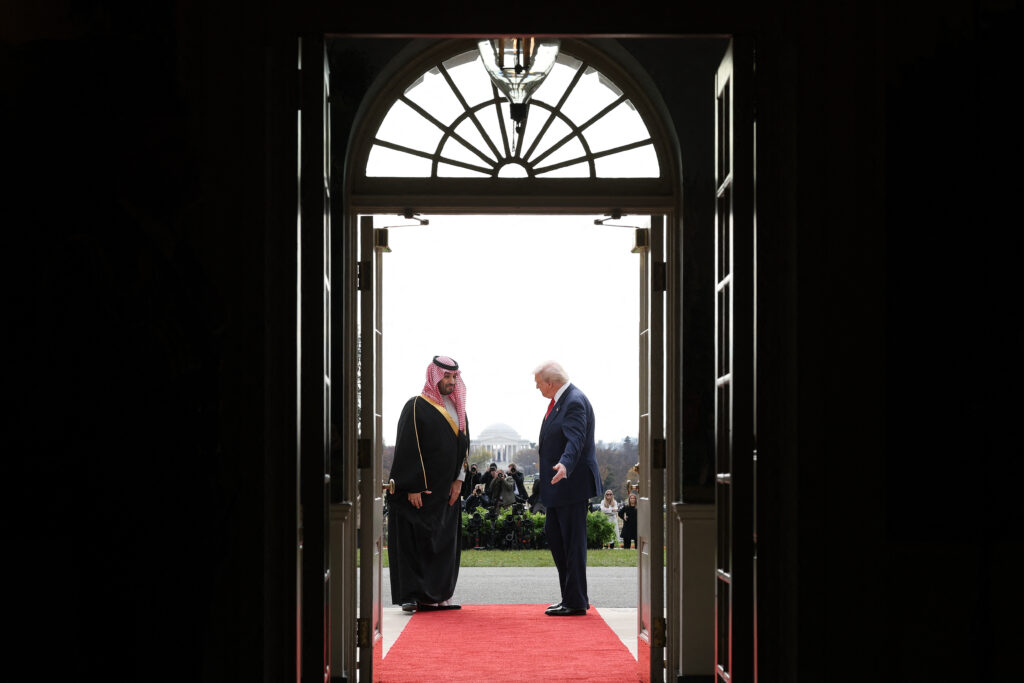
As part of US efforts to reshape the balance of power in the Middle East, President Donald Trump met Mr Al-Sharaa during his recent four-day Gulf tour, which took him to Saudi Arabia, Qatar, and the United Arab Emirates. The meeting took place in Riyadh, shortly after Mr Trump announced — during the US-Saudi Investment Forum held alongside Saudi Crown Prince Mohammed bin Salman — that the United States would lift sanctions imposed on Syria. The move came as a result of direct mediation by the Saudi leadership.
Syrian Foreign Minister Asaad Al-Shibani hailed the lifting of sanctions as a “pivotal turning point” in US-Syrian relations, and expressed his country’s readiness to engage in a strategic dialogue with Washington based on mutual respect and shared interests.
This US decision reflects a broader, multi-layered strategic vision aimed at advancing several key objectives at both regional and global levels.
First, the move is intended to address Israel’s longstanding security concerns by promoting regional stability between Damascus and Tel Aviv under Syria’s new leadership. During the Riyadh meeting, attended by the Saudi Crown Prince, with Turkish President Recep Tayyip Erdoğan joining via video, Mr Trump urged Mr Al-Sharaa to normalise relations with Israel. According to remarks the US President gave to journalists aboard Air Force One en route to Doha, the Syrian president demonstrated “notable openness” to the idea.
Second, Washington aims to curtail Russian and Iranian influence in Syria by drawing Damascus out of the Tehran-Moscow axis and reintegrating it into the Western-led international order. This effort aligns with a broader US strategy to contain Iran, especially following the erosion of its influence in Lebanon and Syria in the aftermath of the 7 October, 2023 Hamas attacks as a result of the decimation of the “Shia Crescent” by the Israeli Defense Forces (IDF). In contrast, the United States is working to establish a new “Sunni Crescent” of moderate, stable allies centred around Saudi Arabia, Egypt, the UAE, and Jordan that can act as a regional counterweight to Iran and bolster American interests.
Meanwhile, a Russian delegation led by Deputy Foreign Minister Mikhail Bogdanov held a three-hour meeting with the new authorities in Damascus on 29 January. Mr Bogdanov later described the meeting as being “mostly conducted in a good atmosphere”, and included a reaffirmation of bilateral relations. Through these moves, Russia seeks to restore its traditional influence by strengthening ties with Damascus.
Washington, on the other hand, aims to use its economic and political influence as a crucial strategic tool to strengthen its presence in the country and counter Russian ambitions. This includes the use of political guidance to steer the Syrian authorities away from easing relations with Moscow, thereby creating a presence and influence in favour of Washington in the Syrian arena.
Third, lifting sanctions opens the door to international investment, particularly from American and Gulf-based companies, aimed at revitalising Syria’s war-torn economy and paving the way for its gradual reintegration into the global financial system, including access to institutions like the International Monetary Fund and World Bank. The US’ actions prompted the 27 member states of the EU to reach an agreement on lifting sanctions on Syria on 20 May.
In sum, President Trump’s decision to lift sanctions on Syria can be viewed as a calculated component of a comprehensive American initiative to re-engineer geopolitical and economic alignments in the Middle East, rebuild strategic partnerships, and position the US for leadership in the post-conflict regional order.
Assessment of Israeli Policies in Light of Regional Transformations
Israel’s current approach to Syria in the aftermath of Mr Assad’s fall does not appear capable of delivering the strategic objectives it seeks. On the contrary, it may backfire, exacerbating the security threats emanating from Syrian territory, especially if Israel continues to pursue a policy of military expansion and seeks to assert control over additional areas inside the country. Rather than enhancing Israeli security, this strategy risks producing a more complex and volatile environment, particularly if accompanied by a resurgence of Iranian influence in Syria — a development Israel perceives as a direct threat to its national security.
The US decision to lift sanctions on Syria and reopen lines of communication with the new leadership in Damascus further complicates Israel’s strategic calculus. There is intense international pressure on Israel to halt its attacks on both Gaza and Syria, and to engage in a political process that includes Gaza and the two-state solution. The Washington Post, for instance, reported that individuals close to Mr Trump have threatened to abandon Israel if it does not halt the war.
The newspaper added that the pressure from Mr Trump intensified as Israel escalated its bombing of Gaza and approached a point of no return in the war. On 19 May, the leaders of the United Kingdom, France, and Canada threatened to punish Israel if it did not stop its offensive in Gaza.
Amid these rapid political and military developments, it is in Israel’s interest to reassess its current policies. A shift is needed from a unilateral, militarised strategy aimed at creating facts on the ground to a more political approach grounded in multilateral negotiations, ideally under the auspices of key regional and international powers, chief among them the United States. Such a shift would allow Israel to address its security concerns without being drawn into broader regional confrontations.
Conclusion
In light of the profound changes unfolding in Syria following the fall of the Assad regime, Israel’s policies, rooted in military expansion and direct intervention within Syrian territory, have become increasingly fraught with risk. Rather than bolstering its security, such strategies may inflame regional tensions, particularly amid Turkey’s growing influence, The possibility of a renewed Iranian effort to reassert itself in Syria, and the rising calls for separatism among certain groups, could threaten the country’s unity and further destabilise the broader region.
A rational engagement with the new Syrian regime and openness to settlement initiatives may offer Israel the most viable path forward — one that avoids broader confrontations and supports a more stable regional order that serves the interests of all parties involved.
Image Caption: An Israeli army Merkava main battle tank crosses the barbed-wire fence into the UN-patrolled buffer zone separating Israeli and Syrian forces in the Golan Heights near the UN Quneitra checkpoint on March 2, 2025. Photo: AFP
About the Author
Mohamed Nabil El-Bandary is a researcher at the InteRregional for Strategic Analysis in the United Arab Emirates, specialising in political changes, regional security and military cooperation, and regional and international relations in the Middle East.