As Gulf Becomes More Volatile, Is Asean’s Energy Strategy Viable?
- Cameron Stone
- -
Indonesia’s announcement in May 2025 that it plans to decrease fuel imports from Singapore and look towards the United States aligns with a broader trend of South-east Asian countries moving to diversify their sources of energy. For Jakarta, there is the added impetus of repositioning itself more favourably towards Washington as it seeks to secure better terms in the wake of President Donald Trump’s protectionist outlook and tariff war.
The refashioned global political order is being increasingly defined by multipolarity and balancing between great powers and their respective spheres of influence. Key economic relations are also being shaped the same way for countries that pursue strategic non-alignment. Indonesia is not alone in this effort — other Asean countries, including Singapore and Malaysia, have also moved in this direction.
With the US, Gulf Arab producers, and Russia are all competing to satiate South-east Asia’s energy appetite, which is projected to increase through 2035 — or even until 2050, according to some reports — this policy realignment has become more apparent.
However, juggling multiple geopolitical arenas carries risks, too, and Jakarta — and indeed, other regional capitals — might find that the turn away from intra-Asean means of building energy independence will lead down the long road of managing one source of insecurity after another.
South-east Asia has long depended on the Gulf as a source of oil. Even though Malaysia and Brunei are among the few net exporters of crude oil in the region, Indonesia, Vietnam, and Thailand remain major importers. Much of the oil that Singapore — one of the world’s five largest refineries and export hubs for the processing of petrochemicals, with over 100 petroleum and chemical companies and a production capacity of 1.3 million barrels per day — treats comes from the Gulf. Most Singaporean energy exports have been destined for countries in its immediate vicinity, including Malaysia, Thailand, Vietnam, China, and Indonesia.
Jakarta’s plans for greater reliance on the US are rooted in avoiding crushing American tariffs, but much of South-east Asia has gone the other way — increasing imports of hydrocarbons from the Middle East and Russia. Among the notable examples are a US$27 billion deal between Indonesia and Saudi Arabia from July 2025, aimed at the development of the petrochemical and clean energy industries, as well as a 15-year cooperation agreement between Malaysia’s Petronas and the United Arab Emirates’ Adnoc from late 2024. While Gulf producers continue to supply approximately 60 per cent of South-east Asia’s oil, overall Russian oil exports to Asia and Oceania have increased by over 80 per cent in 2025 as Moscow redirected shipments to avoid Western sanctions imposed on it for invading Ukraine.
The current reality is that, despite the decarbonisation plans in several countries, South-east Asia’s energy landscape — as it is in other developing parts of the world — is one of overwhelming reliance on hydrocarbons, with only modest progress towards increasing the share provided by clean sources. Given this reliance on oil and gas, national strategies to diversify sources may not eliminate risks, since the production capacities of the key suppliers remain influenced by geopolitical swings and security risks.
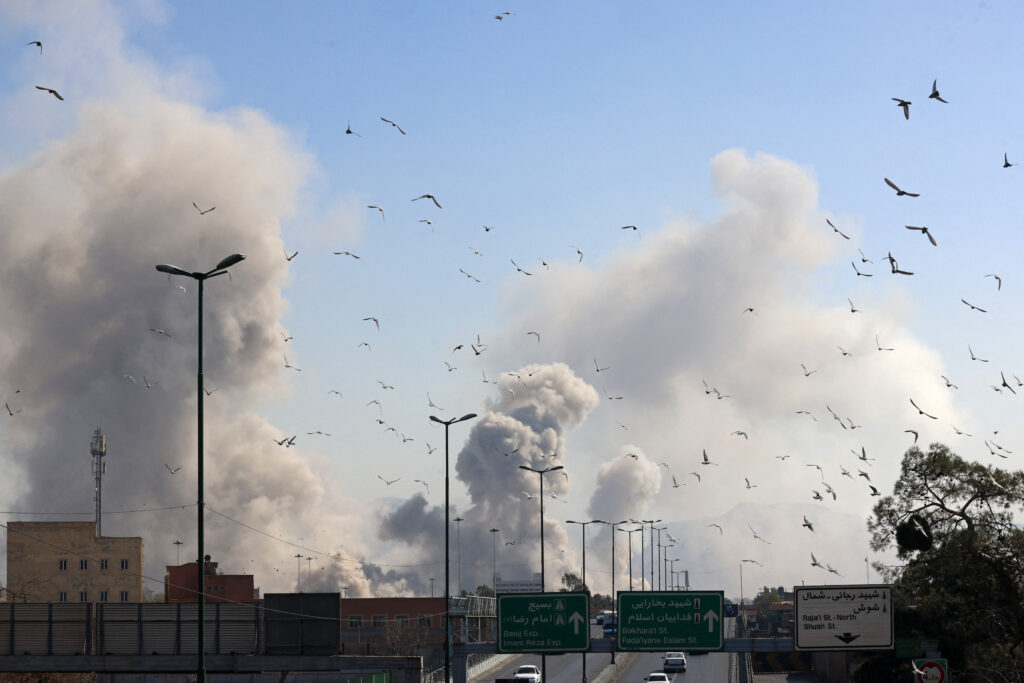
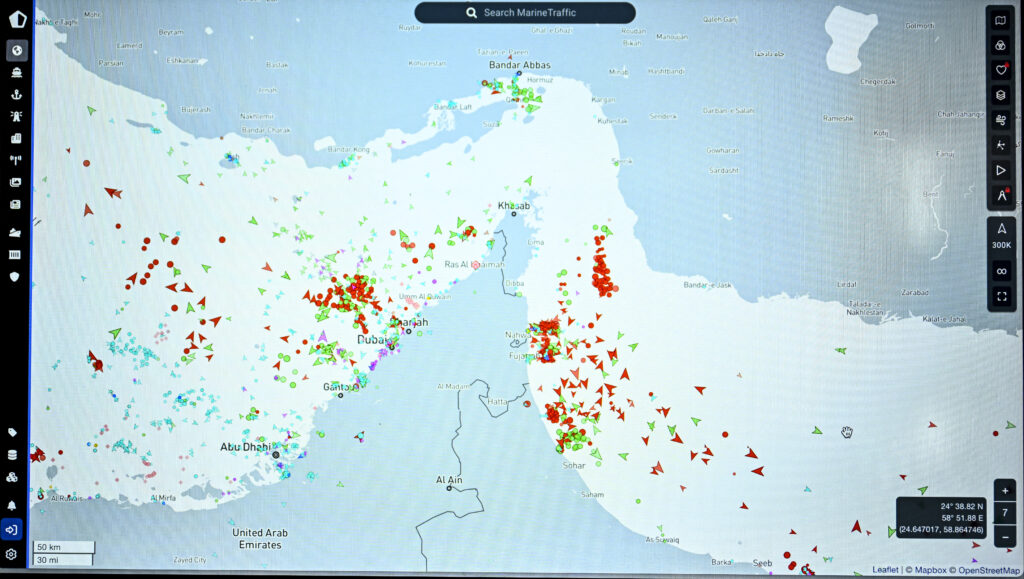
The Gulf is now a more volatile geopolitical arena, with continuing conflict — the latest being an Israeli strike on Qatar, a Major Non-Nato Ally of the US — causing instability which threatens energy shipments. Iran and its weakened, albeit not extinguished, Axis of Resistance, which includes the Houthis in Yemen, still reserve the option of blocking maritime trade routes in the Strait of Hormuz, where 80 per cent of the oil that passes through is destined for Asia.
The US under the current administration has a reputation for volatility, demanding increasing levels of loyalty from its allies, with policies and consequent tariffs often changing from week to week. As India found out at the end of August 2025, when the US imposed a 50 per cent tariff rate, trading with Russia could be particularly troublesome — for some. China, for example, has gotten off scot-free for doing much the same thing. In a vivid example of Mr Trump’s swings, however, he pushed the European Union to impose tariffs as high as 100 per cent on India and China last week as a means of exerting pressure on Moscow.
Given these factors, South-east Asian nations may find that upending their current supply chains, as Indonesia plans to do, may bring even more volatility. They should thus tread carefully on plans to increase energy security by diversifying their import sources away from Singapore too quickly.
Another looming risk for diversification concerns the future of South-east Asian decarbonisation plans, which, as mentioned, are lagging. China, currently the largest importer of oil in the world, has also emerged as the world leader in investments in renewable energy resources. Such investments returned impressive results: The country reached its 2030 development goals for building wind and solar capacity six years ahead of schedule. Even more critical for the future of the world’s energy landscape is China’s ownership of global production capabilities in the renewables sphere. China controls over 80 per cent of the world’s supply chain for the production of solar cells, 60 per cent of the manufacturing of wind turbine components, and more than 70 per cent of the lithium-ion battery market. This entails significant ownership over the supply chain, as well as the production of technologies — from the sourcing of raw materials in Africa and South America, the refining of minerals on site or in China, or the manufacturing of solar panel, wind turbine, and battery components. China has also been a leader in the production of more complex products, such as electric vehicles.
This makes China a significant factor in the decarbonisation and net zero development goals of a number of South-east Asian countries, which rely on the ever-greater substitution of hydrocarbons for renewables energy resources. Examples of early cooperation agreements between Chinese companies and other producers in emerging and developed economies in the region that would see the transfer of Chinese technology for production outside China are already demonstrating how the future of energy will gravitate towards Beijing. For instance, India’s Reliance Industries has reportedly sought collaboration with Hithium Energy Storage.
But despite their early-mover advantage and dominant position in renewables, Chinese firms are not without problems. China’s state-led prioritisation of this sector has thrown up early symptoms of trouble — much the same way its property market expansion faltered and eventually collapsed after the signs were ignored. While the property issue was debt, for renewables, it is overcapacity. Hithium, for example, has reportedly been facing solvency issues, with state subsidies of US$56 million heavily outweighing revenue of about US$40 million. It recently lost one of its biggest customers, which filed for Chapter 11 bankruptcy, but state subsidies kept it afloat. A similar problem is bubbling in the electric vehicles sector. South-east Asia’s increasing dependence on Chinese renewables technology, as well as large-scale investments from Beijing, which are often at the expense of those from the West, can likely expose the region to vulnerabilities emanating from China.
Balancing between today’s hydrocarbon producers as a way of avoiding being dragged into geopolitical competition between great powers is mired in risk due to the combination of politico-economic shifts and security risks. The evolution of the global energy industry is headed in a very specific direction, one that is defined by a low-carbon renewables-driven future that is facilitated by supply chain resilience, and regional self-sufficiency.
South-east Asia’s energy needs would be best served by continuing to cautiously pursue diversification of energy suppliers to prevent an undesirable dependence on a single actor, while leaning towards the stability and security that Singapore has long provided. This, alongside building regional and bilateral partnerships while investing in storage and logistical infrastructure, would maximise energy security.
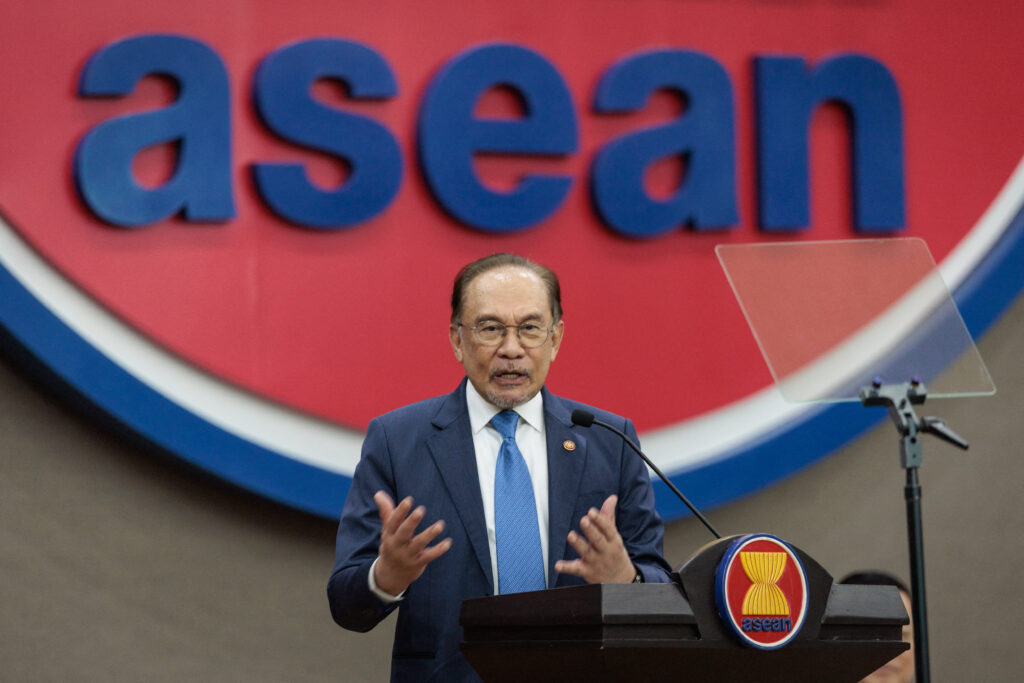
Image Caption: Malaysia’s Prime Minister Anwar Ibrahim delivers a speech at the Association of Southeast Asian Nations (ASEAN) Secretariat in Jakarta on 29 July 2025. Photo AFP
About the Author
Cameron Stone is a London-based energy analyst, is completing his MPhil at King’s College. He analyses and comments on UK and European government policy vis-à-vis Asean in the renewable energy space through in-depth research reports on the subject. His primary focus is currently the UK government’s policy objective of reaching Net Zero targets by 2030, and how this can be supported by relationships with Asean. Mr Stone was the recipient of The Duke of Edinburgh’s Award in 2021 for public service and contribution to the community.


More in This Series
- Huzeir Ezekiel Dzulhisham
- -