After Strike on Qatar, What Next for Gaza Mediation Efforts?
- Ghada Soliman
- -
Introduction
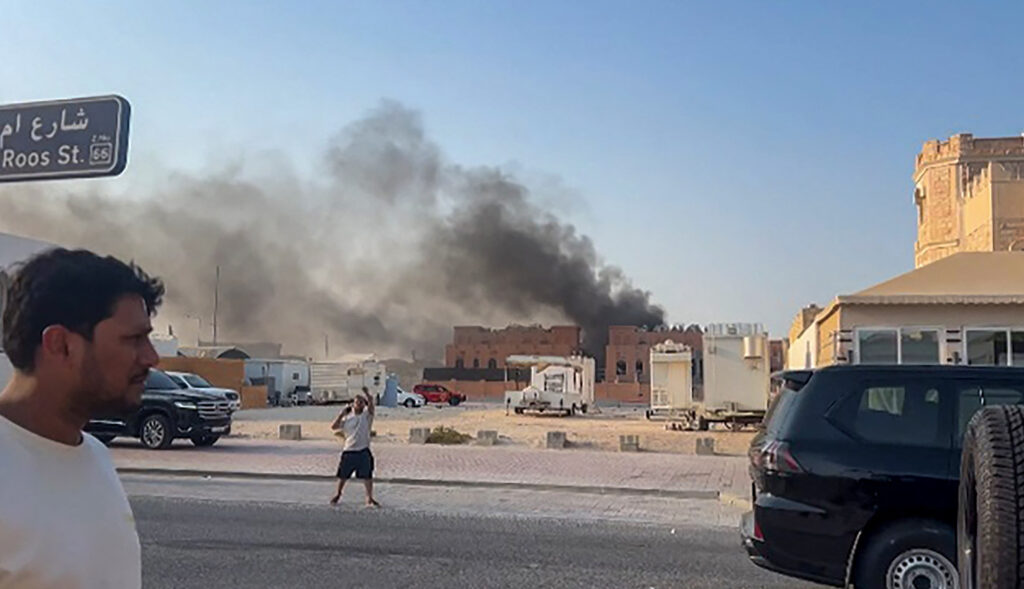
Israel’s unprecedented Operation Fire Summit, which targeted Hamas leaders in Doha on 9 September 2025, continues its trend of expanded military actions across the Middle East. Although deemed unsuccessful, the strike came as a shock. It introduced a new layer of complexity and distrust into already fragile truce talks between Israel and Hamas, and added to growing unease in the region over Tel Aviv’s unconstrained use of military power. The attack on Doha, a Major Non-Nato Ally of the United States, demonstrated Israel’s willingness to set aside convention — including the interests of its closest ally — raising questions about the implications for Qatar, future safe havens for Hamas’ leadership, and efforts to end the Gaza war: A point brought home by America’s top diplomat, Marco Rubio, who said on 15 September that a diplomatic solution to the conflict might not be possible.
Israel’s attack in Doha led to the killing five people, including the son of Hamas’ exiled Gaza chief and top negotiator Khalil al-Hayya. Qatari authorities stated that the weapons used went undetected by their radar systems, and described the attack as “state terrorism”. Despite sparking regional and international condemnation by various countries, including the US and the United Nations Security Council (UNSC), Israel remains unbowed, and has threatened more strikes to eliminate Hamas leaders. On 12 September 2025, the United Nations General Assembly adopted a resolution that supports a two-state solution for Israel and the Palestinians. It explicitly condemned Hamas and demanded its disarmament, as well as calling on it to free all hostages. However, despite overwhelming support — with 142 votes in favour, 10 votes against, including from the US and Israel, and 12 abstentions — American opposition rendered the resolution merely symbolic.
A Message to Hamas and the Region
The Israeli strike amplified President Donald Trump’s “last warning” for Hamas to surrender or face elimination. It also puts pressure on countries involved in mediating in the conflict to exert pressure on Hamas to accept the US proposal made on 8 September 2025. In addition to calling for the release of all living Israeli hostages and the remains of dead ones, that plan paves the way for the Gaza Riviera, a concept championed by Mr Trump and embraced by some right-wing Israeli politicians that envisions the transformation of the Strip into a luxury coastal development after the displacement of its Palestinian population. Despite being widely condemned as a cover for ethnic cleansing, it nevertheless remains on the table.
Hamas, meanwhile, has reiterated its commitment to the ceasefire framework proposed by Cairo and Doha on 18 August 2025, which involves the release of 10 living hostages and 18 bodies in exchange for a 60-day truce, but which Israel has rejected. Given the trenchant positions of both sides, the chances of a deal are diminishing by the day.
Qatar Has Limited Options to Respond
Due to its diplomatic role, strategic interests, and geopolitical realities, Qatar faces a complex and constrained set of options in responding to the Israeli strike. Any direct military retaliation by Qatar against Israel is highly improbable. The emirate lacks the military means to respond in such a fashion; in any case, even if it did, doing so would severely escalate the conflict, jeopardise the ongoing negotiations over Gaza, and directly challenge its crucial relationship with the US. Consequently, it swiftly denied a report suggesting a potential review of its partnership with the US. That explains why Qatar’s official statements following the strike, much like those issued after Israel’s attacks on Iran, often express a reservation of the right to respond, rather than outlining concrete retaliatory measures. Similarly, the emergency Arab–Islamic Summit held on Doha on 14 and 15 September 2025 amounted to little more than a show of solidarity among Gulf Arab leaders.
What’s Next?
Since Hamas’ 7 October 2023 attack, Doha has played a crucial role as a mediator in negotiations between Israel and the terrorist organisation. This would not be the first time Qatar played this role: It also facilitated negotiations with the Taliban at the request of the US, leading to an agreement between both sides in February 2020. Now, however, Prime Minister Benjamin Netanyahu has called on Qatar and other countries protecting terrorists to either expel them or ensure they face justice, emphasising that failure to comply would result in unilateral Israeli action. He has also challenged Qatar’s role as mediator by accusing the nation of offering Hamas leaders a secure refuge, financial support, and luxurious accommodation. Following the strike, Qatar has suspended its mediation efforts between the two parties.
Could Negotiations be Moved to Egypt?
While Qatar has been a key location for Hamas’ political bureau and a frequent site for indirect talks, the attack on Doha could lead to a loss of trust among the negotiating parties, making it difficult to continue discussions there. In such a scenario, a new, secure location would become essential. Egypt has expressed its willingness to host and protect Palestinian faction leaders within its borders; it has warned Israel against attacks on it.
Egypt has been a central player in Israeli-Palestinian diplomacy, having been the first Arab nation to sign a peace treaty with Tel Aviv in 1979. It has also consistently engaged with both the Palestinian Authority and Hamas. However, if negotiations are moved to Egypt, it would put tremendous pressure on the country: If Cairo is unable to put pressure on Hamas, it would jeopardise ties with its neighbour.
Conclusion
It is clear that neither Qatar nor its fellow Gulf Cooperation Council states can take any meaningful steps against Israel. Despite Mr Trump’s call for Israel not to strike Qatar again, there are no guarantees it will not do so. During his visit to Israel, Mr Rubio did not discuss what, if any, message the US had delivered regarding the Doha strike. The best that can be hoped for is that he stressed Mr Trump’s message that the attack did nothing to advance either the US’, nor Israel’s, goals. Mr Rubio is to visit Qatar next, and perhaps he will provide reassurances in private there, too.
As for negotiations, the window for a resolution appears to be closing. The disproportionate suffering of civilians — with more looming, as Israel moves ahead with its assault on Gaza City — is the cost of these unending negotiations.
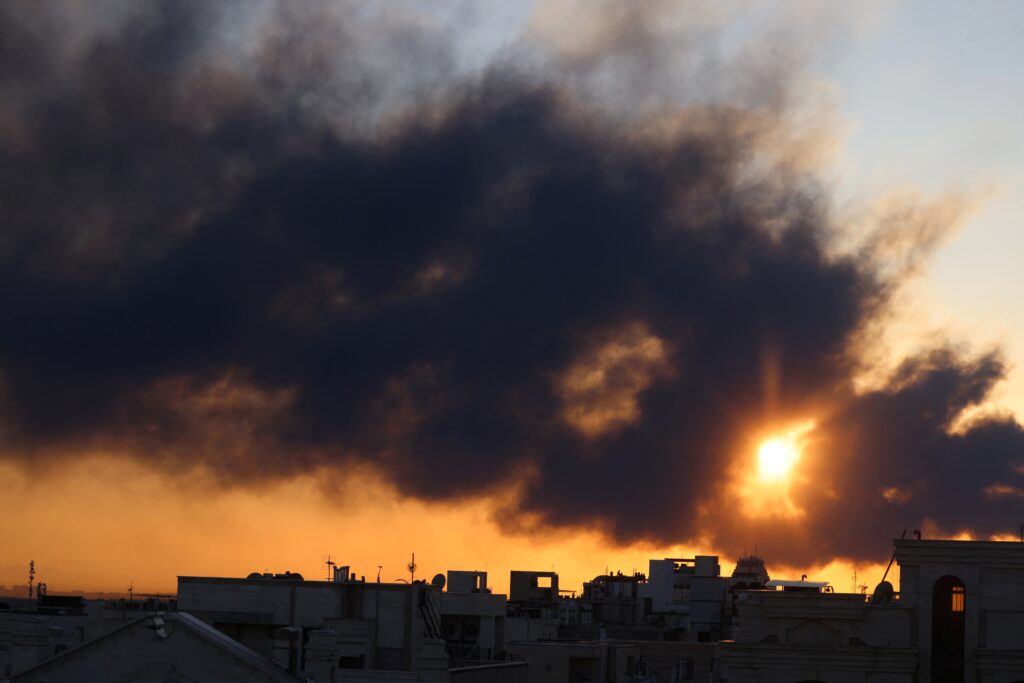
Image Caption: This frame grab taken from an AFPTV footage shows smoke billowing after explosions in Qatar’s capital Doha on 9 September 2025. An Israeli military official told AFP that the military had carried out air strikes on Doha in an operation targeting senior leaders of Palestinian militant group Hamas. Photo: AFP
About the Author
Dr Ghada Farag Sayed Soliman is a Research Fellow in the International Centre for Political Violence and Terrorism Research at S. Rajaratnam School of International Studies (RSIS), Nanyang Technological University (NTU), Singapore. Her research focuses on extremism in the Middle East and North Africa region.

More in This Series
- Huzeir Ezekiel Dzulhisham
- -