*The writer was a speaker at MEI’s Annual Conference this year – this article expands on his perspectives.
It is customary and tempting, but analytically mistaken and factually misleading to approach the current realities in the Middle East as if they are part of a single geostrategic picture with one essence and a single underlying ground from which they spring and are organically linked, thus allowing for a single meta-narrative indicating their future trajectory. Instead, I argue that the current realities of the Middle East are too complex and diverse to be enveloped in one framework, or reduced to a single dynamic allowing for an internally coherent over-arching strategic foresight. Instead of misleading totalisation, I propose to identify some major trends that seem to be dominating the geostrategic landscape of the Middle East today, and are most likely to shape its trajectory in the foreseeable future. Although these trends interact and sometimes influence each other, they are neither organically linked nor a manifestation of an underlying single determining logic.
Growing Disparities between the GCC and Other Arab Countries
This trend can be most clearly identified at the economic level, where the Gulf Cooperation Council (GCC) comprises some of the wealthiest and fastest-developing counties the world, whereas most of the other Arab countries languish in a deepening economic and developmental crisis. From a global strategic point of view, one can detect a clear shift in the centre of gravity in the region towards the Gulf. This trend of divergence between the GCC states and most other Arab countries can be seen at the political stability and internal social cohesion levels, too.
The Phenomena of State Failure and Weakness in the Middle East
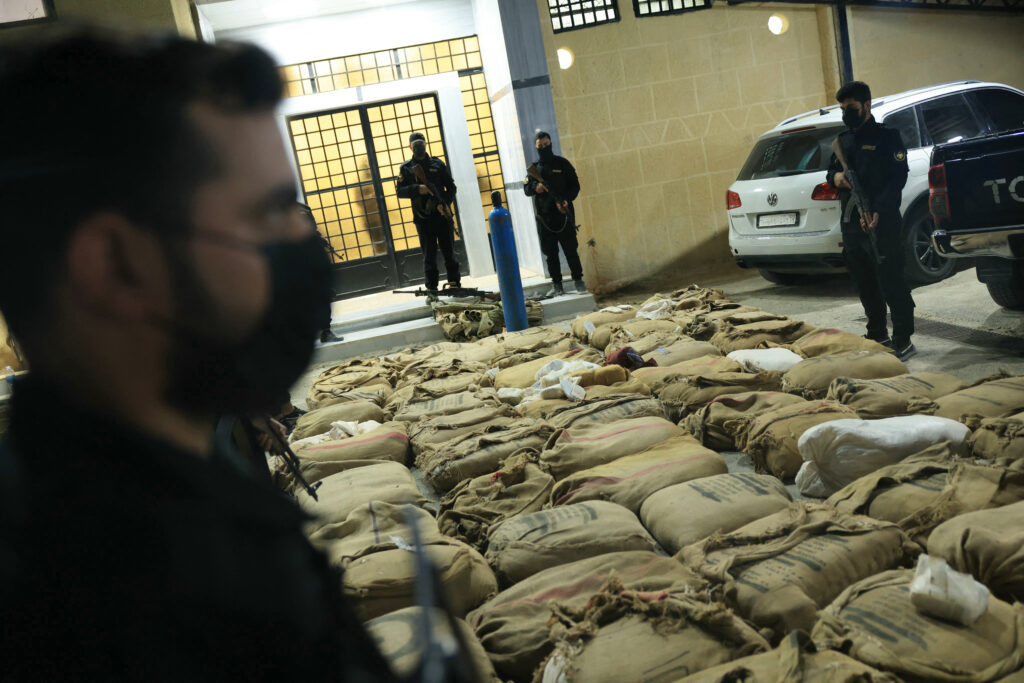
Max Weber provided the widely-accepted definition of the modern state as being the political entity that has a monopoly on the legitimate use of physical force within a given territory. In the past two decades, the negative consequences that have arisen from the loss of this monopoly have manifested themselves in many parts of the Middle East. The failure of state authority in Iraq, Syria, Sudan, Libya, Yemen, and Lebanon has led to inability to control their borders and their territories, provide services and adequate governance to their populations and, ultimately, forge a common national identity that could be the basis of a cohesive political community. With the collapse of central government control, brutal identity politics has given rise to various forces based on ultra-fundamentalist, sectarian, ethnic, tribal, and regional identities. These forces are competing violently to fill the vacuum, further tearing these countries asunder. The problem of state failure in some Middle Eastern countries, and state weakness and fragility in most others, has created terrorism, crimes against humanity, organised crime — among other blights — that cannot be solved by one country, no matter how powerful.
Great Power Competition and Its Consequences for the Region
It is increasingly clear that the fundamental shifting dynamic in contemporary international politics is the emergence of an international system that increasingly tends towards bipolarity — one in which the United States and China are the clear leaders on the most important indices of power, economic and military. There is a gap between them, but this is steadily shrinking. Most suggest that world politics is entering a type of bipolarity for the second time since 1945. However, this emerging new bipolar system has quite different characteristics from the previous one i.e., the Cold War between the Soviet Union and the US. There is a specificity to contemporary China-US relations that sets its logic apart from that of the zero-sum game that dominated the Cold War. Taken in its entirety, the relationship between China and the United States as it stands today and in the future is a complex one comprising overlapping dimensions of interdependence and competitive confrontation.
What is remarkable in recent years is that the dimension of competitive confrontation has been coming increasingly to the fore. In addition to the military build-up in the Indo-Pacific Region, and hawkish diplomatic exchanges, recent years have seen a tendency towards strategically selective economic decoupling by the US from China via protectionist practices (raising tariffs on Chinese goods), and employing an expanded definition of national security to include the preventing Beijing from acquiring advanced American. These in turn produced counter Chinese protectionist measures. All in, this confrontationist tendency transformed the cherished economic interdependence achieved over four decades into a political and strategic challenge for both powers, and is ripple effects are a growing turn away from globalisation. Another aspect of this competitive confrontation is the race to achieve greater dominance in the fields of artificial intelligence, digital systems, and their commercial applications. Accompanying this is an intense effort to gain dominance over international organisations, achieve greater political influence in certain regions of the world, and reshape the world order.
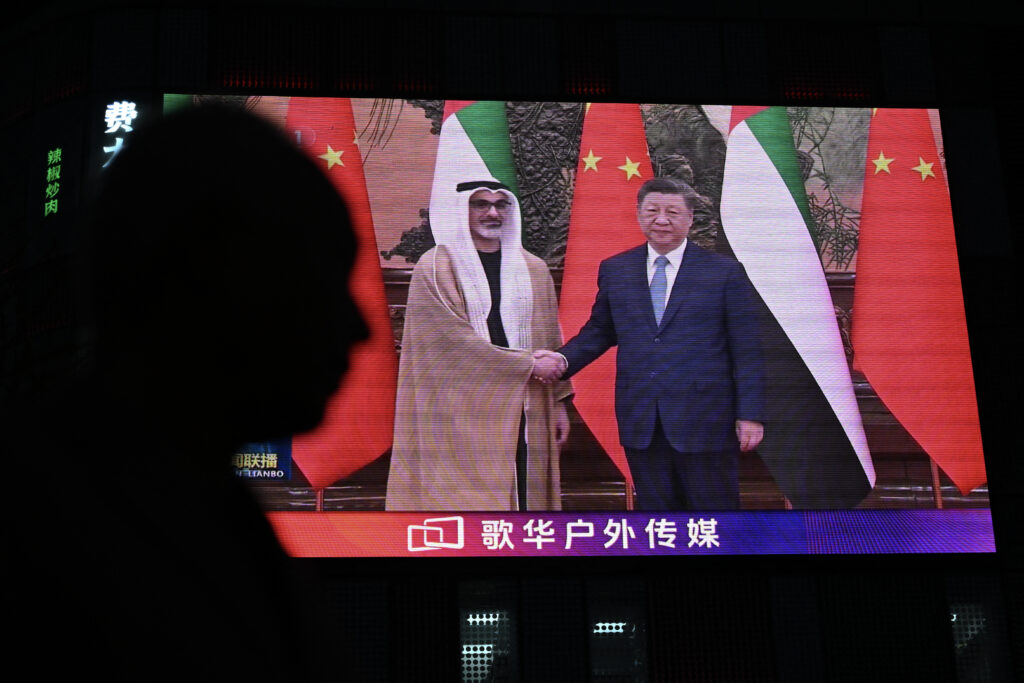
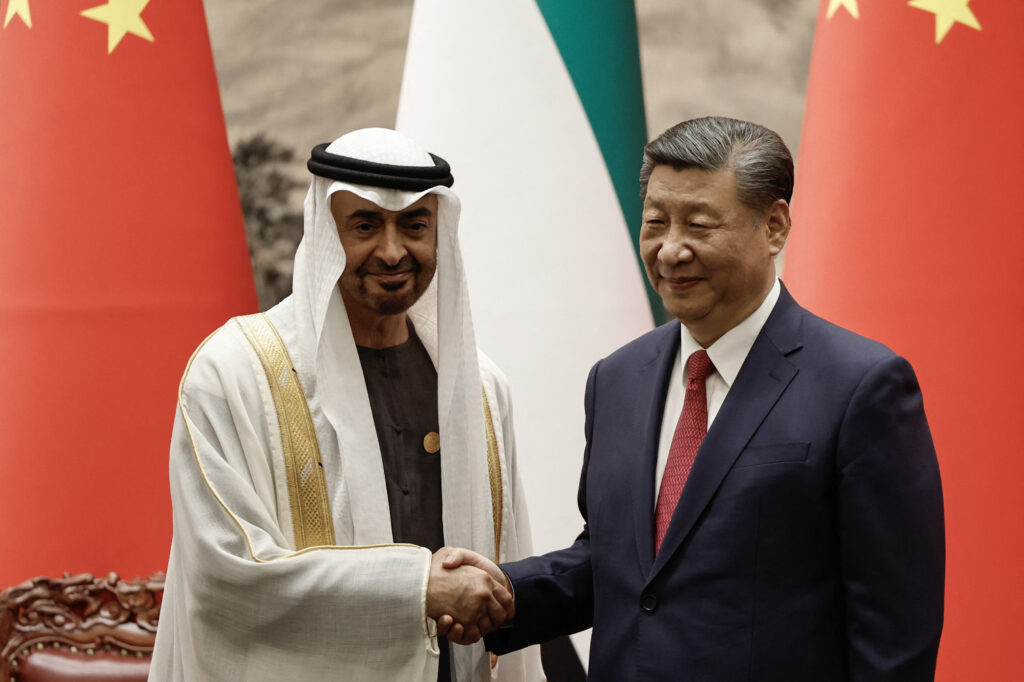
These actions present specific problems (and perhaps some opportunities) to the countries and regions of the world (like Saudi Arabia and the rest of the GCC) that have historically had crucial security and political relations with the US, while building, over the last three decades, important and beneficial economic ties with China.
This is an emerging problem. Previously, the notion that having strong relations with both countries did not constitute a demanding challenge, because the US and China were themselves very much in tandem in strengthening bilateral relations. Today, however, developing closer relations with one power carries the risk that will be interpreted by the other as coming at its expense.
As far as the Middle East, and specifically the GCC countries, are concerned, the increasing competition between China and the US will increase their importance to each one of them primarily (but not exclusively) because of the region’s indispensable energy resources. But this deterioration in US-China relations to the level where confrontation becomes the dominant feature carries with it actual and potential challenges, among them the risk of a long-term global economic recession, which in turn will not only weaken the demand for energy, but also create additional challenges to the ambitious economic transformation projects being undertaken by the Gulf states. In addition, the weakening of international institutions because of the continuing confrontation goes against the interest of the GCC countries in strengthening international governance through multilateral diplomacy.
The Persistence of the Palestinian Question
The Palestinian issue has been fundamental factor shaping the fundamental factor in shaping the geopolitical and political culture of the Middle East for more than a century. The 1990s witnessed high hopes of a peaceful settlement that could eventually put the issue to rest. Over time, however, these hopes receded. After the 7 October attacks, they have all but disappeared, replaced instead by a growing push to eliminate the possibility of a Palestinian state.
Palestinians, on their part, will no doubt continue their resistance to the “Greater Israel” project. This will no doubt visit immense violence and destruction on them. On the other side, Israel will be firmly seen as the main destabilising actor in the Middle East, generating more poisonous reactions, reducing the moral standing of the West, and battering the worldwide image of Israel and of world Jewry.
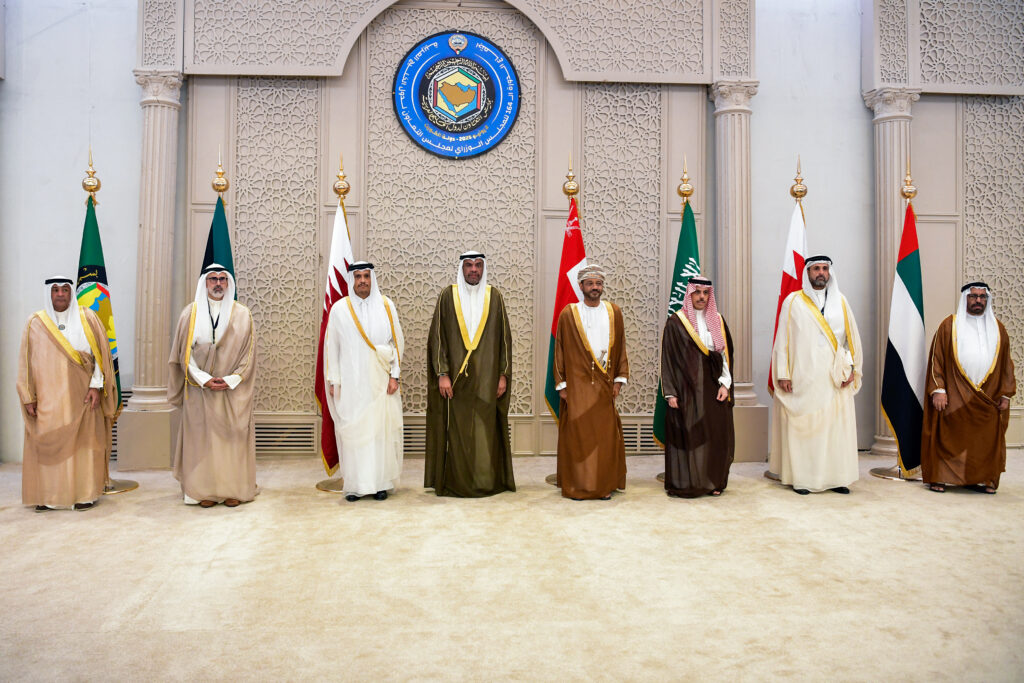
Image Caption:(L-R) Gulf Cooperation Council (GCC) Secretary-General Jassim al-Budaiwi, Kuwaiti deputy Minister of Foreign Affairs Sheikh Jarrah Jaber Al-Ahmad Al-Sabah, Qatari Prime Minister and Foreign Minister Mohammed bin Abdulrahman al-Thani, Kuwaiti Foreign Minister Abdullah Ali al-Yahya, Omani Foreign Minister Badr al-Busaidi, Saudi Foreign Minister Faisal bin Farhan, Bahraini Foreign Ministry Undersecretary for Political Affairs Khalid Yousef Al-Jalahma, and UAE Minister of State at the Ministry of Foreign Affairs Khalifa Bin Shaheen Al-Marar pose for a group photo during the GCC foreign minister meeting in Kuwait City on 2 June 2025. Photo: AFP
About the Author
Dr Asaad Alshamlan is Associate Professor of Political Science & International Relations and Director of the Center for European Studies at Prince Saud Al Faisal Institute for Diplomatic Studies in Riyadh. Among other things, he worked as a political consultant for the General Secretariat of the Gulf Cooperation Council (GCC) from 2012-2014. His teaching, research and publications relates to Gulf security, Saudi-American relations, Saudi-British relations, GCC-EU relations, Saudi-Russian relations, Saudi-Chinese relations, Political Islam, Foreign Policy Analysis, contemporary theories of international politics, The Concept of The Political, and Post-Structuralist approaches in political analysis. He holds a BA (Honors) from Carleton University-Canada, and an MA and PhD in Political Science from the University of Essex-UK.