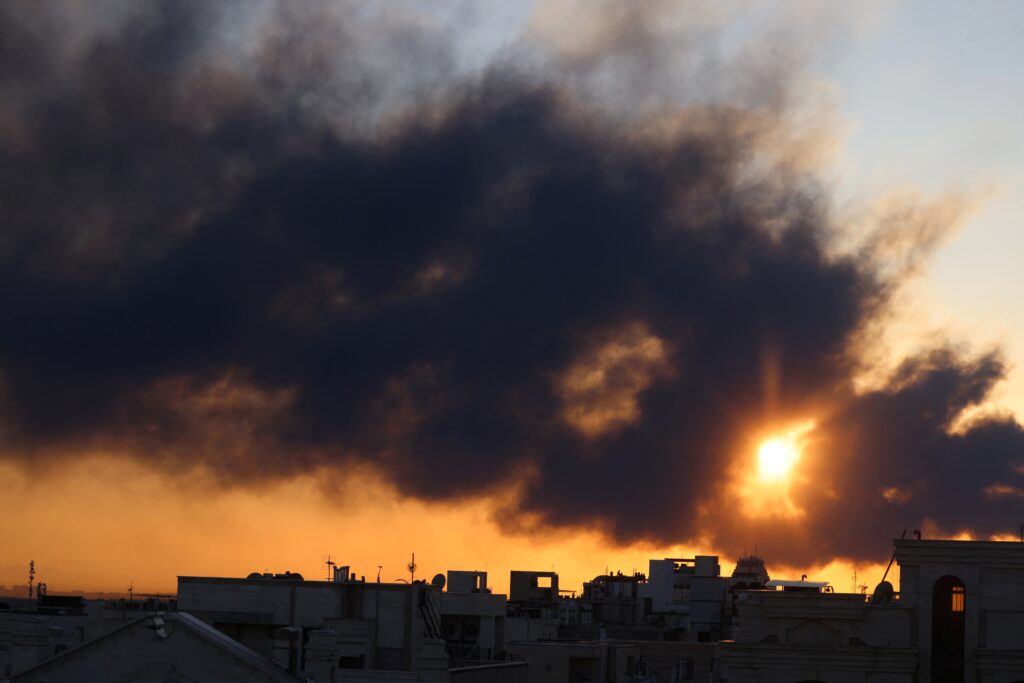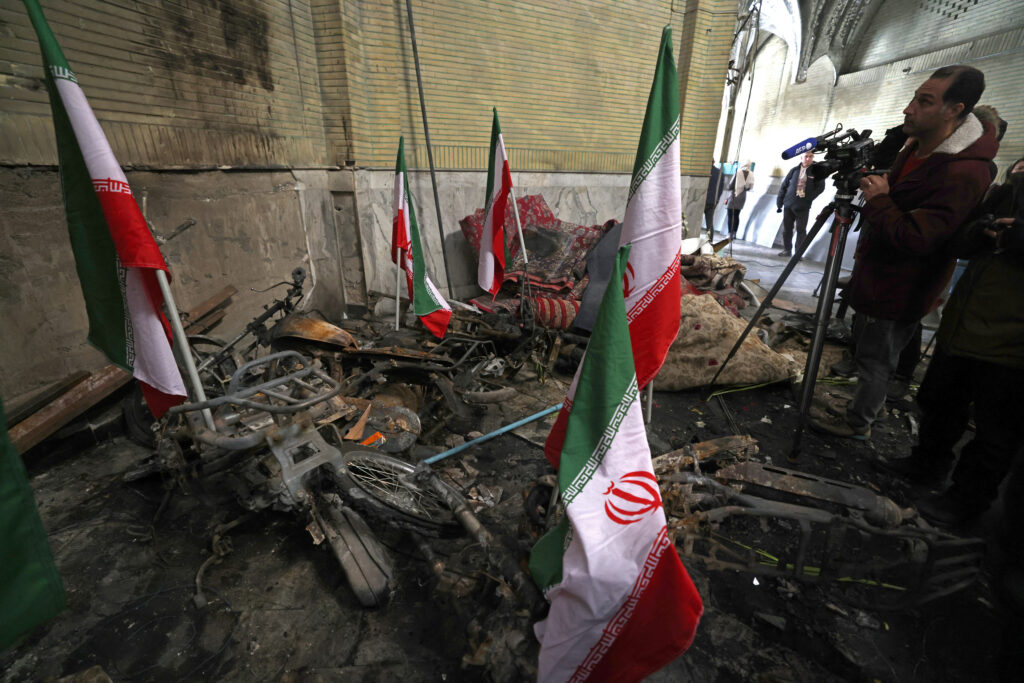
Since the beginning of the United States-Israel war against Iran on 28 February, the conflict has embroiled the Gulf, with oil and gas infrastructure, industrial zones, airports, ports, and diplomatic sites targeted by the Islamic Republic. Global energy markets reacted sharply to the shock, with oil prices surging above US$100 per barrel, and gas markets experiencing significant volatility.
For the Gulf Cooperation Council (GCC), the significance of this conflict extends well beyond the short-term energy price paradox. The more consequential question is what the war reveals about the fragility of the Gulf’s diversification model itself. The GCC states’ economic transformation strategies, such as Saudi Arabia’s Vision 2030, Qatar’s National Vision 2030, and Oman Vision 2040, as well as similar long-term development frameworks across the region, were designed on the assumption that geopolitical risk could be contained, and that sectors such as tourism, aviation, logistics, mega-projects, and Foreign Direct Investment (FDI)-led transformation could be insulated from the region’s structural vulnerabilities. The Iran war has put those assumptions under direct stress.
Energy Markets, the Strait of Hormuz, and Vision Exposure
In the earlier stages of the war, Brent crude briefly surged to US$119.5 per barrel on 9 March, its highest level in a year, before declining as markets reassessed the likelihood of immediate supply disruptions. However, prices rose to similar levels on 19 March, reaching an intra-day high of approximately US$119, driven by renewed escalation following attacks on regional energy infrastructure, including the strike on Ras Laffan in Qatar, and broader disruptions to gas and oil supply expectations. Figure 1 traces oil price movements alongside the war’s key developments.
Figure 1: Oil Price and Geopolitical Escalation: Iran War (Feb 26- Mar 25, 2026)
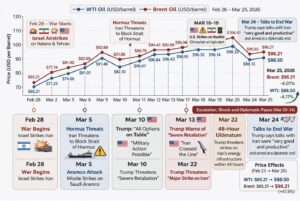
Source: Investing.com Brent & WTI Oil Historical Data. Author’s compilation of events and visualization
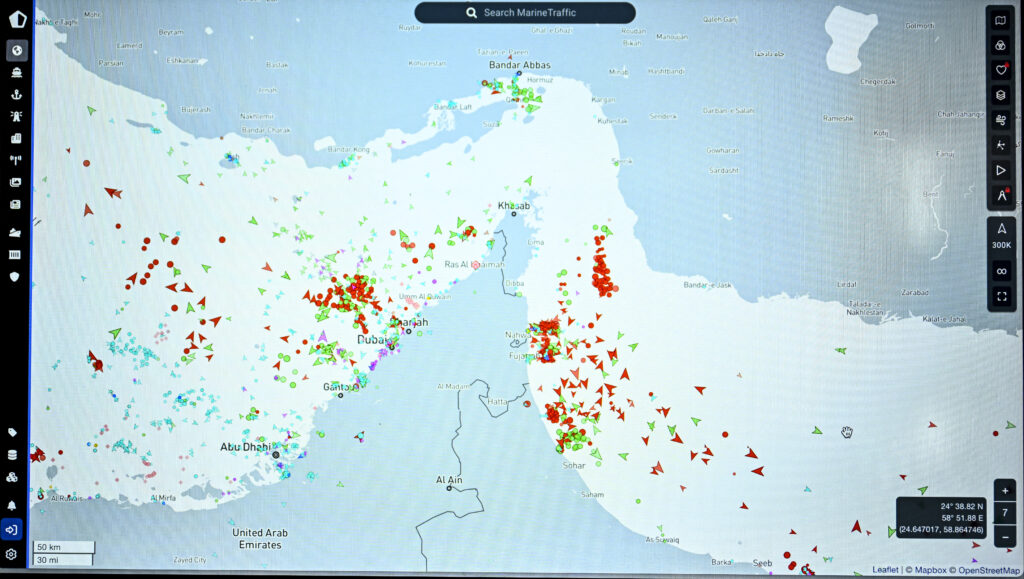
These fluctuations underline the strategic importance of the Strait of Hormuz, through which a significant amount of oil and gas supplies transit. In 2024, roughly 20 million barrels per day of oil transited Hormuz, representing around one-fifth of the worldwide oil demand, alongside approximately 20 per cent of global LNG trade, much of it originating from Qatar. This heavy concentration of energy flows through a single maritime corridor makes global markets highly sensitive to disruptions in the Gulf.
Recent developments have further heightened these risks. Iran has repeatedly made clear its willingness to use the Strait as leverage. The leadership transition in Iran has further intensified geopolitical uncertainty. In the first public statement attributed to him, the new Supreme Leader, Mojtaba Khamenei, signalled a more assertive stance by warning that the Strait of Hormuz could be closed if the conflict escalates further. Despite sustaining significant damage to its naval forces and military infrastructure, Iran continues to function as a de facto gatekeeper of the Strait — on 24 March, it declared to the International Maritime Organization that “non-hostile” ships which “neither participate in nor support acts of aggression against Iran”, or belong to the US or Israel, could pass. Efforts by the United States to establish a multi-national naval coalition to secure passage have drawn limited support from key allies, with some countries instead pursuing bilateral arrangements with Iran to ensure safe transit. This evolving dynamic reinforces the fragility of maritime security in the Gulf.
The case of Qatar further highlights the fragility of global energy supply chains. With QatarEnergy shipping 80.97 million metric tons of LNG in 2025, a volume that cements the state-owned company’s standing as one of the foremost exporters worldwide, the extent to which large-scale gas flows depend on uninterrupted maritime access becomes strikingly clear. In early March, Qatar halted LNG production following strikes on Ras Laffan facilities, while QatarEnergy also suspended operations at multiple petrochemical sites, exposing how disruptions affecting a single major exporter can quickly translate into global supply risks. In response to these rising risks, the International Energy Agency agreed to release about 400 million barrels of oil from strategic reserves on 11 March, the largest emergency release in the agency’s history, illustrating how even the threat of disruption can function as a supply shock and trigger swift market reactions.
At the same time, attacks on regional infrastructure have expanded beyond the Strait itself. Oman’s ports of Duqm andSalalah were targeted, while in the United Arab Emirates, a drone strike disrupted operations at the Fujairah terminal. These incidents demonstrate that even alternative export routes located outside the Strait remain vulnerable to regional escalation. The attacks on infrastructure in Oman and the UAE highlight the vulnerability of regional logistics and energy hubs, while the concentration of energy infrastructure in the Gulf continues to expose global supply chains to geopolitical risk. For GCC economies, such instability may undermine investor confidence, and complicate diversification efforts reliant on trade, logistics, tourism, and foreign investment.
The declaration of force majeure by QatarEnergy on 4 March, and subsequent warnings that it may have to do so for up to five years, should be interpreted not merely as a legal or contractual adjustment, but as a signal of structural disruption in the global gas market. While earlier interruptions in the Gulf could still be framed as temporary logistical or security-related disturbances, the extension of force majeure to long-term contracts, particularly with European and Asian partners, indicates a deeper breakdown in production certainty and delivery reliability. This development effectively increases the geopolitical risk premium associated with Gulf gas supplies, and may accelerate diversification strategies among importing countries.
GCC Diversification Under Strain
Beyond energy markets, geopolitical instability increases the uncertainty for international investors, affecting long-term investment decisions across the Gulf. Higher oil prices strengthen fiscal revenues, but regional turbulence may slow foreign investment in non-oil sectors central to the region’s various diversification strategies. Saudi Arabia illustrates this dynamic clearly. Official data show that FDI soared 34.5 per cent to US$6.6 billion in the third quarter of 2025, indicating renewed investor confidence and interest in the Kingdom’s diversification efforts. Now, however, the conflict and its swift escalation across the region are increasing risk levels. While equivalent data for Q4 2025 and early 2026 are not yet fully available, leading indicators, including rising insurance premiums on Gulf-based assets and delays in early-stage investments and financing decisions, suggest momentum has stalled. In the medium term, much will depend on developments on the ground, and whether investors come to view the crisis as a temporary blip, or a structural shift in regional risk.
The disruption to FDI is compounded by equally serious damage to the service sectors that are central to diversification strategies across the Gulf. Tourism and aviation are not merely economic sectors, they are structural pillars of the Gulf’s post-oil identity and employment transition model, intended to absorb national employment, reduce hydrocarbon dependency, and demonstrate that diversification is real and irreversible. In 2024, the GCC attracted over 72 million international visitors, generating more than US$120 billion in tourism revenues. Recent attacks on airports across the UAE, Bahrain, Kuwait, and Saudi Arabia have led to flight cancellations and scrambles to leave the region, exposing how quickly this model can be disrupted, and how sentiment-sensitive these sectors fundamentally are. Disruptions that erode international visitor confidence therefore strike at the credibility of the transformation models themselves.
The conflict also exposes deeper structural challenges across GCC economies. In Kuwait, the conflict threatens to trigger a governance trap, where the urgency for structural reform highlighted in the International Monetary Fund’s February 2026 Article IV consultation risks being shelved as decision-makers redirect attention towards crisis management and short-term stabilisation, paradoxically deepening oil dependency at the very moment diversification is most needed. In Bahrain, a deficit of approximately 11 per cent of GDP, and with public debt reaching 134 per cent of GDP in 2024, leave the kingdom with a very limited fiscal buffer to absorb prolonged geopolitical shocks, making it the weakest link in the GCC’s collective resilience chain. Most critically, Iran’s 11 March declaration of its intent to target economic and banking interests linked to the United States and Israel in the region marks a turning point, shifting the conflict from a peripheral background risk to an active economic warfare scenario, with direct repercussions on the Gulf’s financial sector, possibly triggering capital outflows, and intensifying sovereign credit rating pressures across the region.
Taken together, these circumstances reveal a fundamental tension in the Gulf’s growth model. GCC resilience is real, but is increasingly strained, uneven across countries, and dependent on fiscal capacity, which rests on specific foundations that are themselves under pressure: Mainly sovereign wealth funds (SWFs) with combined GCC assets approaching $US5 trillion, substantial fiscal reserves accumulated during prior boom cycles, strong state capacity for rapid policy intervention, and, until recently, active diplomatic management of regional risk. That last foundation deserves particular attention, because it was not passive. The GCC did not simply assume stability, it actively pursued it. The Saudi-Iranian detente brokered by China in 2023, and the broader pattern of Gulf engagement with Tehran, represented a deliberate diplomatic strategy to reduce the geopolitical risk premium bearing on diversification efforts, which appeared to be working. The gradual normalisation of relations created the conditions that tourism, aviation, FDI, and mega-project development depend on — calmer airspace, reduced proxy conflict, and improved investor sentiment. But the war upended the situation overnight.
The lesson is not that diplomacy failed, but that the vision strategies were designed for a region on a stabilisation trajectory, but which must now be redesigned for one that may remains structurally volatile. Sectors built on the assumption of regional openness cannot carry the full weight of diversification in an environment where that openness can be suspended by conflict at any point. The post-war agenda is therefore not simply to restore what existed before, but to build a diversification model resilient enough to function if, or when, the next disruption comes.
This re-ordering of priorities also changes how emerging connectivity and technology initiatives should be situated within GCC Vision strategies. The India–Middle East–Europe Economic Corridor (Imec), envisaged as a trade and transport corridor linking India, the Gulf, and Europe through integrated maritime, rail, and logistics networks, is important for GCC countries because it aligns with their ambitions to position themselves as indispensable hubs in global trade, logistics, and value chains beyond oil. Once the war ends, it becomes even more relevant, as the conflict has reinforced the strategic value of diversified land-sea connectivity, rerouting capacity, and alternative port configurations outside the region’s main chokepoints. At the same time, Pax Silica, a technology-oriented initiative centred on digital infrastructure, artificial intelligence, data centres, and semiconductor-linked ecosystems, is significant for GCC Vision plans because it supports the shift towards knowledge-based growth, technological upgrading, and less sentiment-sensitive forms of diversification. It therefore points to a different but equally important lesson: The next phase of diversification should place greater weight on knowledge-intensive sectors that are less dependent on tourism sentiment, airspace stability, or uninterrupted maritime flows. Taken together, these initiatives suggest that the postwar challenge is not to retreat from diversification, but to rebalance it towards sectors and connectivity architectures that are more resilient to geopolitical disruption.
Figure 2 summarises this shift by contrasting the pre-war configuration of GCC Vision priorities with the post-war re-ordering now required under conditions of sustained regional instability.
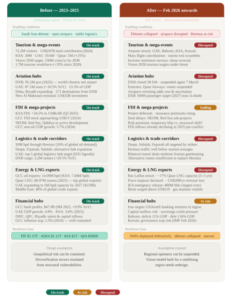
Figure 2. GCC Vision Strategies: Before and After the War
Sources: QatarEnergy, GCC-Stat, Dubai Airports, IMF, EIA, Reuters, Global SWF – Author’s analysis
Shifting Regional Dynamics
This evolving situation also highlights a clear shift in regional dynamics. While GCC states initially called for de-escalation and restraint, the widening pattern of Iranian attacks on civilian and strategic infrastructure has visibly hardened their positions. Recent reporting by Reuters and The Wall Street Journal indicates that some GCC countries, angered by attacks on civilian infrastructure, are pushing the US to “finish the job”, by leaving Iran significantly weakened and unable to threaten its neighbours again. This reflects a growing convergence between economic security concerns and geopolitical calculations across the Gulf. Abdulaziz Sager, chairman of the Gulf Research Center think-tank in Saudi Arabia, told Reuters that “there is a wide feeling across the Gulf that Iran has crossed every red line with every Gulf country”. From an economic perspective, this shift is tied to the perception that continued Iranian military and proxy capabilities pose a structural threat to energy exports, trade routes, tourism, investor confidence, and long-term diversification strategies, thus explaining how the Gulf’s traditional preference for hedging is giving way to a more security-driven regional posture.
This shift became more pronounced following the events of 18 March, when, in retaliation for an Israeli strike on Iran’s gas infrastructure, Teheran launched an attack on Saudi Arabia’s capital hours before an emergency gathering of Arab and Islamic foreign ministers. Saudi officials reacted by saying that the Kingdom’s restraint “is not unlimited”, indicating that military options may increasingly be considered. On the same evening, an Iranian missile struck Qatar’s Ras Laffan Industrial City, damaging key gas infrastructure. In response, Qatar declared Iranian military and security attaches persona non grata, and gave them 24 hours to leave the country. This attack was particularly consequential because Ras Laffan is not merely a national production site, but a central node in the global LNG system. Any disruption to this hub rapidly transmits shocks beyond Qatar’s domestic economy into global supply chains, affecting contract reliability, spot markets, and energy security in both Europe and Asia. According to QatarEnergy CEO Saad Al-Kaabi, the attacks damaged two of the country’s 14 LNG liquefaction trains and one gas-to-liquids facility, reducing export capacity by approximately 17 per cent and removing around 12.8 million tons per annum from the market for a period estimated between three and five years. QatarEnergy estimates that this translates into annual revenue losses of approximately US$20 billion.
The events of 18 March extend the logic of economic warfare from infrastructure strikes to direct diplomatic rupture, confirming that the conflict has entered a qualitatively new phase. While direct military engagement by GCC states remains unlikely, the scale and persistence of economic disruption may push them towards stronger security coordination, increased defence spending, and more assertive strategic positioning.
Regardless of how the conflict is resolved, several structural changes are now necessary. First, as mentioned, Vision plans must shift from growth-optimised to resilience-optimised design, by reducing over-concentration in sentiment-sensitive sectors, including tourism, aviation, mega-events, premium real estate, and rebalancing towards digital infrastructure, advanced manufacturing, food security, and knowledge-intensive industries less exposed to regional instability. In practical terms, this implies giving greater post-war priority to two types of strategic platforms, namely Imec and Pax Silica. Taken together, these platforms do not replace existing Vision goals, but they do suggest which components of diversification deserve to move closer to the centre of post-war economic planning.
Second, and most urgently, the GCC needs collective security and economic architecture, a gap this conflict has exposed with clarity. No GCC-level mechanism currently exists for coordinating infrastructure protection, managing crisis spillovers, or aligning fiscal responses. Individual states have their own contingency plans, but there is no GCC-level equivalent of the coordination mechanisms that the EU or Asean deploy in crisis conditions. The post-war period should be used to design and institutionalise such a framework. Finally, critical infrastructure must be systematically hardened, and domestic productive capacity prioritised, so that diversification rests on foundations less vulnerable to future regional disruption.
Given that the duration of the conflict remains highly uncertain, a realistic assessment of timelines suggests three possible trajectories. In a best-case scenario, a ceasefire or de-escalation agreement within the next four to eight weeks would allow partial maritime normalisation, limiting the cumulative damage to Gulf diversification strategies to a recoverable setback. In a medium scenario of three to six months of sustained conflict, the structural damage to FDI pipelines, tourism, and regional financial hubs would become more entrenched, requiring active fiscal intervention and targeted economic reforms to arrest the decline. In a worst-case scenario of conflict extending beyond six months, the GCC would face a fundamental reconfiguration challenge: Energy infrastructure would need systematic hardening, alternative export corridors would need urgent activation, and economic diversification strategies would need to be redesigned around a “conflict-resilient” rather than “growth-optimised” framework in double-quick time. The economic, diplomatic, and potentially military options available to GCC states will become progressively more costly and complex as each of these thresholds is crossed.
Managing Risks and Sustaining Resilience
The analysis above reinforces a central paradox: While rising hydrocarbon prices may generate short-term fiscal gains, the direct targeting of energy and other civilian infrastructure reveals that the region’s core economic strength has simultaneously become a source of strategic vulnerability. The risk is no longer limited to maritime chokepoints such as the Strait of Hormuz, but now includes the physical degradation of production capacity, the disruption of long-term contractual frameworks, and the erosion of the Gulf’s reputation as a stable and reliable energy supplier. Managing this paradox by extracting the short-term benefits of elevated energy prices while simultaneously hardening against the structural risks that the same conflict creates is the defining policy challenge for GCC governments today.
GCC economies have shown resilience in absorbing the immediate shocks of the conflict, supported by higher oil revenues, their SWFs, and substantial fiscal reserves. However, this resilience comes at a cost. The escalation has exposed structural vulnerabilities, particularly the reliance on the Strait of Hormuz and the increasing dependence on globally-connected sectors such as tourism, aviation, and logistics. In the short term, GCC states should prioritise protecting critical infrastructure and ensuring market stability, enhancing maritime security, hardening energy and transport infrastructure against attacks, and improving cyber and financial system resilience. Governments should also deploy clear communication strategies to reassure investors and prevent capital outflows, while using SWFs and other fiscal buffers to smooth volatility and sustain key economic projects.
Strengthening supply chain resilience is equally essential. This requires expanding strategic reserves, diversifying import sources, and investing in domestic food and industrial capacity. Enhancing regional coordination within the GCC, in logistics, energy policy, and emergency response, will be critical to mitigating cross-border disruptions.
In the medium term, GCC economies should accelerate efforts to reduce exposure to geopolitical chokepoints by expanding alternative export routes where geography permits, such as the UAE’s Habshan-Fujairah pipeline and Saudi Arabia’s East-West pipeline, while acknowledging that several states have no viable bypass, and must rely on maritime security cooperation. The GCC should also enhance investing in inland logistics corridors and strengthening trade partnerships beyond traditional markets. Deepening regional integration and aligning infrastructure strategies across the six countries in the grouping can further enhance collective resilience. Over the longer term, the conflict accentuates the urgency of meeting the challenges to recalibrating diversification strategies: Strengthening human capital, innovative ecosystems, and private sector development. These Gulf nations have long grappled with problems in these areas. Their private sectors, though maturing, still lag behind the public sector, both in terms of innovation and attracting talent, domestic education systems are scaling gradually, and the kind of workforce re-orientation required by diversification strategies does not happen quickly. The war does not change this reality, but it does raise the cost of inaction, reinforcing the case for simultaneously pursuing sectors where gains are more immediately achievable such as tourism and hospitality, logistics and trade facilitation, renewable energy and green hydrogen, financial services, and digital infrastructure, as a bridge while the deeper human capital transition advances.
Ultimately, the trajectory of the conflict, and specifically the stability of the Strait of Hormuz, will determine whether the current shock remains temporary or evolves into a structural shift in global energy and trade dynamics. In this context, GCC policy choices will be decisive. The ability to move from reactive crisis management to proactive structural reform will shape the region’s long-term position. That means not merely managing the current shock, but using it as an inflection point to redesign their vision strategies for a region that may be permanently less stable than the models assumed.
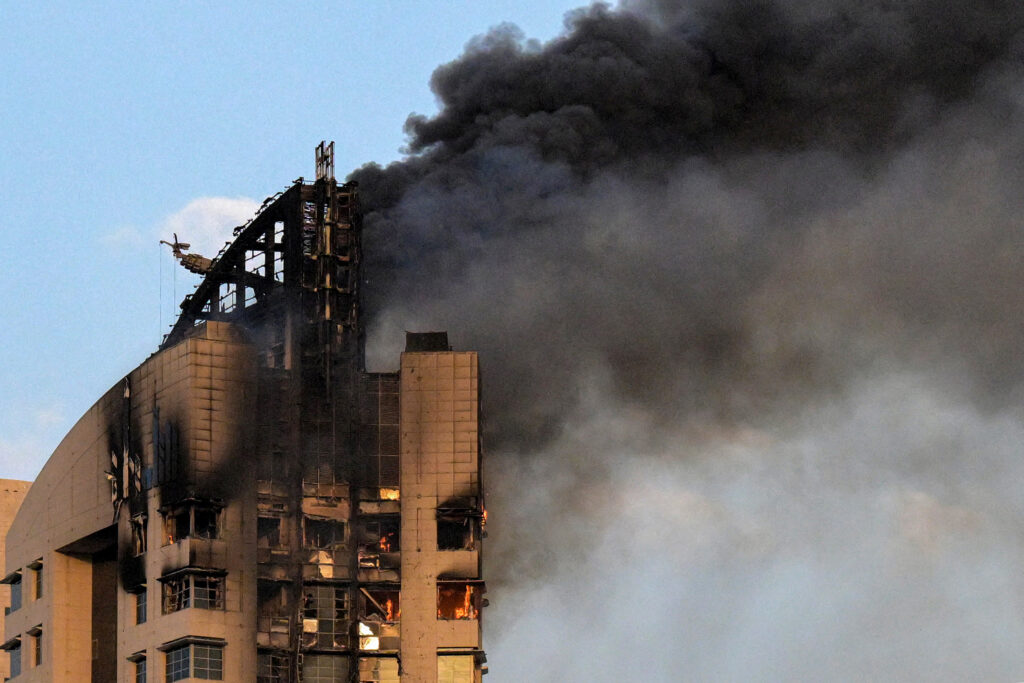
Image Caption: Smoke rises from a high-rise building following an Iranian drone attack in Kuwait City on 8 March 2026. Photo: AFP
About the Author
Héla Miniaoui is Associate Professor of Economics at both Lusail University and Sorbonne University Qatar. With deep expertise in Gulf and MENA economics, she brings a blend of academic scholarship and policy engagement to her work, having previously served as Technical Specialist at the United Nations’ International Labour Organization. Her research portfolio spans economic development, international trade, finance, Islamic banking, and sustainability issues.