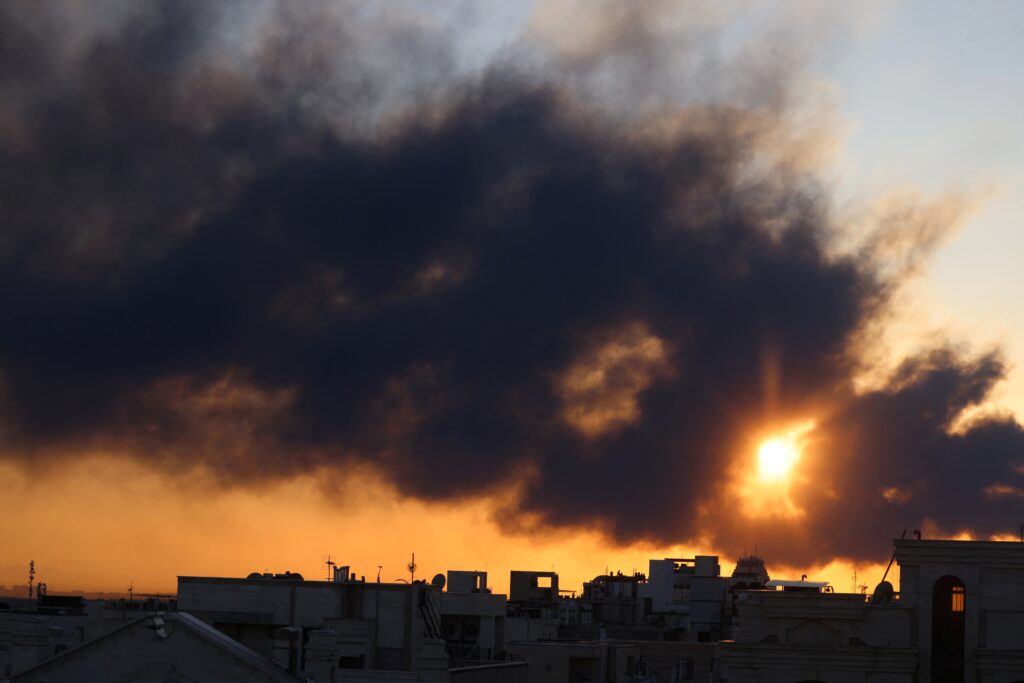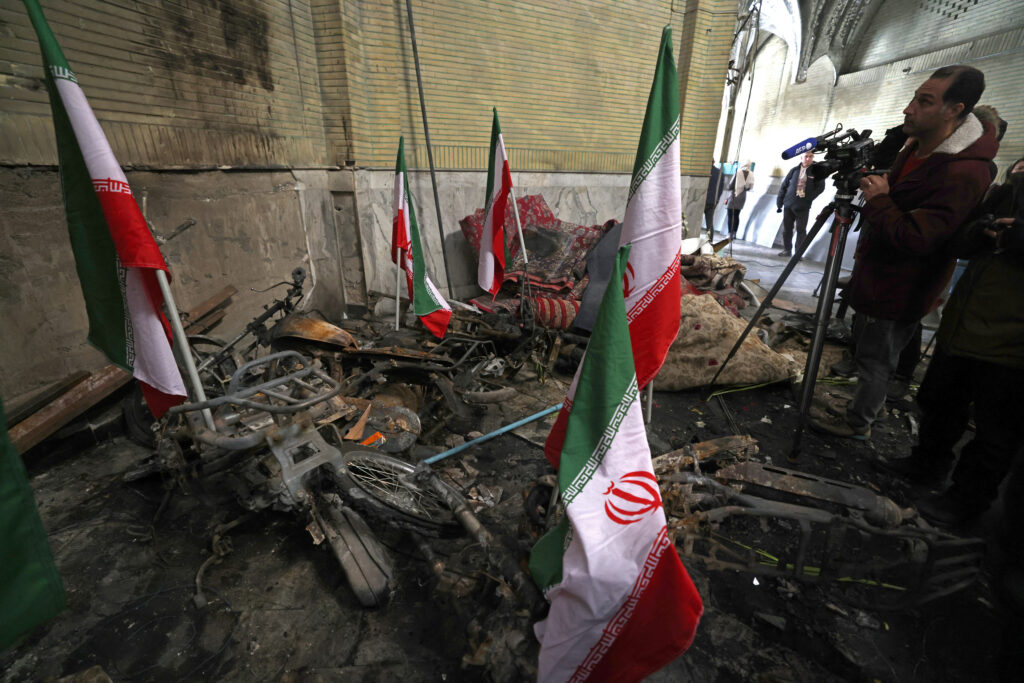
West Asia — comprising the Gulf Cooperation Council (GCC) states alongside Iran and Israel — is typically viewed from this part of the world as a distant arena of instability. The latest outbreak of violence between the United States, Israel, and Iran has once again cast the region in familiar terms: A geopolitical flashpoint whose tremors ripple outward through energy markets and financial systems.
Yet the speed and scale of those ripples suggest something more fundamental. The Strait of Hormuz and the Strait of Malacca are often discussed separately. In practice, however, they anchor a single economic corridor. Much of the energy that sustains East Asia’s industrial production, trade balances, and monetary stability originates along the Gulf littoral. These flows move eastward through the Strait of Hormuz, across the Indian Ocean, and onward through the Strait of Malacca into the region’s manufacturing and financial centres, underpinning Asia’s growth model. The connection is not episodic. It is structural.
Nor is it uni-directional. Gulf economies increasingly depend on east-to-west flows of manufactured goods, technology inputs, construction materials, and capital originating in East and South Asia. The corridor therefore sustains a reciprocal system of exchange in which Asian demand anchors Gulf energy exports, while Asian production networks and investment flows support the Gulf’s diversification and infrastructure development. These reciprocal exchanges are organised along the same maritime axis linking both regions.
When markets in Tokyo, Seoul, Shanghai, and Singapore responded within hours to developments along Iran’s coastline, they were not reacting to distant events. Instead, they were adjusting to pressures along a corridor that forms part of their own economic foundation. The stability of that corridor is therefore not peripheral to East Asia’s prosperity — it is integral to it.
Two Straits, One Strategic Corridor
The Strait of Hormuz and the Strait of Malacca are often treated in strategic discourse as distinct chokepoints — one framed through the Gulf and wider Middle Eastern volatility, the other through Indo-Pacific maritime competition, although, as mentioned, they anchor a single, continuous economic corridor. The Strait of Hormuz carries extraordinary weight. In the first half of 2023, roughly 20 million barrels of oil transited the waterway each day — nearly one-fifth of global oil output — amounting to an estimated US$600 billion in annual energy trade. It serves as the principal maritime outlet for Iran, Iraq, Kuwait, Qatar, Saudi Arabia, and the United Arab Emirates, accommodating the world’s largest crude carriers and channelling the bulk of Gulf-origin exports into global markets.
A substantial share of this energy moves eastward across the Arabian Sea towards Asia’s major consumption centres. Nearly half of India’s crude oil imports and around 60 per cent of its natural gas imports transit Hormuz, while Japan sources close to 75 per cent of its crude through the waterway, and South Korea, roughly 60 per cent. Given that 87 per cent of Japan’s and 81 per cent of South Korea’s total energy consumption depends on imported fossil fuels — compared with roughly 35 per cent for India and 20 per cent for China — the stability of the Hormuz passage remains disproportionately consequential for the most import-dependent Asian economies.
These flows do not end in the Arabian Sea. They continue onward through the Strait of Malacca — the shortest maritime route between the Indian and Pacific Oceans — which facilitates roughly 82,000 vessel transits annually and carries more than 40 per cent of global trade. The linkage between Hormuz and Malacca therefore represents more than two vulnerable maritime passages. Together, they constitute a trans-regional artery connecting Gulf production to Asia’s manufacturing, logistics, and financial hubs.
In the opposite direction, Gulf development strategies increasingly rely on Asian industrial capacity and technology partnerships. Emirati and Saudi firms have expanded joint ventures with Asian partners—including defence-industrial collaboration with companies in India, Indonesia, South Korea, and Singapore—while licensing arrangements and co-production initiatives allow Asian technologies and manufacturing capabilities to be embedded within Gulf industrial ecosystems. These exchanges illustrate how Asian production networks and Gulf resource exports now operate within a mutually-reinforcing economic system.
At the eastern end of this corridor, Singapore functions as a highly-sensitive intermediation node. The country’s exposure stems less from direct Middle Eastern dependence than from its position as a trade-dependent hub where energy volatility, freight costs, and insurance premiums are rapidly transmitted into shipping throughput, airfreight reliability, and working capital pressures. Brent crude has already moved above US$70, with forecasts of further upside should the war in Middle East continue, while airspace closures across Gulf hubs and potential rerouting of maritime traffic threaten longer transit times and higher logistics costs. For an economy anchored in wholesale trade, bunkering, commodities clearing, and maritime finance, even anticipatory instability along the Hormuz–Malacca corridor reverberates quickly through margins, inventory decisions, and business confidence — underscoring how structurally embedded this linkage has become within Asia’s economic architecture.
Crucially, the corridor is not defined by shipping volumes alone. Long-term energy contracts, maritime insurance markets, freight benchmarks, and sovereign capital allocations are embedded within the same arc. The recent escalation has already translated into higher risk pricing: Hull and machinery insurance premiums for vessels transiting Hormuz have reportedly risen from approximately 0.125 per cent to 0.2 per cent of a ship’s value, while oil prices and tanker freight rates have climbed sharply as markets anticipate potential disruption.
The Scale and Deepening of Interdependence
The Hormuz-Malacca corridor is not sustained by energy flows alone; it is reinforced by a rapidly expanding web of trade, capital, and institutional linkages. Gulf-Asia trade, which reached US$516 billion in 2024, has continued its upward trajectory into 2025–2026, with projections placing flows on course to approach US$800 billion by 2030. Asia is now poised to surpass advanced Western economies as the Gulf’s largest trading partner within this decade. What is unfolding is not cyclical fluctuation, but a durable re-orientation of commercial gravity.
Gulf-Asia trade is increasingly driven by non-oil sectors — infrastructure, logistics, advanced manufacturing, construction, renewables, digital services, and technology platforms. Economic diversification strategies across the Gulf, including Saudi Arabia’s Vision 2030, the UAE’s Vision 2031 and 2071, and Qatar’s Vision 2030, are channelling large-scale investments into solar and wind capacity, artificial intelligence, digital infrastructure, and financial innovation — sectors closely aligned with Asia’s demand for connectivity, industrial inputs, and technology-driven growth. This strategic convergence has produced a thicker and more resilient pattern of interdependence that extends well beyond commodity trade. Recent disruptions to Gulf aviation hubs during the current war — which saw thousands of flights cancelled and major transit airports such as Dubai, Doha, and Abu Dhabi suspend operations for days, stranding thousands of travellers, including Singaporeans desperate to get home — illustrate how quickly shocks in West Asia can disrupt not only passenger mobility, but also global air cargo networks and business travel flows that connect Asian markets to the Gulf.
The redistribution of trade weight further illustrates the transformation. China accounts for roughly half of the Gulf’s trade with Emerging Asia, while India represents more than a quarter, embedding the corridor within the production networks of the world’s fastest-growing large economies. Gulf-China trade, which crossed US$240 billion in 2025, has continued to expand, consolidating the eastward pivot in long-term economic alignment, and narrowing the gap with Gulf-Western trade flows.
Capital flows deepen and institutionalise this shift. Gulf sovereign wealth funds deployed an estimated US$56 billion globally in the first nine months of 2025, with roughly 40 per cent directed towards Asia, underscoring a sustained reallocation of capital toward the region’s growth markets. At the same time, capital is also moving in the opposite direction. Financial centres such as Singapore have become increasingly active investors in Gulf infrastructure, logistics, and technology projects. For instance, Abu Dhabi’s Mubadala has partnered with Seviora, a subsidiary of Singapore’s Temasek, to pursue co-investment opportunities across Asian markets, while Mubadala and Singapore’s GIC also joined in a US$7.3 billion transaction to acquire German energy-efficiency firm Techem alongside other global partners. Simultaneously, Asian financial services firms are expanding their presence across Gulf financial centres to tap into rising pools of sovereign and private wealth.
Structural Exposure in an Era of Conflict Escalation
The deepening of the Hormuz-Malacca corridor brings with it a corresponding degree of structural exposure. The US and Israeli strikes on Iranian targets have already demonstrated how rapidly disruption reverberates beyond the Gulf. Within the last few days, benchmark VLCC freight rates on the Middle East-China route climbed above US$200,000 per day — the highest level since 2020 — while oil prices surged by nearly 9 per cent after briefly spiking even higher.
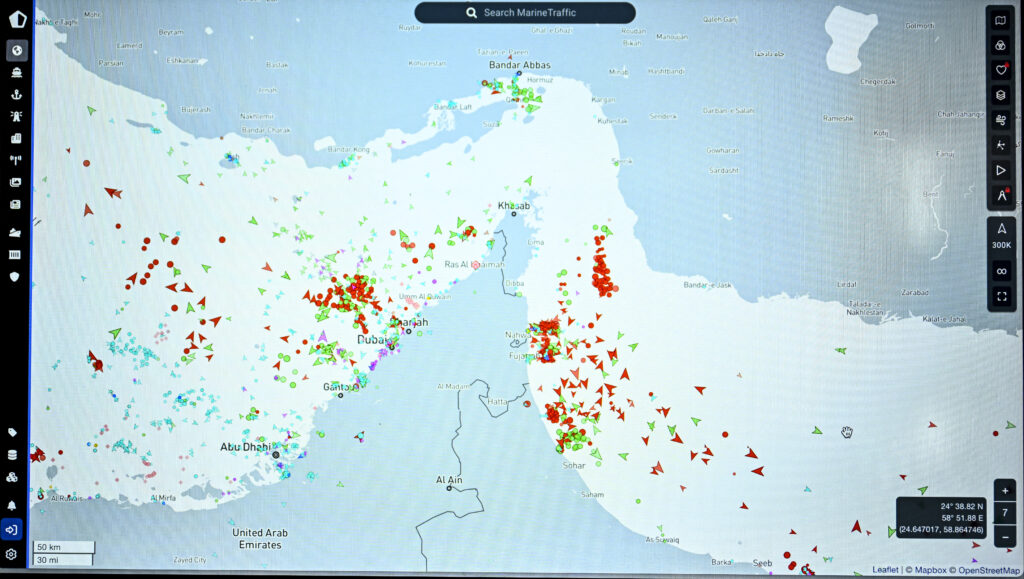
Shipping disruption has already moved beyond hypothetical risk. Tracking data shows that activity through the Strait of Hormuz’s main shipping lanes fell by roughly 40 to 50 per cent as vessels slowed, rerouted, or idled outside the narrowest transit points. Warnings continued against transiting the Gulf waters, while insurers signalled that war-risk premiums could rise sharply, with some vessels potentially unable to secure coverage. Following Iran’s declaration that “not a drop of oil” would pass through the Strait of Hormuz, vessel movements slowed sharply, highlighting how quickly disruption can emerge along a corridor that carries roughly one-fifth of global crude exports. The United States is now consideringnaval escorts to maintain transit through the waterway.
The vulnerability lies less in immediate shortages than in systemic transmission. Asia sources roughly 60 per cent of its crude oil from Middle Eastern producers, and more than 80 per cent of Qatar’s liquefied natural gas exports flow to Asia-Pacific markets, where they account for roughly a quarter of LNG consumption in several major economies. Even temporary disruption — including precautionary halts at regional energy facilities — tightens inventories, raises import costs, and compresses refinery margins. Higher freight and insurance costs feed directly into trade balances, corporate earnings, and industrial production across energy-intensive sectors from petrochemicals to electronics.
The exposure extends into financial markets. Following the US and Israeli strikes, oil benchmarks surged by roughly 7-8 per cent, not because supply had collapsed, but because markets were repricing the probability of disruption at the Strait of Hormuz. That repricing cascaded across asset classes. Equity futures in the United States and major Asian markets fell in tandem, reflecting concerns over higher input costs and compressed corporate margins. Currency movements were equally revealing: The US dollar strengthened while the Japanese yen weakened — an inversion of typical safe-haven behaviour that underscored Japan’s structural vulnerability as a major energy importer.
From Economic Exposure to Economic Statecraft
The recent escalation in West Asia did not create a new vulnerability for East Asia. It revealed how fully financial markets have already internalised a reality that strategic planning often treats as peripheral. As described above, market systems recognised the corridor’s centrality instinctively; policy frameworks tend to do so more slowly.
If the Hormuz-Malacca corridor functions as a vital artery of East Asia’s economic system, and increasingly that of the Gulf’s, resilience cannot rest on reactive measures. Energy security planning must account for transit-route vulnerability alongside supplier diversification. Strategic petroleum reserves and LNG stockpiles should be stress-tested against sustained disruption along the Gulf-Arabian Sea axis, while procurement contracts, hedging strategies, and infrastructure investments reflect not only price risk, but corridor continuity risk.
Monetary and fiscal authorities may also need to incorporate Western Indian Ocean contingencies more systematically into inflation modelling, reserve management, and financial stability frameworks. For example, central banks could incorporate Hormuz disruption scenarios into energy price forecasts, stress-testing inflation projections and foreign-exchange reserve buffers against sustained spikes in oil and LNG prices. Freight and commodity markets already price geopolitical volatility in real time; macro-economic planning should not lag those signals. Integrating early-warning mechanisms and scenario-based contingency planning can reduce the transmission of shocks before they tighten margins.
Over the longer term, deeper institutional coordination between Gulf producers and Asian consumers — and increasingly between Asian investors and Gulf development strategies — will be essential. Joint storage facilities, diversified shipping arrangements, cross-border capital partnerships, and deeper financial cooperation can distribute risk more systematically. These are not technical refinements. They are strategic decisions about how exposure is managed within an interdependent economic system.
The corridor linking Hormuz and Malacca is not a distant transit route. It is part of the infrastructure of East Asia’s growth model. The question is no longer whether instability in West Asia affects Asia. It is whether Asia’s economic statecraft is calibrated to the degree of integration already in place.
Image Caption: This photograph shows a page on the Marinetraffic website thats shows commercial boats traffic on the edge of the Strait of Hormuz near the Iranian coast on 4 March 2026. Photo: AFP
About the Author
Gopi Bhamidipati is a scholar of international relations and a non-resident senior fellow at the Newlines Institute for Strategy and Policy in Washington, D.C. He holds a Ph.D. from Virginia Tech and specialises in Middle East geopolitics and India’s foreign policy.