Introduction
The arrival of a United States naval “armada” in the Middle East region, followed by President Donald Trump’s maximalist demands to Iran’s leadership, has raised the possibility that an American intervention aimed at regime change in the country may be imminent. This follows weeks of tensions between the US and the Iranian regime of Supreme Leader Ayatollah Ali Khamenei, which were sparked by widespread anti-government protests that began in December. As the protests widened, and reports of a bloody crackdown began emerging, President Trump encouraged Iranians to rise up against the leadership, promising that “help was on the way”, and warned the regime against hanging demonstrators. Initially, Tehran appeared to relent, by publicly delaying a scheduled execution. Soon, however, reports and videos began to emerge from the country, pointing to a widespread campaign of deadly repression, with some observers claiming the death toll could exceed 10,000 or more.
With US military assets now in place, the Iranian leadership’s crisis — prompted by protests against runaway inflation, and the collapse of its currency — has sparked fevered commentary about whether the Islamic Republic is on its last legs.
Velayat-e Faqih: Younger Iranians Disconnect
The anti-government protests, begun on 29 December 2025 by Tehran’s merchants to decry the country’s poor economic conditions, the collapse of the Iranian currency, and the resignation of the head of Iran’s central bank, have shown how the Islamic Republic’s grip over its citizens is declining. Younger Iranians, especially, appear to reject Ayatollah Ali Khamenei’s religious authority. Protesters called for the death of the dictator — a reference to the Supreme Leader — and for the end of the principle of velayat-e faqih, or the guardianship of the jurist, the Shia Islamic principle that grants authority to qualified jurists to govern and manage the affairs of the Muslim community until the return of the infallible Imam.
Instead, many Iranians now largely view the system as a symbol of mismanagement, oppression, and a stifled future. The religious establishment, on the other hand, has consistently demonstrated a pattern of ignoring the demands of its protesting citizens, and has again resorted to severe suppression, primarily through its military force, the Islamic Revolutionary Guard Corps (IRGC), which was designated as a terrorist group by the US in 2019, and which commands the Basij national militia that has internal security responsibilities, and the Quds Force (QF), which oversees pro-Iranian militias in the region. The IRGC has amassed significant military, economic, and political power under the aegis of the Islamic Republic, tying both their fates together, and is thus deeply committed to its primary objective of ensuring regime survival.
Regime Response to Protests using Foreign Fighters
While the regime has consistently asserted that widespread violence during the recent round of protests was orchestrated by armed infiltrators backed by Israel and the US, reports indicate that the IRGC was the primary perpetrator of the crackdown, potentially leveraging on the QF, which possesses extensive experience in crowd control.
Reports indicate that the group has utilised its foreign proxy forces, collectively known as the “Axis of Resistance”, to assist in the crackdown, including the use of thousands of Iraqi Shia militia members who crossed into Iran as religious pilgrims. One such account details the recruitment of Mohammed Iyad, a 37-year-old Iraqi, by Kata’ib Hezbollah in Iraq, for US$600 a month to “defend the Islamic Revolution in Iran”. The group, part of Iran’s network of proxies, has already declared its support for the current regime if the US attacks.
The Houthis, the Zaydi sectarian group in Yemen, have also declared their support. Several other Iran-aligned militia groups, such as Harakat al-Nujaba, Kata’ib Sayyid al-Shuhada, Harakat Ansar Allah al-Awfiya, and Kata’ib al-Imam Ali, which were designated as terrorist groups by the US last September, were reported to have crossed the borders from Iraq as well.
In Iraq, there are more than 60 militias that are religiously devoted to the Supreme Leader, reflecting Iran’s great influence in its neighbour. Other groups involved thus far include Afghanistan’s Fatemiyoun Brigade, and Pakistan’s Zainebiyoun Brigade. It is important to note that Ayatollah Khamenei’s government has institutionalised the use of non-state actors as a pillar of its foreign policy, utilising the IRGC to project power not only in the Middle East, but also globally.
IRGC: A Global Threat and An Expansionist of Ideology
Beyond its extensive support for non-state proxies, the current Iranian regime has also continued orchestrating terrorist plots — often involving the use of diplomatic facilities — that target individuals around the world who are perceived as its enemies. In 2023, it supported terrorist attacks against Israeli and Jewish targets in Cyprus, and across Europe. In 2021, Assadollah Assadi, a Vienna-based Iranian diplomat, was convicted for plotting to bomb a dissident rally in France. He transported explosives on a commercial flight from Tehran to Europe. Iran has also significantly expanded its operations in Asia: In 2023, a small bomb exploded near the Israeli Embassy in New Delhi, which Indian investigators concluded was linked to the IRGC — a repeat of a similar incident in 2021.
Beyond these attacks, the Iranian regime has also sought to expand its influence among the Shia populace in Thailandthrough high-level visits by Iranian clerics. In 2024, Meysam Motiee, who is close to Ayatollah Khamenei, visited the country in a bid to export the ideology of the Islamic Revolution and promote Al-Mustafa University, which maintains an active branch in Bangkok. The university, which has branches globally, including in Indonesia and Malaysia, has been sanctioned by the United States government for providing a platform for the IRGC-QF to use it for recruitment of foreign students for intelligence collection and the facilitation of pro-Iranian militia activities.
Far from its initial role as the protectors of the Iranian theocracy, the IRGC is now a global force that blurs the lines between diplomacy, education, and terrorism — a factor that must be taken into account by those seeking regime change.
Implications of Iranian Regime’s Collapse for Regional Terrorism
Decentralised Terrorism
The IRGC is just one factor that makes the potential collapse of the Iranian regime a complex scenario for regional stability. Rather than an end to the threat Tehran poses to the region and elsewhere, regime collapse — which would wreck its control over proxies, causing the fragmentation of power and the potential emergence of numerous, unaligned militant groups — could lead to decentralised terrorism that could spill over to neighbouring countries. This is a significant concern not only for Iran, but the whole region as well, as it could lead to an unprecedented level of chaos and violence.
Regional Instability Amid Proliferation of Advanced Weaponry
Additionally, regime collapse could lead to advanced weaponry, including enriched uranium and ballistic missiles, falling into the hands of various factions, including extremist groups. This scenario is particularly concerning given Iran’s longstanding pursuit of nuclear capabilities, and its development of a significant ballistic missile arsenal. The implications of non-state factions acquiring such destructive power would essentially change the regional security landscape.
The Kurdish Resistance
Given that Iran is a diverse country with numerous ethnic minorities — Azeris, Kurds, Arabs, and Balochis, among others — who have historically faced discrimination, these groups may seek greater autonomy, or even independence, in a post-regime scenario. A good example is what happened during the recent protests, when an Iranian Kurdish separatist group, the National Army of Kurdistan — the armed wing of the Kurdistan Freedom Party, or PAK — provided both financial support and protection to demonstrators. The group took control of an IRGC base in Kermanshah Province, western Iran, and launched attacks against the Corps to retaliate against the crackdown. This may encourage other minorities to follow suit, leading to further fragmentation within Iranian society.
It is important to note that the relationship between the Kurds in Iran and the regime of Ayatollah Khamenei has historically been fraught with tension, and this escalated following the death of Mahsa Amini, who was tortured to death while in the custody of the Iranian religious police in September 2022. An ethnic Kurd, Amini’s death ignited widespread outrage, particularly within Kurdish regions. Her funeral in Iranian Kurdistan rapidly transformed into a powerful demonstration against the Iranian government, with protests quickly spreading across numerous Iranian cities.
Iran’s opposition is widely seen as a “leaderless” movement, and if the current government falls, it is difficult to see how a strong, unified, and widely-accepted transitional authority could emerge. In its absence, the country’s internal ethnic and sectarian competition could devolve into widespread instability, and provide a power vacuum for terrorist groups to exploit.
Internal Power Shift and IRGC Dominance?
One plausible scenario in the event that the regime collapses, or if an internal coup is mounted, is that the IRGC, the most powerful entity within Iran, will replace it. Given its existing infrastructure, it is more than capable of reasserting control. However, Iran under the IRGC could be even more authoritarian and hardline than the current leadership, while continuing the proxy policy that the Islamic Republic has pursued. This will be a concern unless a generational shift occurs within the IRGC’s leadership, specifically if younger officers who were not involved in the 1979 revolution succeed in replacing the older leadership. The new generation of leaders within the IRGC, which emerged around 2018, is notably distant from its predecessors, and many have received advanced education from Iran’s top universities. This technocratic shift represents a significant departure from the IRGC’s ideological foundations, its pursuit of revolutionary martyrdom, and support for proxy terrorist militias that characterised the old guard. While no less devoted to the Islamic Republic than their forebears, the younger cadre is equally motivated by material goals, and may be more inclined towards economic liberalisation, as well as a slight loosening of social controls to act as a pressure valve of sorts.
These differences led to internal tensions between the old guard and the emerging generation in 2018. For instance, Saeed Mohammad, who was appointed director of Khatam al-Anbiya Construction Headquarters (GHORB), a major engineering firm controlled by the IRGC, is both highly-educated, and oriented towards modernisation. He perceived then-President Hassan Rouhani’s administration as creating additional obstacles to private sector development, arguing that the IRGC’s economic activities, and state policies, were hindering entrepreneurship and market liberalisation. Tensions with the old guard extend to its relationship with the executive branch. President Masoud Pezeshkian, frequently characterised as a pragmatic reformer, has rubbed it the wrong way, too. The depth of these tensions was revealed in August 2025, when the IRGC openly criticised the verbal lapses in his defence of renewed nuclear negotiations with the United States as showing signs of weakness. This underscores the ideological rigidity of the IRGC’s old guards and their resistance to diplomatic alignment. It is thus likely that if the regime collapses, a power struggle will break out between the old and new guard, as well as the executive branch.
Given its wide-ranging the power, the IRGC can be expected to see off any challenge from President Pezeshkian, but if the younger officer corps prevails in the internal fight, it could pursue a more pragmatic approach to ensure its survival and consolidate power. To do so, the cadre may focus on securing Iran’s interests by modernising its economy through national development, fostering technological advancement, and strengthening economic resilience. However, it remains to be seen whether it will turn its back on the Corps’ reliance on terrorism as a defence strategy.
The Future Trajectory: A Prolonged Period of Instability
Regime change may not lead to the dismantling of the theocracy. Ayatollah Khamenei, who is currently hiding in an underground bunker, took extraordinary measures to manage his succession during the 12-Day War with Israel in June 2025. He reportedly nominated three senior clerics as potential successors to the Assembly of Experts to avoid a vacuum in the power structure. The Assembly is an 88-member body composed of high-ranking Shia clerics who are formally tasked with electing a Supreme Leader should the existing leader die. The question of whether the theocracy should continue, or be replaced, is the core challenge facing Iran in the post-Khamenei era. His strategic pre-selection of successors, while aimed at ensuring stability and continuity, does not resolve the fundamental tension between the regime’s ideological commitments and the evolving aspirations of its populace, especially the younger generation.
Whether the US strikes or not, Iran thus faces a prolonged period of internal instability. The current crisis is not merely about a change in leadership, but about the very identity and direction of the Islamic Republic. The potential collapse of the regime is only the most extreme outcome. Given the turmoil in the country, a complex struggle is already under way involving several key groups: Hardliners within the security forces, who are deeply invested in preserving the Islamic Republic’s current structure; the various separatist movements that have been suppressed for decades; and a disillusioned Generation Z, some of whom support the National Council of Resistance of Iran (NCRI), the political coalition led by the People’s Mojahedin Organisation of Iran (MEK), which aims to overthrow the current regime. Additionally, anti- theocracy figures, from reformist technocrats such as Mehdi Karroubi, the leader of the 2009 Green Movement who has challenged the unchecked power of the Supreme Leader and called for constitutional reforms, to the internal religious opposition like the Quietist school of Shi’ism, which argues that clerics should remain religious rather than political rulers, are pursuing their own agendas.
Then there are popular exiled figures, such as Reza Pahlavi. The son of the last Shah has presented a vision of a secular, democratic Iran that would possibly normalise relations with the West and Israel, end support for terrorist groups, and focus on economic development. Nevertheless, he is a polarising figure: To some Iranians, Mr Pahlavi represents aspirations for a democratic transformation in Iran; to others, he is associated with the repressive legacy of Shah, which gave rise to the 1979 Revolution. All this means that opposition to the current leadership is very divided, lacks a unifying figure, and has no widely-supported vision for a post-Ayatollah Iran. Without this, the regime will continue its drift, bleeding more of whatever support it has left, but eventually arriving at the same outcome that a regime collapse will precipitate: An Iran riven by internal chaos.
Lessons from Regional Instability
The experiences of Iraq, Libya, and Syria are good examples of the dangers of power vacuums and the emergence of terrorist groups in the absence of a stable, unifying leadership. The 2003 overthrow of Saddam Hussein, while initially met with joy by Iraqis, quickly led to a prolonged period of insurgency and sectarian violence. Until today, Iraq continues to grapple with significant terrorist threats. Libya has been experiencing the same since the fall of Muammar Gaddafi in 2011, which resulted in the widespread proliferation of weapons, especially throughout Africa, and the emergence of new terrorist groups. Likewise, in Syria, after the collapse of the Assad regime, the interim government led by Ahmed Al-Sharaa continues to grapple with domestic terrorism, and a resurgence of the Islamic State, despite its efforts to stabilise the country.
Conclusion
As the United States arrays its forces around Iran, the Islamic Republic is in greater danger of collapsing than at any time since 1979. However, revolutions are rarely neat. On the one hand, the removal of Iran’s regime holds the promise of a brighter tomorrow for its people, a new era of engagement with the rest of the world, and a significant drop in regional terrorism owing to the dismantling of a vast state apparatus that funds and supports numerous proxy militant groups. On the other, Iran’s current situation would more likely mean that a collapse would result in a power vacuum, potentially leading to new forms of conflict and extremism. There is a third way the situation could unfold: A pre-emptive internal military takeover by the IRGC, which could see the rise of an even more authoritarian regime that would continue to deny Iranians’ hopes of better times to come, leave the country as a pariah state, and exacerbate existing regional instabilities by doubling down on its forward defence, or proxy, strategy — including the use of terrorism — in the face of stifling global pressure and sanctions.
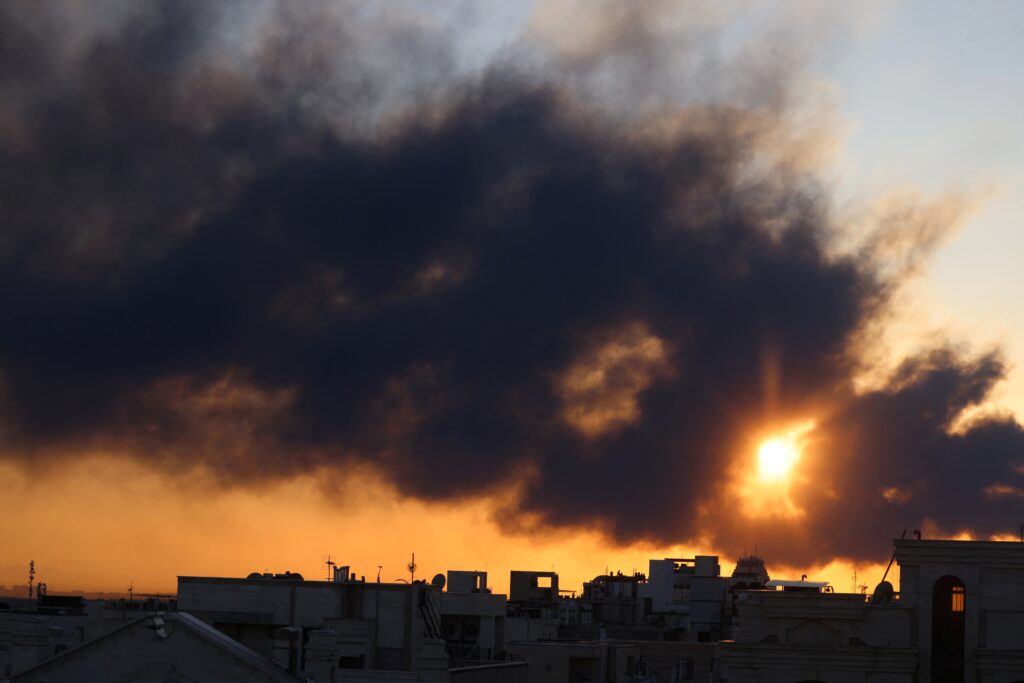
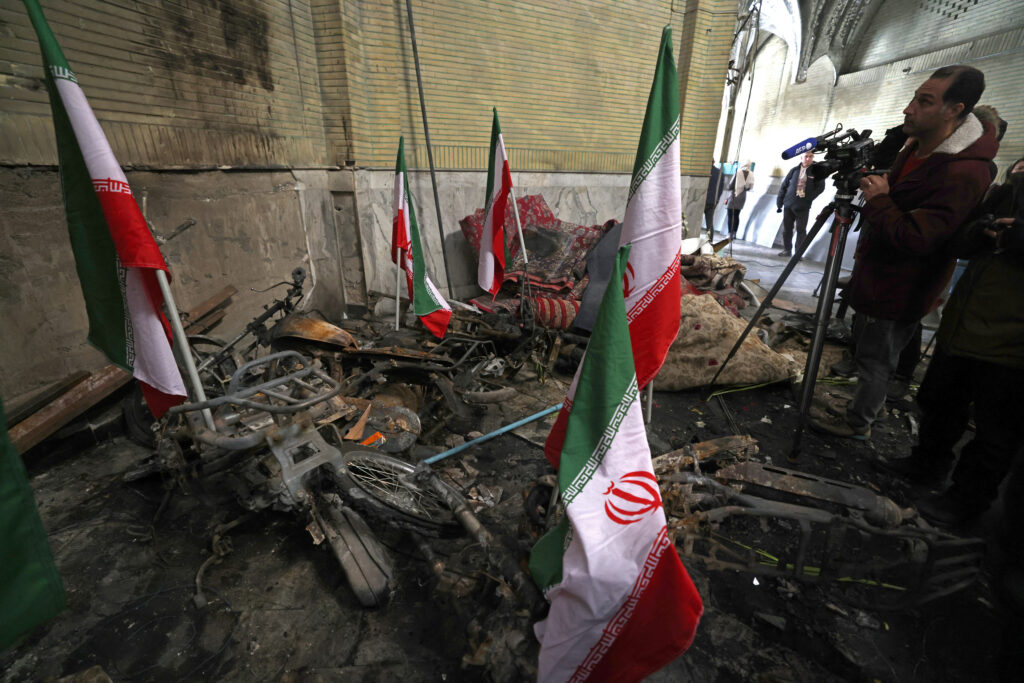
Image Caption: This photograph taken during a tour for foreign media shows a videographer taking images of the wreckage at the Al-Aqsa Mosque that was damaged during recent public protests, in Tehran on 21 January 2026. Demonstrations sparked in late December by anger over economic hardship exploded into protests widely seen as the biggest challenge to the Iranian leadership in years. Photo: AFP
About the Author
Dr Ghada Farag Sayed Soliman is a Research Fellow in the International Centre for Political Violence and Terrorism Research at S. Rajaratnam School of International Studies (RSIS), Nanyang Technological University (NTU), Singapore. Her research focuses on extremism in the Middle East and North Africa region.