The world has witnessed the largest growth in Liquified Natural Gas (LNG) capacity ever through several waves, starting with the 2009-11 increase to 73 million tons per annum (MTPA), largely driven by Qatar. The 2015-19 increase to 145 MTPA followed, and was driven by the United States and Australia. The present global LNG expansion (2025–30) is likely to surpass 200 MTPA as import and export infrastructure comes online, and demand in regions like South-east Asia grows. Over the past decade alone, South-east Asian LNG imports rose from around 4.4 MTPA in 2014 to 17.3 MTPA in 2023. This was reflected in global imports, which last year showed 5 per cent of global LNG imports heading to the region, up from 2 per cent in 2014. This trajectory is a testament to widespread structural transformation. South-east Asia was once a minor player in LNG trade, but is now emerging as the primary driver of growth.
The seemingly unstoppable demand for liquified natural gas (LNG) over the last decade has created a remarkable new supply chain environment among legacy providers. Development across Asia has played the biggest role in advancing demand, and private sector actors have been quick to secure supply routes connecting key producers, including Qatar, Australia, and the US, with Asean consumers. Traders and private aggregators have been critical for making the shift from oil and coal to cleaner liquified petroleum gas (LPG) and LNG. However, if progress in this area is to be sustained, infrastructural development and responsible policymaking will be needed.
Demand For LNG
The cheap and reliable supply of Gulf energy has helped to fuel the expansion in Asian economies. Japan, for example, imported 95 per cent of its crude oil from the region in 2023, with Saudi Arabia and the United Arab Emirates supplying the largest quantities. Twelve per cent of Japan’s LNG imports also come from the Gulf. South Korea similarly gets most of its crude oil from Gulf countries, and imported 19 per cent of its LNG from Qatar, and 11 per cent from Oman, in 2023. China, meanwhile, is the largest importer of oil from the GCC, and has depended heavily on cheap supply from the region. For some time now, however, each of these importers, as well as those in South-east Asia, has been shifting to LNG as a cleaner and cheaper alternative to oil and coal. Vietnam and Indonesia are currently building LNG terminals amidst new deals with Qatar and the US. Japan and Korea also hold major LNG contracts with Qatar and the UAE. Crucially, the biggest expected growth in demand comes from Singapore, the Philippines, Thailand, and even Malaysia, which has reduced production and begun to rely on imports.
Singapore transitioned from oil to LNG imports for energy generation more than two decades ago, completing the switch in 2013, with a growth rate of around 21 per cent per year since then. Demand is expected to continue to rise substantially through 2030 as its needs for electricity grow. Singapore also serves as the central bunkering and trading hub for South-east Asia, where LNG can be regassified or transported across the region. It recently established GasCo, a centralised gas company, to fully secure a steady supply of LNG to the region. This entity oversees much of the contracting work done through energy and commodity traders. Companies with global reach, like BGN International, an oil and gas trader active in over 120 countries, and other energy and commodity traders like Gunvor Group and Trafigura, for example, are among a list of counterparties signing supply contracts with Asian nations.
BGN International, in particular, is signing new agreements with fast-growing Asian economies seeking greater supply chain flexibility. The Geneva-based trader manages a blend of long-term contracts and spot transactions, carefully balancing risk and supply to help clients navigate price fluctuations. By sourcing from multiple regions, BGN bolsters energy resilience across Asian markets, particularly those exposed to chokepoints like the Strait of Hormuz and the Suez Canal. The firm also operates a hybrid shipping model, deploying a versatile fleet capable of serving both frontier and advanced markets, ranging from shallow, analogue ports to fully automated deep-water terminals.
Supply
Qatar and the UAE are also helping to buoy supply, securing long-term multi-year supply deals. For example, multiple buyers have contracted supply from Adnoc’s Ruwais LNG, including Malaysia’s Petronas, and SEFE Marketing & Trading Singapore. The biggest project, the 32-MTPA North Field East Expansion in Qatar, will also allow for the creation of more long-term contracts and increased activity from portfolio suppliers. The surges in supply are likely to meet demand from South-east Asia, especially as that from regions that are further along in their paths to net zero falls.
The Middle East has dominated the supply of LNG, and Gulf Opec states are continually adjusting to secure capacity for expected future demand, which is expected to rise globally by 60 per cent by 2040, according to Shell. This will be driven largely by economic growth. QatarEnergy expects to increase its capacity by over 80 per cent by 2030. Meanwhile, Adnoc is preparing for demand growth in Singapore with its recent sale and purchase agreement (SPA) — a 15-year gas deal — with ENN LNG, and its Ruwais LNG project. Notably, the Ruwais project is also the first LNG export facility in the Mena region to run on clean power. Similarly, Oman, which started exporting LNG in 2000 and has maintained a relatively constant rate of production, plans to boost production to 15.2 MTPA by 2029. Oman also plans, through the Marsa LNG project, to open the first LNG bunkering hub in the Middle East by 2028. These projects show that supply should not be a problem for consumers in Asia, at least not in terms of production capacity. However, there may be challenges ahead in delivering supplies efficiently to a region primed for rapid development, entailing growth which could exceed current infrastructural capacity.
Supply Risks
While supply is not a major concern, it remains to be seen if the Middle East can deliver the goods to South-east Asia, especially given chokepoints and piracy risks in the Red Sea and Strait of Hormuz. The conflict between Israel and Iran recently heightened supply fears, spiking spot prices, and deepening concerns about the reliability of Middle East LNG, but these worries have calmed somewhat. The geopolitical stability in the Gulf — though tenuous — has allowing for the continued flow of one-fifth of the world’s LNG through the Strait of Hormuz. However, continuing concerns around pirate or Houthi rebel attacks on shipping in the Red Sea persist. But while lingering geopolitical concerns have receded somewhat, economic and infrastructural issues remain as less volatile challenges.
One issue is that LNG import growth in Asia is dependent on global spot prices. In 2022, for example, higher prices caused a 16 per cent drop in LNG imports in South Asia. If supply routes remain open, however, the International Energy Agency (IEA) projects that LNG liquefaction capacity will exceed long-term demand, growing 40 per cent by 2028. This will lead to lower prices, creating a boost in energy growth in the region. But in order to sustain the surplus of contracted supplies, importers will need regassification, distribution, and power generation infrastructure. Geopolitical tensions, regulatory hurdles, and labour shortages, however, have led to delays in new LNG projects. Despite the predicted Asean growth in LNG demand — it is expected to account for over 75 per cent of the global LNG market by 2050 — the region lacks the additional infrastructure to accommodate the rise in demand. Regulatory delays or financing gaps also slow progress, making it harder for the region to absorb available LNG or LPG. If the lack of infrastructural and policy development persists, Asean will face higher levels of energy insecurity, as demand outpaces import capacity. This could deter international investment and hamper continued coordination between public and private actors.
A solution to this bottleneck is a combination of state export and import companies, which provide large volumes, long-term SPAs, and terminal capacity with private traders. Private sector actors provide the adaptability and multi-market reach that state producers cannot, by offering flexible sourcing, spot deals, and logistical accessibility.
South-east Asian countries, like Thailand, Vietnam, or the Philippines, will need to manage their energy resources efficiently to match the pace of supply growth and electricity demand. Bottlenecks may persist without regassification terminals, bunkering hubs, and distribution networks. Private firms can assist in providing capital, expertise, and vessel capacity to overcome delays. Accurately matching demand to supply could, however, pose a serious challenge for LNG producers. Mismatched supply setbacks will be best managed by LNG aggregators who can manage supply chains and better account for spot-price changes. Key market players, like the UAE and Singapore, will be able to stabilise much of the growth in LNG demand as they utilise existing and developing infrastructure in collaboration with traders. LNG and LPG are set to remain crucial resources for growth and development. The main question is not when demand will flatten or decrease, but whether the combined capacity of Gulf producers and the agility of private intermediaries can deliver the volumes Asia needs for its development trajectory.
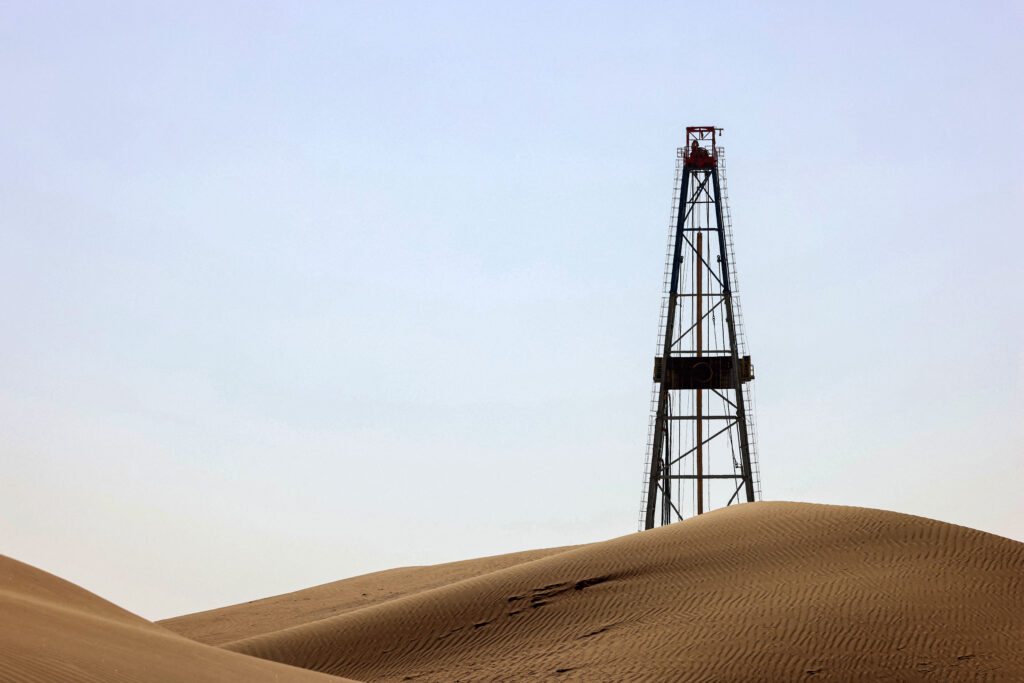
Image Caption: This picture taken on August 30, 2022 shows a view of an oil drill pump amidst the sand dunes in the desert of the Gulf emirate of Dubai. Photo: AFP
About the Author
Matthew Pajares Yngson is the Representative Councillor of the Caribbean Asean Council and Diplomatic Affairs Envoy of the Eastern Caribbean-South-east Asia Chamber, an organisation recognised by the United Nations through the UN-OHRLLS. Matthew Yngson holds a Doctorate in Professional Studies in International Relations and Diplomacy and a Master of Arts in International Relations and Cultural Diplomacy.