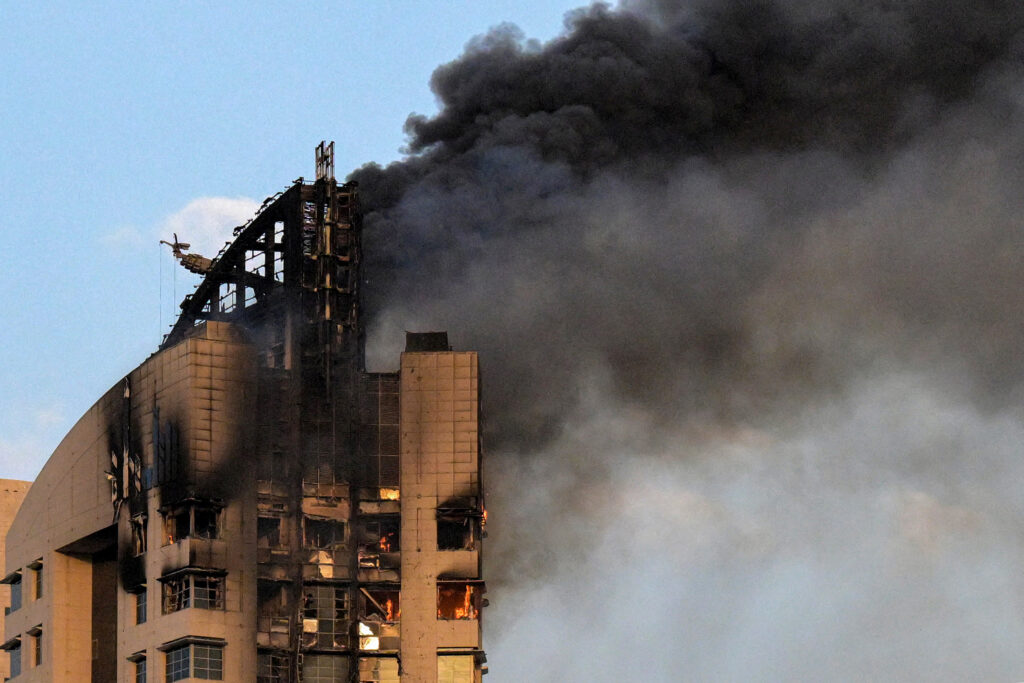
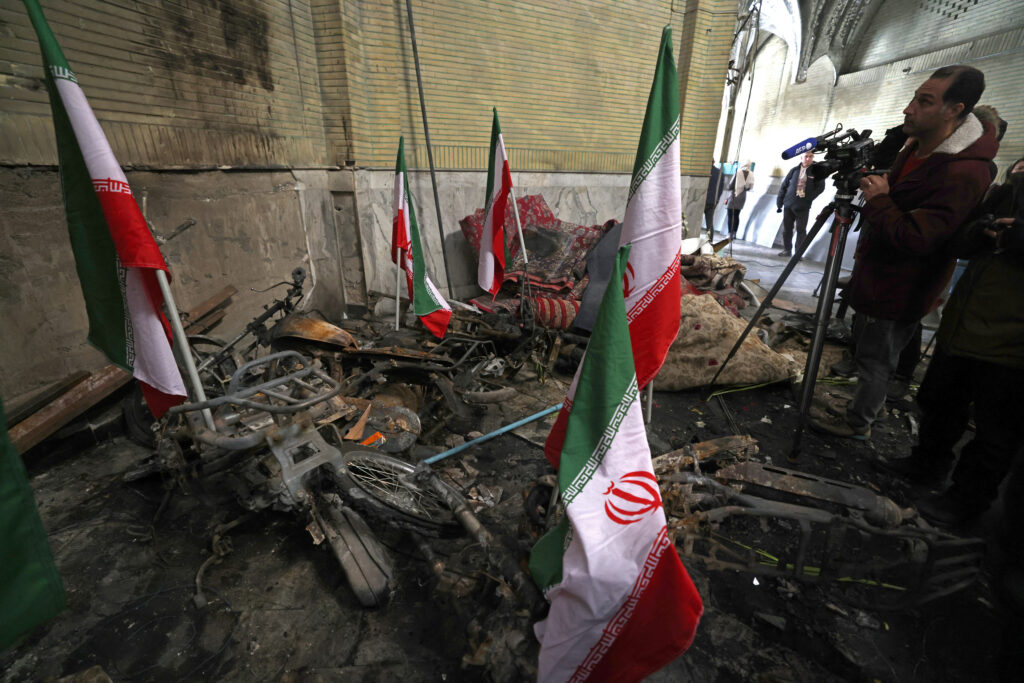
Israel’s strikes on Iran have left the Islamic Republic in its most vulnerable state since the 1980-1988 war with Iraq. The scale and lethality of the Israeli attacks, which targeted not just nuclear facilities, but also decimated Iran’s top military leadership and killed scientists, effectively shattered existing paradigms of Iranian security and forced the country to confront three hard truths: Conventional military deterrence has failed to prevent a foreign attack; members of the elite are vulnerable to assassination, and its nuclear programme is more exposed than previously thought.
But while vulnerable, the Iranian government remains intact and operational, a testament to its resilience. Leadership succession has been activated, most notably in the case of the Islamic Revolutionary Guard Corps, where Mohammad Pakpour was appointed as successor to the slain former chief, Hossein Salami. Supreme Leader Ali Khamenei has ordered retaliation against Israel, which has been hit by missile and drone attacks, and while the IDF has declared that it has “aerial freedom of action” over Iran, the Islamic Republic’s air defence systems have continued to intercept missiles. Among the main questions that remain now are how the attacks will affect Iran’s domestic political environment, whether they will influence greater aggression, particularly among what’s left of Axis of Resistance militias, and if they will spark renewed determination to pursue a nuclear deterrent.
Danger from the Inside
Aside from military objectives, the attacks appear to be a psychological campaign with two strategies aimed at undermining Iran from within: First, sow internal dissent within Iranian society by catalysing public anger at the Iranian government for pursuing confrontational policies that endangers its security, and exacerbating existing frustration with the government over its repressive policies and economic stagnation. Second, the attacks reinforce the Iranian government’s weakness and inability to protect citizens and even its elite.
In the immediate aftermath of the attacks, many Iranians at all levels of society expressed anger driven by fear. This anger was reportedly directed at the Iranian leadership, which was criticised for the absence of early warning about the attacks, and a lack of shelters in some areas. Within the ranks of the elite, Israel’s success in killing military leaders could give rise to discontent. The strikes that targeted generals hit apartment buildings in northern Tehran, which is among the wealthiest neighbourhoods in Iran. Senior regional officials close to the Iranian establishment have described how there is “concern and uncertainty within the ruling elite”, not only over more attacks, but also over domestic unrest. This explains why there was a nationwide restriction on Internet access after the attacks, which was officially justified as a step to “limit disclosures of local military activities that could further threaten security”, but plausibly also to prevent the mobilisation of organised mass opposition.
Critically, the psychological aspect of Israeli attacks appear designed to influence coordinated political opposition against the regime, which explains why Israeli Prime Minister Benjamin Netanyahu called on the “Iranian people to unite around its flag and its historic legacy, by standing up for your freedom”. In doing so, he described the attacks as helping “clear the path for you to achieve your freedom”.
Redirecting Anger and Dangerous Expectations
But these circumstances also provide the Iranian government with opportunities to shift the narrative and unite public opinion against Israel. The Iranian leadership is adept at shifting public narratives and mobilising anger against foreign enemies. During the 1980–1988 Iran-Iraq War, then-Supreme Leader Ruhollah Khomeini framed the war in religious terms, calling for “Sacred Defence”. Iranian leaders were thus able to unite the country against Iraq despite the horrendous toll of eight years of war.
The same strategy is being deployed to shift the narrative and unite public opinion against Israel. Building on existing societal hostility towards Israel and anger towards it over the attacks, Lotfollah Dezhkam, the representative of the Supreme Leader, called for a “firm response”, and for the “public to remain disciplined”, emphasising “that all action must follow the guidance of Iran’s Supreme Leader”. At the same time, pro-regime protests calling for “revenge against Israel” emerged in Tehran, with some demonstrators calling for an end to nuclear talks with the United States. Religious marches celebrating the Shia holiday of Ghadir Khumm transformed into mass protests against Israel and the US.
Within Iranian political circles, the attacks have appeared to unite opposing political conservative and reformist factions against Israel. An observer in Tehran commented on the disappearance of schisms within Iranian politics after the attacks, noting that “domestic factions, dissidents, oppositions of all trends inside Iran, critics, etc. have all united. Their messages of unity are already spreading like wildfire. Message is let’s put differences aside and fight for Iran instead”.
But this unity will be tested by whether Iran can mount an effective response. As Carnegie Middle East Centre analyst Mohanad Hage Ali commented: “They can’t survive if they surrender…they need to strike hard against Israel, but their options are limited.” This predicament explains the somewhat underwhelming initial response, which involved just 100 drones aimed at Tel Aviv and Jerusalem, most of which were intercepted.
Retaliation Constrained
While further retaliation involved ballistic missiles which caused significant damage, Iran is disadvantaged by limited on-the-ground intelligence, and lack of awareness of Israeli vulnerabilities. Iran’s retaliatory strikes were indiscriminate, with drones and missiles hitting both civilian and military areas without distinction in Tel Aviv, Jerusalem and central Israel. By contrast, the Israeli strikes were targeted, and included the use of Mossad operatives on the ground to direct the attacks with precision.
Complicating Iran’s constraints is the severely weakened Axis of Resistance. Hamas has been operationally crippled by Israel, as has Hezbollah in Lebanon, which is also facing the prospect of forced disarmament. The Houthis in Yemen and Popular Mobilisation Forces in Iraq remain the sole active and operational groups. Strategically, however, it remains questionable if Iran would risk crippling them by opening them to Israeli retaliation.
However, Iran’s limited options dangerously broaden its target scope to include inflicting as much damage as possible. This makes escalation a threat. Strikes against civilian targets that cause mass casualties will invite an even deadlier response. Meanwhile, Iran has threatened that US, French, and British bases could be hit if they supported Israel, which the Americans, at least, most certainly already have. Britain has ordered more jets to the region, and Prime Minister Keir Starmer has not ruled out helping to defend Israel. Attacking these external powers will have disastrous consequences for Iran.
Iran may thus decide that a more feasible option would be to accelerate its nuclear programme, bringing it closer to obtaining a nuclear weapon. Indeed, ongoing Iranian parliamentary debates signal that it will restrict inspections of its nuclear enrichment facilities by the International Atomic Energy Agency (IAEA). Iran also cancelled the latest round of nuclear discussions with the US, which were to have taken place in Oman on 15 June. Obtaining a nuclear bomb might placate hardline conservatives who have demanded the revocation of Supreme Leader Khamenei’s religious fatwa against Iran’s deployment of nuclear weapons.
However, Iran certainly understands that racing towards a bomb could lead to more devastating strikes. Whether it even has the technical capabilities to do so remains to be seen. The Israeli attacks reportedly caused extensive damage to infrastructure in uranium enrichment facilities in Natanz, Isfahan, and Fordow.
Resilience and Adaptation
Despite Iran’s perilous predicament, the history of the Islamic Republic demonstrates its remarkable ability to endure existential crises, which have been a near-permanent aspect of its existence since its birth after the 1979 Iranian Revolution. The regime has always found creative ways to survive these threats, and even extend its influence in the Middle East; the Axis of Resistance and its forward defence strategy stand as testaments to this. It is thus too early to dismiss Iran’s current weakness as terminal, and too dangerous to underestimate the extent of its willingness to retaliate. What is important now is to observe if these attacks will change Iran’s strategic worldview, and how it will adapt to a Middle East with an emboldened Israel.
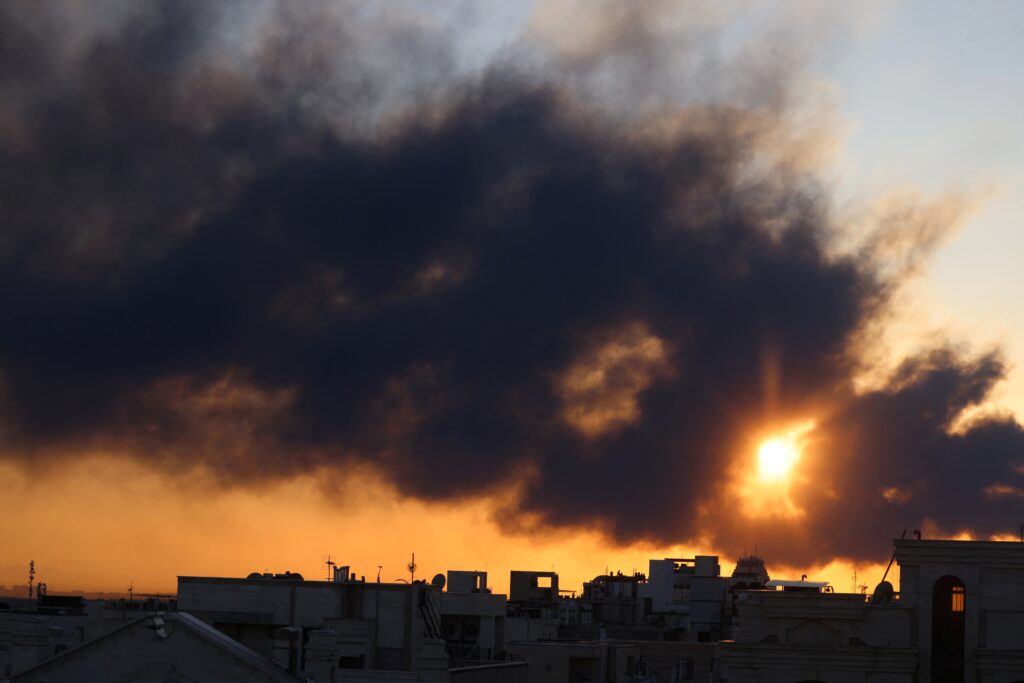
Image Caption: A fire blazes in the oil depots of Shahran, northwest of Tehran, on June 15, 2025. Israel and Iran exchanged fire on June 14, a day after Israel unleashed an unprecedented aerial bombing campaign that Iran said hit its nuclear facilities, “martyred” top commanders and killed dozens of civilians. Photo: AFP
About the Author
Huzeir Ezekiel Dzulhisham is a Research Analyst in the Dean’s Office at the S. Rajaratnam School of International Studies (RSIS), Nanyang Technological University (NTU), Singapore.