“Chinese people are good at maths” — it is a stereotype you have probably heard more than once, often with a knowing chuckle, or a raised eyebrow. But what happens when China tries to apply its maths skills to the complex political and economic equations of the Middle East?
In his latest book, Building the Belt and Road Initiative in the Arab World: China’s Middle East Math, Dr Jonathan Fulton tackles exactly that question, not with formulas or calculators, but with sharp analysis, deep regional knowledge, and a dose of political realism. At the heart of the book is the “1+2+3 Cooperation Pattern”, a formula introduced by President Xi Jinping in 2014 to guide China’s engagement with the Arab world. But as Dr Fulton shows, solving this particular problem in this context requires more than just technical skill: It demands strategic vision, adaptability, and, sometimes, a willingness to learn from failure.
In Dr Fulton’s telling, the “1”, representing hydrocarbons, anchors China’s strategy in energy security, with oil and gas imports from Gulf states playing a central role in sustaining both economic growth and domestic legitimacy. The “2” refers to infrastructure construction and trade/investment, which form the two wings of China’s Belt and Road outreach. Through large-scale connectivity projects and economic zones across the region, China is not merely exporting capital and labour, but also reconfiguring strategic relationships. Finally, the “3” — nuclear energy, renewable energy, and space cooperation — reflects Beijing’s push into high-tech domains. While these sectors are still emerging, they reveal China’s ambition to shift from being a follower to a frontrunner in frontier technologies.
Rather than presenting the 1+2+3 framework as a static blueprint, Dr Fulton treats it as an evolving strategy, shaped by political realities, economic opportunities, and geopolitical constraints. The framework builds upon existing Sino-Arab cooperation mechanisms, but represents a notable escalation in China’s regional strategy, reflecting a broader shift towards a more proactive foreign policy. By mobilising government agencies, state-owned enterprises, and policy banks, China has sought to expand its presence across the Middle East. While the framework formally targets Arab states, Dr Fulton notes that similar forms of engagement have extended to non-Arab Mena countries, such as Iran, Israel, and Turkey, though each presents distinct challenges and does not fall neatly within the model.
As Dr Fulton notes, the third component of the 1+2+3 framework is where geopolitical tensions are most likely to emerge. His cautionary note about Western pushback in sensitive sectors like nuclear energy and space technology is timely, particularly as China’s growing role in high-tech cooperation draws increasing scrutiny from the United States. This is especially relevant in the Gulf. For instance, while open to Chinese tech partnerships, the United Arab Emirates has explicitly reaffirmed that the US remains its most important partner for advanced technology, and has taken steps to reassure Washington of its commitment in sensitive sectors such as artificial intelligence. As the sun begins to set on hydrocarbons, and questions grow about the BRI, this component appears to be a key equation for China moving forward. More’s the pity, then, that Dr Fulton only skims the surface.
That shortcoming aside, China’s Middle East Math excels in its careful research and evidence-based approach. The inclusion of tables, such as those listing ministerial meetings, diplomatic relations, and investment values, provides a clear empirical foundation. For example, he offers an up-to-date valuation of construction contracting for Chinese companies in Mena from January 2005 to January 2024, which shows a strong concentration in the Gulf states and a few key partners such as Egypt and Algeria. He also presents a detailed breakdown of Chinese investment into Mena and Arab League countries from 2005 to 2023, revealing significant variation across countries. Investment remains limited in both volume and scope across much of the Arab world, with a few energy-rich states receiving the bulk of Chinese FDI. Taken together, these patterns reflect China’s pragmatic focus on high-return, low-risk environments, prioritising politically stable and strategically aligned countries that fit within its broader BRI and foreign policy objectives.
Drawing on nearly two decades of living in the region, Dr Fulton weaves first-hand experiences and anecdotes into the narrative, giving the book a grounded, insider’s perspective. Whether it is a casual chat with a young Chinese diplomat in Dubai, or a candid remark from a Gulf policymaker, these asides lend depth, real-world context, and a human element to what might otherwise remain abstract geopolitical analysis. Rather than relying solely on official documents or macro-level data, Dr Fulton incorporates voices from the field, often with contrasting perspectives, to highlight the disconnects between official narratives, public perception, and policy reality. For example, he recounts a conversation with a China specialist in Israel, who observed that the public remained largely unaware of Beijing’s one-sided position on the Israel-Hamas conflict, allowing economic ties to grow — Chinese electric vehicles captured nearly 69 per cent of the Israeli market in 2024, for instance — even as diplomatic relations turned frosty.
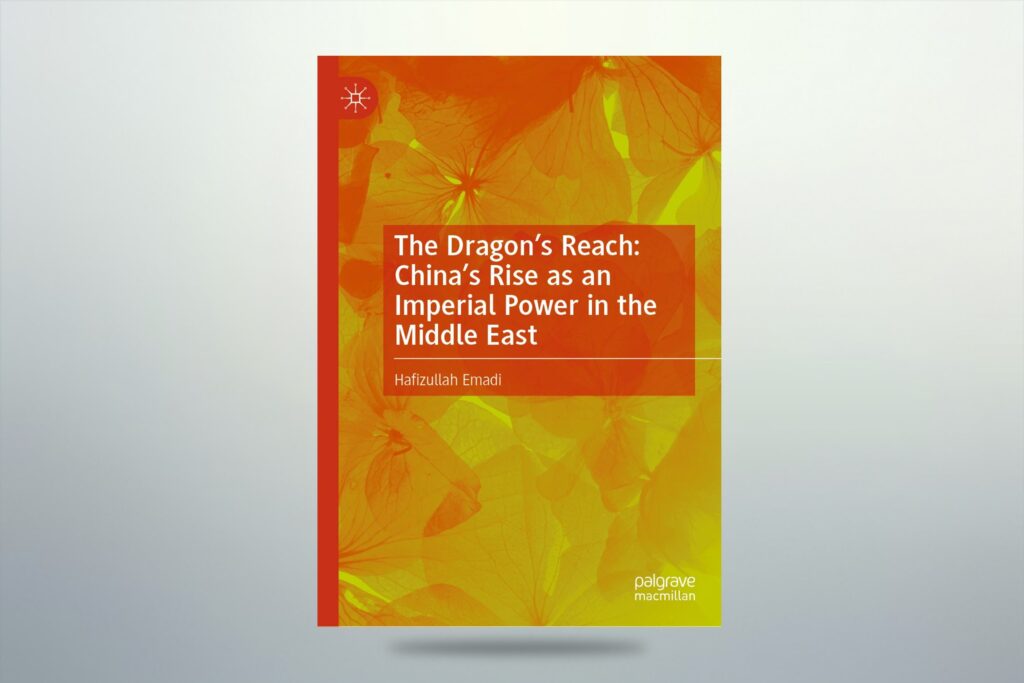
In sum, China’s Middle East Math is a timely and well-researched contribution to understanding China’s strategic engagement with the Mena region. Dr Fulton presents a clear framework, supported by solid evidence and thoughtful analysis, making the book a valuable resource for scholars, policymakers, and students of international relations. Though concise in length, it effectively captures the complexity of China’s BRI in a region critical to global energy and geopolitics. It is a must-read for anyone seeking to grasp the evolving dynamics of Sino-Arab relations in the context of global power shifts.
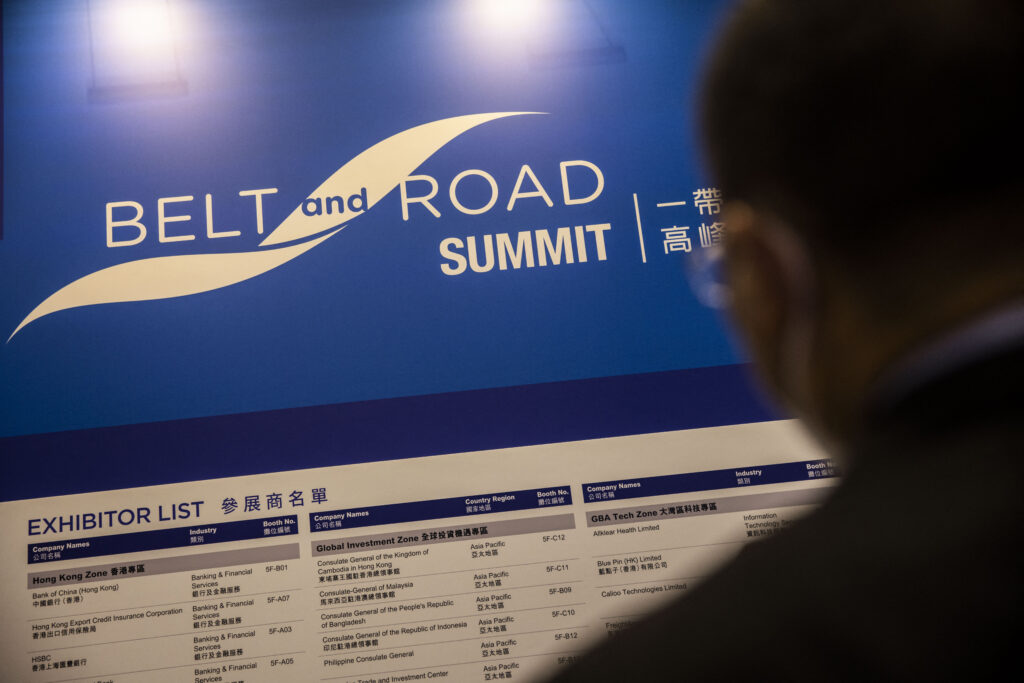
Image Caption: A man attends the Belt and Road Summit in Hong Kong on 31 August 2022. Photo: AFP