For many actors within the international community, including Singapore, the two-state solution is regarded as the most viable and acceptable framework for achieving a long-term resolution to the Israeli-Palestinian conflict. In periods of heightened violence, prominent international figures and institutions consistently call for renewed efforts towards the establishment of a sovereign Palestinian state alongside Israel.
Yet, nearly two years since the 7 October 2023 attacks by Hamas, the prospects for a two-state solution are arguably the bleakest they have ever been. As the visions of the international community and the realities on the ground began to diverge sharply, prominent scholars have used a book, The One State Reality: What Is Israel/Palestine?, to exhort the international community to take a more pragmatic approach to a long-term resolution to the Israeli-Palestinian conflict. Originally written in March 2023, the book has gained even more relevance since the start of the Israel-Hamas war.
The volume opens by urging readers to abandon outdated assumptions of the two-state solution, mainly the belief that a viable Palestinian state remains politically and territorially plausible, or that the current status quo is merely temporary, and instead confront the entrenched nature of a single state controlled by Israel. A notable chapter here is written by Ian Lustick, Emeritus Professor of the Political Science Department at the University of Pennsylvania, who provocatively calls for a “gestalt shift” in how Israel is conceptualised. He argues that what has long been seen as a temporary occupation is a coherent political order that spans the entire territory from the Jordan River to the Mediterranean Sea. He challenges readers to see beyond the illusion of separate legal regimes or parallel sovereignties in Gaza and the West Bank, emphasising instead how a unified structure of domination has emerged. This analysis underscores the enduring and systemic nature of Israeli supremacy over Palestinians, pushing policy analysts and scholars to rethink the lenses through which the conflict is understood.
Moving along, the City College of New York’s Diana Greenwald writes in the second part of the book that indirect rule in the West Bank illustrates how Israeli governance relies on delegated domination, outsourcing repression to Palestinian Authority institutions while maintaining ultimate control. Other essays return to the theme of domination, including how the one-state reality has deeply shaped Palestinian politics, framing resistance, governance, and survival within the constraints of Israeli control. Part three of the book focuses on how some influential actors on both sides have already operated under the presumption of a one-state reality, and analyses the results and implications of this.
While convincing, these arguments fail to address crucial questions: How will Israel manage long-term governance over Palestinians in a way that offers adequate rights and representation? Can Israel maintain internal political stability and international legitimacy while denying full citizenship to a population that may soon constitute a demographic majority? And what form of political inclusion, short of full equality, might emerge that is still more accountable and rights-respecting than existing alternatives under the Palestinian Authority or Hamas? Without addressing these questions, the one-state reality angle risks mirroring the very limitations it critiques in the two-state solution, by falling short of offering a realistic and lasting resolution. Describing reality is vital, but without grappling with how that reality could be made more workable leaves the framework politically inert.
The book closes by exploring alternative solutions, including a binational state — a single state with equal rights for Israelis and Palestinians — and a confederation model, with two states existing within a shared political and economic framework, allowing for cooperation on key issues while maintaining separate sovereignties. In doing so, Georgetown University’s Khaled Elgindy argues that the success of a one-state model relies on factors for which there is no compromise available, such as compliance with international humanitarian laws, a comprehensive timetable for Israeli withdrawal, and mechanisms for accountability.
In sum, while the book’s arguments for a one-state solution provide an adequate and respectable starting point for discussions, it fails to suggest workable solutions. Ultimately, its most significant contribution is that it highlights the risks of the international community succumbing to inertia about the peace process, and failing to account for new developments in the conflict. That said, it is recommended for both scholarly and general audiences as it provides a fresh analytical lens through which to reconsider the broader Israeli-Palestinian conflict.
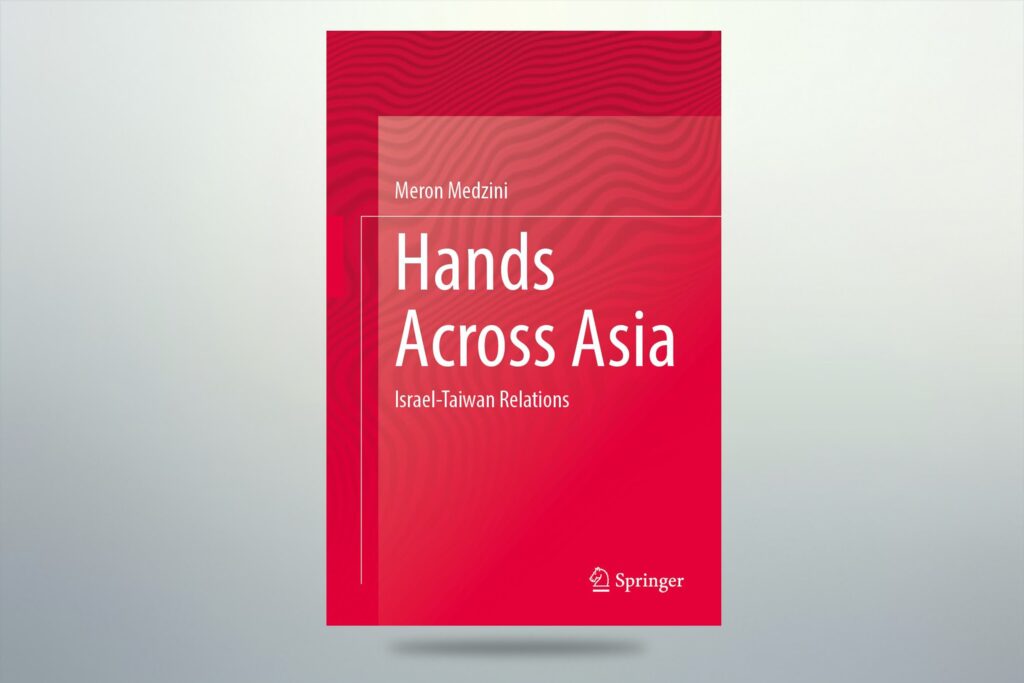
Image: Cover image © Cornell University Press. Used here for the purpose of academic review.
About the Author
Damien Tan is a Research Assistant at the Middle East Institute, National University of Singapore, with experience in policy research in government and academia. His research focuses on international security and Middle East foreign policy. He is currently a final-year undergraduate student at the National University of Singapore.