- 15 Jul 2026
[Closed-Door] China and the Gulf Cooperation Council: Evolving Ties and Future Engagement
China’s relationship with the Gulf Cooperation Council (GCC) countries has changed profoundly in decades past. What began as a relatively narrow relationship, shaped by diplomatic recognition and basic trade, has evolved into one of the most economically consequential partnerships in the wider Middle East. While ties have become more comprehensive, they remain bounded by an enduring structural reality. Prior to the recent tensions in the Middle East, China became an increasingly important economic partner for the GCC, while the United States remained the central security provider.
It was this so-called division of labour, namely economic deepening without security substitution – albeit accompanied by a growing diplomatic footprint – that brought together the East Asian Institute (EAI) and the Middle East Institute (MEI) of the National University of Singapore (NUS) to examine the durability and the limits of China-Gulf relations. Yet the ongoing geopolitical dynamics in the Middle East could reshape this relationship in important ways going forward, with potentially significant implications for China-GCC ties.
This seminar discussed a joint EAI-MEI monograph that examines the evolving relations between China and the GCC countries prior to the current Middle East tensions, covering areas such as bilateral political ties, trade, investment, the Belt-and-Road Initiative, diplomacy as well as Gulf perceptions of China’s ambitions and constraints. The seminar assessed potential paths going forward.
This event was held in person on Wednesday, 15 July 2026, from 3:00 PM to 5:00 PM (Singapore time).
This seminar was held under the Chatham House Rule. No media coverage is permitted and there should be no attribution of the information shared during the seminar to any specific speaker.
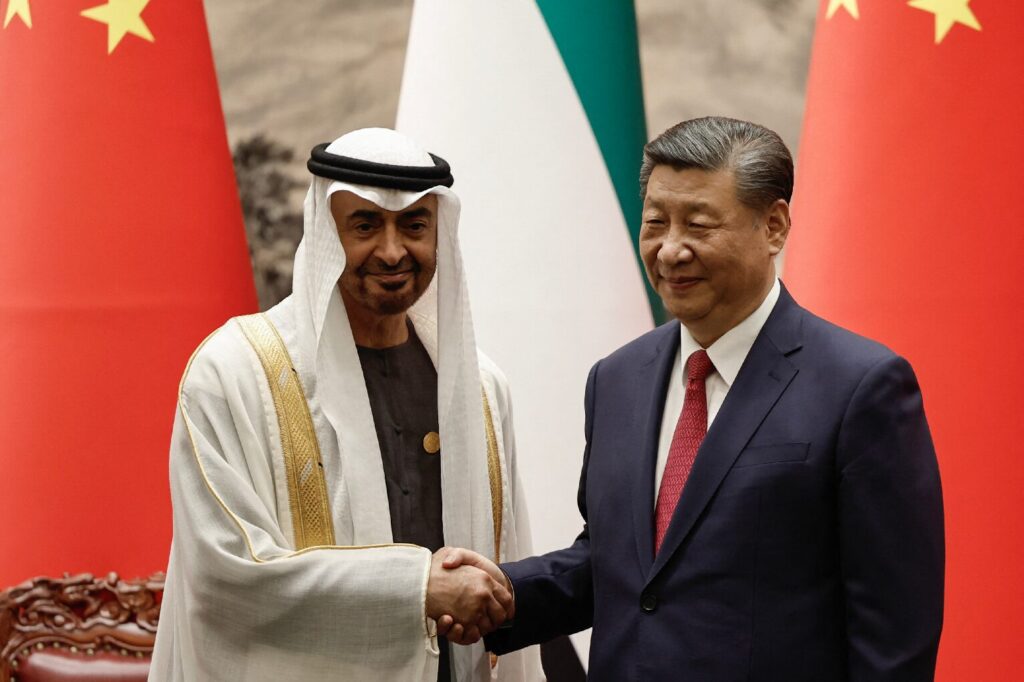
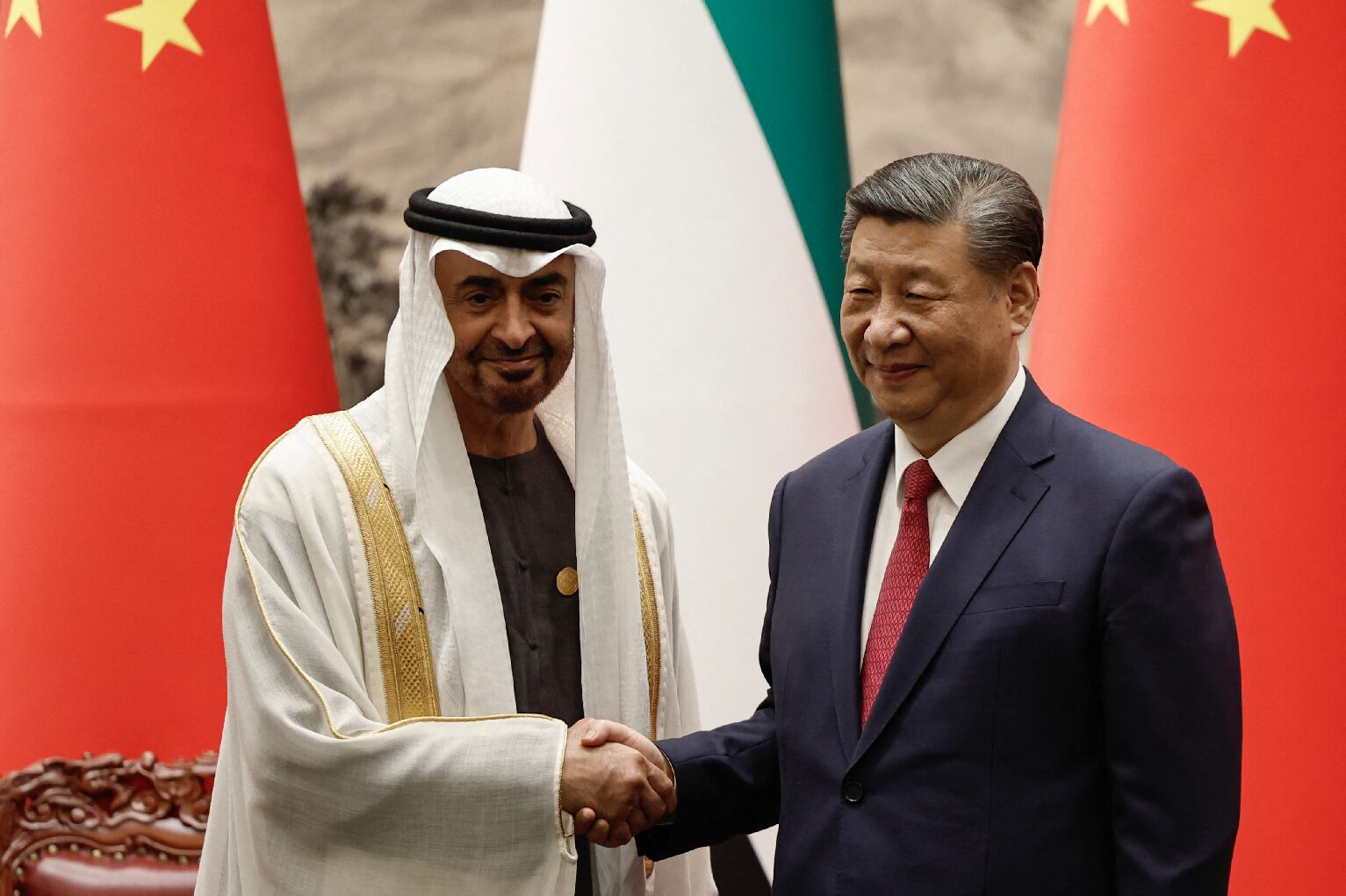
Photo Description:Chinese President Xi Jinping and United Arab Emirates President Sheikh Mohammed bin Zayed Al Nahyan (L) shake hands following a signing ceremony at the Great Hall of the People in Beijing on May 30, 2024. (Photo by TINGSHU WANG / POOL / AFP)
About the Speakers

Director
East Asian Institute, NUS
Prof Alfred Schipke is the Director of the East Asian Institute and Professor of the Practice of International Finance at the Lee Kuan Yew School of Public Policy at NUS. Before joining NUS, he held various roles in the International Monetary Fund (IMF). He was Director of the IMF–Singapore Regional Training Institute for Asia and the Pacific in charge of technical assistance, training, and research. Prior to that, he was Assistant Director and Mission Chief for India and Senior Resident Representative and Mission Chief for China providing policy advice, spearheading analytical work, and coordinating capacity development. He has worked closely with key Chinese economic and financial sector agencies, including the People’s Bank of China, the Ministry of Finance, and financial sector regulatory agencies.
At the IMF, Prof Schipke was also Division Chief in the Asia and Pacific Department leading its work on fast-growing low-income countries in Southeast Asia (frontier economies), In addition, he was Mission Chief for Vietnam. In the IMF’s Western Hemisphere Department, he negotiated several successful IMF programmes, including for El Salvador and St. Kitts and Nevis.
Prof Schipke has taught international finance at Harvard Kennedy School and the National School of Development at Peking University, and has authored and edited several books and articles. He is currently working on China-Africa economic relationships. He holds a PhD from Duisburg-Essen University, an MPA from Harvard University, and a BA from Indiana University of Pennsylvania.
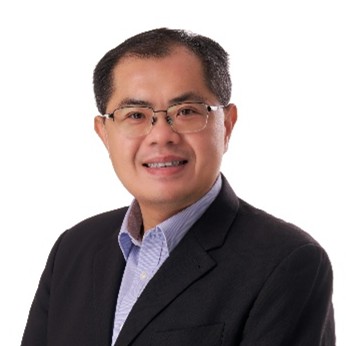
Senior Research Fellow
East Asian Institute, NUS
Dr Yu Hong is a Senior Research Fellow at the East Asian Institute. His research interests cover regional economic development in China, urbanisation, One Belt, One Road initiatives, the Asian Infrastructure Investment Bank, as well as China’s state-owned enterprises and railway sector reform. Dr Yu’s research articles have appeared in international peer-reviewed journals such as Journal of Contemporary China; Asian Survey; China: An International Journal; Asia Policy; East Asia: An International Quarterly; The Copenhagen Journal of Asian Studies; and Asian Politics & Policy.
He is the author of the monograph Economic Development and Inequality in China: The Case of Guangdong (Routledge, London and New York: 2011). He also wrote the book Chinese Regions in Change: Industrial Upgrading and Regional Development Strategies (Routledge, London and New York: 2015). Dr Yu’s most recent book, in Chinese, is The Belt-and-Road Initiative, The Rise of China and International Cooperation: What Does it Mean to China and the Region? (World Affairs Press, Beijing: 2017). He also co-edited the book China’s Industrial Development in the 21st Century (World Scientific, Singapore: 2011). He is frequently interviewed as an expert on China by international and local media outlets such as Phoenix Television and The Business Times on a range of topics.

Executive Director
Middle East Institute, NUS
Ms Michelle Teo is the Executive Director of the Middle East Institute, and has more than 20 years’ experience in the government and private sectors. Her career has spanned international relations, corporate and digital communications, and the globe. Ms Teo’s career with Singapore’s Ministry of Foreign Affairs has taken her to Europe, Australia, North America, the Middle East, as well as North and Southeast Asia. Ms Teo previously served as Singapore’s Deputy High Commissioner in Canberra. She then joined IBM, first as Communications Leader with IBM Singapore and later with IBM ASEAN. Prior to joining the Middle East Institute, Ms Teo worked with local small-and-medium enterprises focused on digital content re-design for Singapore government agencies.
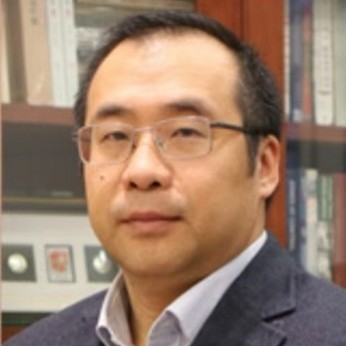
Senior Research Fellow of the Institute of International and Strategic Studies and an Associate Professor at the Department of Arabic Language and Culture in Peking University
Dr Wu Bingbing is a Senior Research Fellow of the Institute of International and Strategic Studies and an Associate Professor at the Department of Arabic Language and Culture in Peking University. He was a visiting scholar in Kuwait University in 1997 and Damascus University in 2001, and received his PhD in Arabic language and literature from Peking University in 2003.
Dr Wu’s research interests include Arab-Islamic culture, Shi’ite Islam, the history of Islam, and contemporary Islamic issues. He is the author of the book The Rise of the Shi’i Modern Islamism (CASS Press, Beijing, 2004). He has also published on the concept of jihad and contemporary Islamic terrorism, ummah and Islamic society, as well as secularism in the Arab world. Currently, Dr Wu is a Fellow of the China Association of Middle East Studies and the Deputy General Secretary of the China Arabic Language Education Association.
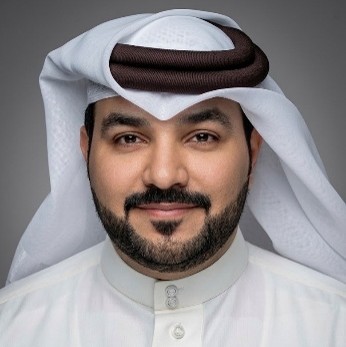
PhD candidate in national development (theoretical economics)
Peking University’s Institute of South-South Cooperation and Development
Mr Jasim Abdulla Alsakran is a PhD candidate in national development (theoretical economics) at Peking University’s Institute of South-South Cooperation and Development. He previously served as Head of the Monetary Department and Head of Economic Policies at the Gulf Cooperation Council (GCC) Secretariat General in Riyadh, where he oversaw policy analysis, national development, macroeconomic forecasting, and financial programming. He led strategic recommendations for the GCC Economic & Development Affairs Commission EDAC and coordinated with the International Monetary Fund (IMF) and World Bank, while also contributing to ministerial committees and drafting GCC initiatives.
Mr Alsakran holds a master’s in public management from Aix-Marseille University and a bachelor’s from the University of Bahrain. In addition, he has a diploma from Georgetown University and certificates from France’s École Nationale d’Administration. His technical proficiency is reinforced by advanced training from the IMF, the Arab Monetary Fund, and the United Nations in financial programming and econometric modeling. This academic foundation – combined with his extensive experience in project management, diplomacy, and policy formulation – positions him as an expert on the Gulf’s development. Mr Alsakran is also the author of the book Digital Governance: How AI Innovation is Reshaping Economic Policies, which examines the intersection of technology and modern governance.

Research Fellow
East Asian Institute, NUS
Dr Guo Fang is a Research Fellow of the East Asian Institute. Her research interests focus on China and regional economic ties, as well as Japan’s economy. Before joining NUS, she was a Country Economist for the World Bank–East Africa, covering Eritrea, South Sudan, and Sudan. Prior to that, she served as a Country Economist for the World Bank–East Asia, covering Laos and Myanmar. In her roles as Country Economist, Dr Guo led and published a series of economic updates and policy notes, working closely with key government counterparts, development partners, and the private sector in these countries. Before taking on the role of Country Economist, she was an Economist for the World Bank–Debt Global Practice, focusing on debt sustainability analysis.
Event Details
EAI Conference Room
469A Bukit Timah Road, #06-01
Singapore 259770