Non-traditional security (NTS) has become a central idiom shaping international politics in the 21st Century. Unlike traditional security, which privileges military threats, territorial defence, and geopolitical rivalry, NTS describes vulnerabilities that endanger societies, rather than armies: Climate change, pandemics, water scarcity, food-system fragility, natural disasters, demographic pressures, and the governance of cross-border labour mobility. These risks cannot be mitigated by coercion, or insulated by borders. Instead, they demand cooperation, institutional capacity, and long-term planning, and they increasingly structure the domestic politics of Asian states.
Soft power takes on a distinctive character in this context. It is not built primarily on cultural attraction or ideological affinity, but on functional credibility: The perception that a state can provide public goods, i.e., environmental support, humanitarian relief, labour protection, and renewable energy investment, among others – that alleviate real vulnerabilities. This “functional soft power” rewards states that deliver tangible benefits at critical moments. It is practical, relational, and particularly resonant in societies experiencing climate shocks, economic volatility, or labour-migration pressures. For policymakers in the Indo-Pacific, this shift matters because it expands the range of external partners that are able to deliver resilience without demanding alignment in great-power competition.
This reframing helps explain why the Gulf Arab states have rapidly become consequential actors in the Indo-Pacific’s evolving NTS landscape. Long viewed as hydrocarbon exporters and migrant-labour destinations, the Gulf Cooperation Council (GCC) states are now repositioning themselves as providers of human security, development partners, and climate-transition actors. Their sovereign wealth funds, humanitarian institutions, renewable energy companies, and increasingly regulated labour-governance systems give them capabilities few emerging powers can match. At the same time, the Gulf’s own domestic transformation agendas – Saudi Arabia’s Vision 2030, the UAE’s Net Zero 2050 and Centennial 2071, Qatar’s diversification strategies, and Kuwait’s long-standing development diplomacy – create strong incentives to cultivate reputational legitimacy across the Indo-Pacific.
Earlier scholarship and policy commentary tended to frame Gulf–Indo-Pacific relations around two pillars: Energy interdependence and labour migration. Those remain foundational, but they no longer capture the full political character of the relationship. Gulf and Indo-Pacific states are bound together by shared non-traditional security vulnerabilities: Exposure to extreme heat, dependence on imported food, stressed water basins, fragile coastal megacities, and large populations whose livelihoods depend on global supply chains. In that context, Gulf governments have begun to treat NTS not only as a domain of risk, but also as a domain of statecraft – a strategic language through which they can build goodwill, diversify partnerships, and project an image of modernity and responsibility.
For its part, the Indo-Pacific region offers a receptive environment for this kind of engagement. According to the IPCC’s Sixth Assessment Report, South and South-east Asia are among the world’s most climate-exposed regions, facing more intense heatwaves, erratic rainfall patterns, and sea-level rise that threatens low-lying coastal zones. The Asian Development Bank estimates that climate-related disasters displace millions of people in Asia every year, putting pressure on housing, infrastructure, and social protection systems. Governments wrestling with these pressures are keen to tap external capital, technology, and crisis-response capacity, provided it comes without the geopolitical strings that sometimes accompany great-power rivalry. Gulf NTS diplomacy fits neatly into that space.
Across the last decade, the relationship between the Gulf states and the rest of Asia has undergone a qualitative transformation. This shift reflects a structural convergence between Gulf capabilities and Indo-Pacific nations’ vulnerabilities, and demonstrates how the provision of public goods can evolve into a strategic language of influence.
Climate and Environmental Diplomacy
No domain illustrates this evolution more clearly than environmental diplomacy. For decades the Gulf was portrayed, often simplistically, as a climate laggard: Wealthy, carbon-intensive, and reluctant to embrace serious mitigation. Over the last several years, however, regional governments have invested heavily in renewables, green hydrogen, and climate-adaptation research. According to the International Renewable Energy Agency (Irena), installed renewable capacity in the GCC has more than tripled since 2014, albeit from a low base, and planned projects run into the tens of gigawatts. These ventures are motivated by domestic energy security and diversification goals, but also function as tools of external engagement.
The UAE’s cooperation with Singapore and Indonesia is emblematic. In Singapore, Emirati diplomacy now revolves as much around joint statements on carbon markets, sustainable urban planning, and green financeas it does around trade or aviation. Singaporean officials have increasingly described the UAE as a “critical environmental partner”, a significant shift from earlier eras when Gulf ties were seen primarily through a petro-financial lens. At the same time, these initiatives remain more significant as agenda-setting and signalling mechanisms than as drivers of large-scale emissions reduction, reflecting the early and still limited material depth of Gulf-Asia climate cooperation. In Indonesia, Masdar’s investment in the Cirata floating solar plant, South-east Asia’s largest, has become a touchstone for Jakarta’s narrative about its energy transition. Local media and officials regularly cite the project as proof that the Gulf is contributing capital and technology to Indonesia’s low-carbon future, not merely seeking political access or land deals. While the project’s absolute contribution to Indonesia’s energy mix is modest, its political salience lies in demonstrating the Gulf’s willingness to invest in visible, future-oriented infrastructure rather than extractive or short-term ventures.
Saudi Arabia’s emerging green-hydrogen partnerships with India extend the same logic into South Asia. New Delhi’s ambition to become a global hydrogen hub converges neatly with Riyadh’s plans to export clean fuels as part of Vision 2030. Joint declarations now cover not only fuel trade, but also technology transfers, desalination research and carbon-capture initiatives. Irena’s recent hydrogen outlook identifies both India and Saudi Arabia as potential major players in the global hydrogen economy by 2035. For India, Saudi Arabia has the potential to become a long-term partner in its decarbonisation strategy; for Saudi Arabia, India is an anchor market that validates the credibility of its own transition narrative.
Qatar, while still central to Asian LNG markets, has begun to pair long-term supply contracts with more modest solar investments in states such as Bangladesh, and with exploratory renewable-gas hybrid models elsewhere in South Asia. These initiatives are small in scale, but symbolically important. They signal that Doha intends to be part of the Indo-Pacific’s low-carbon trajectory, not simply a legacy fossil-fuel supplier.
Environmental cooperation thus serves multiple functions. It allows Gulf governments to deploy sovereign capital into future-oriented sectors, recast their reputations at a time of intense scrutiny of hydrocarbon producers, and strengthen ties with other Asian governments searching for reliable partners in their own energy transitions. For Asian leaders confronted with increasing climate extremes, this partnership is not an abstract one. It addresses vulnerabilities that are already reshaping domestic politics – whether in the form of air pollution, water scarcity, coastal erosion, or energy-price shocks.
Humanitarian and Development Diplomacy
If climate partnerships project technological ambition and stewardship, humanitarian outreach communicates reliability and benevolence. Gulf states have become some of the world’s most active humanitarian and development donors, relative to the size of their economies. OECD data show that Saudi Arabia and the United Arab Emirates regularly rank among the top 10 humanitarian donors in absolute terms as well. Much of that assistance flows to Indo-Pacific states.
The UAE’s response to Typhoon Haiyan in 2013 remains illustrative. Emirati aircraft delivered relief supplies within days; field hospitals and reconstruction support followed. Subsequent storms have seen similar mobilisations. According to United Nations’ Office for the Coordination of Humanitarian Affairs (OHCA)reporting on disaster responses in the Philippines, Emirati funding and in-kind support have repeatedly featured among the largest contributions from non-Western donors. Philippine officials and media have come to treat this pattern as evidence that the UAE is more than a labour-receiving state – it is a dependable partner in moments of national crisis, as was the case with the Emirates’ vaccine diplomacy during the Covid-19 pandemic, when Manila and other Asian countries were recipients of shots provided by Abu Dhabi.
Saudi Arabia’s humanitarian relationship with Pakistan is even more deeply institutionalised. The Saudi Fund for Development has financed more than 40 major infrastructure and social projects, while the King Salman Humanitarian Aid and Relief Center has become a visible presence in disaster responses. When catastrophic floods hit Pakistan in 2022, displacing an estimated 33 million people, according to the United Nations High Commissioner for Refugees, Riyadh mobilised over 180 tonnes of relief supplies, and coordinated donation campaigns across the Kingdom. Pakistani coverage framed this assistance not simply as charity, but as proof of a strategic and emotional bond that stretches back decades.
Qatar’s humanitarian diplomacy in Afghanistan, and its wider work through the Qatar Charity in Pakistan and Bangladesh, has likewise boosted its standing. The International Organization for Migration and other international agencies repeatedly cite Qatar’s evacuation, shelter, and aid efforts as integral to Afghanistan’s crisis management after the United States’ pullout in 2021. These interventions reinforce Doha’s broader reputation as a mediator capable of pairing political facilitation with material assistance.
Kuwait, often overlooked in discussions of Gulf power, has long practised a quieter form of development diplomacy. Through the Kuwait Fund for Arab Economic Development, it has supported water, health, and rural infrastructure projects across Indonesia and other parts of the Indo-Pacific. Indonesian officials frequently describe Kuwait as a “consistent” and “low-profile” donor whose reliability contrasts with more episodic great-power initiatives.
Humanitarian and development assistance therefore functions as a flexible form of political communication. It signals solidarity, projects moral leadership and positions Gulf states as alternative or complementary development partners at a moment when many Asian governments want to diversify beyond traditional Western donors, and hedge against over-reliance on China. It also creates deep relational infrastructures, local implementing partnerships, technical-cooperation agreements, and public narratives of shared experience that embed Gulf influence in ways that trade agreements alone cannot.
Labour Governance and the Politics of Interdependence
Labour mobility is the most socially embedded dimension of Indo-Pacific–Gulf relations. Remittances from Gulf economies account for a substantial share of total remittance inflows for states such as Pakistan, Bangladesh, and the Philippines; World Bank data suggests that in some years, more than half of Pakistan’s remittances originate in the GCC. Yet, labour rights and working conditions have long been sources of tension, generating international criticism and domestic political pressure in sending states.
Over the past decade, however, labour-governance reforms in the Gulf have begun to transform this domain from a liability into an asset. Qatar’s reforms in the lead-up to the 2022 World Cup — abolition of most exit permits, the introduction of a non-discriminatory minimum wage, and expanded job mobility — were monitored closely by the International Labour Organization. While implementation was uneven, the ILO and major sending governments have described the reforms as significant and unprecedented in the region. Media in India, Nepal, and the Philippines highlighted these changes as evidence that sustained pressure and engagement can produce concrete improvements for migrant workers.
The UAE has pursued a different pathway, centred on digitalisation and regulatory transparency. Its Wage Protection System, unified digital labour contracts and expanded health insurance schemes have been accompanied by a series of bilateral memoranda of understanding with India, Indonesia, and the Philippineson skills certification, information sharing, and dispute resolution. Analysts at the Migration Policy Institute and other research centres have pointed to these measures as early steps towards a more rules-based management of transnational labour corridors.
Saudi Arabia’s Labour Reform Initiative, launched in 2021, is another important marker. By allowing eligible foreign workers to change employers and exit the country without their sponsor’s consent, it alters the core logic of the kafala system. Indian and Pakistani officials publicly welcomed the reforms as “historic”, and incorporated them into domestic messaging designed to encourage regulated migration through official channels.
These developments are still partial and contested. Implementation gaps and protection concerns remain, and civil society actors rightly caution against over-celebrating reforms that remain fragile. Yet, from the perspective of state-to-state relations, labour governance is no longer only a source of reputational risk. It has become a field of shared responsibility in which Gulf and Indo-Pacific governments co-operate on digital identity systems, skills partnerships and joint health security protocols, especially in the wake of Covid-19. In this way, labour mobility has turned into an area where trust, predictability, and institutionalisation are rewarded by both sides.
A Gulf Model of NTS Soft Power
Taken together, environmental diplomacy, humanitarian outreach and labour-governance reform reveal an emerging Gulf model of soft power grounded not in culture or ideology, but in functionality. Gulf states gain influence by helping other Asian partners manage vulnerabilities that directly affect their societies and development trajectories. Unlike Chinese infrastructure diplomacy or legacy Western values-based aid, Gulf engagement in NTS spheres is transactional, non-ideological and crisis-responsive — qualities that resonate in politically-plural Asian systems. In a world that the Stockholm International Peace Research Institute (Sipri)and other security institutes increasingly describe as defined by “poly-crises”, rather than singular threats, this kind of practical assistance carries significant weight.
This model works for several reasons. First, Gulf and many Asian states share structural vulnerabilities, climate stress, food-import dependence, water scarcity and urbanisation, that make NTS cooperation intuitively meaningful. The Gulf is not offering abstract visions, but capital, technology and crisis response capabilities that match the problems Indo-Pacific states face. Second, NTS domains are comparatively politically neutral, compared with hard security issues. Gulf investments in solar power, disaster relief or labour reforms do not force Asian governments to choose sides in US-China competition, nor do they trigger the anxieties that can accompany overt defence cooperation.
Third, NTS diplomacy aligns closely with Gulf domestic transformation agendas. Vision 2030, Net Zero 2050, and similar strategies depend on attracting foreign partners and building reputational legitimacy around narratives of modernisation, openness, and responsibility. Demonstrating leadership in climate, humanitarian response or labour rights helps reinforce those narratives at home and abroad. Finally, NTS cooperation generates public narratives in Asia that matter for soft power: Indonesian leaders speaking of the UAE as a “future-oriented partner”; Philippine commentators framing Gulf humanitarian support as kindness towards Filipino workers; Indian media portraying Saudi clean-energy cooperation as part of a shared prosperity agenda, among others.
Conclusion: Towards a Shared Gulf-Asia Resilience Architecture
The rise of NTS soft power marks a quiet but consequential transformation in Gulf-Indo-Pacific relations. What was once dominated by oil flows and migrant labour is becoming multi-layered and forward-looking, embedded in collaborative responses to climate risk, humanitarian crisis, and labour market volatility. Climate partnerships enable Gulf states to recast their global identity; humanitarian outreach anchors long-term goodwill; labour reforms cultivate trust and institutionalisation. Together, these developments suggest that Gulf influence in the rest of Asia now rests less on economic leverage than on the ability to help societies manage complex non-military risks.
If current patterns continue, the coming decade may see the gradual emergence of a shared Gulf-Indo-Pacific architecture centred on resilience: joint climate platforms, cross-regional health security systems, regulated labour pathways, and more explicit coordination in development financing. Such an architecture would reposition both regions not as passive recipients of global shocks, but as co-producers of solutions to some of the century’s most pressing challenges.
At the same time, this evolution forces a rethinking of how scholars and practitioners approach both Gulf politics and Asian security. Analyses that focus exclusively on hydrocarbons, ideology or military alignments will miss a growing share of the story. The most consequential interactions increasingly occur in spaces like climate adaptation funds, infrastructure tenders, labour-mobility agreements, and humanitarian coordination cells. Watching how Gulf and Asian actors negotiate these arenas over the next decade will be essential to understanding not only the trajectory of Gulf foreign policy, but also the broader reshaping of the Indo-Pacific and West Asia as intertwined security regions.
By treating non-traditional security as diplomacy, and diplomacy as the provision of public goods, Gulf states have developed a pragmatic and increasingly durable form of soft power in Asia. It is functional rather than ideological, relational rather than coercive, and well-suited to a world in which the security of societies depends as much on resilience to non-traditional threats as on deterrence of traditional ones.
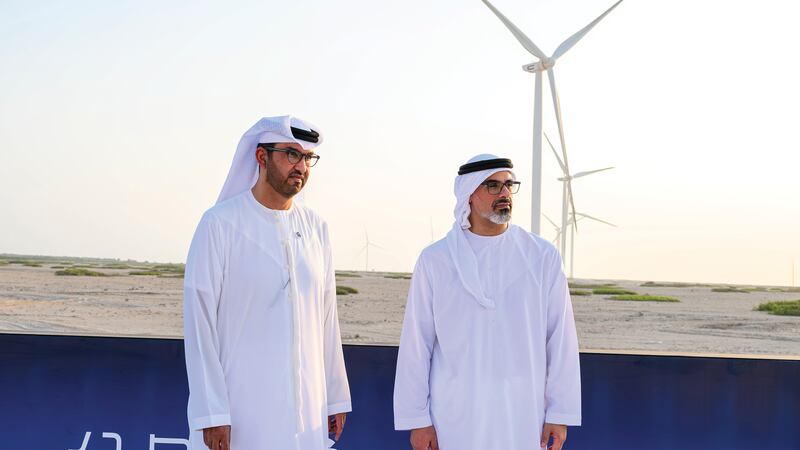
Image Caption: Sheikh Khaled bin Mohamed, Crown Prince of Abu Dhabi and chairman of Abu Dhabi Executive Council, inaugurates the UAE Wind Programme during a ceremony on Sir Bani Yas Island alongside Dr Sultan Al Jaber, Minister of Industry and Advanced Technology, chairman of Masdar and Cop28 President-designate. Photo: Abu Dhabi Government Media Office
About the Author