The National University of Singapore’s Middle East Institute’s (MEI-NUS) Annual Conference offered a great opportunity to discuss priorities in the Middle East-North Africa (Mena) region and Europe. The discussions highlighted a central dilemma for Europe: Pressured by the war in Ukraine and reduced American alignment, the European Union (EU) faces the urgent task of defining a more coherent and pro-active strategy towards the Middle East, centred on three interconnected challenges — relations with the Gulf, the war in Gaza and the Israel-Palestine conflict, and the future of diplomacy with Iran.
While the EU places a high priority on the Middle East and North Africa due to its geographic proximity (for example, trade routes and the relevance of oil and gas), the war in Ukraine simultaneously absorbs much of Europe’s political and financial resources, making stability in the Middle East more essential than ever. Following the shift in United States politics under the Trump Administration, the EU has been forced to strengthen its own defence capabilities, and distancing itself from Washington while trying to avoid widening the existing gap in political, economic, and military interests. Yet, while building military capacity, Europe’s credibility still rests largely on its ability to mediate and facilitate dialogue. The war in Ukraine is already redrawing Europe’s relations with the Middle East — most notably in terms of energy security and strategic partnerships. The continent must therefore ensure that responses in Eastern Europe reinforce its engagement in the south.
Europe Must Act Fast to Strengthen Relations with Countries in the Gulf Region
There is broad consensus within the EU on the strategic importance of strengthening its ties with the Gulf Cooperation Council (GCC) countries, driven by energy needs and the significant investment capital of states such as Kuwait, Qatar, and Oman. At the same time, Europe increasingly recognises the growing political role of the Gulf in regional and global affairs — including Sudan, Congo, and Ukraine. Hence, the relevance of the Gulf has substantially increased after the war in Ukraine, and will most likely grow further in the future.
As China expands its economic and political footprint in the Gulf, Europe must act faster if it wants to strengthen and capitalise on its relations there. A step in this direction was made in 2022, when the EU launched a Strategic Partnership with the Gulf, emphasising the need for cooperation on stability and security. To strengthen this relationship, former Italian Foreign Minister Luigi di Maio was appointed EU Special Representative for the Gulf in 2023. In January 2024, the EU-GCC Structured Security Dialogue was launched, focusing on maritime security, cyber and hybrid threats, disaster response, and counter-terrorism. Morever, during the EU-GCC Summit the same year, the Union recognised that “GCC states play a fundamental role in dispute mediation and resolution to preserve peace and security regionally and across the globe”, and both organisations agreed to work together on “peace-building efforts, such as mediation and negotiation”.[1]
The EU Must Come to a Consistent Position on the War in Gaza
By contrast, Europe’s attempts at fostering collaboration and strong partnerships with other countries in the Mena region, particularly in relation to Gaza, remain far more fragmented. The EU has been struggling to establish a clear and consistent position towards the Israel-Palestine conflict. After Hamas’ attack on Israel in October 2023 and the subsequent war in Gaza, the internal differences have become even more evident. The brutality, scope, and length of the Israeli war on Gaza have shifted public opinion across Europe, with mounting pressure on policymakers to criticise Tel Aviv’s conduct of it, and its impact on civilians.
The impact of changing public opinion is visible: In August 2025, Germany, one of Israel’s strongest supporters, and second-largest arms supplier after the US (with 30 per cent of arms imports between 2019 and 2023), announced a temporary suspension of the export of weapons which could be used in Gaza.[2] However, the suspension did not constitute an arms embargo, and allowed for weapons supposedly unrelated to the conflict to continue being exported to Israel.
Despite the shift in public discourse becoming increasingly visible in Germany and other EU member states, and the Union’s condemnation of Israel’s settlement plans in the Occupied West Bank (E1 area), as well as the imposition of sanctions on extremist Israeli settlers, any action against Israel remains highly-contested within many coalition governments, particularly when it comes to recognition of Palestine. While France, Britain, and Portugal recently joined Ireland, Sweden, and Poland in recognising Palestine, the Netherlands, Italy, and Germany currently show no intention of doing so, with Berlin describing such a move as a “counter-productive”.[3] Other tangible actions, such as limiting research funding for Israel through Horizon Europe — the EU’s flagship funding programme — remain off the table due to hesitation from Germany and Italy. These differing approaches show a lack of consensus within the EU, and highlight the urgent need for common ground.
The Complicated Question of Iran
Iran is the EU’s third priority in terms of foreign policy in the Middle East. During the past 25 years, Europe’s Iran policy mainly focused on the prevention of nuclear proliferation, the promotion of regional stability, and the normalisation of economic relations under the Joint Comprehensive Plan of Action (JCPOA). When the US under the first Trump Administration withdrew from the deal in 2018, Iran resumed uranium enrichment while maintaining strategic ambiguity. Growing concerns since then that Tehran was nearing “break-out” status culminated in a sustained, 12-day bombing campaign led by Israel — with the US joining later — to set back its alleged nuclear ambitions. In August, the E3 states (France, the UK and Germany) piled more pressure on Iran by activating the snap-back mechanism for United Nations’ sanctions. This initiated a 30-day interim period, after which previously-lifted United Nations Security Council resolutions were reinstated. Other events, such as Iran’s supply of drones to Russia for its war against Ukraine, as well as the forceful crackdown against the “Jin, Jiyan, Azadi” (Women, Life, Freedom) movement, prompted the EU to adopt a firmer stance. This marked a shift in European foreign policy, as the EU began to define its own security interests and values, moving away from its previous subordination to US strategic priorities. Trans-Atlantic coordination, particularly regarding Ukraine, took precedence over relations with Iran. These developments prompted the EU to adopt a firmer stance on the Islamic Republic. While this occurred within continued alignment with US strategic priorities under the Biden Administration, it nonetheless signalled Europe’s growing readiness to define its own security interests and values.
Europe’s support for Ukraine and Israel, when set against Iran’s supply of technology and arms to Russia and its hostile posture towards Tel Aviv, has deepened mutual distrust, and further complicated diplomatic efforts. France, meanwhile, has shifted towards a Gulf-centred strategy (focusing mainly on Saudi Arabia and the United Arab Emirates), and prioritising nuclear diplomacy over normalisation with Iran. Issues such as the detention of persons with dual nationalities by Iran have only complicated the situation, hardening positions further.
Outlook
The Mena region, especially the Gulf, Israel-Palestine, and Iran, will remain a priority for Europe. It is therefore time to define a pragmatic EU-wide policy to overcome current deadlocks, especially on whether to recognise Palestine as a state and reiterate the two-state-solution. One approach is the Global Alliance initiative, which links the Israel-Palestine conflict to a regional agenda where the Gulf states play a key role. Although uniting European and Gulf countries is unprecedented, and thus sends a clear message, practical success without US support is limited, relegating the move to merely symbolic status.
As one of the largest development, humanitarian, and financial aid supporters to Palestine, Europe could do more in collaboration with key Gulf states, as well as Jordan and Egypt, to start a serious intra-Palestinian dialogue about how the future after war will be shaped.
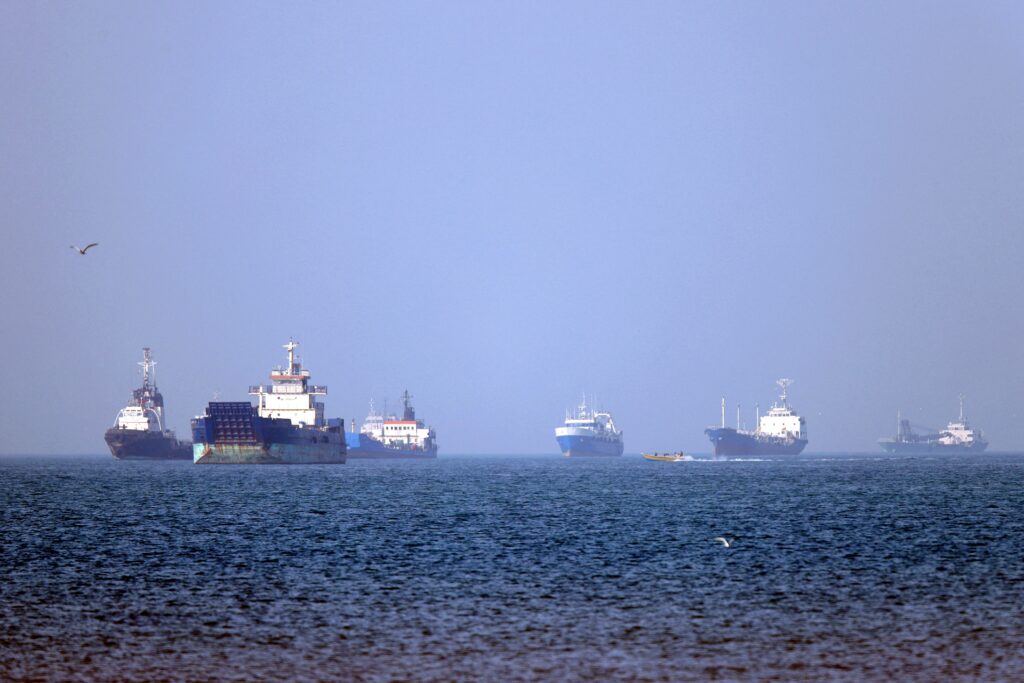
Various initiatives already exist, but suffer from a lack of coherence and political leverage. While Europe is not perceived as a strong security provider, it is still widely seen as a welcome addition to the overwhelming American presence in the region. The EU could build on its existing security engagement in the Red Sea, the Strait of Hormuz, and the Indian Ocean. Ultimately, it should also invest more in supporting joint initiatives, especially in collaboration with the Gulf states. These should aim to provide incentives for economic, social, and environmental collaboration across the wider Mena region, with the ultimate goal of fostering long-term regional stability and reducing the structural drivers of conflict.
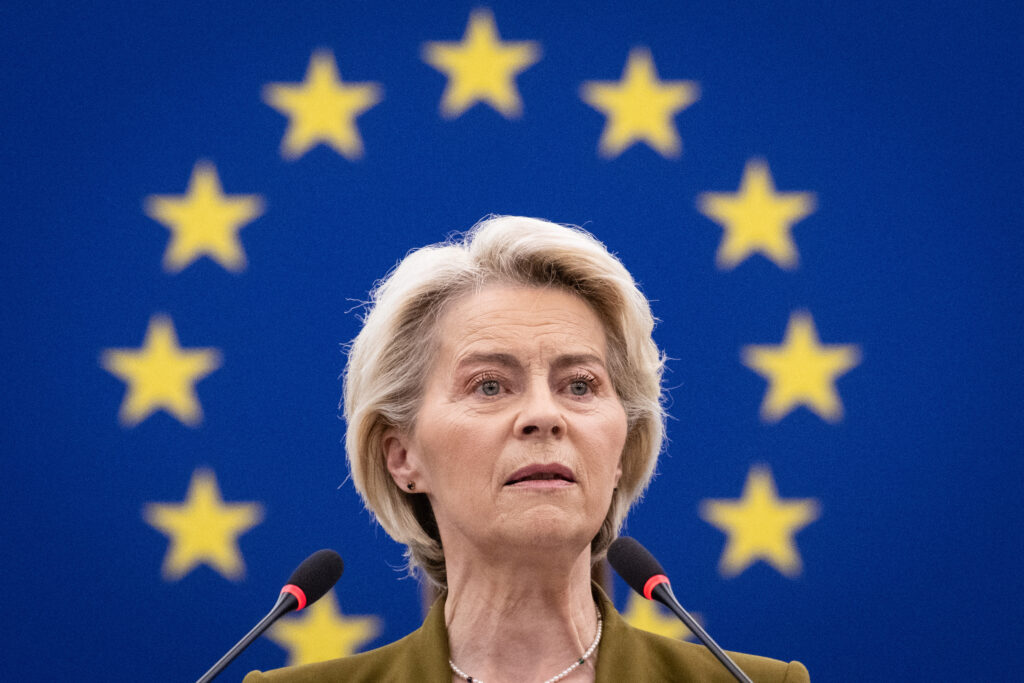
Image Caption: EU Commission President Ursula von der Leyen gives her annual State of the Union address during a plenary session at the European Parliament in Strasbourg, eastern France, on September 10, 2025. Ursula von der Leyen, targeted by two motions of censure, called on 6 October 2025 for European MPs to show ‘unity’, warning them that any division would be ‘exploited’.
About the Author
Dr Chris Coulter is Executive Director of the Berghof Foundation, which aims to achieve conflict transformation by addressing root causes and social grievances, among other means.
[1] Council of the European Union, “First European Union-Gulf Cooperation Council Summit – Joint Statement,” Consilium, October 16, 2024, https://www.consilium.europa.eu/en/press/press-releases/2024/10/16/first-european-union-gulf-cooperation-council-summit-joint-statement/.
[1] Shona Murray, “EU Fails to Agree Israeli Suspension from Research Fund over Gaza,” Euronews, July 30, 2025, https://www.euronews.com/my-europe/2025/07/30/eu-fails-to-agree-israeli-suspension-from-research-fund-over-gaza.
[2] Sam Jones, “German Arms Exports to Israel Surge as Berlin Backs Campaign Against Hamas,” Financial Times, August 22, 2025, https://www.ft.com/content/1a09622b-91cf-4527-a887-f8f328bd7cad.
[3] Reuters. “German Government Calls Recognition of Palestinian State Counterproductive.” Reuters, August 22, 2025. https://www.reuters.com/world/middle-east/german-government-calls-recognition-palestinian-state-counterproductive-2025-08-22