On 20 August 2025, Chinese Ambassador to Israel Xiao Junzheng published a signed article in Calcalist, Israel’s largest financial daily, entitled “China’s growth can usher in a new era for China-Israel cooperation”. He highlighted that, while geographically distant, China and Israel remain highly complementary partners: Israel is renowned as the “Startup Nation”, with world-class capabilities in innovation, while China, as a manufacturing powerhouse and vast consumer market, can provide the scale, resources, and capital needed to commercialise ideas. In his view, the model of “Israel R&D + China manufacturing + global markets” still carries strong potential, especially in emerging fields such as AI, biotechnology, healthcare, and clean energy.
Yet, this optimistic message comes at a moment when the bilateral relationship faces mounting uncertainty. Since the 7 October, 2023 Hamas attacks and subsequent Gaza war, Beijing’s cautious diplomacy — it did not condemn the rampage on Israel — and perceived tilt towards the Palestinian side have chilled political ties. Israeli public opinion has grown more sceptical of China, while American pressure has narrowed the space for Chinese involvement in Israel’s critical infrastructure and high-tech industries. At the same time, China has deepened its partnerships with the Gulf states and Iran, shifting the regional balance of attention.
Against this backdrop, a central question arises: Is China-Israel economic cooperation still important for both sides in today’s circumstances? And, if so, in what form can it endure?
Historical Foundations: What Makes China-Israel Cooperation Unique?
Since the establishment of diplomatic ties in 1992, China and Israel have recognised their natural economic complementarity. China provides vast markets, strong manufacturing capacity, and capital, while Israel contributes cutting-edge innovation and R&D. This pairing has proven mutually beneficial: Chinese firms have looked to Israeli expertise in areas such as agricultural water saving, medical devices, and semiconductor design, while Israeli companies rely on China’s scale and investment to commercialise their ideas. Over time, this synergy has evolved into a distinctive “idea-to-product pipeline”, in which Israel excels at invention and prototyping, and China at mass production and global scaling.
To turn complementarity into concrete results, the two sides built institutional platforms and flagship projects that anchored their economic ties. The China-Israel Changzhou Innovation Park, launched in 2015, provides an incubator for Israeli high-tech firms in China, combining their R&D with Chinese industrial support. Over the past decade, the park has drawn nearly 300 Israeli and joint‑venture enterprises, and facilitated around 60 bilateral technology cooperation projects, becoming a “key window” for Sino‑Israeli scientific collaboration.
This momentum has not been derailed by the pandemic or by recent regional conflicts. In May 2025, a dedicated life‑sciences matchmaking event in Tel Aviv led to six new Israeli projects, including energy management systems and carbonates technology, signing agreements to enter the park, underscoring its growing role in emerging-health innovation.
Meanwhile, the “Guang‑Israel Tech Changzhou Innovation Institute”, co-located within the park, onboarded 10 seed projects, five start-ups, and sealed three industry-academia-research cooperation agreements during its 2025 launch ceremony, highlighting the platform’s increasing capacity for commercialisation and talent development.
Over the years, tangible successes have underscored the importance of the partnership. Bilateral trade volumes expanded dramatically, from just US$50 million in 1992 to around US$15 billion by 2020, and to roughly US$24-25 billion by 2022, making China Israel’s largest trading partner in Asia, and one of its top three globally. Much of this exchange has been concentrated in high-tech and knowledge-intensive goods, supported by flagship projects and investment deals. Chinese firms not only built — and now operate — port terminals in Haifa and Ashdod and helped construct Tel Aviv’s light rail system, but also became major players in Israel’s technology scene. By 2019, they had completed 449 investment or M&A deals worth over US$9 billion, ranging from ChemChina’s $1.4 billion acquisition of Adama to Bright Food’s purchase of Tnuva, alongside extensive venture capital funding for Israeli startups.
Challenges and Doubts: Factors Undermining the Partnership’s Importance
However, several factors have emerged that cast doubt on whether the China-Israel economic relationship can maintain its past importance, introducing friction into once enthusiastic engagement.
Geopolitical Headwinds: The United States, Israel’s closest ally, has grown increasingly wary of China’s involvement in critical sectors of Israel’s economy. As the US-China strategic rivalry intensified, Washington began pressuring Israel to limit Chinese access to strategic infrastructure and advanced technologies. This pressure has had concrete effects. In May 2020, the Israeli government awarded a US$1.5 billion desalination plant contract to a local company over a competing bid from Hong Kong-based CK Hutchison, a decision widely seen as succumbing to US concerns. American export controls on semiconductors, AI, and other dual-use technologies have forced Israel to fall in line, leading to a sharp decline in semiconductor exports to China, from around US$2 billion in 2018 to nearly zero by 2023.
Israel’s Diplomatic Balancing and Internal Hesitation: Israel has grown more ambivalent as it tries to balance relationships. Israeli leaders still see opportunity in China’s market, but must calibrate “limited engagement” to avoid angering Washington. In sectors like 5G telecommunications, Israeli regulators kept Chinese companies out, largely deferring to US concerns.
At the same time, domestic perceptions of China have shifted. Beijing’s stance during the Israel-Hamas war — calling for ceasefires and highlighting Palestinian suffering without explicitly condemning Hamas — was met with disappointment, and by 2024, polls showed that a majority of Israelis regarded China as “unfriendly”, or even hostile, a stark reversal from their earlier favourable views. Yet the reality on the ground is more complex. Despite the war, many Chinese construction workers remained in Israel, with new groups even arriving in 2025 to keep projects running. Likewise, a steady inflow of Chinese goods, from consumer products to electric vehicles, helped cushion the impact of wartime inflation, indicating that political rifts have not yet translated into a rejection of economic ties with China.
China’s Evolving Priorities in the Middle East: China has dramatically expanded ties with other regional countries by signing massive energy and infrastructure deals with Gulf states, initiating a strategic pact with Iran, and facilitating the Saudi Arabia-Iran rapprochement. China’s trade with the Middle East reached nearly US$430 billion in 2022, mostly with oil-rich states, dwarfing its US$20 billion trade with Israel. From Beijing’s perspective, Israel remains a valuable tech hub, but its limited market size reduces its strategic weight for Beijing when set against the vast infrastructure and energy opportunities in Arab states.
Value Reassessment: Why the Cooperation Still Matters
Despite these challenges, compelling reasons suggest China-Israel economic cooperation remains important and strategically valuable for both countries. The underlying drivers have not disappeared; global developments have made some cooperation aspects even more relevant.
A Node in the Global Innovation Network: In an era of rapid technological change, Israel and China together form a critical innovation node that neither can fully replace elsewhere. For Israel, engaging with China provides access to resources and scale that can catapult innovations from idea to worldwide impact. For China, engaging with Israel provides cutting-edge ideas and niche technologies that help overcome development “chokepoints”.
As China confronts Western restrictions on semiconductors and defence-related technologies, Israeli firms offer expertise in specialised chips, radars, drones, cybersecurity, and medical equipment, precisely the areas where Beijing seeks greater self-reliance. In this context, the formula of “Israel R&D + China manufacturing + global markets” remains highly attractive, providing a synergy that neither side can easily replicate elsewhere.
China’s Window to the West, Israel’s Bridge to the East: The Sino-Israeli economic link serves as a valuable bridge between China and the Western-oriented innovation sphere. Israel, though geographically in Asia, is deeply integrated with Western markets and standards. When Chinese firms invest in Israeli start-ups, they indirectly plug into Western-aligned innovation networks. For China, whose companies sometimes face US or EU barriers, Israel offers a more convenient entry point for advanced collaboration.
From Israel’s viewpoint, its companies that succeed in China’s vast, competitive market prove their mettle and gain experience that can be translated to other emerging markets. An example is Foresight Autonomous Holdings, an Israeli auto-vision tech firm which in 2022 established a wholly-owned subsidiary, Foresight Changzhou Automotive Ltd, in Jiangsu Province under the China-Israel Changzhou Innovation Park. By securing local engineering talent, government incentives, and operating from a supportive innovation hub, Foresight has strengthened its presence in China, while collaborating with local vehicle manufacturers and Tier-One suppliers.
From China’s perspective, entering a small but sophisticated market like Israel allows its firms to test their competitiveness against international brands, refine their products in a demanding environment, and draw lessons for entry into other developed economies. The automotive sector provides one example: Chinese automakers captured over 68 per cent of Israel’s new electric vehicle (EV) sales in the first half of 2024, with BYD’s Atto 3 becoming the best-selling model. This success not only benefits Chinese companies, but provides them with feedback for global expansion, while Israeli consumers gain affordable, innovative products supporting clean transportation goals.
A Pillar of Diverse Middle East Engagement: For Israel, maintaining strong economic ties with China is part of diversifying international relations beyond Western security ties. For China, engagement with Israel adds a vital dimension to its Middle East presence beyond oil and infrastructure deals with Arab states. Through Israel, China connects to the region’s innovation and high-tech scene, balancing its portfolio while positioning itself as a technology bridge.
In critical civilian needs like healthcare, environment, and urban development, China-Israel cooperation has proven its worth. During the Covid-19 pandemic, the two countries exchanged medical supplies and know-how. In water and green energy, joint projects have introduced Israeli innovations into Chinese cities, improving sustainability. These “low-sensitivity, high-value” areas are politically benign, but deliver tangible benefits.
Future Directions: Enhancing the Partnership’s Relevance
To maintain and increase the importance of their economic cooperation, China and Israel need to adapt to new realities.
Focus on High-Complementarity Sectors and Avoid Highly-Sensitive Ones: Both sides could recalibrate cooperation toward fields with the greatest win-win potential and least geopolitical friction, prioritising agri-tech, food security, water management, renewable energy, electric vehicles, biotechnology, and medical devices. Projects in sensitive sectors like 5G telecom and advanced semiconductors should be de-emphasised.
Strengthen Institutional Safeguards: Concluding a long-negotiated Israel-China Free Trade Agreement would provide stable frameworks and clear rules for businesses. Additionally, establishing joint technology cooperation review mechanisms could handle security concerns transparently, ensuring compliance with regulations, rather than allowing unilateral third-party pressure to dominate.
Deepen People-to-People and Knowledge Links: Expanding joint research programmes, establishing bilateral innovation incubators, and increasing scholarships and training opportunities can overcome cultural gaps and build long-term trust. More direct exchanges create natural ambassadors for collaborations sensitive to both cultures.
Conclusion
Is China-Israel economic cooperation still important for both sides? After examining its evolution, challenges, and enduring benefits, the answer is yes — but with qualifications. The golden years of unbridled growth are over; geopolitics has introduced caution and constraints. However, the foundational logic remains sound: They complement each other in ways few others can.
Israel still offers world-leading innovation helping drive China’s development, while China offers scale and resources amplifying Israel’s global impact. Their economic partnership continues to hold significant importance, not just bilaterally, but in addressing wider challenges like sustainable development and technological progress.
From Israel’s perspective, despite recent frictions, engagement with China provides diversification, investment, and routes into Asia’s dynamic markets. From China’s perspective, Israel remains a valuable high-tech source and important Middle East player supporting its global strategy. The key is recalibrating expectations: Quality over quantity, long-term gains over short-term hype.
By focusing on areas of true synergy and managing risks smartly, China and Israel can ensure their economic cooperation not only remains important, but evolves into a more mature and resilient partnership. In an increasingly divided world, the China-Israel economic link can demonstrate that pragmatic cooperation — when nurtured carefully — can endure and deliver value to both nations. The importance has not vanished; it remains very much alive, provided both countries commit to meeting today’s world challenges.
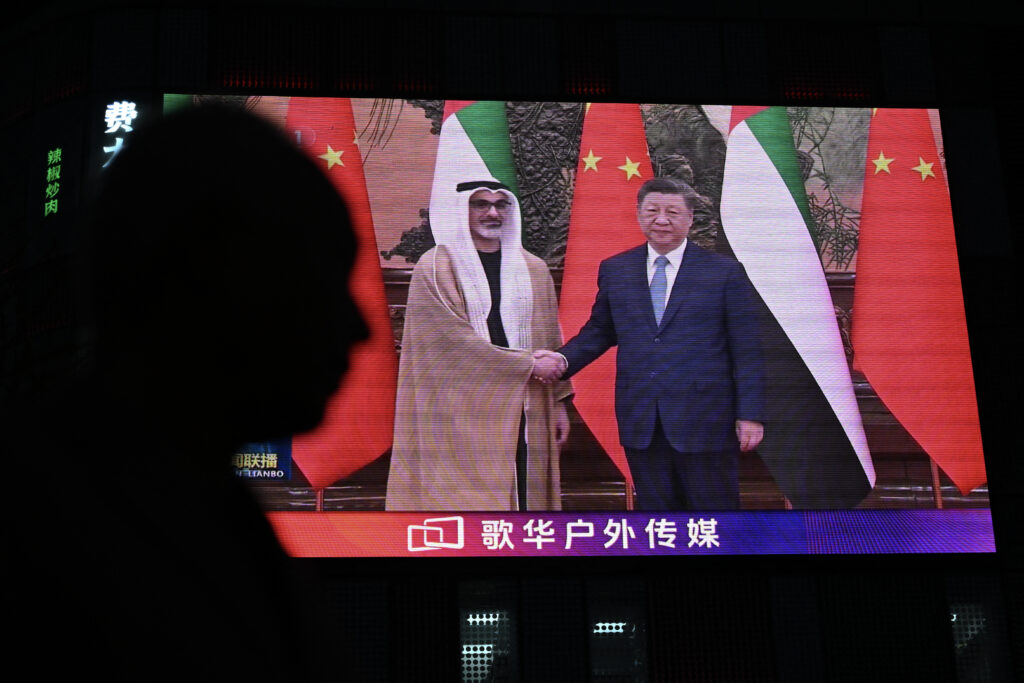
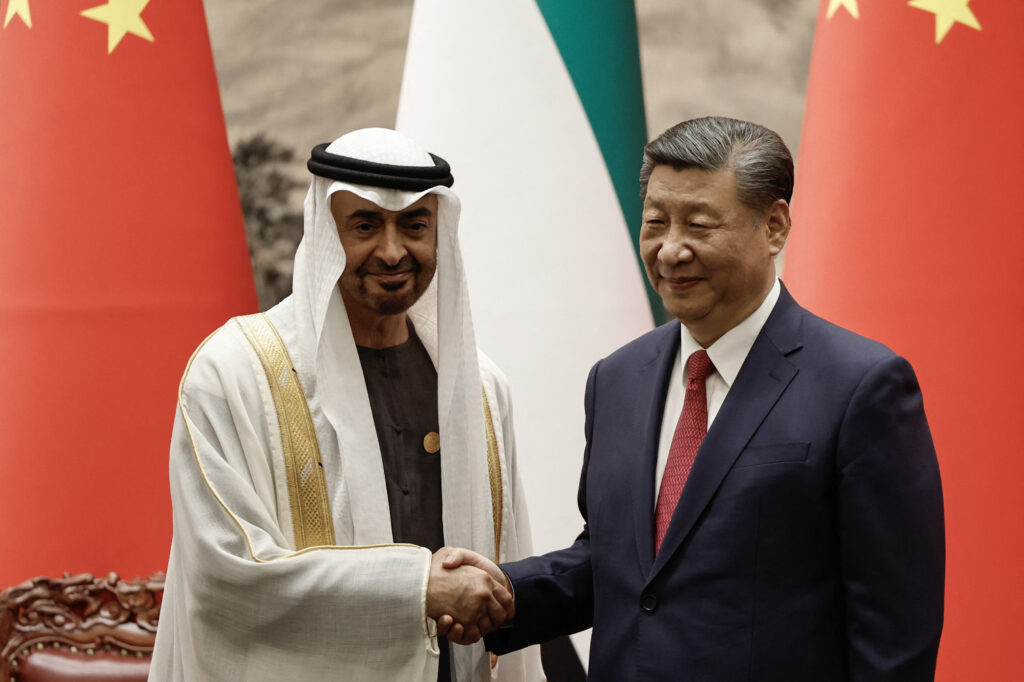
Image Caption: China’s President Xi Jinping (R) shakes hands with Israel’s Prime Minister Benjamin Netanyahu at the Great Hall of the People in Beijing on 9 May 2013. Netanyahu is on a five-day trip to China. Photo: AFP
About the Author
Dr Zhu Zhaoyi is a Chinese scholar specialising in Middle Eastern studies, international economics, and Sino-Middle Eastern relations. He is currently the Executive Director of the Middle East Institute at the PKU HSBC Business School, and founding director of the Israel Center and Middle East Institute at the Pangoal Institution.
Dr Lin Jing is a Research Fellow at the National University of Singapore’s Middle East Institute. Her research interests include China-Middle Eastern relations, Jewish studies and inter-religious relations. She was previously Senior Lecturer at the School of Asian & African Studies at Beijing Foreign Studies University (BFSU).