While President Donald Trump’s objective is to have Iran scale down its nuclear activities in a verifiable way, Tehran seeks to boost the legitimacy of the Islamic Republic by demonstrating its willingness to “talk” with the United States and reach a deal acceptable to both sides. The political elite of Iran regard the attempt to negotiate with the US as a concession to the Iranian people, who elected Mr Masoud Pezeshkian — an advocate for “dialogue with Western countries” — as their new President in the summer of 2024.
Reaching a deal with the US would substantially enhance the legitimacy of the Islamic Republic. It would not only demonstrate Iran’s ability to negotiate with the US based on mutual respect, but also help alleviate some of the economic hardships the Iranian people have endured under the “maximum pressure” campaign initiated by the first Trump administration. More importantly, however, the act of negotiating is itself critical for Iran, as it helps it avoid the “snapback” option — the re-imposition of UN sanctions — that the E3 has been preparing to pursue. The Islamic Republic believes that by engaging in dialogue with the US, it can prevent this, regardless of whether a deal is ultimately reached.
– Sachi Sakanashi, Senior Research Fellow and Director of the Japanese Institute of Middle Eastern Economies (JIME), IEEJ
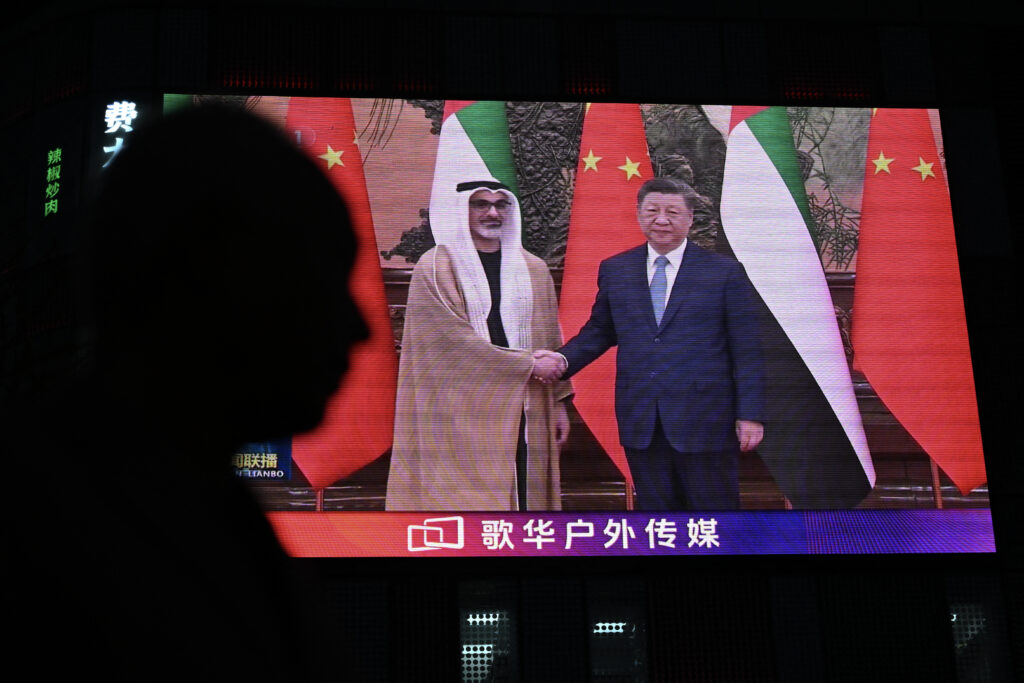
Since the United States’ withdrawal from the Joint Comprehensive Plan of Action (JCPOA) in 2018, the geopolitical landscape has shifted considerably. The rise of non-Western powers, particularly China and Russia, has challenged the Western-led international order. Iran has embraced this shift towards multi-polarity, formalising Comprehensive Strategic Partnership agreements with both China and Russia. These alignments reflect Tehran’s strategic re-orientation away from the West, and its pursuit of deeper ties with alternative global power centres.
While the JCPOA was in force (2015–2018), several Middle Eastern states opposed the deal. Today, however, regional dynamics have evolved: Apart from Israel, regional actors now support renewed US-Iran negotiations.
Since 2018, Iran’s nuclear programme has progressed significantly, bringing it close to becoming a latent nuclear state. At the same time, Iran has expanded its missile and drone capabilities, as demonstrated in its April 2024 strikes on Israel. These developments highlight Iran’s growing capacity to threaten US regional bases and Israeli territory, intensifying Western concerns over its military reach.
The US has relied heavily on coercive tools in recent decades, with limited success in Afghanistan, Iraq, and Yemen. This has engendered caution about entering another open-ended conflict. A war with Iran would carry grave risks:
- Nuclear Breakout: Military action could accelerate Iran’s weaponisation, irreversibly shifting regional power dynamics.
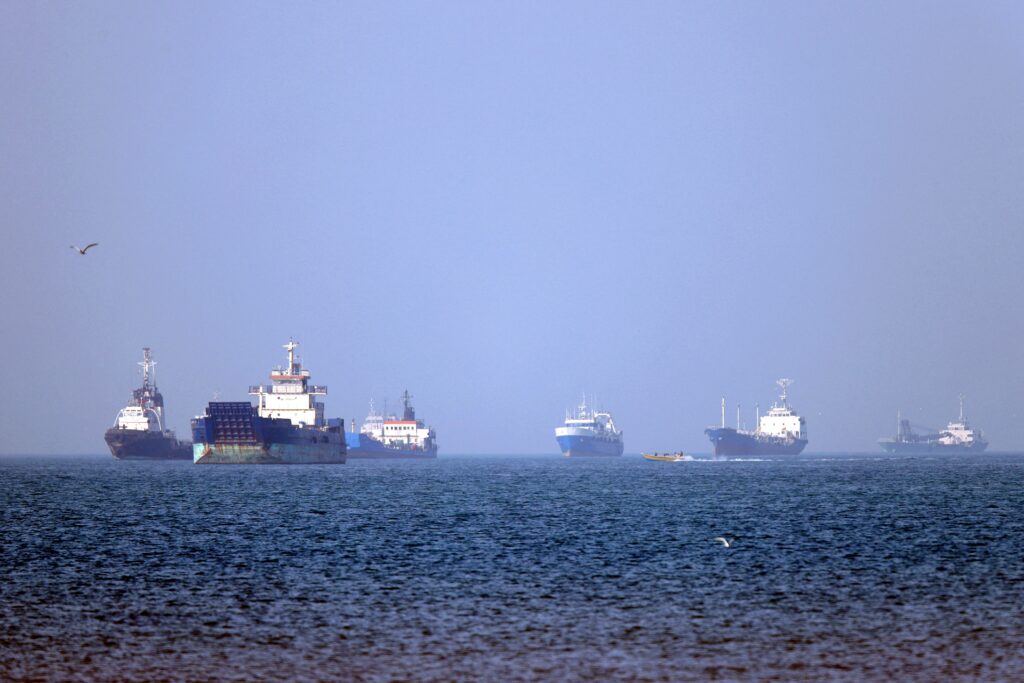
- Economic Shock: The closure of the Strait of Hormuz, through which roughly 20 per cent of global oil supply passes, would destabilise energy markets.
- Regional Escalation: Iranian retaliation could imperil US allies and assets, fuelling broader instability across the Middle East.
The US faces intensifying strategic competition with China and Russia, alongside persistent crises in the Middle East, including the Israel-Palestine conflict, Houthi disruptions in Yemen, and instability in Syria, Iraq, and Afghanistan. Escalation with Iran would compound these challenges, risking a prolonged and unpredictable conflict.
Despite Tehran’s more assertive posture, internal economic pressures, exacerbated by sanctions and popular discontent, provide incentives for renewed negotiations. For Washington, diplomacy offers a means to contain proliferation and avoid another costly war. As both sides confront the limitations of coercive power, dialogue, however difficult, remains the most pragmatic starting point. In this volatile environment, the alternative to diplomacy, escalation, carries consequences that neither party can afford.
– Alam Saleh, Centre for Arab and Islamic Studies, Australian National University
The latest developments in US-Iran talks highlight divisions in both camps. Despite the Iranian leadership’s willingness to negotiate, local reporting has revealed that there are groups attempting to obstruct the talks. The rifts in the US camp, on the other hand, are associated with the understanding of how best to curtail Tehran’s nuclear programme — to limit, or eliminate, it? At present, both camps seem to grasp that the best possible deal is one that both limits and places checks on uranium enrichment.
Iran’s Supreme Leader recently delivered cryptic remarks on how the “dominance of heresy and hypocrisy is not meant to be permanent” — alluding to the possibility of a short-lived potential deal with Washington. Meanwhile, Donald Trump’s appointment of Michael Anton, the State Department’s Director of Policy Planning, to lead technical talks raises more doubts than assurances. While the discussion of technicalities suggests the talks are further along than expected, Mr Anton’s background as the Director of Strategic Communications at the National Security Council during Donald Trump’s first term offers clues of his thought process. Of note was his strong belief in a nuclear apocalypse.
What both camps have in common — at least until now — is their opposition to escalation. But spoilers remain in the midst, notably Israeli Prime Minister Benjamin Netanyahu, who is reportedly itching to deploy the military option given the transformed strategic landscape in the region, which favours Tel Aviv. Regionally, the Gulf Arab states will be watching with bated breath as any signs of escalation will threaten their diplomatic investments in détente with Iran — particularly for Saudi Arabia.
– Clemens Chay, Research Fellow, Middle East Institute-NUS
While the Trump administration might paradoxically pursue an agreement conceptually similar to the JCPOA, the technical and political context has fundamentally changed. Iran’s uranium enrichment levels are now significantly higher, its breakout timeline considerably shorter, and its nuclear infrastructure markedly more sophisticated. Moreover, substantial gaps in monitoring and knowledge have emerged. Any future negotiations would thus take place in an altered environment, among different interlocutors, and under conditions of heightened mistrust and political trauma, complicating the prospects for successful diplomacy.
– Ludovica Castelli, Project Manager, Nonproliferation and Disarmament Programme, Istituto Affari Internazionali (IAI)
Image Caption: This picture shows a magazine front page at a kiosk in Tehran on 19 April 2025, featuring the Iran-US talks on Tehran’s nuclear programme set to begin in Rome on the same day. Photo: AFP